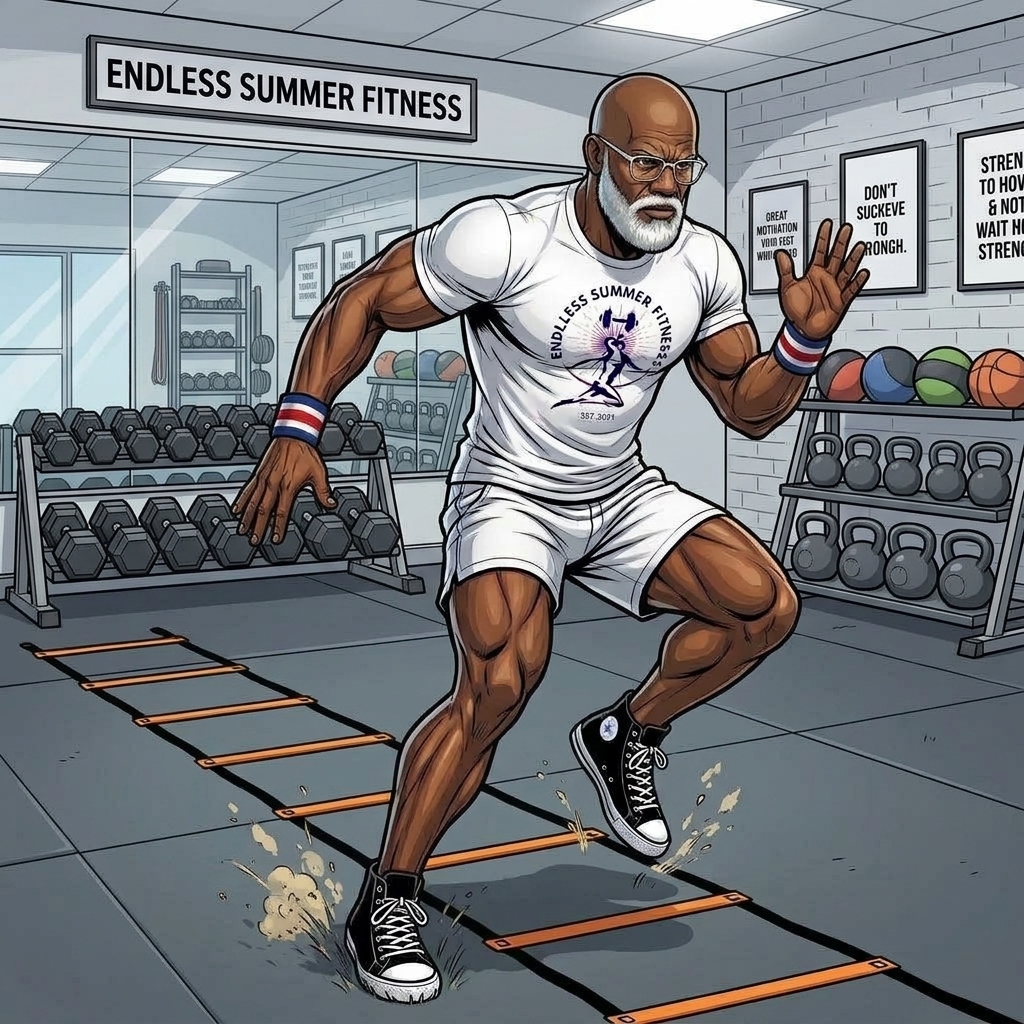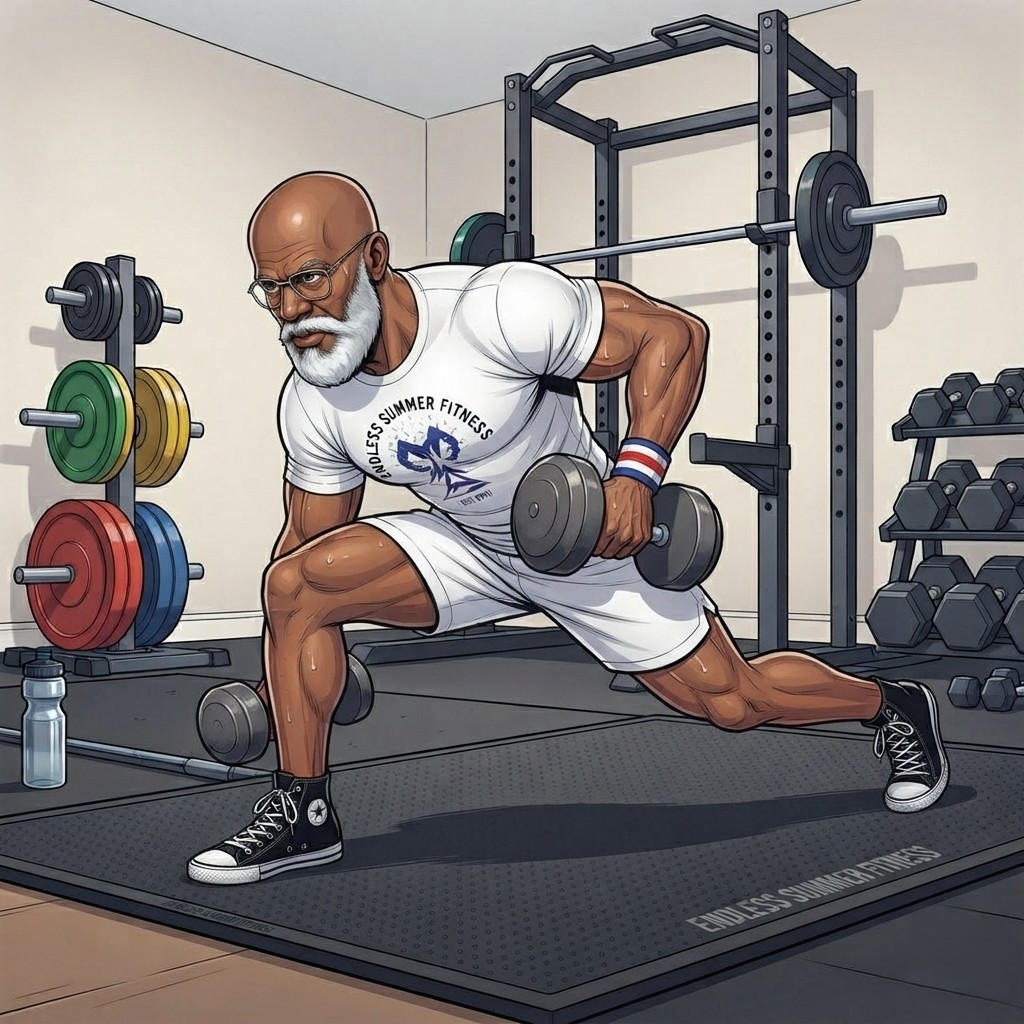
Interval routines often rely on explosive jumping, rapid twisting, and high-impact ground transitions. While these movements elevate heart rate quickly, they also expose knees, lower backs, and wrists to high shock loads and excessive joint shear.
You do not need to subject your joints to ballistic impact to build conditioning or retain muscle.
By removing explosive jumps and applying strict tempo control specifically a slow, 3-second lowering phase on every rep—you turn standard bodyweight exercises into effective strength builders. Resting your back or hands on stable surfaces like a floor or wall eliminates unnecessary spinal pressure while keeping constant, productive tension on your target muscles.,
Safety & Execution Rules
- Control the Eccentric Phase: Take a full 3 seconds to lower yourself on every single repetition. Gravity should never do the work for you.
- Keep the Spine Neutral: Avoid uncontrolled twisting or rapid bending at the waist. Hold your torso stable and braced throughout every movement.
- Prioritize Form Over Speed: Aiming for maximum speed leads to loose form and joint irritation. Keep your movements deliberate, clean, and fully controlled.
The Foundation Routine
Perform this workout 2 to 3 times per week. Complete 3 full sets per exercise, resting 45 to 60 seconds between sets.
Warm-Up (5 Minutes)
- Marching in Place: 2 minutes at an easy, rhythmic pace
- Arm Circles: 60 seconds (30 seconds forward, 30 seconds backward)
- Bodyweight Hinge Practice: 2 minutes (feet shoulder-width apart, pushing hips back with knees slightly bent)
Foundation Exercises
1. Incline Push-Up (Wall or High Counter)
- Volume: 3 sets of 12–15 reps
- Speed: 3 seconds lowering, 1-second pause, 1 second pressing up
- How to do it: Stand facing a sturdy wall or high countertop, placing your hands slightly wider than shoulder-width apart. Step your feet back so your body forms a straight line from head to heels. Bend your elbows to lower your chest toward the surface over a 3-second count, pause briefly without resting your weight, then press firmly through your palms to return to the top.
2. Chair Squat with Pause
- Volume: 3 sets of 12–15 reps
- Speed: 3 seconds lowering, 1-second pause at the bottom, 1 second standing up
- How to do it: Stand directly in front of a sturdy dining chair with your feet shoulder-width apart and toes turned slightly out. Keep your chest upright and sit back slowly over 3 full seconds until your glutes lightly touch the seat. Pause for one second without relaxing your torso, then push through your mid-foot to stand back up.
3. Step-Back Reverse Lunge
- Volume: 3 sets of 10–12 reps per leg
- Speed: 3 seconds lowering, 1 second stepping up
- How to do it: Stand tall with your feet hip-width apart. Take a controlled step backward with your right leg, lowering your hips straight down over 3 seconds until your back knee is just an inch off the floor. Push through your front heel to step back to the starting position. Complete all reps on the right leg before switching to the left.
4. Standing Doorframe Row
- Volume: 3 sets of 12–15 reps
- Speed: 1 second pulling, 1-second squeeze, 3 seconds lowering
- How to do it: Stand in a doorway, holding the frame at chest height with both hands, feet placed close to the base of the doorframe. Lean back until your arms are fully extended and your body is tilted at a slight angle. Pull your chest toward the frame by driving your elbows back and squeezing your shoulder blades together. Hold for one second, then lower your body back over 3 seconds.
5. Opposite Arm & Leg Reach (Bird-Dog)
- Volume: 3 sets of 8–10 reps per side
- Speed: 2-second hold at full extension, 3 seconds lowering
- How to do it: Position yourself on all fours on a padded mat with hands under shoulders and knees under hips. Keep your back flat and abdominals braced. Simultaneously reach your right arm straight forward and your left leg straight back until both are parallel to the floor. Hold for 2 seconds, return to the start position under strict control over 3 seconds, and repeat on the opposite side.
Cool-Down (5 Minutes)
- Standing Calf Stretch: 60 seconds per leg
- Doorway Chest Stretch: 60 seconds per side
- Child’s Pose: Hold for 2 minutes on a padded mat, taking slow, deep breaths
The Progressive Routine
Transition to this routine once you can complete all reps of the Foundation Routine with total control and zero joint discomfort.
Warm-Up (5 Minutes)
- Side Step-Touches: 2 minutes
- Gentle Torso & Shoulder Mobility: 3 minutes
Progressive Exercises
1. Floor Incline Mountain Climber (Slow Tempo)
- Volume: 3 sets of 10–12 reps per leg
- Speed: 2-second drive, 2-second hold, 2-second return
- How to do it: Place your hands on a sturdy bench or chair seat in a solid plank position. Slowly draw your right knee toward your chest over 2 seconds, hold the contraction for 2 seconds without letting your hips sag or rise, then return the foot to the floor over 2 seconds. Alternate sides in a deliberate, controlled rhythm rather than running.
2. Bodyweight Romanian Deadlift (Single-Leg Support)
- Volume: 3 sets of 12–15 reps per leg
- Speed: 3 seconds lowering, 1 second standing up
- How to do it: Stand tall with your feet hip-width apart. Shift your weight onto your left foot, placing the toes of your right foot slightly behind you for kickstand balance. Hinge at your hips, pushing your glutes back toward the wall behind you while lowering your torso over 3 seconds until you feel a comfortable stretch in your left hamstring. Squeeze your glutes to stand back up.
3. Forearm Plank with Knee Taps
- Volume: 3 sets holding for 30–45 seconds
- Speed: Continuous, slow movement
- How to do it: Rest your forearms on a mat with elbows directly beneath your shoulders and body in a straight line. Gently lower both knees to touch the mat lightly, then raise them back up into a full plank without shifting your lower back or hip height.
4. Doorframe Single-Arm Row
- Volume: 3 sets of 10–12 reps per arm
- Speed: 1 second pulling, 1-second squeeze, 3 seconds lowering
- How to do it: Grasp the doorframe with your right hand at chest height, setting your feet near the base of the frame. Lean back so your right arm supports your body weight. Pull your chest to the frame using your right lats and upper back muscles, squeeze at the top, then lower yourself back out over 3 full seconds.
5. Supine Glute Bridge with Pause
- Volume: 3 sets of 12–15 reps
- Speed: 1 second raising, 2-second squeeze at the top, 3 seconds lowering
- How to do it: Lie flat on your back on a mat with your knees bent and feet flat on the floor, shoulder-width apart. Drive through your heels to lift your hips toward the ceiling until your thighs and torso form a straight line. Squeeze your glutes firmly at the top for 2 seconds, then lower your hips back to the mat over 3 seconds.
Cool-Down (5 Minutes)
- Seated Hamstring Stretch: 60 seconds per leg
- Standing Quad Stretch: 60 seconds per leg
- Lower Back Knees-to-Chest Stretch: Hold for 2 minutes on the mat
Core Guidelines for Long-Term Progress
- Prioritize Muscle Tension Over Fatigue: Focus on making the target muscle work against gravity rather than simply trying to get breathless.
- Protect Joint Structures: If a specific movement angle causes sharp joint discomfort, stop immediately and reduce your range of motion or adjust your hand/foot placement.
- Rest for Recovery: Connective tissues require adequate time to adapt. Allow at least 24 to 48 hours of rest between resistance sessions.
Summary
High-impact plyometrics and explosive circuits are not required to build muscle or improve body composition. By utilizing controlled tempos, joint-friendly leverage, and stable body positioning, you can train consistently at home while keeping your joints protected for the long haul.
Peer-Reviewed References & Standards
-
American College of Sports Medicine (ACSM)
Guideline: Resistance Training Guidelines for Older Adults and Special Populations.
Takeaway: Recommends controlled movement speeds, non-ballistic exercises, and moderate volume to maintain muscular fitness while minimizing shear forces on aging joints.
Link: ACSM Physical Activity Guidelines -
National Strength and Conditioning Association (NSCA)
Guideline: Exercise Adaptation and Joint Preservation Protocols.
Takeaway: Highlights the utility of closed-kinetic-chain bodyweight movements (such as push-ups and squats) for increasing joint stability and neuromuscular control.
Link: NSCA Education & Research -
Journal of Applied Physiology
Study: Effects of Eccentric Muscle Actions on Muscle Hypertrophy and Strength
Takeaway: Confirms that emphasizing slow lowering (eccentric) phases stimulates muscle retention and connective tissue strength without requiring excessive mechanical impact.
Link: PubMed Research Index
Medical Disclaimer: This article is for educational and informational purposes only and does not constitute medical advice. Always consult a physician or certified fitness professional before starting a new exercise program.