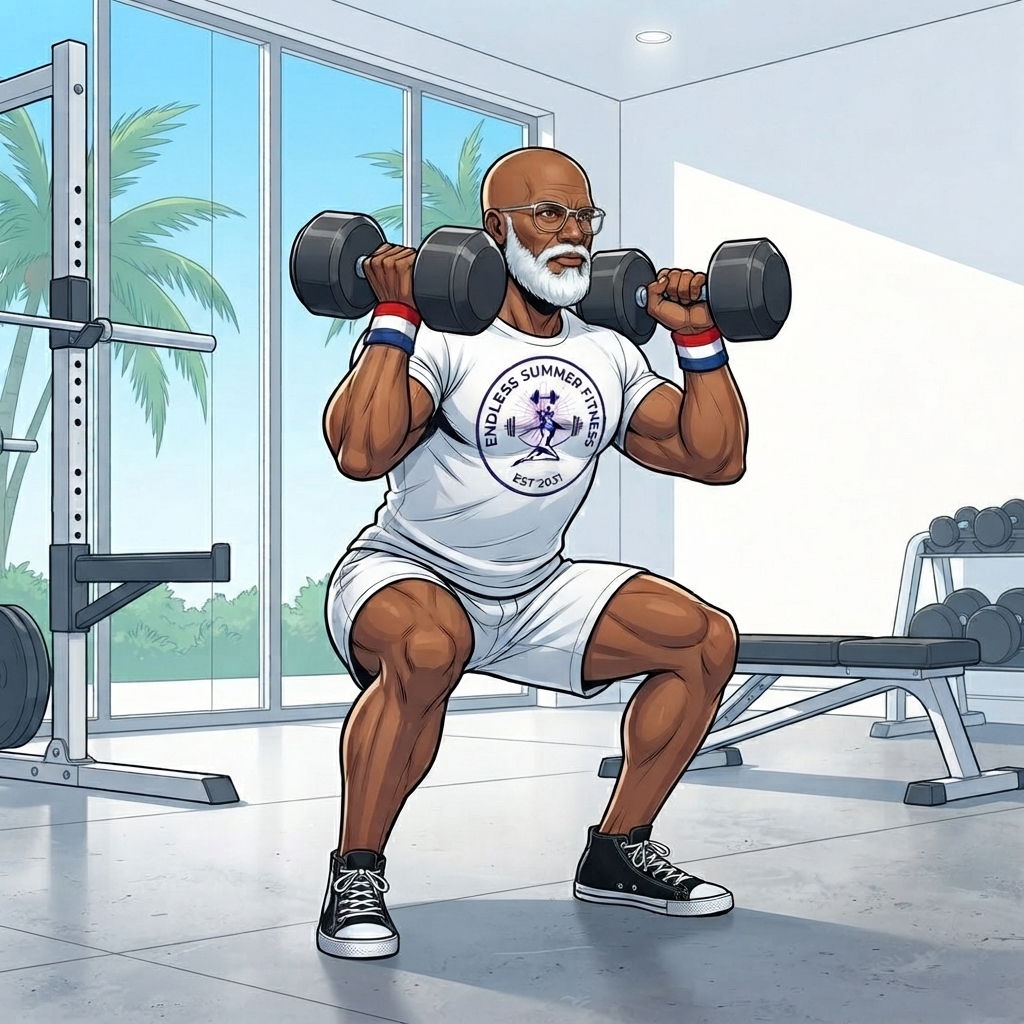
As we navigate life past 40, how we move matters more than how much weight we can lift. Traditional workouts often rely on isolated movements that take up precious time and fail to reflect how our bodies operate in everyday life. Whether you are carrying groceries, working in the yard, or keeping up with active family outdoor trips, your body functions as a single, integrated system. In this article, we discuss 5 Dynamic Hybrid Exercises for Over 40 Adults.
Your next great read: 5 Transforming Hip Mobility Fixes for Over‑40 Bodies
This is where hybrid exercises shine. By fusing two complementary movements into one continuous sequence, you train your body to work as a cohesive unit. For active adults over 40, hybrid exercises (not to be confused with hybrid training) delivers a powerful trifecta: it builds functional strength, protects fragile joints through controlled ranges of motion, and maximizes cardiovascular engagement all in a fraction of the time.
What Are Hybrid Exercises?
Hybrid exercises string together two or more distinct movements into a single, seamless effort. Unlike isolation exercises that target a single muscle group, hybrid movements demand coordination across your entire kinetic chain.
When you combine functional movements—such as combining a lower-body push with an upper-body pull, you unlock key benefits for long-term health:
- Superior Time Efficiency: You train the upper and lower body simultaneously, cutting total workout duration while doubling physical productivity.
- Enhanced Cardiovascular Flow: Engaging multiple large muscle groups at once elevates your heart rate naturally, giving you conditioning benefits without high-impact pounding on your joints.
- Real-World Functionality: Daily life rarely isolates muscles. Hybrid patterns build coordination, core stability, and movement confidence for everyday physical demands.
- Joint-Friendly Volume: Using lighter weights through high-quality, continuous motion builds density and strength without placing heavy compressive loads on your spine or knees.
5 Dynamic Hybrid Movements for Your Routine
-
Kettlebell or Dumbbell Thruster (Squat to Overhead Press)
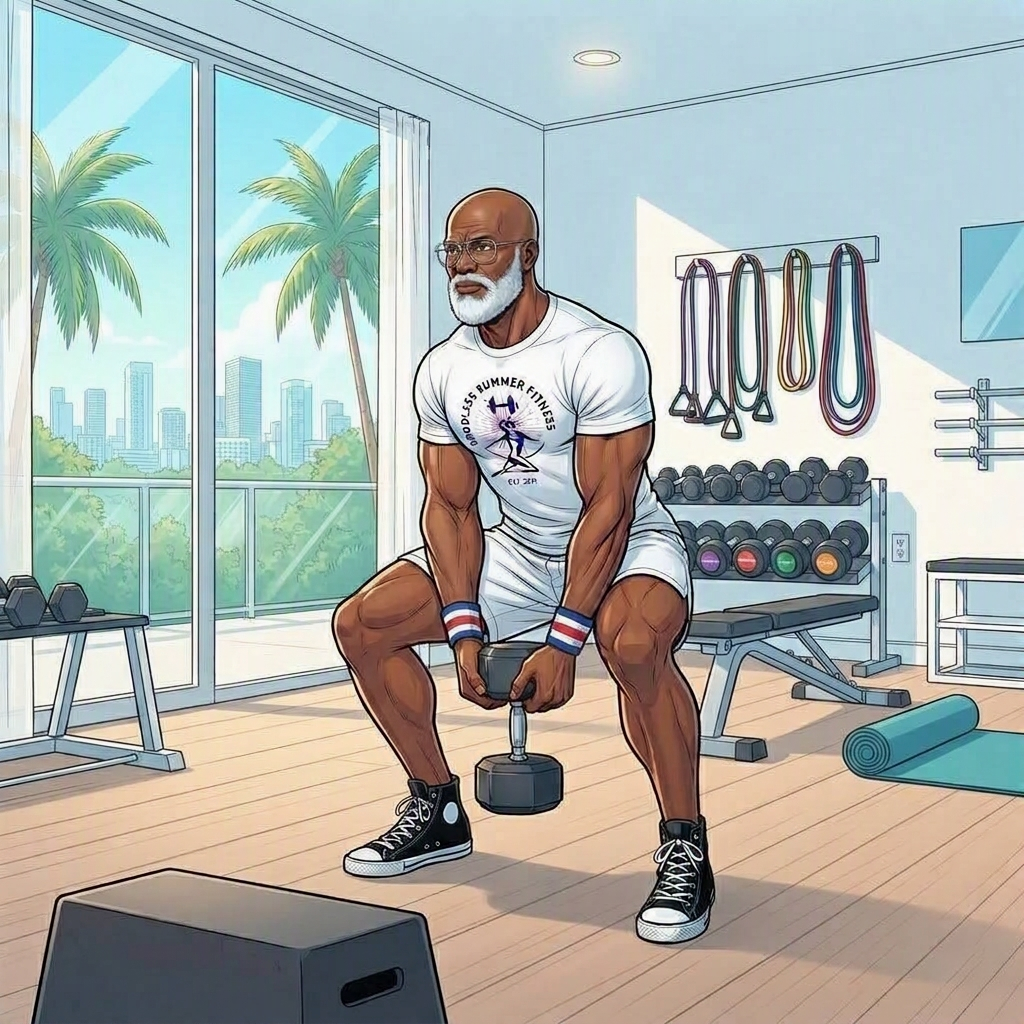
The thruster is a classic hybrid that links a lower-body squat directly with an upper-body overhead press. The upward drive from your legs carries momentum into the press, protecting your shoulders while building whole-body power.
Primary Muscles: Quads, Glutes, Deltoids, Triceps, Core
How to Do It:
- Stand tall with feet shoulder-width apart, holding a pair of dumbbells at shoulder height with palms facing inward.
- Sit back into a controlled squat, keeping your chest proud and knees tracking over your toes.
- Drive firmly through your feet to stand, using the upward momentum to press the dumbbells smoothly overhead.
- Lower the weights back to shoulder height as you descend into your next controlled squat.
-
Renegade Row to Push-Up
This upper-body powerhouse combines horizontal pushing with horizontal pulling while demanding rock-solid core stability. It strengthens the chest, back, and shoulders while teaching your abdominal wall to resist rotation.
Primary Muscles: Pectorals, Latissimus Dorsi, Rhomboids, Core, Triceps
How to Do It:
- Set up in a strong high plank position with your hands gripping a pair of hex dumbbells placed shoulder-width apart on the floor. (Widen your foot stance for greater stability).
- Lower your body into a controlled push-up, keeping your elbows angled at 45 degrees.
- Press back up to the top plank position.
- Holding the plank steady without twisting your hips, row one dumbbell up toward your ribcage. Lower it smoothly to the floor and repeat the row on the opposite side.
-
Deadlift to Shoulder Shrug
Deadlifts are already the gold standard for strengthening the posterior chain—the hamstrings, glutes, and lower back. Adding a deliberate shrug at the top engages the upper trapezius and neck stabilizers, reinforcing healthy posture for adults who spend hours at a desk.
Primary Muscles: Hamstrings, Glutes, Erector Spinae, Trapezius, Forearms
How to Do It:
- Stand tall with feet hip-width apart, holding dumbbells or a barbell in front of your thighs.
- Hinge at your hips, sending your glutes backward while keeping a flat back until the weights pass your knees.
- Drive through your heels and extend your hips to return to a tall standing position.
- At the top of the movement, roll your shoulders up toward your ears in a smooth, deliberate shrug. Hold for one second before lowering your shoulders and repeating the hinge.
-
Step-Up to Biceps Curl
Isolating the biceps does little for balance or lower-body strength. Combining a step-up with a biceps curl turns a simple arm exercise into an athletic movement that sharpens leg strength, ankle stability, and coordination.
Primary Muscles: Quadriceps, Glutes, Biceps, Core, Ankle Stabilizers
How to Do It:
- Stand facing a stable bench or step (6 to 12 inches high) holding a dumbbell in each hand at your sides.
- Step firmly onto the bench with your right foot, driving through your heel to lift your body up.
- As you reach the top of the step and bring your left knee up, curl the dumbbells smoothly toward your shoulders.
- Lower the weights back to your sides as you step down carefully. Alternate lead legs for each repetition.
-
Squat-to-Curl-to-Overhead Press
This triple-movement hybrid is the ultimate full-body builder. It seamlessly transitions from a lower-body push to an upper-body pull, ending with an upper-body push.
Primary Muscles: Quads, Glutes, Biceps, Deltoids, Triceps, Full Core
How to Do It:
- Stand with feet shoulder-width apart, holding dumbbells at your sides with a neutral grip (palms facing each other).
- Lower into a squat while keeping your arms extended toward the floor.
- Drive upward out of the squat. As you reach full standing height, curl the dumbbells to your shoulders.
- Without pausing, press the dumbbells directly overhead until your arms are fully extended.
- Reverse the motion smoothly: lower to shoulder height, uncurl to your sides, and descend into the next squat.
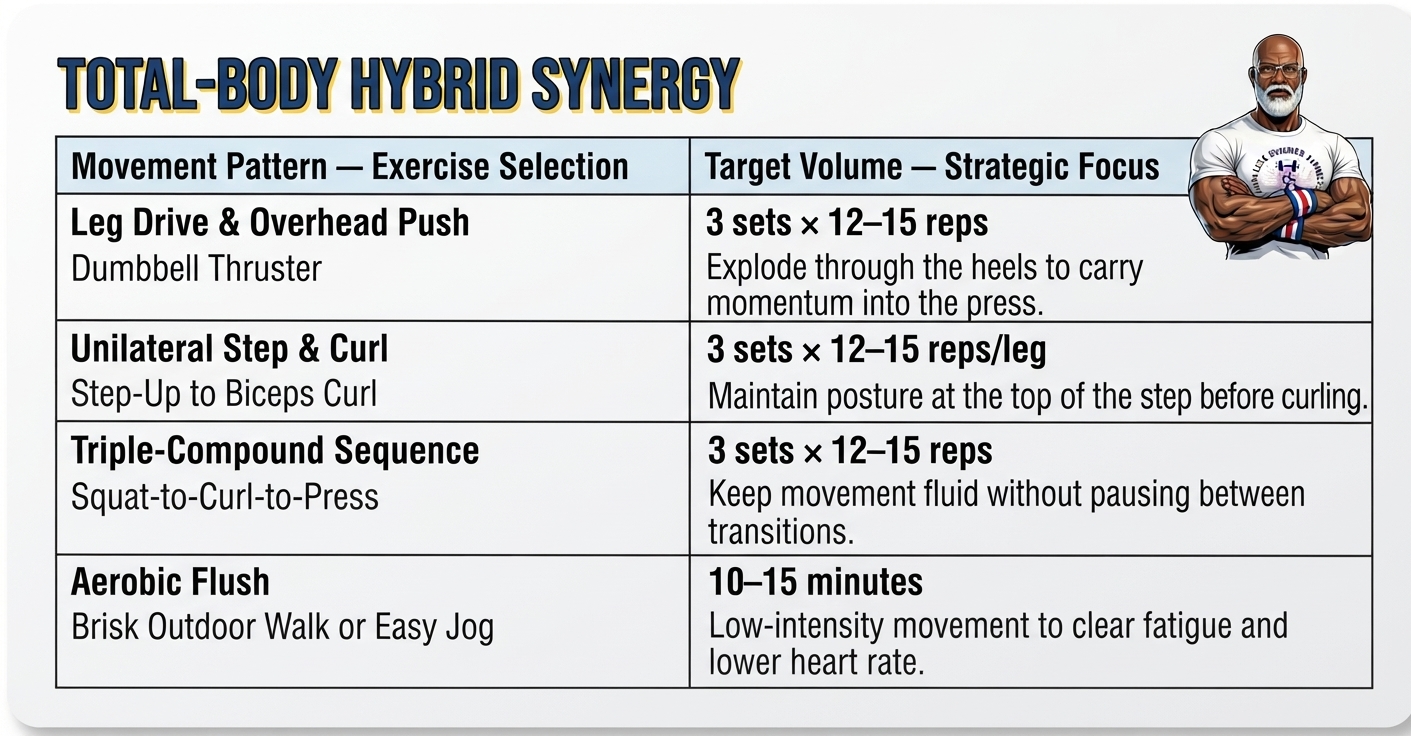
The Total-Body Hybrid Synergy
Designed to hit every major movement pattern- pull, squat, and carry in one smooth, high-efficiency sequence.
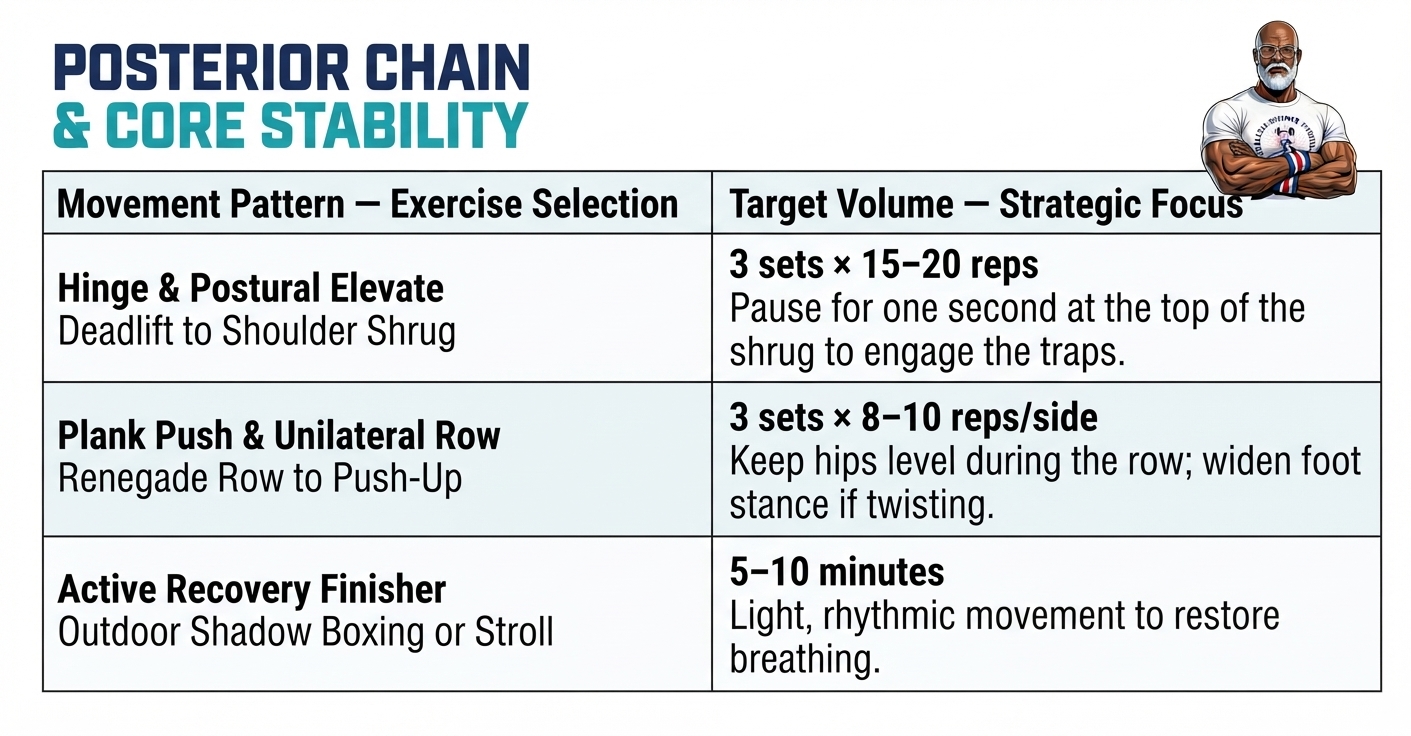
Posterior Chain & Core Stability
This sequence targets the entire backside of the body glutes, hamstrings, upper back, and shoulders—while challenging core rotational stability.
Weekly Game Plan for Active Adults
Integrate these hybrid movements into a balanced weekly structure that prioritizes recovery and steady momentum:
- Monday: Full-Body Hybrid Flow (Card 1)
- Tuesday: Active Recovery — Light Stretches & Easy Outdoor Strolls
- Wednesday: Core & Posterior Hybrid Circuit (Card 2)
- Thursday: Low-Impact Cardio (30 Mins Bike Riding or Power Walking)
- Friday: Full-Body Hybrid Flow (Card 1)
- Saturday: Fun Functional Movement — Outdoor Games, Swimming, or Hiking
- Sunday: Total Rest & Unwinding
Medical Disclaimer: This article is for educational and informational purposes only and does not constitute medical advice. Always consult a physician or certified fitness professional before beginning a new exercise program, especially if you have pre-existing conditions.
If you believe in something, never give up! 12 months can change your life!
Peer-Reviewed Evidence & References
- Functional Multi-Joint Training in Older Adults
- Study: Multi-Joint vs. Single-Joint Resistance Training in Older Adults
- Journal: Journal of Human Kinetics / PubMed Central
- Key Finding: Multi-joint exercise protocols lead to significantly greater improvements in functional mobility, dynamic balance, and overall muscle quality compared to single-joint isolation routines.
- Reference Link: NCBI PMC Article PMC12092270
- Metabolic Demand of Compound Exercise
- Study: Energy Expenditure and Cardiovascular Responses to Complex Movement Sequences
- Journal: Sports Medicine / PubMed Central
- Key Finding: Linking compound exercises into continuous sequences increases acute metabolic rate and oxygen consumption while placing lower mechanical stress on individual joints.
- Reference Link: NCBI PMC Article PMC5772850
- Resistance Training for Healthy Aging
- Study: Resistance Training for Resistance to Aging
- Journal: Frontiers in Physiology / PubMed Central
- Key Finding: Regular resistance training emphasizing full-body movement patterns preserves motor unit integrity, reduces fall risk, and supports long-term independence in active adults over 40.
- Reference Link: NCBI PMC Article PMC10794975