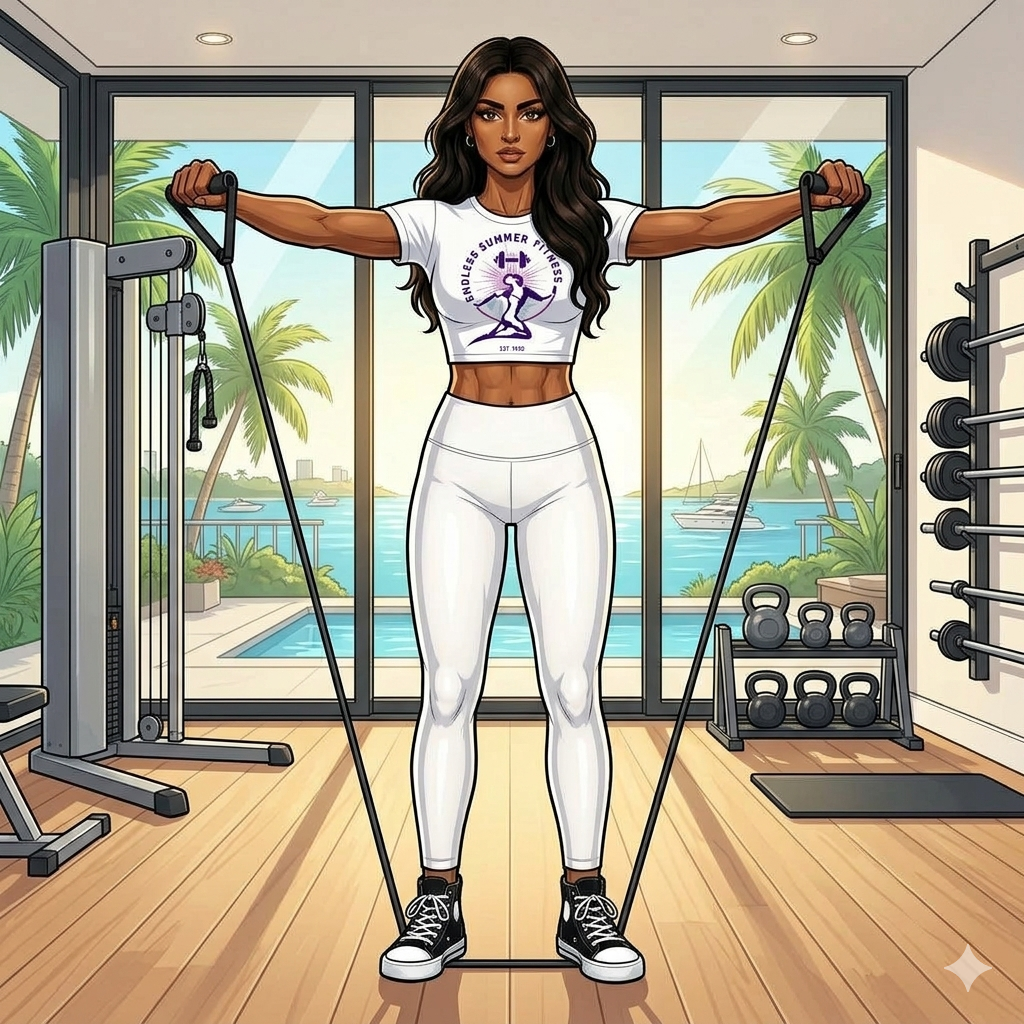
Low-impact upper body strength training is one of the most effective ways to build muscle, improve posture, and enhance daily functioning without stressing your joints. This guide breaks down five dynamic exercises and everything you need to know to get stronger safely—especially if you’re new to fitness, returning after a break, or managing shoulder or elbow sensitivity.
Low-impact upper-body strength training for beginners is one of the most effective ways to build muscle, improve posture, and enhance daily functioning without stressing your joints. This guide breaks down everything you need to know to get stronger safely—especially if you’re new to fitness, returning after a break, or managing shoulder or elbow sensitivity.
Why Low-Impact Upper Body Strength Training Matters for Beginners
Low-impact upper-body strength training for beginners is more than a gentle workout style—it’s a smart, sustainable way to build muscle without irritating your shoulders and elbows. Many people avoid upper-body training because they fear pain or think they need heavy weights. In reality, low-impact strength work can help you tone your arms, improve posture, stabilize your shoulders, and boost everyday performance.
This approach blends hybrid fitness principles: strength, mobility, endurance, and longevity. It’s ideal for busy professionals, over-40 athletes, and anyone who wants to feel strong without beating up their joints.
Front Deltoid Raise with Resistance Band
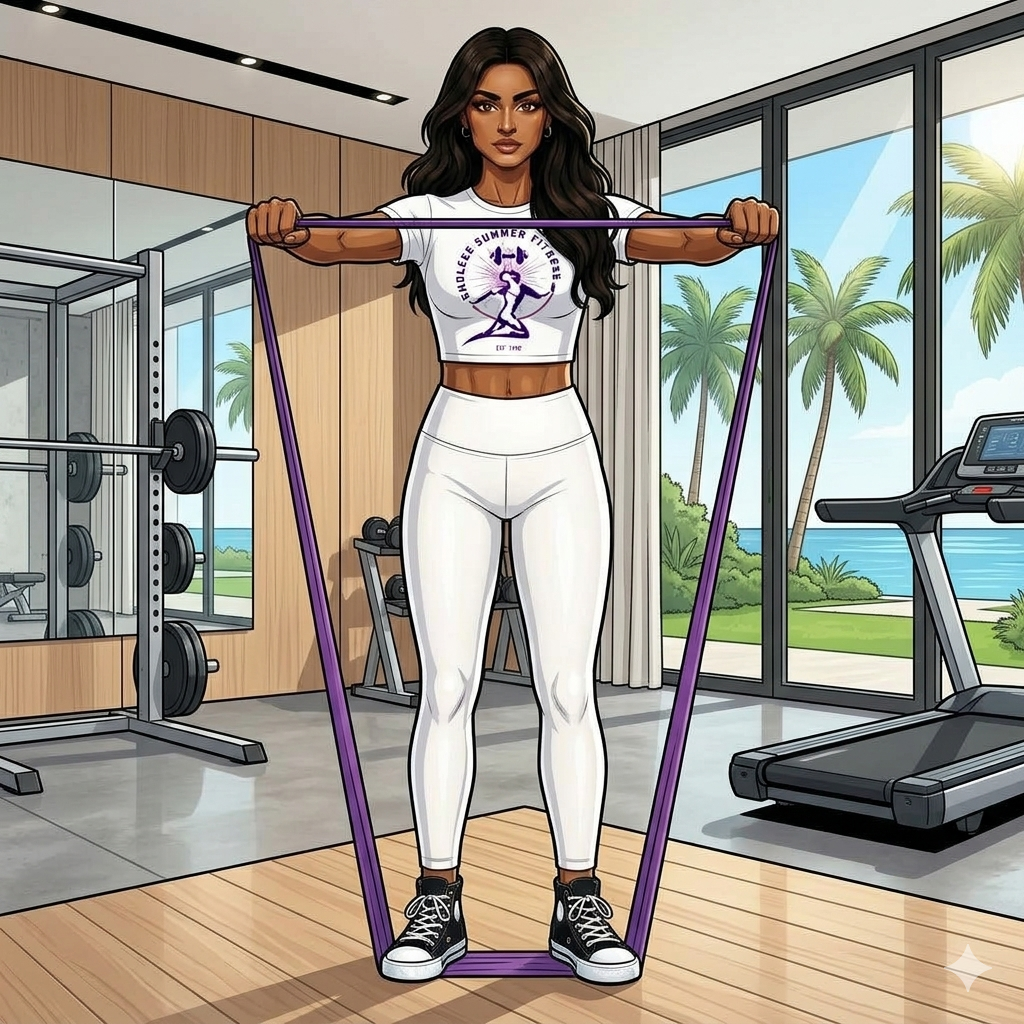
• How to Do It: Stand tall with your feet hip-width apart and the resistance band anchored securely under both feet, then lift your arms straight forward to shoulder height in a slow, controlled motion, before lowering them back down with tension.
• Muscles Worked: This exercise primarily targets the anterior deltoids with secondary activation of the upper traps, serratus anterior, and core stabilizers.
What Is Low‑Impact Upper Body Strength Training for Beginners?
Low-impact upper-body strength training for beginners focuses on controlled movements that build muscle without compressive forces or high-velocity strain. Instead of heavy loads or explosive reps, you use:
- Light dumbbells
- Resistance bands
- Bodyweight
- Slow tempo
- High-quality form
- Mobility-focused strength
This style is perfect for people who want results without soreness or risk.
Who Should Use Joint‑Friendly Upper Body Exercises at Home?
Joint-friendly upper body exercises at home are ideal for:
- Beginners learning proper form
- People with shoulder, elbow, or wrist sensitivity
- Busy professionals who need fast, efficient workouts
- Over-40 athletes prioritizing longevity
- Anyone recovering from inactivity
- Hybrid-fitness enthusiasts balancing strength + mobility
Because these movements are low-impact, they’re accessible and safe for nearly every fitness level.
Overhead Press with Band Anchored Under Feet)
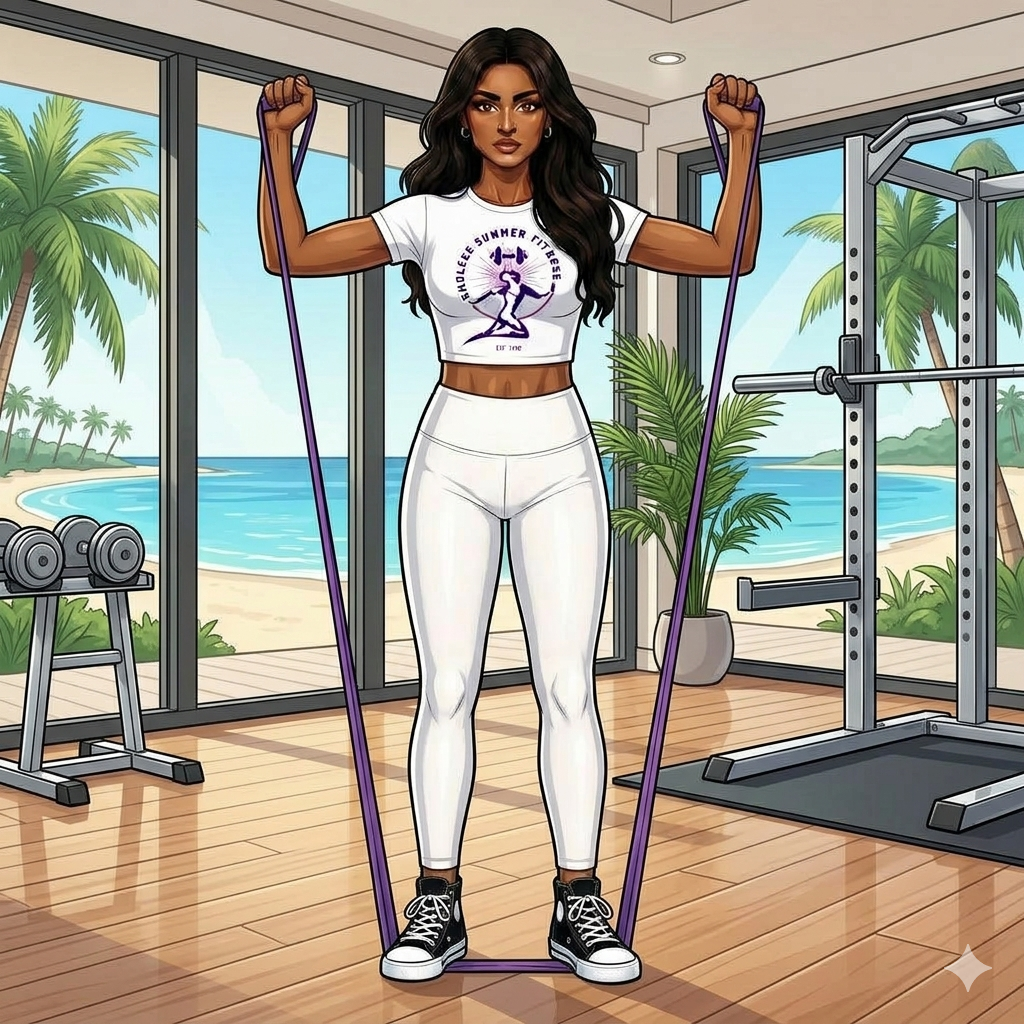
• How to Do It: Stand tall with your feet hip-width apart and the resistance band anchored securely under both feet, then press both handles straight overhead in a smooth, controlled motion while keeping your ribs stacked and shoulders down. Lower the handles slowly back to shoulder height without shrugging, maintaining steady tension through the entire range.
• Muscles Worked: This exercise primarily targets the anterior and medial deltoids, with secondary activation of the triceps, upper traps, and core stabilizers.
What Are the Benefits of Low‑Impact Upper Body Strength Training?
Q: Does low‑impact training still build muscle?
Yes—research from the NSCA shows that controlled tempo and moderate loads can stimulate hypertrophy effectively when performed near fatigue.
Q: Does it improve posture and mobility?
Absolutely. According to the ACSM, strengthening the upper back and shoulders reduces postural strain and improves daily movement quality.
Q: Is it safer for beginners?
Yes. Low-impact training reduces joint stress while still challenging the muscles.
Q: Can it help with longevity?
Definitely. Consistent strength training is linked to better metabolic health, bone density, and functional independence.
What Equipment Do You Need for Joint‑Friendly Upper Body Exercises at Home?
You only need a few simple tools:
- Light dumbbells (5-15 lbs)
- Resistance bands
- A chair or bench
- A mat
- Optional: kettlebell, mini-band, or water bottles
Minimal equipment keeps the workout accessible and low-impact.
What Are the Best Low‑Impact Upper Body Strength Exercises for Beginners?
Below are the top movements for safe, effective strength building.
1. Banded Chest Press (Joint‑Friendly)
Why it works: Strengthens chest and triceps without shoulder strain.
How to do it: Sit tall, anchor the band behind you, and press forward with control.
2. Seated Row with Band
Why it works: Builds posture, back strength, and shoulder stability.
How to do it: Loop the band around your feet and pull toward your ribs.
3. Dumbbell Hammer Curl
Why it works: Neutral grip reduces wrist stress.
How to do it: Keep elbows close and curl slowly,
4. Overhead Band Press
Why it works: Strengthens shoulders with minimal compression.
How to do it: Press overhead while keeping ribs down.
5. Triceps Kickback
Why it works: Isolates the triceps without putting strain on the elbows.
How to do it: Hinge slightly and extend the arm behind you.
How Do You Build a Low‑Impact Upper Body Routine at Home?
Q: How many days per week?
2-3 days is ideal for beginners.
Q: How long should each session be?
15-25 minutes is enough for meaningful progress.
Q: How many sets and reps?
- 12–15 reps for endurance
- 8–12 reps for strength
- 3–4 sets per exercise
Q: How do you progress safely?
Increase reps, slow the tempo, or add light resistance.
The ESF Progression Matrix (Beginner → Elite)
This is your signature ESF ladder—hybrid fitness, scalable, and joint-friendly.
BEGINNER
Definition: New to strength training, learning form, building foundational mobility.
Characteristics: Light loads, slow tempo, simple patterns.
Routine (3 sets each)
- Seated Band Chest Press — 12–15 reps
- Seated Row with Band — 12–15 reps
- Hammer Curls — 12–15 reps
- Overhead Band Press — 10–12 reps
- Dead Bug — 10 reps/side
Muscles Worked: Chest, back, shoulders, biceps, core
Stabilizers: Rotator cuff, scapular stabilizers, deep core
INTERMEDIATE
Definition: Comfortable with form, ready for more resistance.
Characteristics: Moderate loads, added volume.
Routine (3–4 sets)
- Dumbbell Chest Press — 10–12 reps
- Banded Lat Row — 12 reps
- Alternating Hammer Curl — 12 reps/side
- Seated Arnold Press — 10 reps
- Plank Shoulder Taps — 10 reps/side
ADVANCED
Definition: Strong movement patterns, ready for hybrid conditioning..
Characteristics: Higher intensity, more complex patterns.
Routine (4 sets)
- Kettlebell Floor Press — 8–10 reps
- Single‑Arm Band Row — 10 reps/side
- Z‑Press with Dumbbells — 8–10 reps
- Triceps Band Pressdown — 12–15 reps
- Bear Crawl Hold — 20–30 seconds
ELITE
Definition: High-level hybrid athlete, excellent control and stability.
Characteristics: Strength + mobility + endurance blend.
Routine (4 sets)
- Push‑Up to Down Dog Flow — 8–10 reps
- Single‑Arm Kettlebell Row — 8 reps/side
- Half‑Kneeling Press — 8–10 reps
- Banded Face Pull — 12–15 reps
- Hollow Hold — 20–40 seconds
How Do You Avoid Shoulder Strain During Low‑Impact Upper Body Strength Training?
Q: What’s the #1 rule?
Keep your shoulders down and back—avoid shrugging.
Q: Should beginners avoid overhead lifts?
Not necessarily. Use bands first to build stability.
Q: Does mobility matter?
Yes. According to NASM, shoulder mobility reduces injury risk and improves strength output.
Peer‑Reviewed Sources
- ACSM—Medicine & Science in Sports & Exercise
- NSCA—Journal of Strength and Conditioning Research
- NASM—Optimum Performance Training Model
Summary
Low-impact upper-body strength training for beginners is one of the safest and most effective ways to build muscle without causing strain. It supports hybrid fitness by blending strength, mobility, and endurance into a sustainable routine. These movements help you tone your arms, stabilize your shoulders, and improve posture—all while protecting your joints.
Joint-friendly upper-body exercises at home make training accessible to busy professionals and over-40 athletes. With minimal equipment and smart progressions, you can build real strength without pain.
This approach supports longevity, confidence, and daily functionality—the core of the ESF philosophy.
FAQs
Can beginners build muscle with low-impact training?
Yes—controlled tempo and moderate resistance stimulate hypertrophy.
How long until I see results?
Most beginners notice strength improvements within 3-4 weeks.
Are resistance bands enough for upper-body strength?
Absolutely. Bands provide joint-friendly tension and excellent muscle activation.
Can I do these exercises with shoulder pain?
Yes, but avoid sharp pain and modify as needed.
How often should I train?
2-3 sessions per week are ideal for beginners.
Do I need heavy weights?
No. Low-impact strength relies on control, not load.
Medical Disclaimer: This article is for educational and informational purposes only and does not constitute medical advice. Always consult a physician or certified fitness professional before beginning a new exercise program, especially if you have pre-existing conditions.