

Hip mobility after 40 is one of the first things people lose—usually without even noticing. Sitting, stress, old injuries, and repetitive movement patterns all contribute to stiffness and restricted range of motion. The good news is that you can rebuild your mobility at any age with the right daily routine, and this guide shows you exactly how.
The Daily Routine
Hip mobility is one of the first things people lose after 40—usually without noticing. Sitting, stress, old injuries, and tight hips all add up until simple movements start to feel stiff or restricted. The good news: you can rebuild hip mobility at any age with the right daily routine. This guide breaks down exactly what’s happening to your hips after 40, along with simple, science-backed steps to get them moving again.
What Happens to Hip Mobility After 40?
As we move through our 40s, our hips naturally lose access to their full range of motion—not because we’re “getting old” but because modern life keeps us sitting, slouching, and moving in tiny, repetitive patterns.
Why does hip mobility decline?
When the hip joint stiffens, the body cheats. Your knees, ankles, and lower back start doing jobs they were never designed to do. Over time, this compensation pattern can lead to back pain, knee irritation, tight hamstrings, and even shoulder or neck issues.
Is this normal?
Yes—but it’s not permanent. Research shows that mobility loss is strongly tied to lifestyle, not age. With consistent mobility work, you can restore range of motion and reduce pain.
Why does this matter for life after 40?
Because hip mobility is the foundation to everything walking, lifting, bending, playing with your kids or dog, carrying groceries, training in the gym, and staying active in your 60s, 70s, and beyond.
What Problems Can Tight Hips Cause?
Injuries are linked to low mobility.
Limited hip mobility can contribute to:
- back pain
- knee pain
- neck tension
- muscle strains
- decreased muscle activation (which slows strength gains)
- reduced balance and stability
- increased risk of falls as we age
Why does the body compensate?
When the hip joint can’t move, other joints overwork. For example:
- Tight hips → lower back overarches
- Limited rotations → knees collapse inward
- Poor hip extension → hamstrings and low back take over
Can mobility training really fix this?
Yes. Mobility training strengthens the joint at its end ranges—the places where we’re weakest—and teaches the nervous system to trust those positions again.
What’s the Best Daily Hip Mobility Routine After 40?
Ideally 5+ days per week. But even 5-7 minutes a day creates measurable change.
What makes this routine different?
It blends:
- joint-specific mobility
- controlled end-range strength
- breath-driven movement
- hybrid fitness principles (strength + mobility /- stability)
Below is the 5-move routine inspired by Endless Summer Fitness hybrid programs.
The 5-Move Hip Mobility Routine Everyone Over 40 Should Do
Move 1—Segmented Cat-Cow (Spine + Hip Prep)
Why this move?
Your hips can’t move well if your spine is locked up. This resets your entire chain.
How to Do It
- Start on all fours, feet relaxed, hands under shoulders.
- Cat: Tuck your tailbone, round your spine, and let your head drop.
- Segment: Try to move one vertebra at a time.
- Cow: Drop your belly, lift your chest, and gently look forward.
- Repeat 5 slow cycles, breathing deeply.
Move 2—Around-the-World Side Bends (Lateral Hip + Spine)
Why this move?
It opens the side body, improves hip rotation, and wakes up neglected stabilizers.
How to Do It
- Stand tall with knees slightly bent.
- Reach your arms overhead.
- Lean left, squeezing the left side of the body.
- Sweep slowly to the right until you’re in a right-side bend.
- Perform 5 slow reps in each direction.
Move 3—Reverse Snow Angels 9Shoulders + Thoracic + Hip Chain)
Why this move?
Tight upper-back muscles can restrict hip movement. This connects the whole chain.
How to Do It
- Stand with feet shoulder-width apart.
- Hinge forward until your torso is parallel to the ground.
- With palms facing up, sweep your arms behind you like a snow angel.
- Flip palms down, squeeze the shoulder blades, then return to the start.
- Perform 5 reps.
Move 4—Hip Flow (Adductors + Hip Capsule)
Why this move?
This is the secret sauce for restoring deep hip mobility and reducing low-back compensation.
How to Do It
- Start on all fours.
- Extend one leg straight out to the side, heel pressing into the floor.
- Keep the inner thigh engaged as you shift your hips back.
- Stop before your spine arches or twists.
- Hold 5 seconds, return.
- Perform 10 reps per side.
Move 5—Hamstring End-Range Isometric (Posterior Chain Strength)
Why this move?
Strength at end range = mobility that sticks. This is where most adults over 40 are weakest.
How to Do It
- Start in a half-kneeling position with your front leg straight.
- Hinge forward until you feel a deep hamstring stretch.
- Press your heel into the ground for 10 seconds (hamstring contraction).
- Then try to lift your heel off the ground for 10 seconds (quad contraction).
- Switch slides and repeat 3 rounds per leg.
What If My Mobility is Limited?
Here are chair-based options for anyone experiencing pain, stiffness, or a limited range of motion.
Easy Chair Exercises for Limited Mobility
Seated Hip Marches
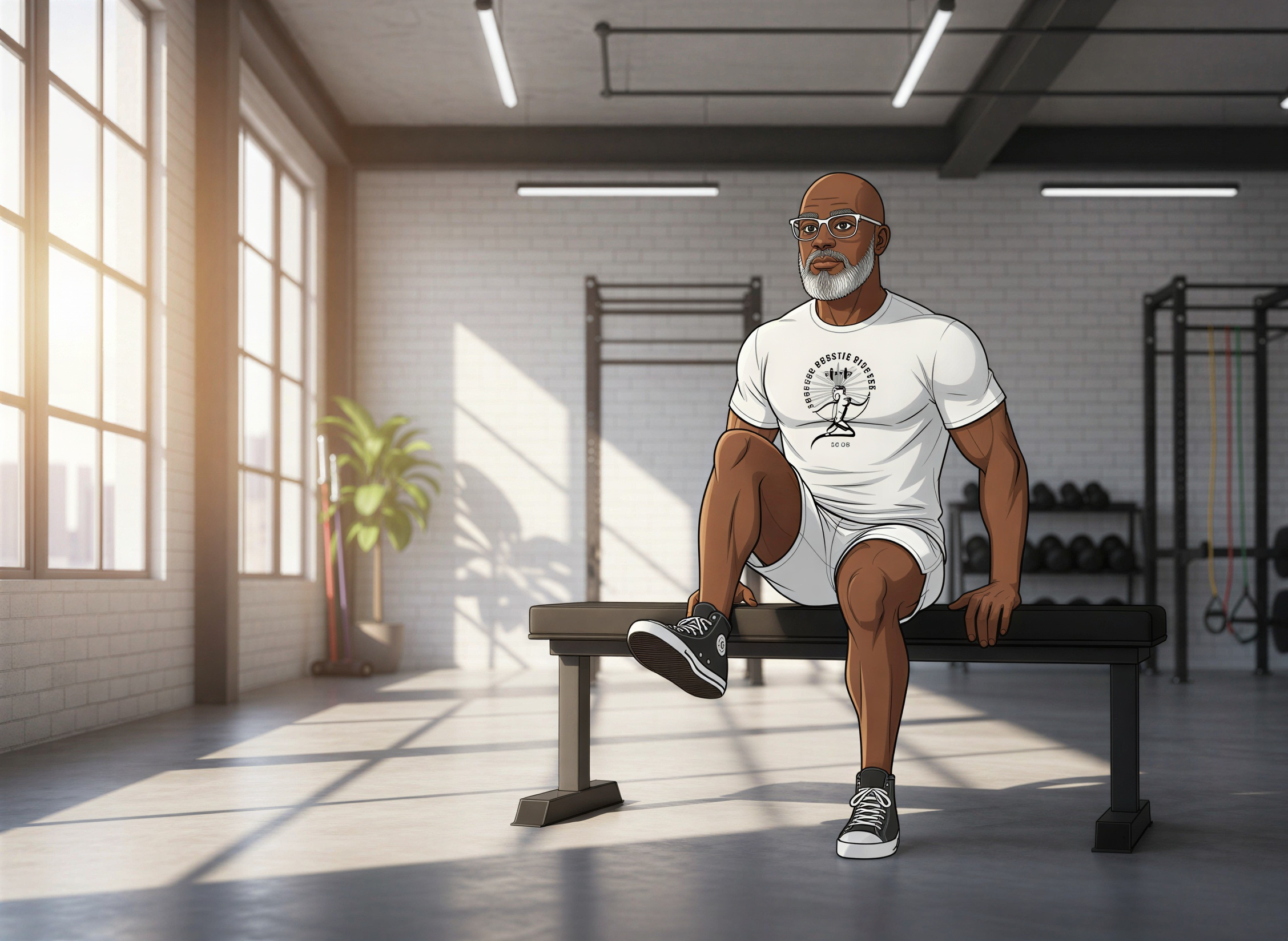
- Sit tall, feel flat.
- Lift one knee toward your chest without leaning back.
- Lower with control.
- Perform 10-15 reps per side.
Seated Figure-4 Stretch
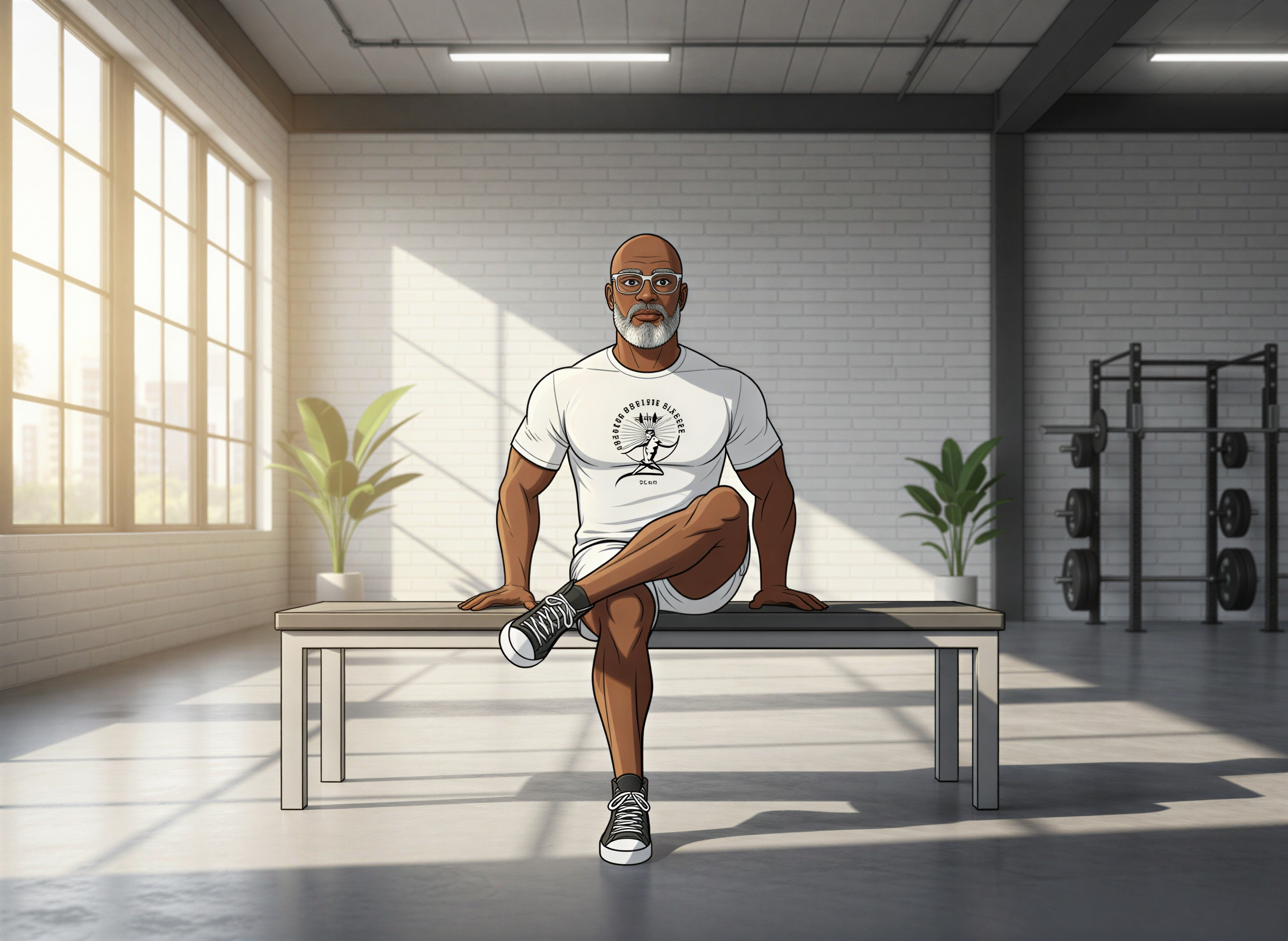
- Cross one ankle over the opposite knee.
- Sit tall and gently lean forward.
- Hold 20-30 seconds per side
Seated Pelvic Tilts
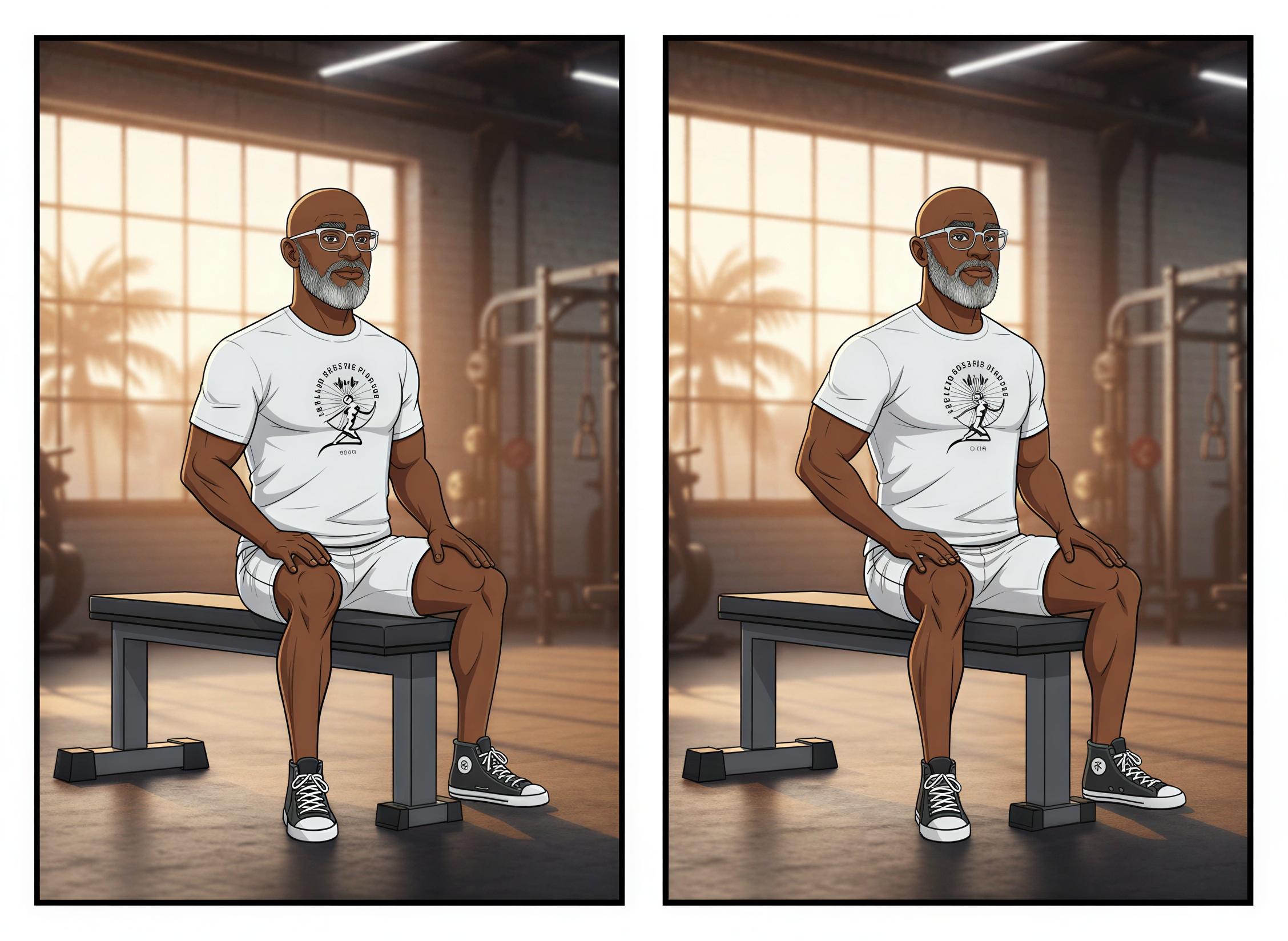
- Sit at the edge of the chair.
- Gently arch your lower back, then round it.
- Move slowly for 10-12 reps.
Seated Hip Internal Rotation
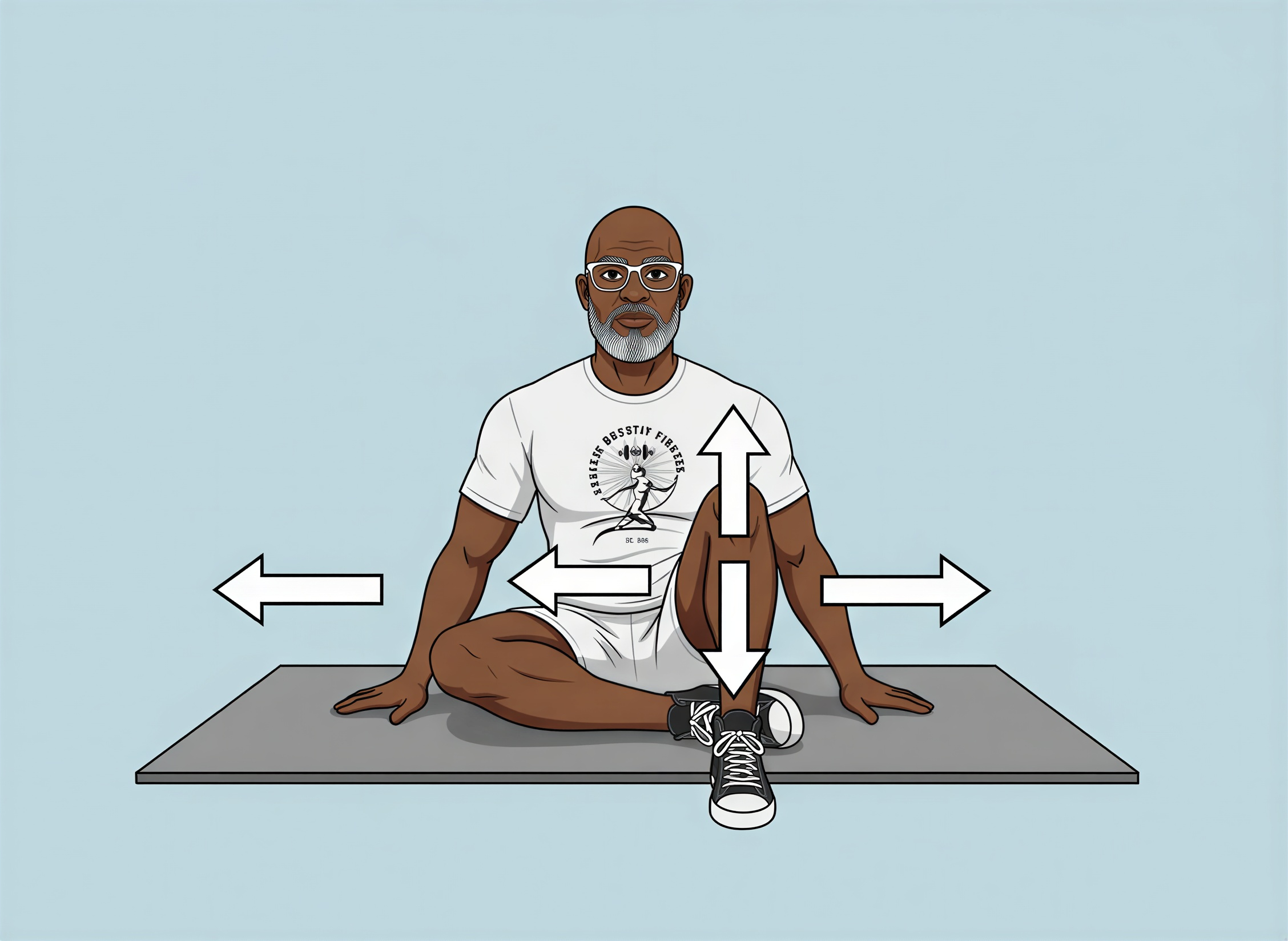
- Sit tall, knees bent at 90°.
- Let one knee fall inward while keeping your foot planted.
- Return to the center.
- Perform 10 reps per side.
What Results Can You Expect From Daily Hip Mobility?
What are the benefits?
- reduced injury risk
- improved range of motion
- better muscle activation
- less stiffness during daily activities
- stronger, more stable hips
- improve posture and balance
- easier strength training sessions
How long until I feel a difference?
Many people feel relief in 1-2 sessions, but lasting change comes from consistency.
Should You Talk to a Doctor First?
If you’re new to exercise, have chronic pain, or have a history of joint injuries, check in with a doctor or physical therapist. They can help you modify movement and build confidence.
Final Takeaway
What’s the big picture?
Hip mobility isn’t optional after 40—it’s the foundation of staying active, strong and pain-free for decades. A few minutes a day can completely change how your body feels and moves.
Summary
Improving hip mobility after 40 isn’t complicated—it’s consistency. Daily movement, not intensity, is what restores range of motion, reduces stiffness, and keeps your hips feeling strong and young. A simple routine of controlled mobility drills, light activations, work, and smart stretching can undo years of tightness in just a few minutes a day. Stick with it, keep the movements clean, and your hips will reward you with better strength, better posture, and better workouts across the board.
Medical Disclaimer: This article is for educational and informational purposes only and does not constitute medical advice. Always consult a physician or certified fitness professional before beginning a new exercise program, especially if you have pre-existing conditions.