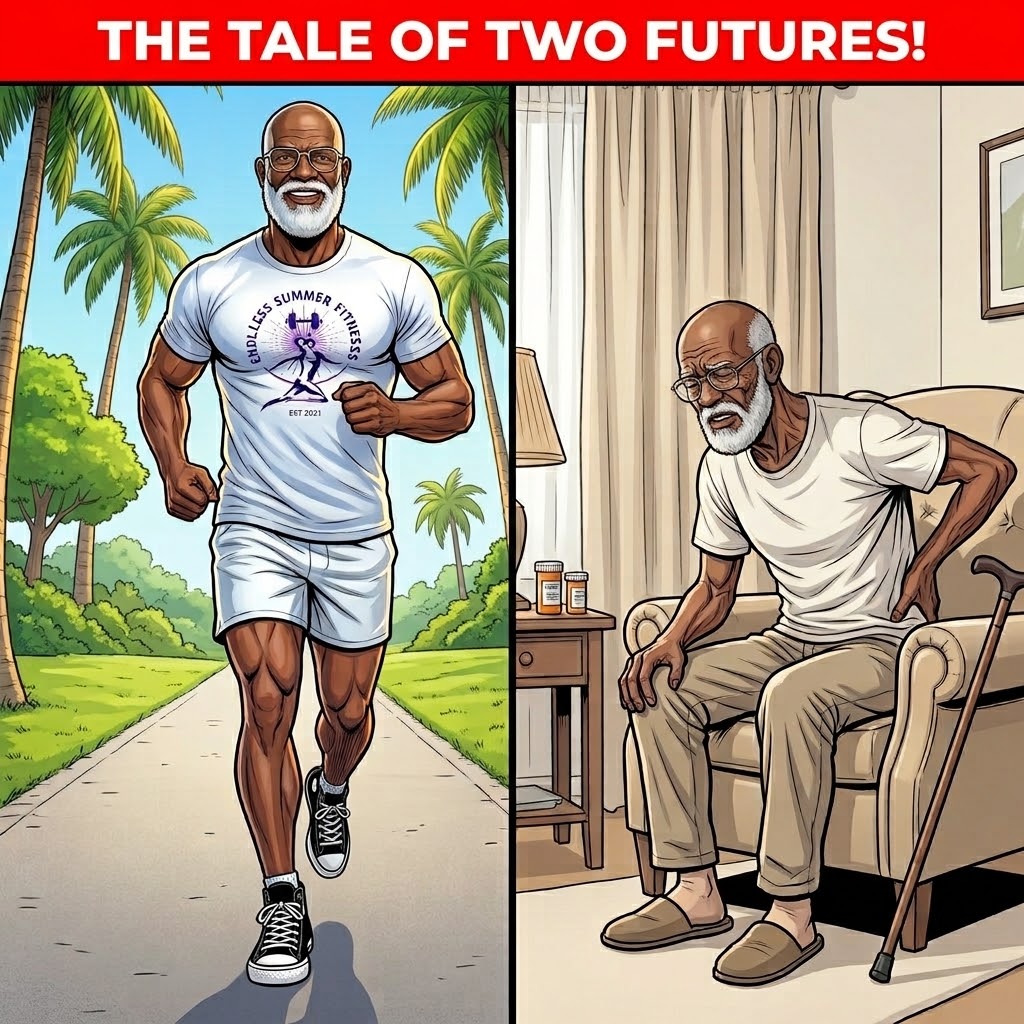
Two futures exist for your 40, 50, 60s, 70s, and 80s. In one, you run, hike, play with family, and wake up pain-free. In the other, your joint health deteriorates, your back aches, and basic movement feels restrictive. Luck does not determine which path you take. Muscle mass does.
Other Important ESF Articles
- Read next: Mobility for Runners: 5 Exercises to Prevent Leg Injuries
- Also read: 30 Day Challenge: 5 Quick Routines for Busy Pros
Muscle Is the Primary Currency for Healthy Aging
Muscle tissue does far more than move weight. It acts as a primary metabolic sink that regulates blood sugar, suppresses systemic inflammation, and absorbs mechanical stress to protect fragile joints. Rapid neural signaling in strong muscle fibers protects against sudden slips and falls.
Loss of active tissue forces your joints to absorb forces they were never designed to handle. At Endless Summer Fitness, our methodology centers on protecting this metabolic bank account through intelligent movement.
What Happens to Your Body After Age 40
Age-related muscle loss, or sarcopenia, begins in your 40s at a rate of roughly one percent per year. Sedentary habits accelerate this drop. Physical decline rarely occurs in a smooth slope. It drops in sharp steps following periods of sitting, illness, or physical inactivity.
Women facing perimenopause or post-menopause experience accelerated bone and muscle loss due to declining estrogen levels. A 2024 meta-analysis in Frontiers in Physiology confirms that structured resistance training stands as the single most effective non-pharmacological strategy for preserving muscle function in aging women.
The body responds quickly when given the proper stimulus. A 2025 study in BMC Public Health demonstrated that a 12-week structured resistance protocol eliminated sarcopenia in 35% of affected participants.
The 5 Movements for Long-Term Physical Capability
1. The Cossack Squat
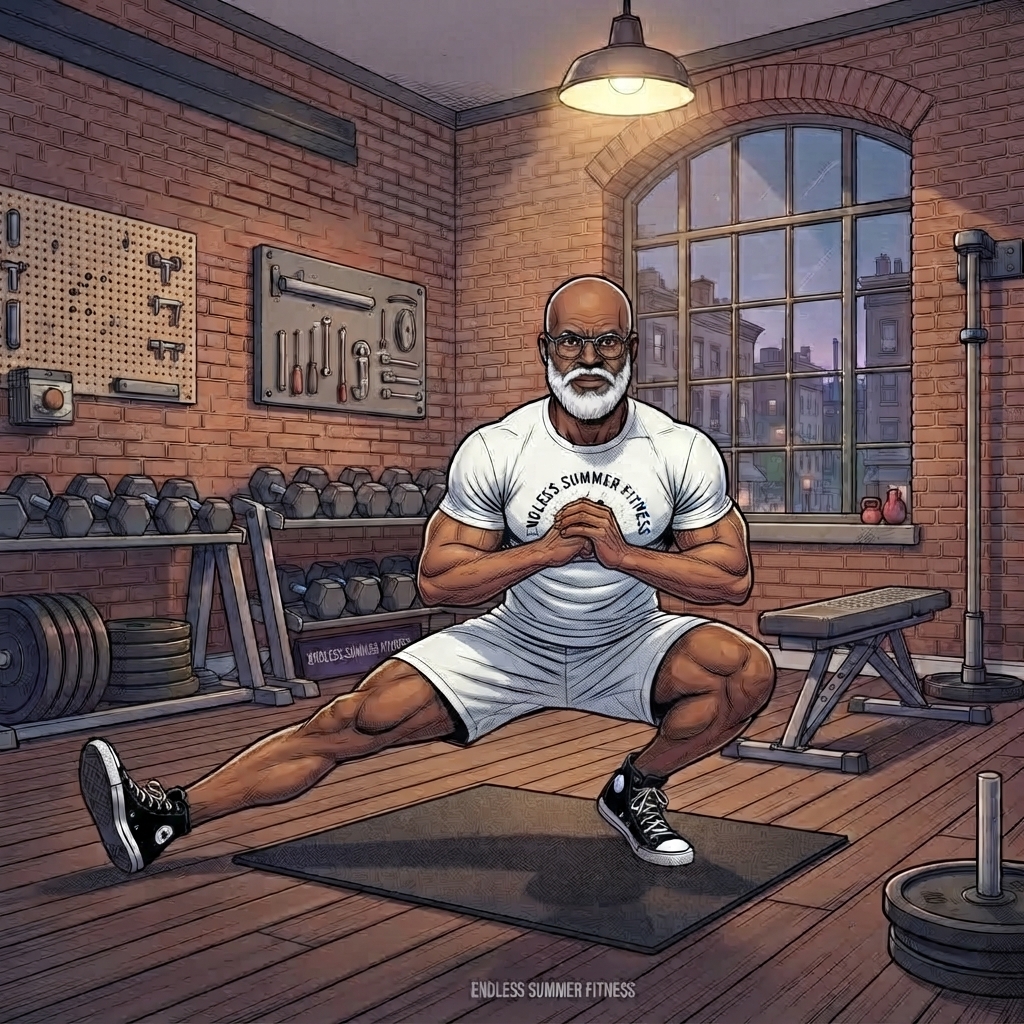
Standard gym routines operate entirely in a forward plane. Life demands lateral strength. The Cossack squat trains the hips and adductors through a deep, side-to-side range of motion that standard squat variations miss.
Execution: Stand with a wide stance, feet pointing forward. Shift your bodyweight smoothly onto your left leg, bending your left knee while keeping your right leg completely straight with the heel anchored. Lower your hips as deep as your mobility allows while keeping your chest upright. Drive through your left mid-foot to return to the starting position. Repeat on the opposite side.
Coaching Tip: Maintain a controlled 3-second lowering phase. Use a doorframe or suspension trainer for assistance if hip tightness limits your initial depth.
2. The Suitcase Deadlift
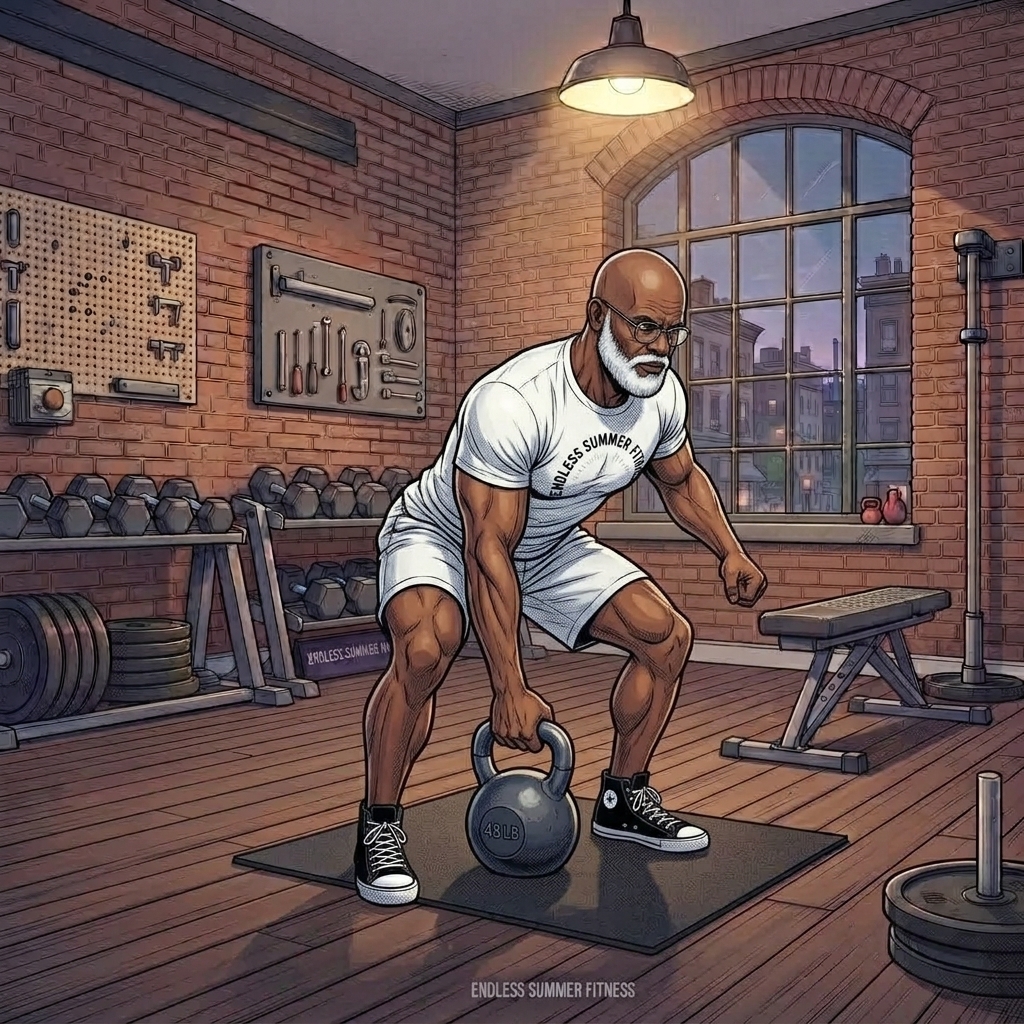
The suitcase deadlift places a load on one side of your body, forcing your core to resist lateral bending. This anti-lateral flexion demand strengthens the obliques, quadratus lumborum, and deep spinal stabilizers.
Execution: Place a dumbbell or kettlebell on the floor beside your right foot. Stand tall, hinge at your hips, and grip the handle. Brace your abdominal wall hard and stand straight up without letting your torso lean toward the weight. Lower the weight under complete control using a strict 3-second lowering tempo before starting the next rep.
Coaching Tip: Keep your shoulders perfectly level throughout the entire motion. Do not allow the load to drag your spine sideways.
3. The Half-Kneeling Angled Dumbbell Press
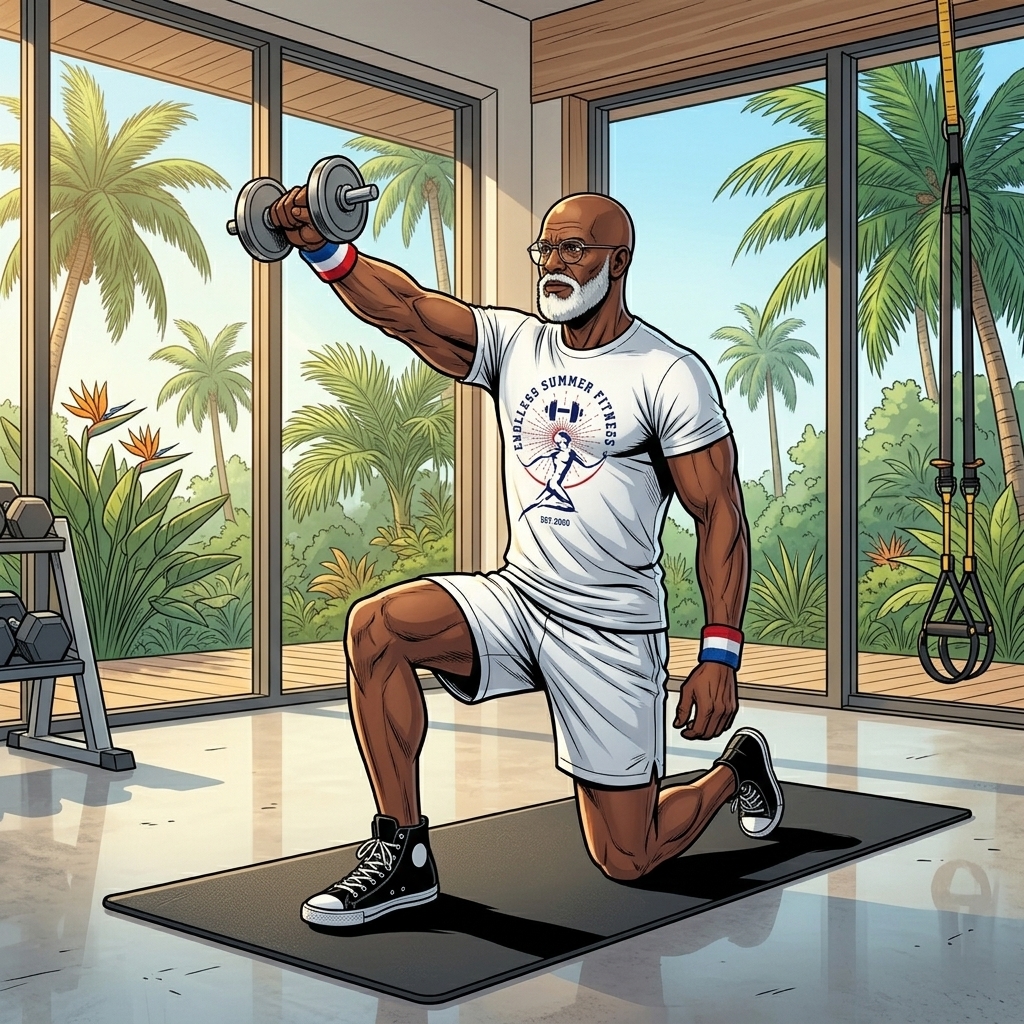
Pressing straight overhead can cause joint impingement in tight shoulders. Holding a single dumbbell at a slight forward angle moves the load along a forward diagonal arc, aligning with the natural plane of the shoulder blade to protect the joint.
Execution: Kneel on your right knee with your left foot flat on the floor in front of you. Hold a dumbbell in your right hand at shoulder height, tilting your torso forward roughly 15 degrees. Brace your glutes and core, then press the dumbbell upward and forward along a diagonal path to full arm extension. Lower the weight slowly under tension for 3 seconds back to shoulder height.
Coaching Tip: Do not arch your lower back to complete the press. Keep your ribcage down, maintain the subtle forward angle, and generate tension directly from the shoulders and upper chest.
4. The Dumbbell RDL-to-Row
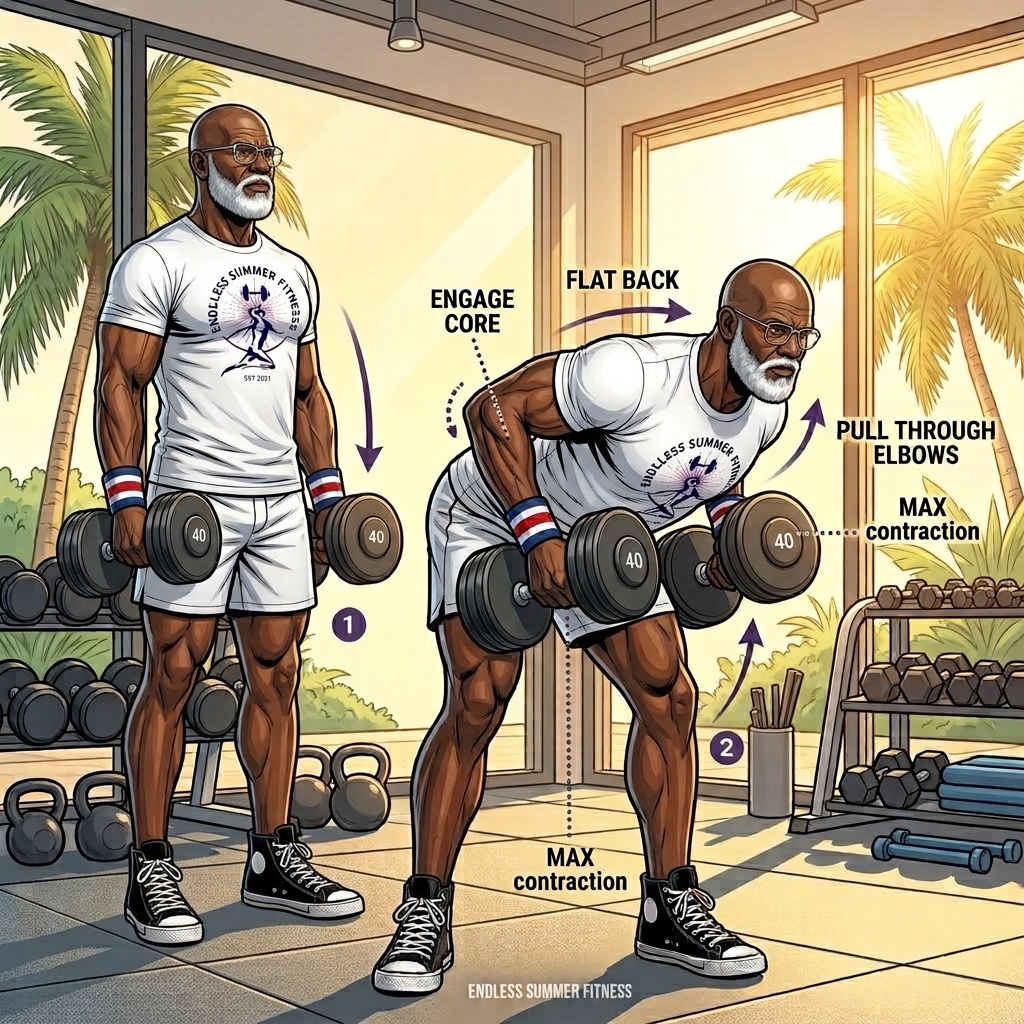
This combination pattern pairs a posterior chain hip hinge with a horizontal pull, targeting the hamstrings, glutes, lats, and upper back in a single movement sequence.
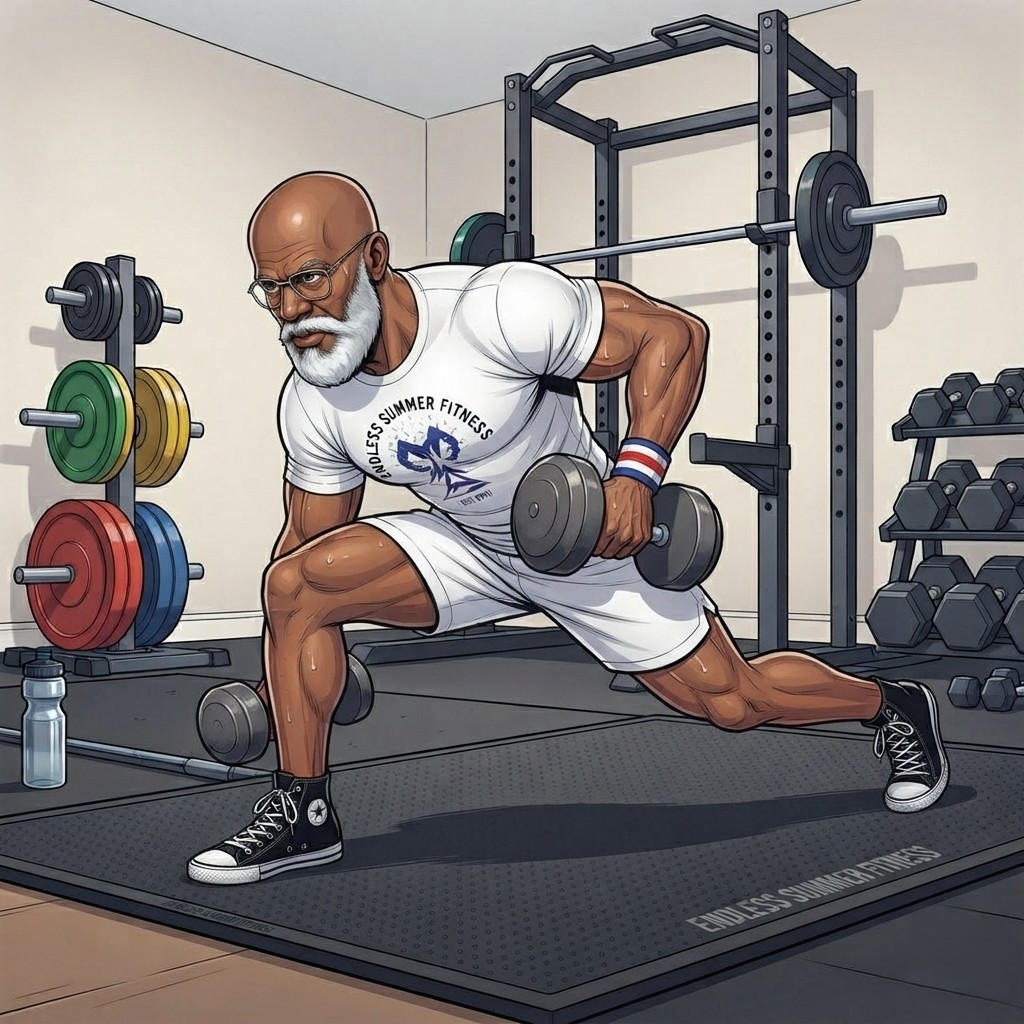
Execution: Hold a dumbbell in each hand with your feet hip-width apart. Soften your knees and hinge at your hips, sending your pelvis backward until your torso is near parallel to the floor. Hold this lower position firmly, then pull your elbows straight back past your ribs to row the weights. Lower the dumbbells smoothly, then drive your hips forward to stand tall.
Coaching Tip: Focus on high-volume continuous tension. Never rush the row phase; pause for one second at peak contraction.
5. The Lateral Lunge to Knee Drive
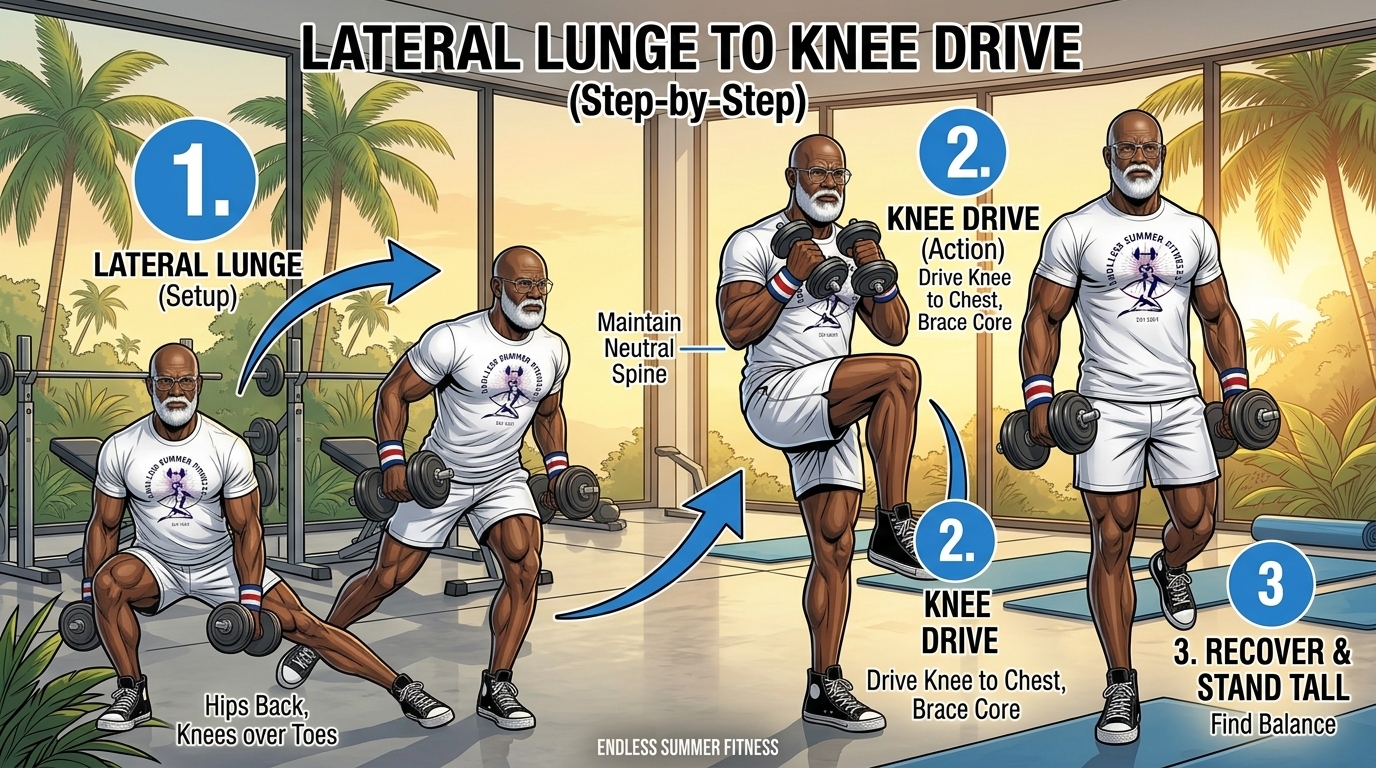
Moving in the frontal plane strengthens the gluteus medius and adductors, protecting your knees and improving lateral balance.
Execution: Stand tall with your feet together. Take a wide step out to your right, bend your right knee, and sit your hips back while keeping your left leg straight. Push off your right foot forcefully to stand back up, driving your right knee high up toward your chest in a single fluid movement. Pause briefly on one leg before stepping out again.
Coaching Tip: Control your landing and explosion. Focus on driving through the mid-foot to generate smooth single-leg stability.
Programming Without Overwhelm
Train two to three days per week. Perform full-body sessions lasting 35 to 40 minutes.
Begin with a dynamic warm-up featuring hip circles, leg swings, and arm circles to prepare connective tissue. Select four exercises, perform three high-volume sets per movement with a strict 3-second lowering phase, and rest 60 to 90 seconds between sets. Finish with static stretching for your hip flexors and upper back.
Continuous muscular tension and strict form drive adaptations without damaging your joints. Show up, execute controlled reps, and let recovery complete the process.
Medical Disclaimer: This article is for educational and informational purposes only and does not constitute medical advice. Always consult a physician or qualified healthcare professional before starting a new exercise program, especially if you have pre-existing medical conditions or joint limitations.
Key Research and Evidence
- Pereira, A., et al. (2025). “Impact of resistance training on sarcopenia reduction.” BMC Public Health. https://pubmed.ncbi.nlm.nih.gov/
- Volpi, E., et al. (2004). “Muscle tissue changes with aging.” The American Journal of Clinical Nutrition. https://academic.oup.com/ajcn
- Frontiers in Physiology (2024). “Meta-analysis on resistance training and muscle preservation in aging women.” https://www.frontiersin.org/journals/physiology
- SuperAge Research (2025). “Muscular adaptation and strength gains in older adults.” https://www.superage.com