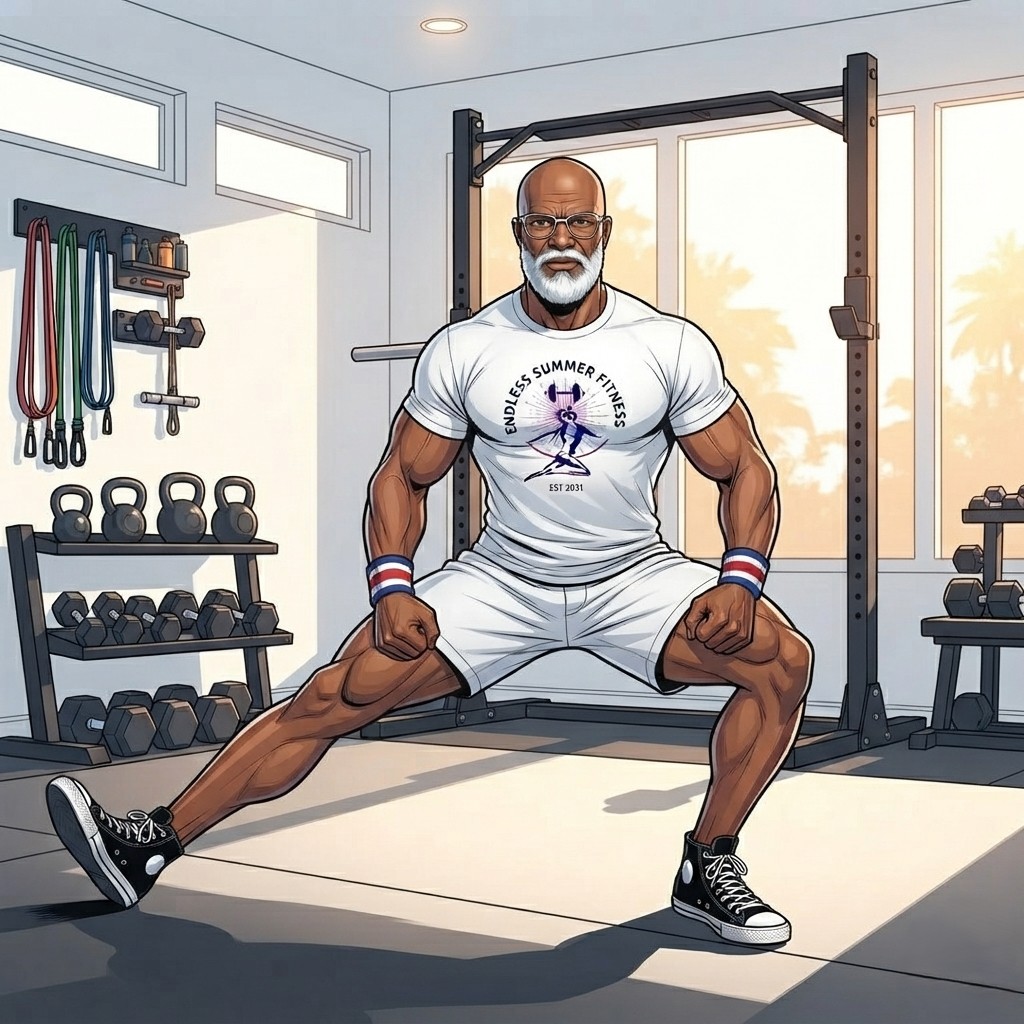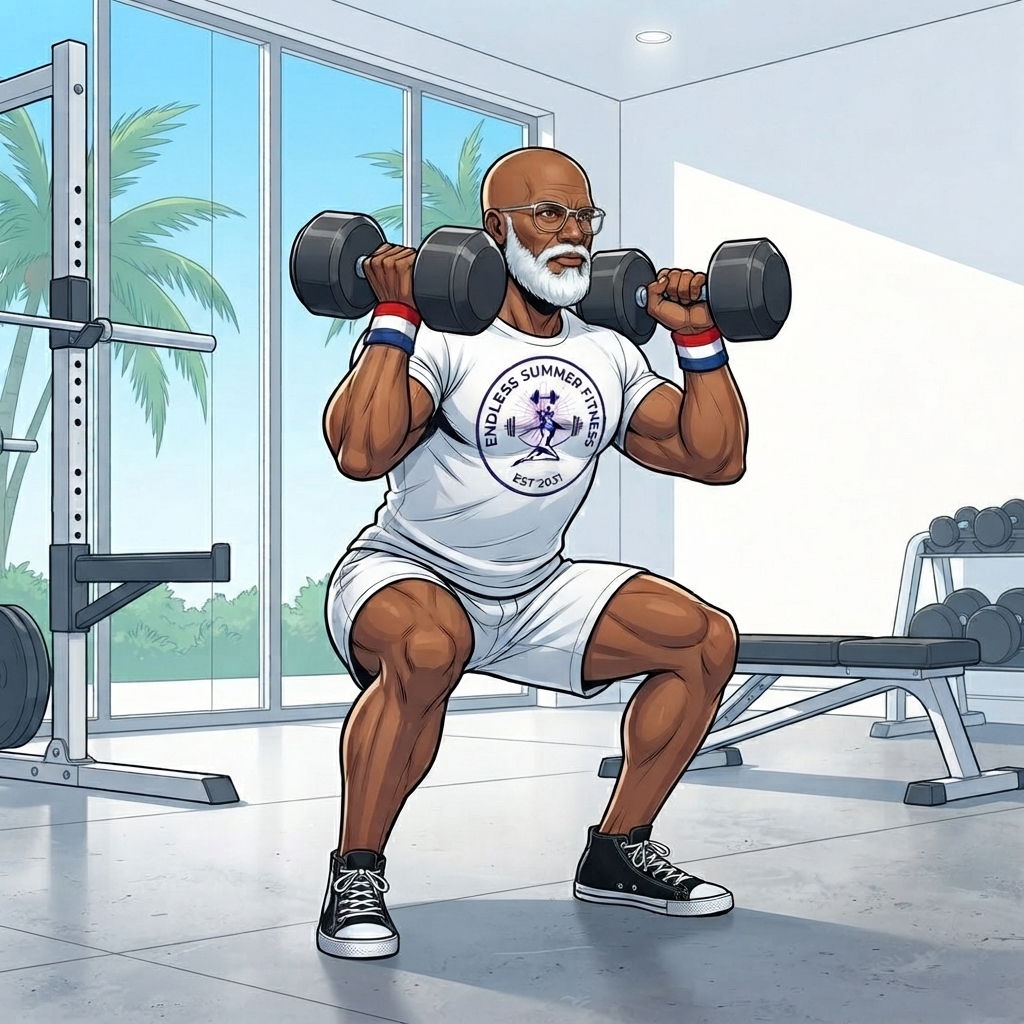
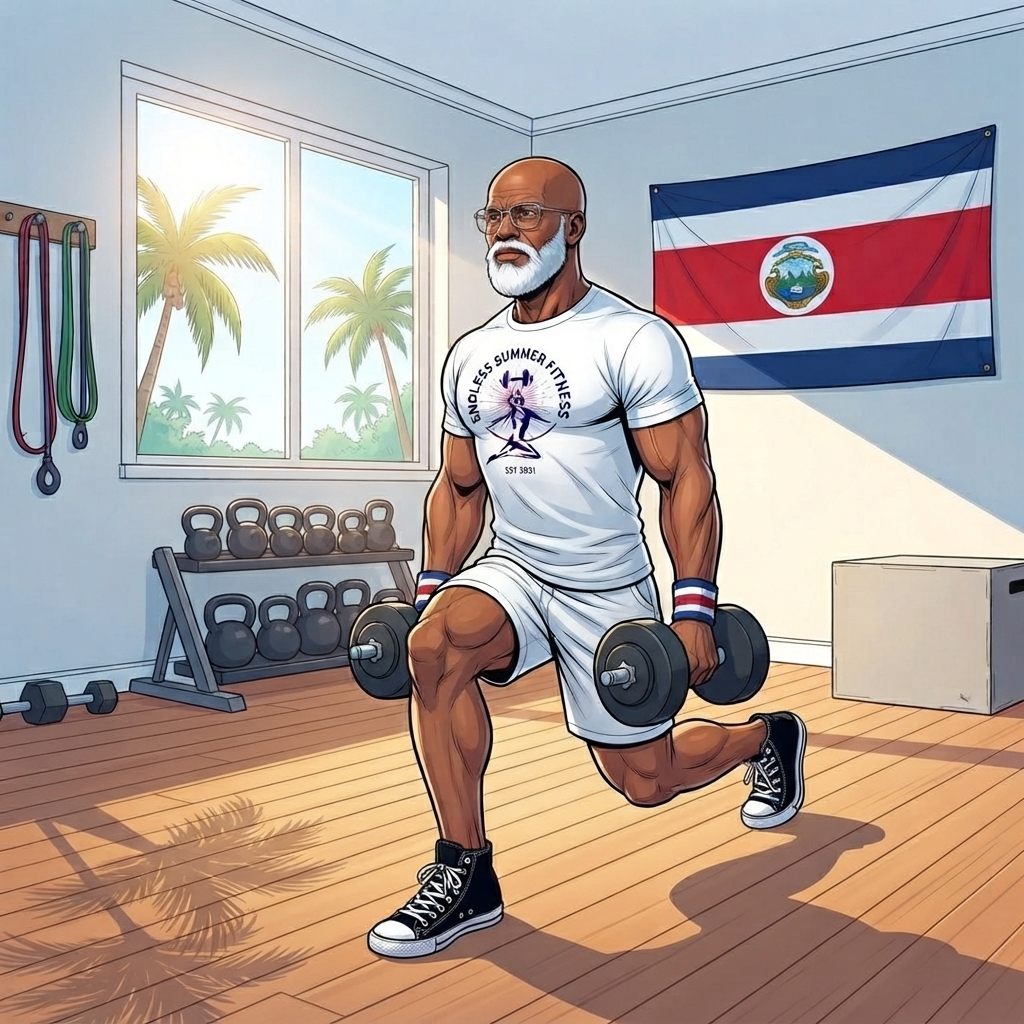
If you are over 40, lifting weights is one of the best investments you can make in your health, body composition, and long-term vitality. Science shows that strength training preserves muscle, protects joints, improves metabolic health, and even slows the aging process. It helps you stay energetic and capable through your 40s, through your 80s. Let’s dive into the discussion of pain‑free strength tips for 40+ lifters.
Don’t skip past our guide on: 5 Transforming Hip Mobility Fixes for Over 40 Bodies
Training after 40 is not about busting through heavy loads or chasing heavy weights at any cost. It is about training smart so you can build strength without wrecking your joints and keep progressing without setbacks. Here are six powerful, pain-free strength tips designed specifically for lifters over 40 using simple home gym gear.
1. Ditch Progressive Overload for High-Volume, Low-Weight Mastery
Traditional fitness dogma preaches progressive overload, constantly pushing you to add heavier weights to the bar. For lifters over 40, chasing maximal loads is often a fast track to joint pain and injury.
Endless Summer Fitness believes a safer, more effective philosophy relies on lower weights, higher reps, and more sets to deliver sufficient overall volume. By managing your workouts through controlled volume rather than heavy resistance, you stimulate muscle growth while building endurance, joint stability, and core balance at the same time. Working with manageable loads lets you focus on pristine movement patterns, keeping your joints healthy and resilient.
2. Prioritize Joint-Friendly Variation
Repeating the exact same loaded movements week after week can wear down shoulders, elbows, knees, and the lower back. Manage wear and tear by structured variation in your home setup rather than adding weight.
- Rotate exercises within movement patterns every few weeks. For example, swap barbell squats for dumbbell goblet squats, band-resisted split squats, or bodyweight tempo squats.
- Combine dumbbells, kettlebells, exercise bands, and bodyweight calisthenics. They provide distinct resistance profiles that are exceptionally joint-friendly.
- Small adjustments can reduce cumulative stress while keeping workouts engaging. Changing your grip from neutral to overhand, altering exercise tempo, or shifting your stance width all work well.
Why it works: Variation distributes physical work throughout different tissues. This prevents overuse injuries and keeps training effective for the long haul.
3. Extend Accumulation Phases (More Volume, Less Maxing Out)
After 40, recovery capacity declines, so you cannot chase maximal low-rep intensity in every session. The solution is periodization, which alternates between volume-focused accumulation blocks and lower volume recovery blocks.
- Spend two or three times longer in accumulation phases with moderate reps, controlled tempos, and higher total work using dumbbells, bands, and kettlebells.
- Avoid grinding near failure with heavy weights or pushing low rep limits.
- This strategy builds muscle, reinforces good movement, and spares your joints from excessive strain.
Why it works: Spending time in higher rep ranges like 12 to 20 stimulates muscle stamina and strength without hammering your nervous system or connective tissues.
4. Increase Time Under Tension (TUT)
You do not need massive weights to get stronger at home. By slowing down your reps, adding pauses, and controlling the eccentric lowering phase, you can create greater muscular tension with minimal joint stress.
- Use 3-4-second eccentrics, isometric holds, and high-rep sets of bodyweight push-ups or band-resisted movements taken close to fatigue.
- Lighter loads become challenging enough to trigger muscle growth while protecting tendons and ligaments.
- This is especially valuable if you are returning from a break or dealing with nagging aches.
Why it works: TUT improves motor control, strengthens connective tissue, and generates a powerful anabolic signal without relying on heavy maximal loading.
5. Reduce Spinal Loading Frequency
Heavy axial compression on the spine can lead to lower back fatigue, stiffness, or injury. This is especially true as discs and vertebrae lose some resilience with age.
- Limit direct spinal loading to once per week per movement pattern.
- On other training days, utilize single-leg bodyweight work such as step-ups and reverse lunges, kettlebell swings, band-resisted hip thrusts, or low-impact plyometrics.
- Beginners should start with unweighted bodyweight calisthenics before adding kettlebell or dumbbell volume.
Why it works: You still train hard and build lower body power, but you give your spine adequate recovery. This reduces injury risk and chronic back pain.
6. Warm Up Smart, Not Long
A generic 10-minute stretch or foam-rolling marathon wastes time and doesn’t prepare you for the specific movements ahead. Instead, use a targeted, efficient warm-up.
- Perform 2 or 3 light sets of bodyweight movements or light band activation for your first exercise.
- Include targeted activation moves like reverse chest-flys with resistance bands, bodyweight glute bridges, and arm circles that directly address the joints and muscles you will be using.
- Keep total warm-up time under 10 minutes, staying focused and purposeful.
Why it works: This strategy improves movement quality, reduces injury risk, and guarantees every working set is productive without draining your energy.
Practical Home Gym Action Plan
To help put these six principles into practice, here is a clean, organized outline for integrating high-volume, joint-friendly movement into your weekly home training:
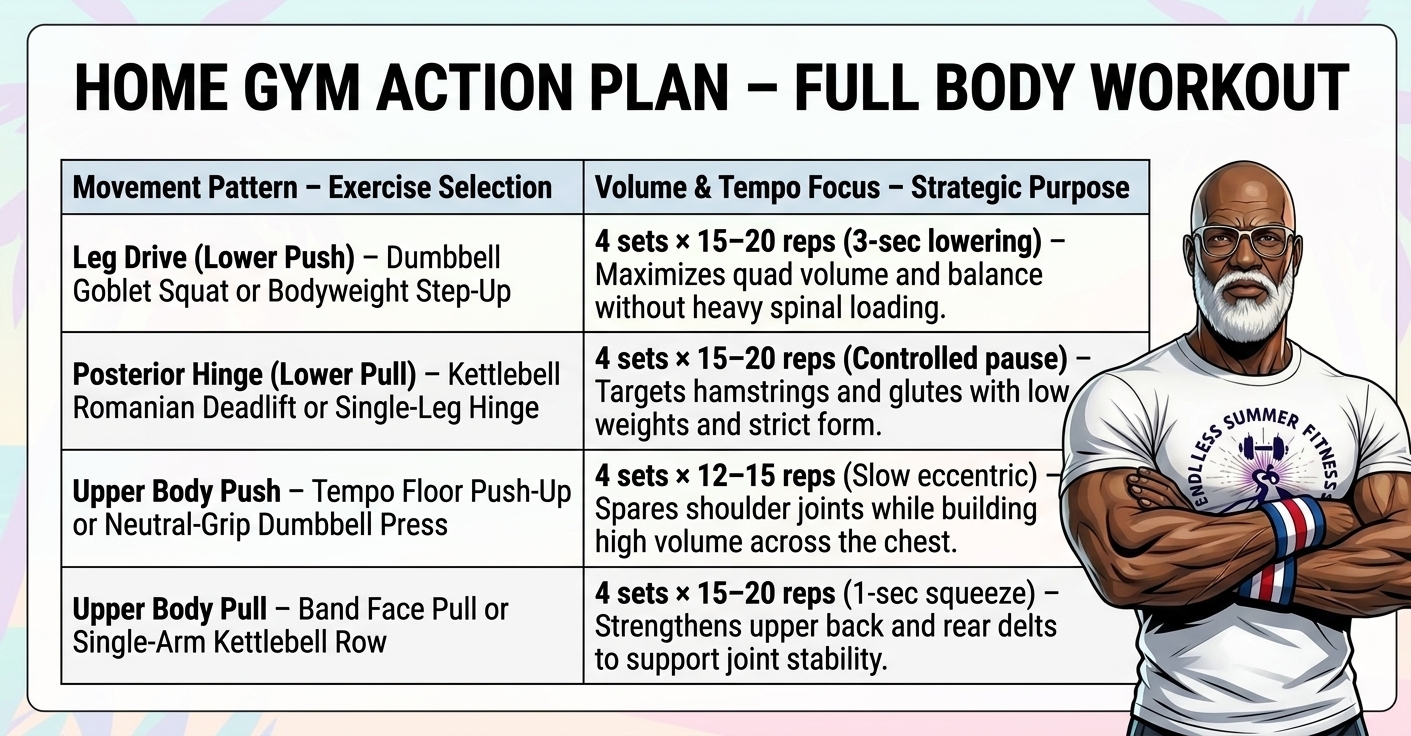
Graphic Asset Concept:
A high-contrast vector graphic titled “Home Gym Pain-Free Volume Blueprint” in bold dark blue and warm amber typography on a clean white background. In the upper right corner, an animated, comic-book-style illustration features an athletic coach with clear glasses wearing a white ESF TT-shirt and black high-top Chucks. Below the header, a clean 4-column table details movement patterns, high-rep home equipment selections, tempos, and strategic benefits. Bright Miami daylight aesthetic with clean vector line art.
Bonus: Stay Active Outside the Gym
Training three or four times a week is powerful, but daily movement amplifies results. Walk after meals, take the stairs, practice agility drills, or stretch in the evening. These habits improve recovery, insulin sensitivity, and fat loss, and they keep you feeling agile and energized.
Real Results: What’s Possible Over 40
Thousands of lifters over 40 have changed their bodies with pain-free, smart strength training. Consider a hypothetical example like a 55-year-old. After years of persistent knee stiffness and low energy, they shifted away from heavy compound lifting in favor of high-volume dumbbell work, resistance bands, and continuous tension.
Over 10 months, they dropped 25 pounds, restored joint mobility, and gained the stamina to go on weekend bike rides with their family. All through three weekly high-volume home sessions, daily walking, and consistent nutrition. Age is not a barrier. It is a reason to train smarter.
Final Word
The rules do not change when you turn 40, but the leeway for error shrinks. By stepping away from heavy progressive overload and applying these six pain-free volume tips, you can build muscle, protect your joints, and keep progressing for decades. Train with purpose, stress quality over ego, and remember that consistency beats intensity every time.
References
- Morton, R. W., et al. (2018). A systematic review, meta-analysis and meta-regression of the effect of protein supplementation on resistance training-induced gains in muscle mass and strength in healthy adults. British Journal of Sports Medicine, 52(6), 376–384. PubMed
- Reidy, P. T., & Rasmussen, B. B. (2016). Role of Ingested Amino Acids and Protein in the Promotion of Resistance Exercise–Induced Muscle Protein Anabolism. The Journal of Nutrition, 146(2), 155–183. PMC
- Mitchell, W. K., et al. (2012). Sarcopenia, dynapenia, and the impact of advancing age on human skeletal muscle size and strength; a quantitative review. Frontiers in Physiology, 3, 260. PubMed
- Watson, S. L., et al. (2018). High-intensity resistance and impact training improves bone mineral density and physical function in postmenopausal women with osteopenia and osteoporosis: the LIFTMOR randomized controlled trial. Journal of Bone and Mineral Research, 33(2), 211–220. PubMed
- Hansen, M., & Kjaer, M. (2014). Sex hormones and exercise. Comprehensive Physiology, 4(1), 1307–1340. PubMed
- Ahtiainen, J. P., et al. (2010). Heterogeneity in resistance training-induced muscle strength and mass responses in men and women of different ages. Age, 32(1), 83–97. PubMed