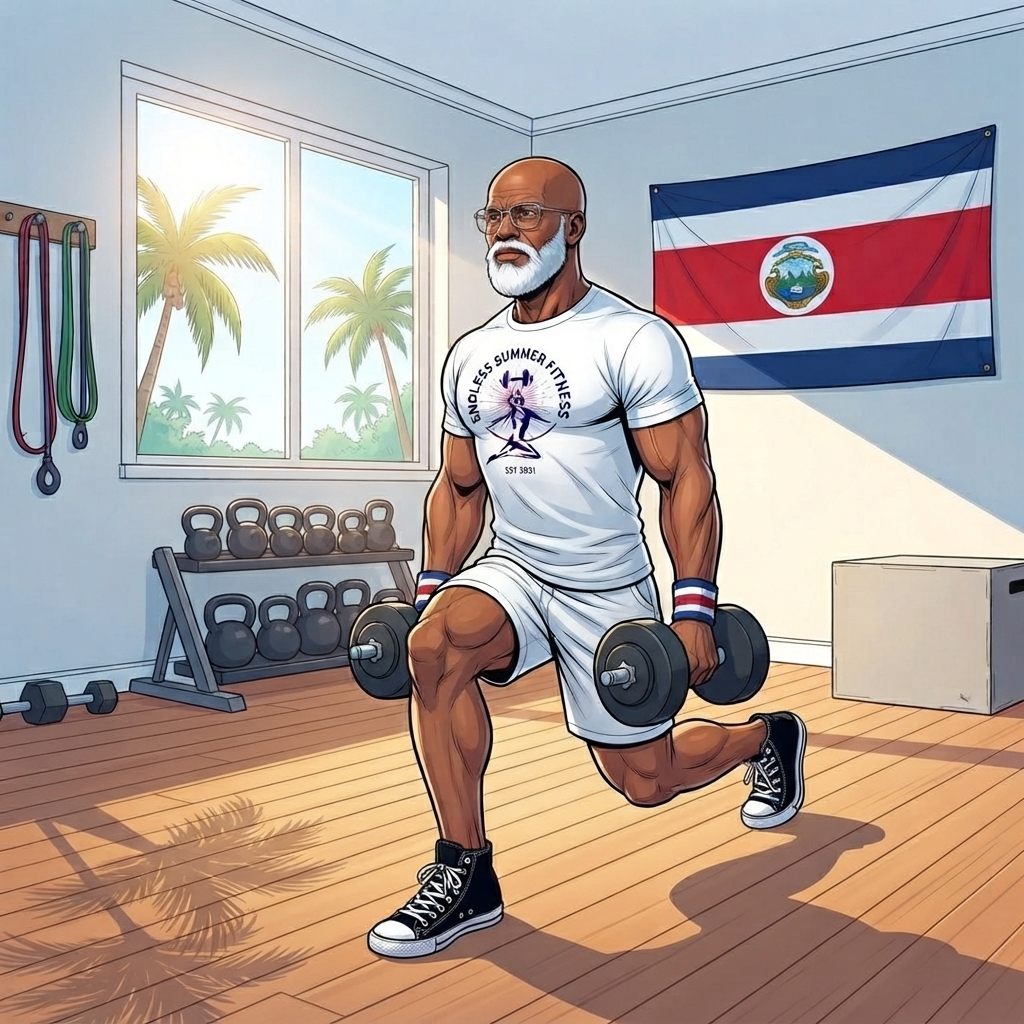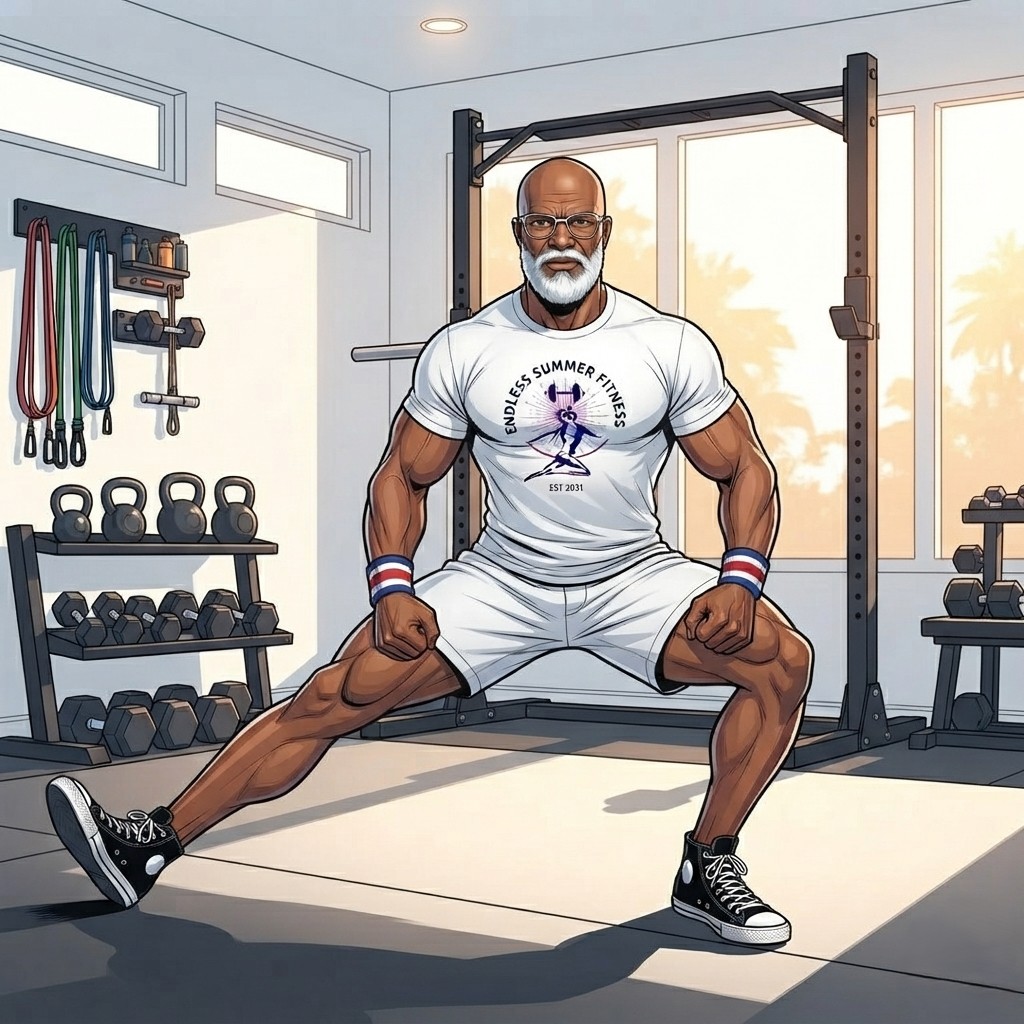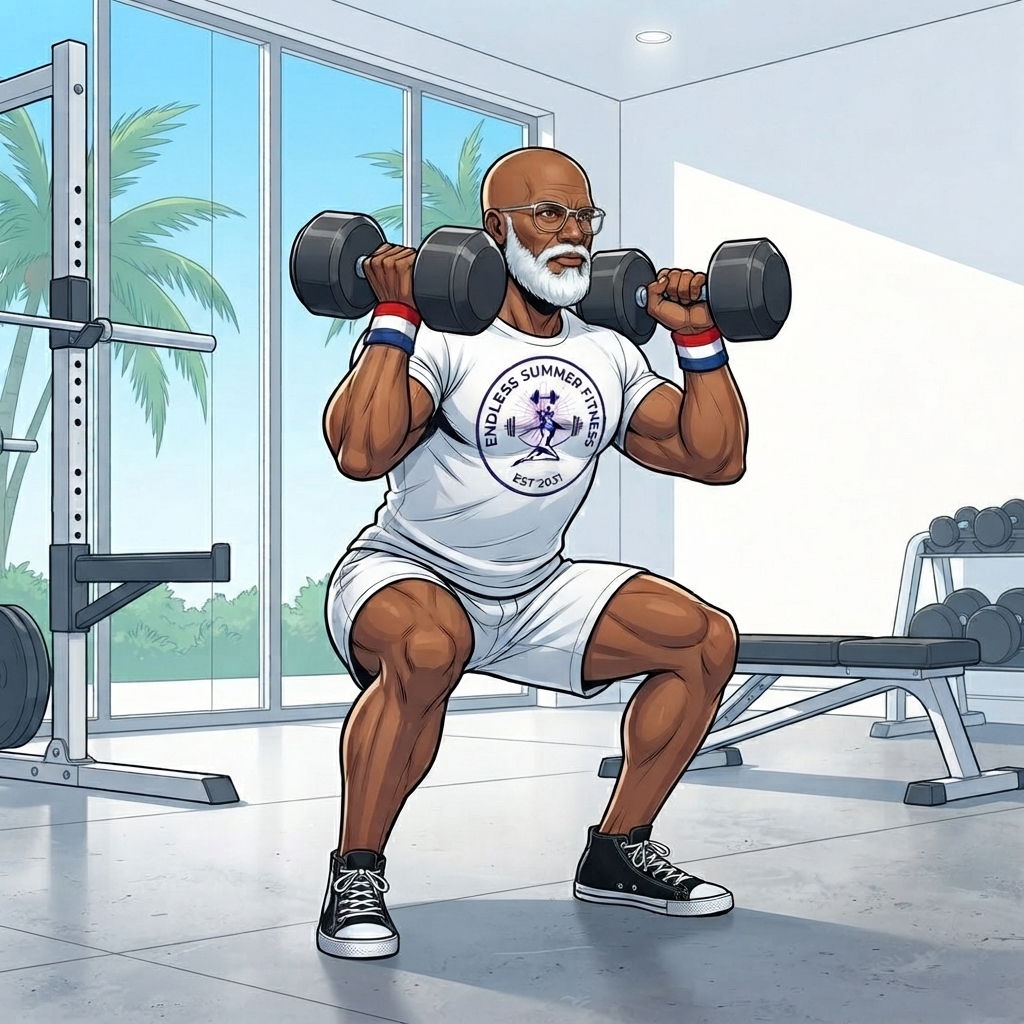
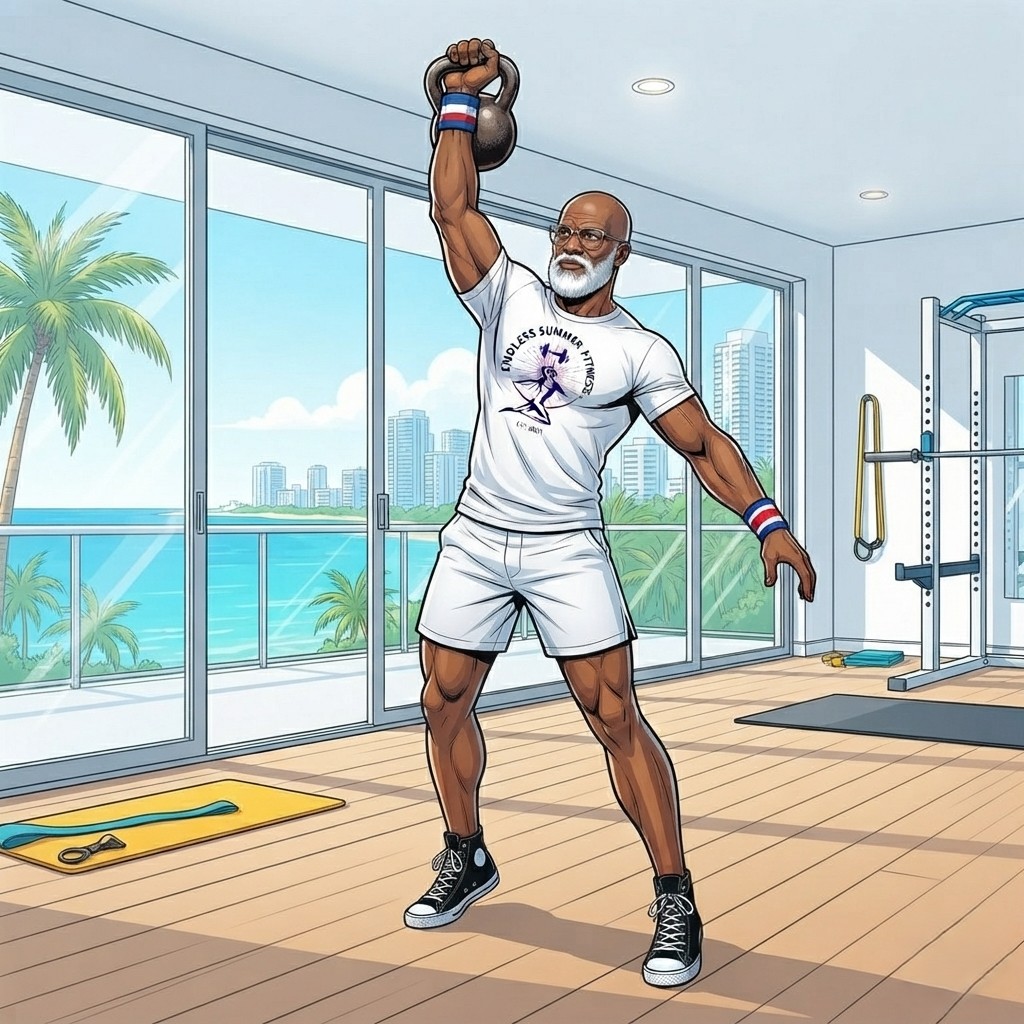
This strength and conditioning exercise program features low-impact circuits, intended for adults aged 40 and over who would like a demanding workout that is gentler on the joints; it gets rid of jumping but still exercises the muscles, lungs, balance, and coordination.
Red Next: 6 Powerful Pain‑Free Strength Tips for 40+ Lifters
Low Impact Does Not Mean Easy
The exercise routine avoids jumping in order to reduce stress on the hips, knees, and ankles; although there is no impact, it still provides a rigorous full-body workout and by the end of the first round your heart rate should have increased and your main muscle groups should feel activated.
Rather than depend on hard hits or rapid landings, the workout increases in intensity by means of resistance, range of motion, and the careful arrangement of exercises. Using kettlebells, dumbbells, resistance bands, and bodyweight exercises, the whole body is worked while keeping the impact low.
The session follows a switchback format: each circuit consisting of seven exercises goes forward from exercise 1 to exercise 7 and then repeats in reverse from exercise 7 back to exercise 1. The exercises seem different on the second go round since your body is going through a new fatigue pattern.
Set up your space. Pick your equipment. Move at a pace you can handle.
Benefits of This Workout
- Cardio that doesn’t involve jumping: increase your heart rate without placing heavy impact on your hips, knees, and ankles.
- In a single session you can work on full-body balance by performing pushes, pulls, hinge movements, squats, and exercises to improve core stability.
- Vary your equipment by using dumbbells, kettlebells, resistance bands, and exercises that rely just on your body weight to keep the workout from becoming monotonous.
- Offer power with reduced stress to the joints by developing explosive strength without having to land heavily repeatedly.
- The switchback format enables you to carry out each move when you are fresh and also when you are tired.
- The core exercises are included as part of the primary workout rather than being added on at the end.
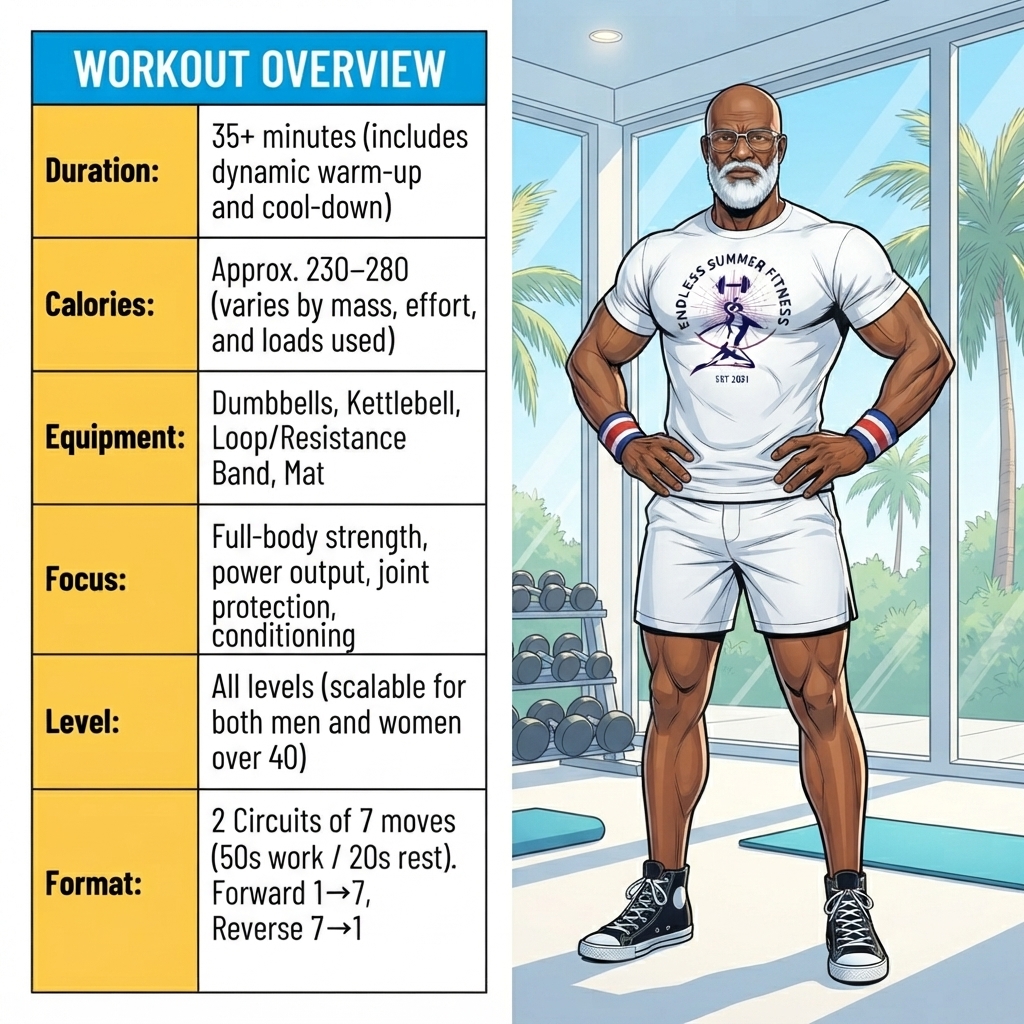
- The number of calories burned efficiently will be about 230 to 280 depending on your body size, the amount of effort you put in, and the weight you’re carrying, over a period of approximately 35 minutes.
Workout Overview
How the Switchback Format Works
For the first round you do the exercises in numerical order from 1 to 7, and in the second round you go in reverse from 7 to 1; this simple alteration causes the workout to seem different since each exercise appears at a different stage of your fatigue.
For instance, the first exercise could seem controlled in Round 1 but in Round 2 it becomes the last action, by that time your muscles and breathing already being under strain. Variety is thus achieved without having to include any additional exercises.
This format is advantageous for adults aged 40 and over since it distinguishes between impact and intensity. The source of impact is the force of the landing, while intensity is determined by how hard your heart, lungs, and muscles are working. It is possible to work out vigorously without jumping.
The exercise also helps to improve power, since this becomes more significant as we get older; quick yet controlled low-impact movements allow you to maintain your strength, balance, agility and everyday confidence without placing additional stress on your knees or back.
The Full Workout
Here’s how to proceed: for each seven-move circuit, carry out 50 seconds of work and then take 20 seconds rest. Start the first round with exercise 1 and go through to exercise 7, and for the second round begin with exercise 7 and proceed back to exercise 1.
Select your weight: Make sure the weights and the resistance from the bands are difficult towards the end of each interval but still allow you to move with good form.
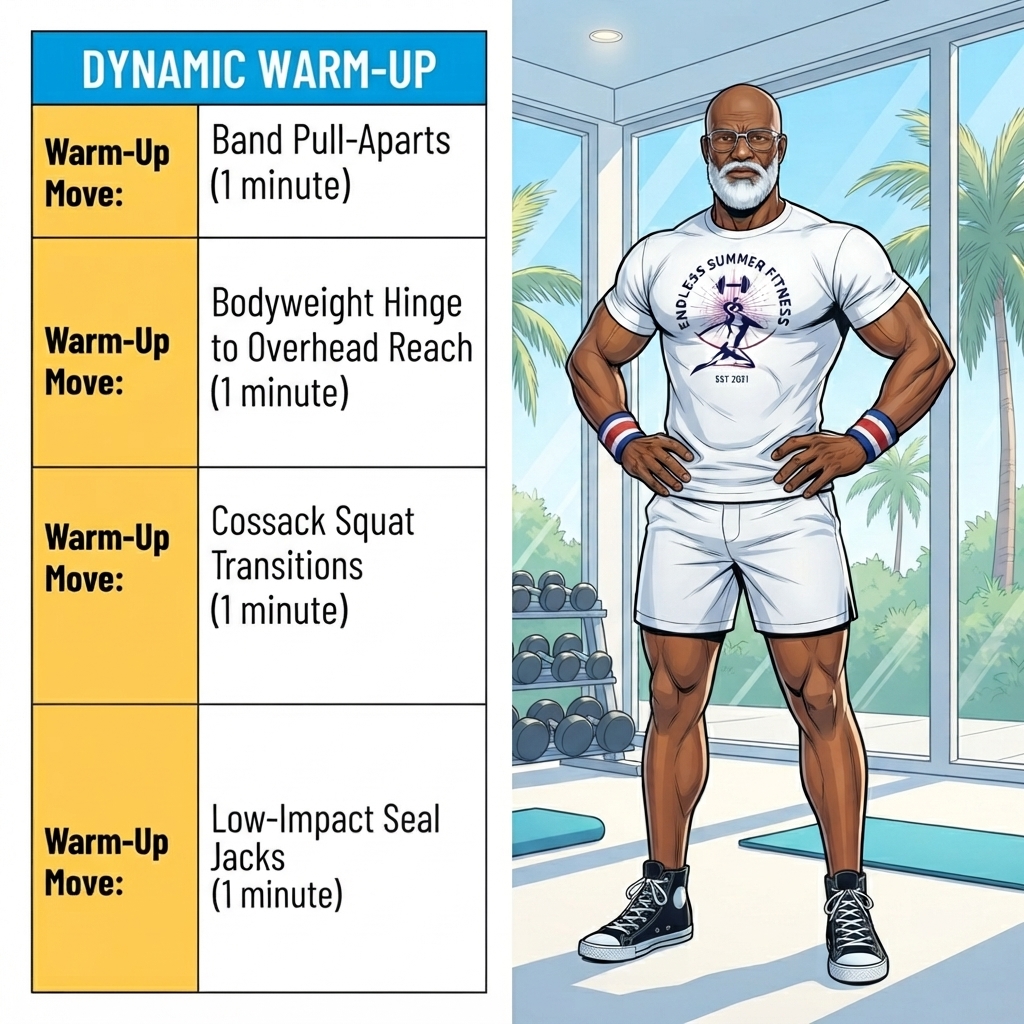
Dynamic Warm-Up
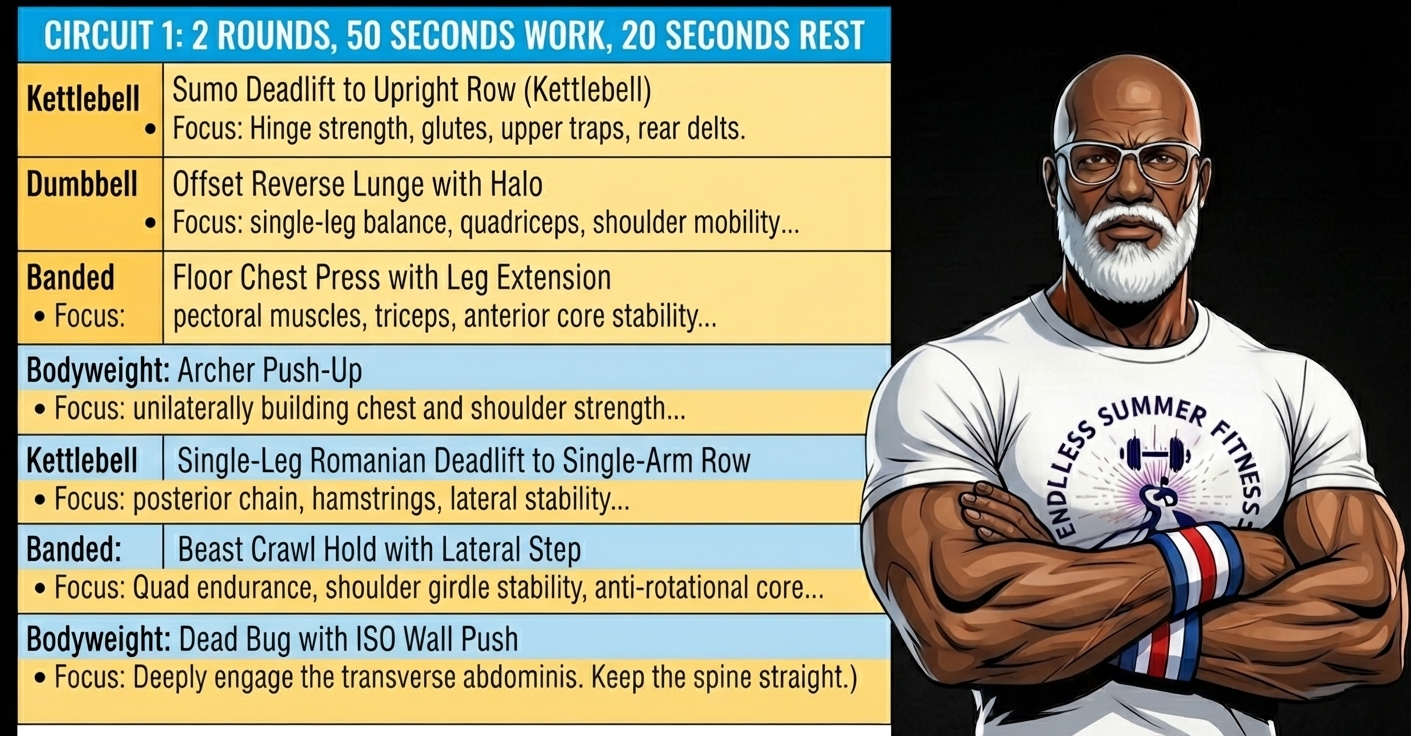
Circuit 1: 2 Rounds, 50 Seconds Work, 20 Seconds Rest
In the first round the exercises numbered 1 to 7 were done and in the second round the exercises numbered 7 down to 1 were done.
Circuit 2: 2 Rounds, 50 Seconds Work, 20 Seconds Rest
In the first round the exercises numbered 1 to 7 were done and in the second round the exercises numbered 7 down to 1 were done.

How to Do the Main Moves
- For the Kettlebell Sumo Deadlift to Upright Row, stand with your feet wide apart over the kettlebell. Push off through your heels and move your hips forward to begin the pull. When the kettlebell has passed your waist, guide it into a high row using your elbows. This exercise works your glutes, hamstrings, and upper back without requiring you to lift the weight overhead.
- For the Banded Floor Chest Press with Leg Extension, lie on your back with a band positioned across your upper back and a handle in each hand. Press the band upwards as you extend one leg at a 45-degree angle and keep your lower back in close contact with the floor, then alternate legs with each press.
- For the Bodyweight Archer Push-Up, put your hands wider than in a normal push-up, lower your body towards one arm while the other arm reaches out to the side, press back to the centre and then alternate to the other side; if necessary, use your knees or an elevated surface.
- To do a Dumbbell Clean to Thruster: begin by having the dumbbells in front of you at your sides, bend your hips and then use your legs and glutes to clean the weights up to your shoulders, squat down and then stand up with power, pressing the dumbbells over your head. This exercise works the entire body without involving a jump.
Trainer Tips
- In the first round, don’t rush through the early moves since the same exercises appear at the end of the second round when fatigue is at its greatest.
- Pay attention to your hip action: When performing exercises such as the Banded Good Morning and the Kettlebell Sumo Deadlift, push your hips back and keep your spine in a neutral position. Do not round your back or turn the movement into a shallow squat.
- Do bodyweight exercises such as the Archer Push-Up or the Side Plank Thread-the-Needle by using a bench, a wall, or your knees so that you can maintain good form throughout the entire interval.
- Lower the weights or bands slowly, taking about two seconds for each repetition. By lowering them in a controlled manner, you will help to build strength and may find it less stressful on your joints than lowering them quickly.
- Keep record of your progress by writing down the weights, the kettlebell loads, and the band tension that you use; make a slow improvement over time while maintaining good form.
Who This Workout Is Best For
This exercise routine is suitable for adults aged 40 and over who would like a tough session but one that is gentler on the joints; it could also be a good option if you are coming back from a period of joint irritation, if you wish to reduce the stress on your back, or if you need a home workout that won’t cause the floor to shake.
It too can be useful in cases where energy levels and recovery ability vary from week to week; the session aids strength development, conditioning, and confidence since it replaces the jumps with loaded strength exercises and controlled power work and thus does not require the body to take in repeated hard landings.
Frequently Asked Questions
What does “switchback” mean?
It means you complete the circuit forward from move 1 to 7, then repeat it in reverse from move 7 back to 1. This gives your muscles two different fatigue experiences within the same session.
Is this workout effective without jumping?
Yes. Jumping is only one way to raise your heart rate. Moving resistance through large ranges of motion can create a similar conditioning effect with less joint wear.
Can I substitute equipment?
Yes. Most kettlebell exercises can be performed with a single heavy dumbbell, and many band exercises can be adapted with light dumbbells or bodyweight isometric holds.
How often should adults over 40 do this workout?
Use this session 1–2 times per week as part of a balanced routine that also includes recovery, walking, mobility work, and strength training variety.
Medical Disclaimer: This article is for educational and informational purposes only and does not constitute medical advice. Always consult a physician or certified fitness professional before beginning a new exercise program, especially if you have pre-existing conditions.
If you believe in something, never give up! 12 months can change your life!
External Source Links
-
Age-Related Power Loss & Fast-Twitch Muscle Decline:
-
National Institutes of Health (PMC) – Age-Related Changes in Muscle Power: Peer-reviewed research detailing why muscle power (force produced quickly) declines at nearly double the rate of muscle strength after age 40 and the importance of ballistic/power training.
-
-
Low-Impact Training vs. Cardiovascular Intensity:
-
American Council on Exercise (ACE) – High-Intensity, Low-Impact Workouts: An authoritative breakdown on how compound resistance exercises generate significant metabolic and cardiovascular strain without high-impact landing forces.
-
-
Perimenopause, Menopause, and Stress Recovery:
-
The Menopause Society – Exercise and Physical Activity During Midlife: Guidance on managing cortisol levels, protecting joint health, and preserving bone mass/muscle density through smart resistance training protocols.
-
-
Core Stability & Anti-Rotation Mechanics:
-
Journal of Strength and Conditioning Research – Core Stability Principles: Evidence-based analysis of anti-rotational core exercises (such as dead bugs and bear crawl variations) in protecting the spine and enhancing force transfer.
-
-
Calisthenics & Joint-Friendly Resistance Training:
-
Harvard Health Publishing – Strength Training After 40: Medical insights on utilizing progressive resistance (bodyweight, dumbbells, bands, and kettlebells) to maintain joint longevity, balance, and functional strength.
-