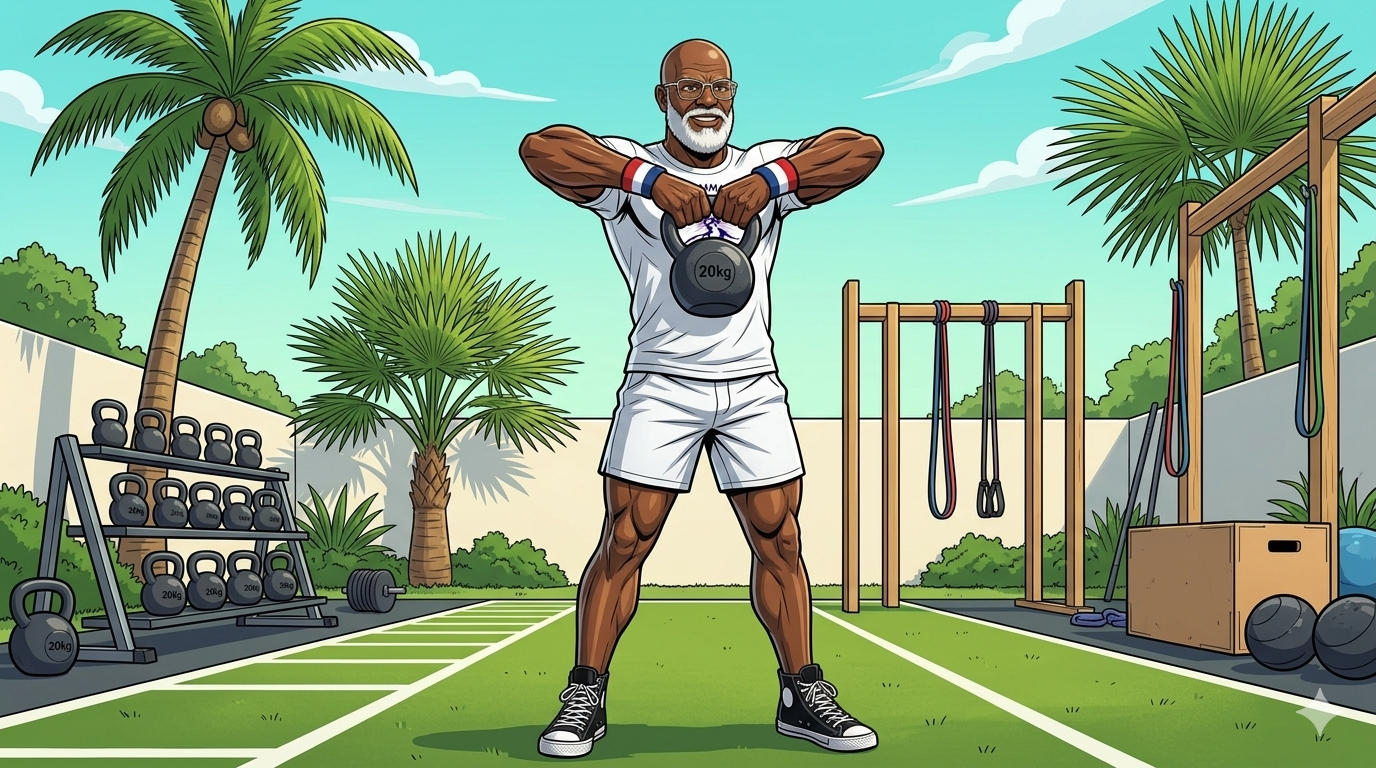

Some workouts build strength. Others build stamina. Hybrid conditioning gives you both without doubling your training time. It’s the sweet spot where controlled resistance work meets steady, sustainable effort. Creating a body that feels capable in every direction of life.
Start your journey here: Start Here: Your Simple, Confident Guide to Beginning Hybrid Fitness
Why This Matters
Most people train in silos, strength on one day, cardio on another, and mobility when something hurts. Hybrid conditioning breaks those patterns by teaching your body to handle resistance and endurance at the same time.
For everyday life, that means you can carry groceries, climb stairs, chase your kids, and move through long days without feeling wiped out. For longevity, it means stronger joints, better energy, and a heart that stays responsive under load.
Hybrid conditioning also fits perfectly into the Endless Summer Fitness philosophy: functional strength, controlled tempo, and movement quality that lasts. You’re not chasing numbers, you’re building a body that performs.
The Science (Brief)
Research shows that combining resistance training with aerobic-style conditioning improves muscular endurance, metabolic efficiency, and overall work capacity without compromising strength gains. Studies published in Journal of Conditioning and Sports Medicine and Sports Medicine highlight that moderate-load, high-rep resistance work paired with sustained effort enhances both cardiovascular and muscular adaptations ideal for hybrid athletes who want durability, not burnout.
The Workout: Hybrid Conditioning for Intermediates
Level: Intermediate
Equipment: Light-to-moderate dumbbells or resistance bands
Sets: 3–4
Reps: 20–25
Rest: 45–60 seconds between sets
Tempo: Slow and controlled
Tension: Continuous — no resting at the top or bottom
-
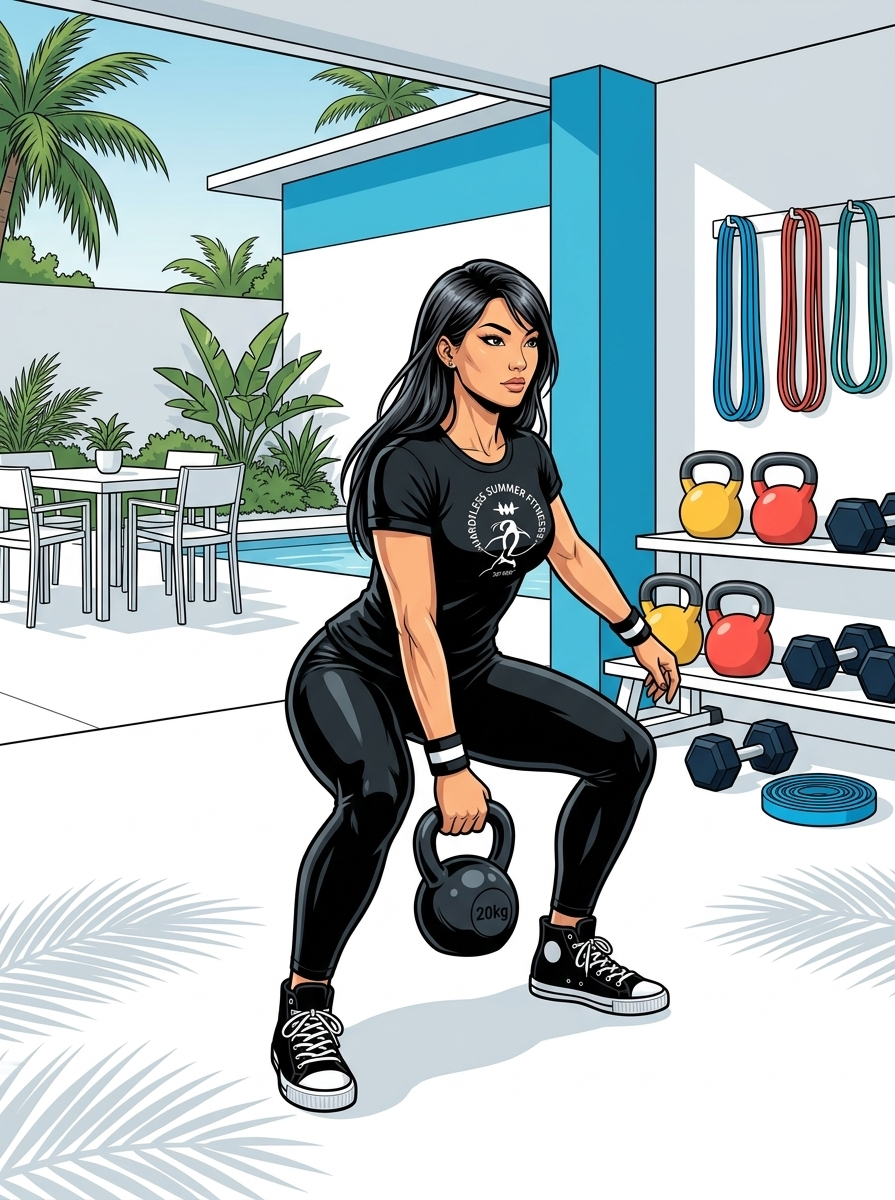
Dumbbell Reverse Lunge to Press
3–4 x 20–25 reps (each side)
Tempo: 2 seconds down, 1‑second pause, 2 seconds up
Tension Cue: Keep the shoulders active and the core engaged throughout the press.
Rest: 45–60 seconds
Form Tip: Step back softly and keep your front knee tracking straight over your toes.
-
Resistance Band Row with Marching Hold
3–4 x 20–25 reps
Tempo: 2 seconds pull, 1‑second squeeze, 2 seconds return
Tension Cue: Maintain constant tension on the band — no slack.
Rest: 45–60 seconds
Form Tip: Lift one knee at a time as you row to challenge balance and core stability.
-
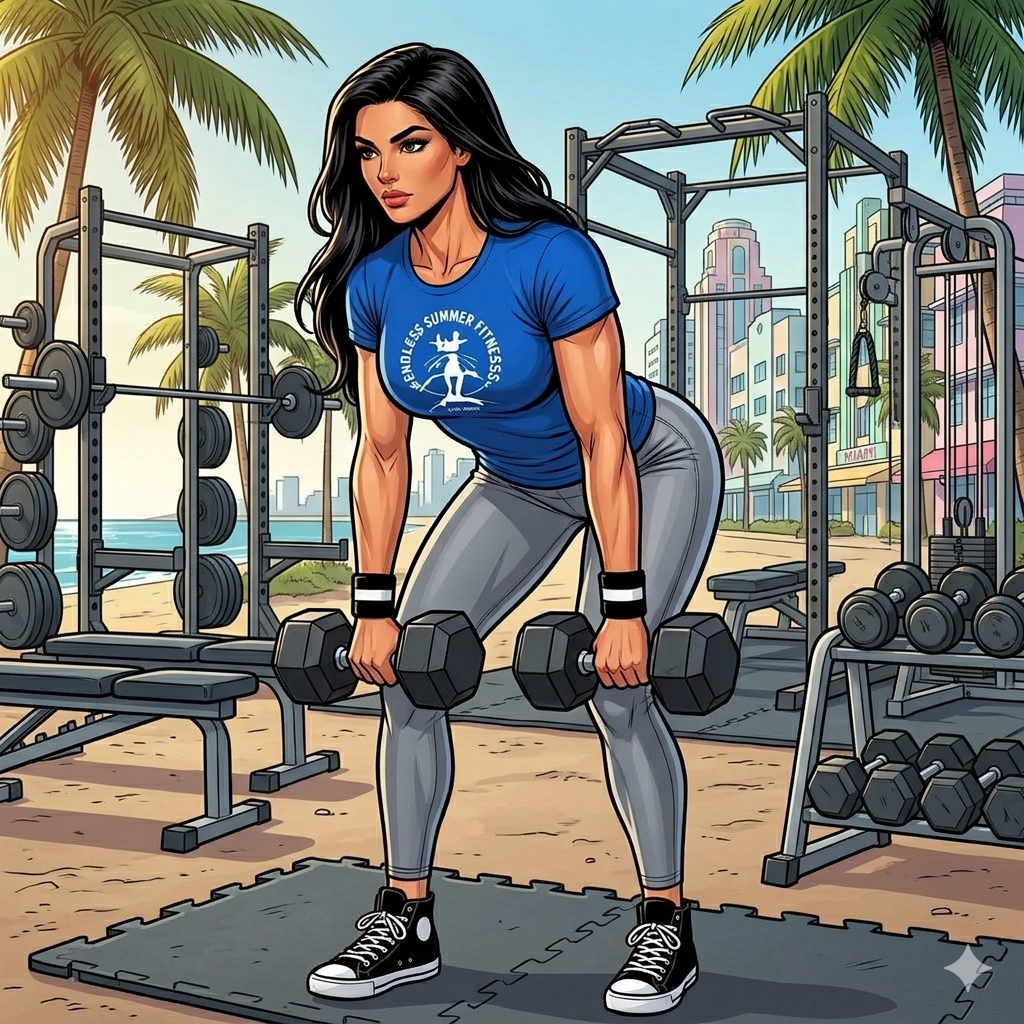
Dumbbell Hip Hinge to High Pull
3–4 x 20–25 reps
Tempo: 3 seconds down, smooth pull-up
Tension Cue: Keep the lats engaged and avoid snapping the elbows.
Rest: 45–60 seconds
Form Tip: Push your hips back, not down — hinge, don’t squat.
-
Alternating Lateral Step + Band Chest Press
3–4 x 20–25 reps (each side)
Tempo: Controlled step, controlled press
Tension Cue: Keep the band taut through the entire movement.
Rest: 45–60 seconds
Form Tip: Step wide enough to feel your glutes stabilize before pressing.
-
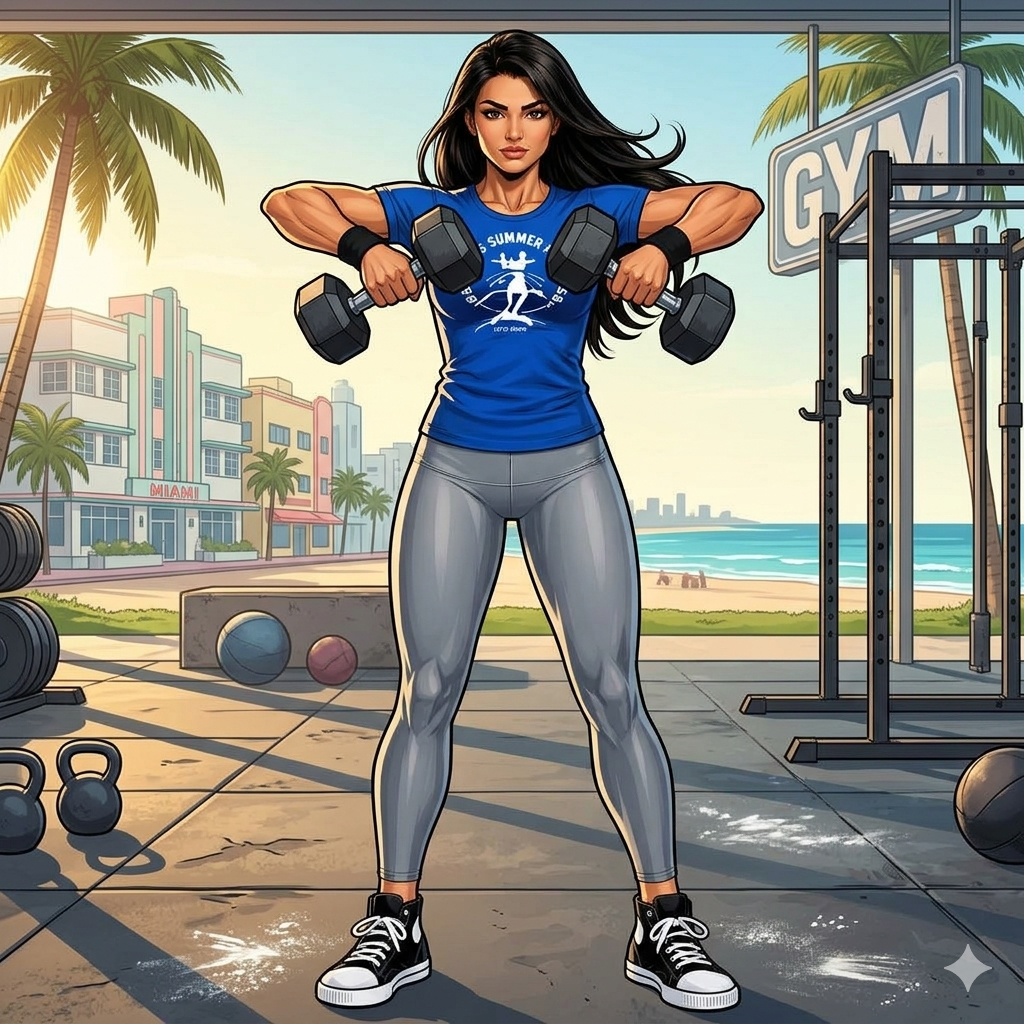
Footwork Shuffle + Light Dumbbell Front Raise
3–4 x 20–25 reps
Tempo: Quick feet, slow raise
Tension Cue: Shoulders stay active — no swinging.
Rest: 45–60 seconds
Form Tip: Keep your feet light and your core tight as you raise the weights.
How to Apply This
Use this hybrid conditioning session 2 – 3 times per week on non-consecutive days. Pair it with one mobility day, one low-impact endurance session (like a brisk walk or light jog) to round out your week.
If you’re short on time, run the first three exercises as a condensed session; they hit the major movement patterns and deliver the hybrid effect efficiently.
Endurance Block: 30‑Minute Hybrid Pace Session
Level: Intermediate
Duration: 30 minutes
Intensity: Steady, sustainable, conversational
Equipment: None
Format: Continuous movement — no breaks
How It Works
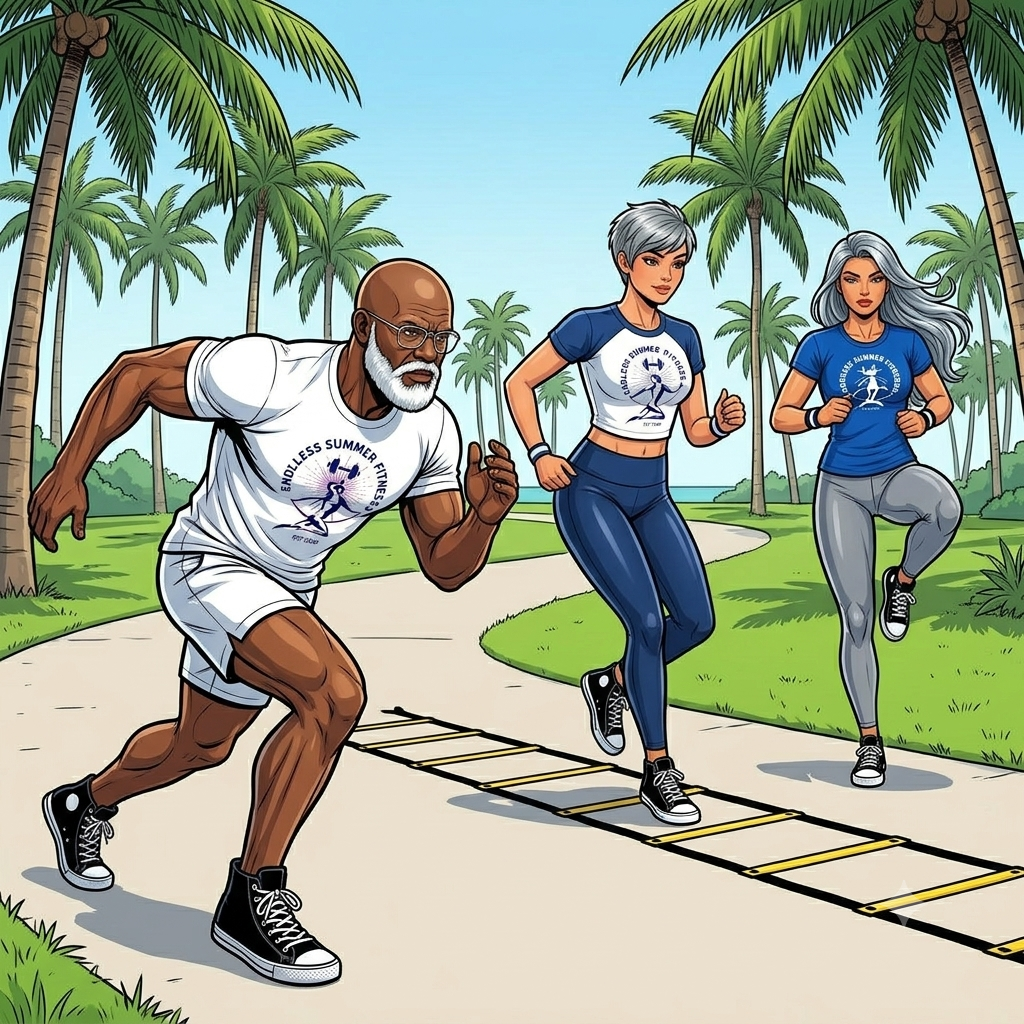
This longer endurance block keeps your heart rate elevated without spiking it. You’ll rotate through low‑impact locomotion, lateral movement, and controlled power steps to build stamina without joint stress. It’s the ESF version of “hybrid conditioning” — smooth, athletic, and repeatable.
The Block (30 minutes total)
- Power Walk or Light Jog — 8 minutes
Settle into a steady, comfortable rhythm.
Cue: Smooth arms, tall posture, relaxed breathing.
- Lateral Shuffle Steps — 3 minutes
Stay low and athletic.
Cue: Quick feet, soft landings, hips stable.
- Marching High Knees — 3 minutes
Drive the knee, brace the core, keep tempo.
Cue: Controlled, rhythmic, no bouncing.
- Power Walk or Light Jog — 6 minutes
Return to your steady pace.
Cue: Think “cruise mode” — sustainable and smooth.
- Backward Walk + Forward Walk Cycles — 4 minutes
30 seconds backward, 30 seconds forward — repeat.
Cue: Small steps, hips level, stay aware of surroundings.
- Strong Finish Pace — 6 minutes
Brisk walk or light jog at a confident, controlled effort.
Cue: Finish energized, not exhausted.
Why This Works
This 30‑minute block builds aerobic capacity, reinforces joint‑friendly athletic movement, and ties directly into hybrid conditioning by improving your ability to sustain effort across strength and endurance sessions.
ESF Mindset Moment
Hybrid conditioning rewards consistency, not perfection. Show up, stay patient, and let the work compound. That’s how you build a body that goes the distance.
Final Thoughts
Hybrid conditioning sits in that rare space where training feels purposeful instead of punishing. When you blend controlled resistance with steady, repeatable effort, you teach your body to stay composed under fatigue, a skill that carries into every part of life. This style of training builds a kind of strength that doesn’t fade when the pace picks up, and an endurance that doesn’t crumble when the load increases.
The real win is how sustainable it feels. You’re not chasing extremes or grinding through sessions that leave you wrecked. You’re building capacity slowly, steadily, and with intention. Over time, that consistency reshapes how you move, how you recover, and how confident you feel in your own physical ability. That’s the heart of hybrid work: a body that keeps showing up for you, day after day.
Medical Disclaimer: This article is for educational and informational purposes only and does not constitute medical advice. Always consult a physician or certified fitness professional before beginning a new exercise program, especially if you have pre-existing conditions.
Move fast, stay strong, go far — The hybrid body is built for anything!
Sources
- Wilson, J. et al. (2012). Concurrent Training: A Meta‑Analysis Examining Interference of Aerobic and Resistance Exercises. Journal of Strength and Conditioning Research. https://doi.org/10.1519/JSC.0b013e31823a3e2d
- Fyfe, J. et al. (2014). Concurrent Strength and Endurance Training: From Molecules to Man. Sports Medicine. https://link.springer.com/content/pdf/10.1007/s40279-014-0162-1.pdf
- American College of Sports Medicine (2021). Resistance Training for Health and Fitness. (ACSM Position Stand / Evidence‑based guidance) https://www.acsm.org (Position Stands section)