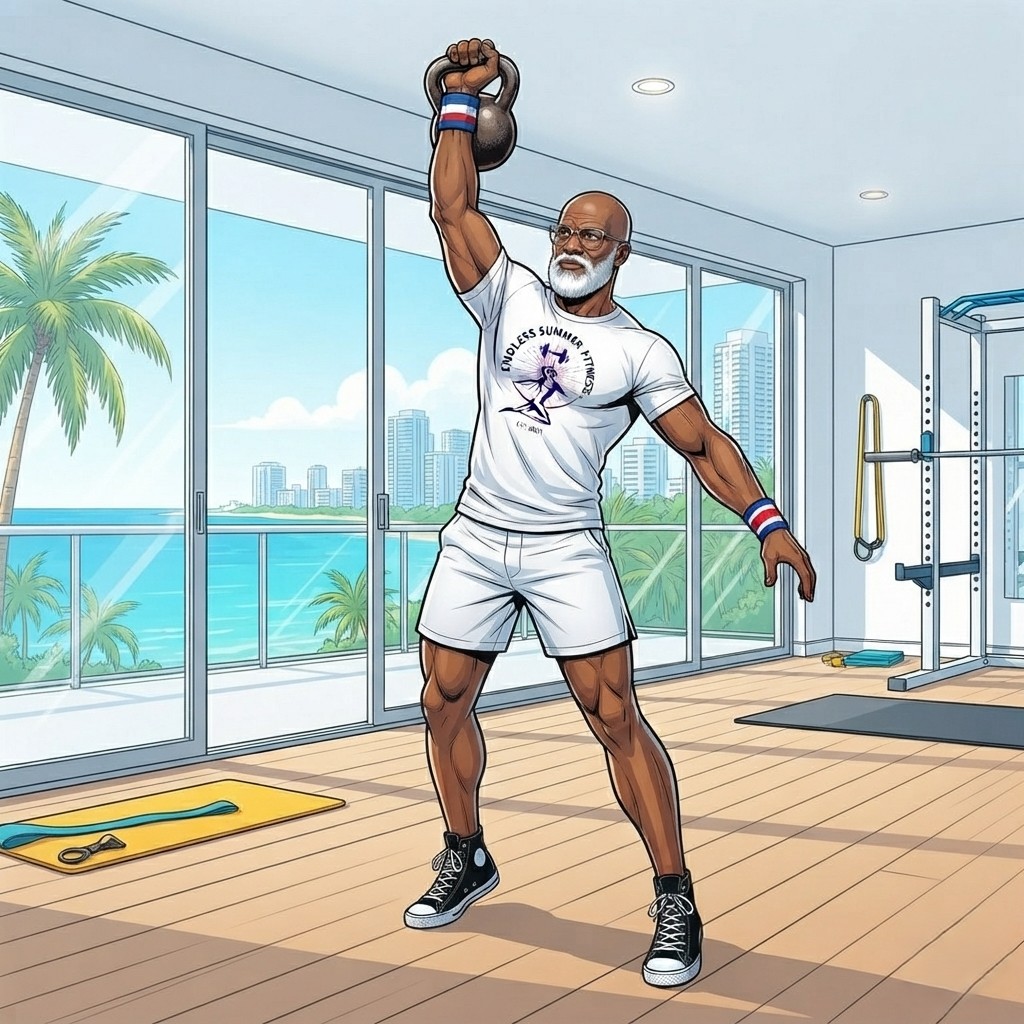

The hardest part of chronic illness isn’t always the symptoms, it’s grief. The grief of remembering who you used to be. The grief of waking up in a body that doesn’t respond to the way it once did. The grief of feeling like your identity has been split into “before” and “after.” This article is for every reader who feels trapped between those two worlds. It’s for the ones who used to be strong, athletic, unstoppable — and now feel like they’re fighting their own biology just to get through the day.
My Background: 9 Years of Peak Fitness vs. My Current Reality
For nearly a decade, I lived in peak condition. I trained hard, moved fast, and was fairly strong for my weight and athletically built size. My body was my engine, and I took pride in my discipline and commitment to fitness. For a long time, my body was my engine… and then it wasn’t.
Chronic illness began to slowly pile up like a slow, grinding snow drift, and later became an avalanche. It didn’t happen all at once, but instead flake by flake, and then snowball by snowball. Flu episodes that wouldn’t end, nausea, and migraines became daily sufferings, unrelenting back pain, and so on.
Often, I feel like I am watching my life from the outside, and I wonder how the strongest version of me has become someone who struggles to walk upstairs, walk a mile without heavy breathing, or go a week without acquiring the latest random viral or bacterial infection.

The Mental Health Toll No One Talks About
Chronic illness doesn’t just attack your body. It takes over your identity. At work, “you become the one who’s always sick.” “The guy we’d better stay clear of to not catch anything.” It’s not just your immune system that’s under attack; your persona is battered and transformed in the eyes of your colleagues, friends, family, and even strangers whom you encounter during your times of illness and struggle.
You grieve the version of yourself who could run all day like a pure-bred stallion. You grieve for the version who didn’t have to plan life around symptoms. You grieve the version who didn’t feel weak and fragile. The grief is real, valid, and heavy.
But here’s the part that matters grief doesn’t mean you’re done. I’m not done. It means we’re adapting.
The Emotional Whiplash of “Good Days” and “Bad Days”
One of the cruelest parts of the chronic illness is the inconsistency that it creates in your life. A good day tricks you into believing that you’re back to a level playing field. A bad day reminds you that you’re not and that the immediate future is unclear.
The emotional whiplash can break even the strongest mindset, and over time, the mental and physical strength you knew you had slowly withers away like granite that eventually succumbs to the relentless assault of waves on a coastline.
Chronic illness is so devastating to your mindset that you question your discipline, your character, and your worth to your job, your family, and to yourself. And when you can’t work anymore, the guilt becomes self-loathing.
But here’s the thing, chronic illness isn’t a discipline problem. Nor does it have anything to do with motivation or character. It is literally all about a biological system that has no inclination to negotiate with you.
Why I Keep Going (Even When I Want to Quit)
I don’t sugarcoat things because it’s not my way: Many days, I want to give up. I often feel defeated, and the unrelenting inner voice clowning at me and telling me I am a failure gets louder. With every fever, cough, sneeze, blurred vision, migraine, and lost lunch from nausea, the self-doubt mounts.
But then I see my wife, who happens to be my only immediate family, and the courage she demonstrates when I’m so ill, and I scrape myself off the canvas one more time. I remember her love for me and mine for her, my responsibility as a husband, and her belief in me. And I remember that I owe it to both of us to keep moving forward, even if the steps are small,
That’s why I write these articles, build these programs, and why Endless Summer Fitness was founded. Not to sell perfection or pretend that I am some glossy, invincible personality. But to show you that you can build a powerful, resilient, hybrid body even when life hits you with everything it has.
What This Means for You
If you’re reading this and you feel broken, behind, or betrayed by your own body, hear me clearly: You are not alone. You are not weak. You are not starting from zero. You’re beginning this phase of your journey with a lifetime experience that includes life, health, mind, and body. It’s not over for you.
Your journey is simply at another unscheduled station. And if you’ve ever taken a train, you know that nobody disembarks the train at an unknown stop just to spite the train conductor. You stay on and ride it home, no matter the temporary inconvenience
And that is my purpose in building Endless Summer Fitness. The journey itself is endless, it’s always summer or whatever your favorite season happens to be, and we never get off because we are our own train engineers, conductors, and passengers all wrapped in one. And the journey isn’t ever until it’s really over.
How ESF Helps You Rebuild (Even Through Chronic Illness)
Every article, in-depth program, and basic workout guide I create is designed for real life, not fitness fantasy.
That means:
- Beginner-friendly strength that respects your energy levels
- Low-impact conditioning that builds endurance without punishment
- Mobility work that restores confidence in your joints
- Hybrid training that adapts to your body’s daily reality
- Mindset pillars that keep you grounded when symptoms flare
Endless Summer Fitness programs are coming. And they are built for people who are fighting battles no one else sees.
The Truth I Want You to Take with You
You can grieve your old body and still build a new one. You can feel broken yet move forward. You can be exhausted and nevertheless be powerful. And you can be sick and, regardless, be strong. Your body may not cooperate every day, but your mind and spirit can. And THAT is where the comeback begins.
Also Read: Savage Pulse Past 116 BPM: My Grim Fitness Health Restart
Medical Disclaimer: This article is for educational and informational purposes only and does not constitute medical advice. Always consult a physician or certified fitness professional before beginning a new exercise program, especially if you have pre-existing conditions.
If you believe in something, never give up! 12 months can change your life!
Mayo Clinic – Coping with Chronic Illness https://www.mayoclinic.org/healthy-lifestyle/stress-management/in-depth/chronic-illness/art-20046577 (mayoclinic.org in Bing)