

Stiff muscles aren’t an inevitable side effect of getting strong. They are the direct result of training in limited ranges and spending hours stuck at a desk. When heavy lifts happen without natural joint glide, movement shrinks, and force gets stacked on top of tight tissue. This article covers 5 smart ways to improve your hybrid strength & mobility.
Level up your nutrition with: 5 Healthy Dinner Ideas for Active Longevity
The common myth is that you have to choose between moving freely and lifting heavy. At Endless Summer Fitness™, we tear that myth down. True athletic longevity comes from hybrid training, a deliberate framework that pairs functional strength with movement preparation, high-output effort with joint control. The result is a body that isn’t just powerful, but completely unshakeable.
-
The Biomechanics of Full-Range Tissue Adaptation
Muscle tissue adapts strictly to the demands you place upon it. When you train through complete ranges of motion, you stimulate muscle fibers along their entire arc of force while conditioning the surrounding fascia and tendons.
- Full-Range Muscle Activation: Compound bodyweight and free-weight movements (like deep squats, get-ups, and lunges) recruit more total motor units than short-range reps.
- Tendon Resilience: Tendons and ligaments adapt to moderate, controlled loading through wide arcs, driving collagen alignment and reinforcing joint stability.
- Dual Fiber Recruitment: Hybrid sessions target both fast-twitch fibers (through explosive power and strength movements) and slow-twitch fibers (through continuous mobility flow and metabolic conditioning).
-
The 40-Minute Hybrid Blueprint
This session blends functional loading, dynamic mobility, and bodyweight conditioning to keep your heart rate up while protecting your joints.
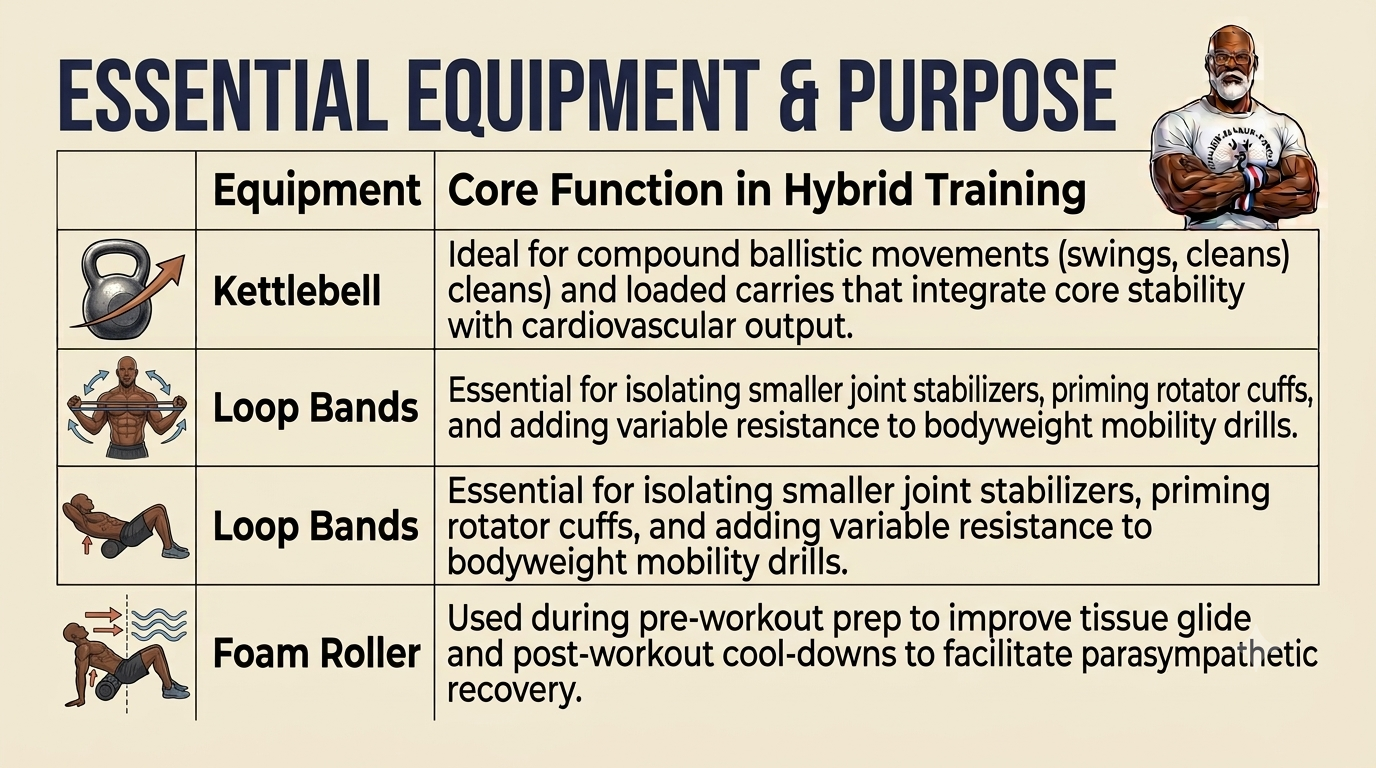
Equipment Needed: 1 Kettlebell, 1 Loop Band, 1 Foam Roller
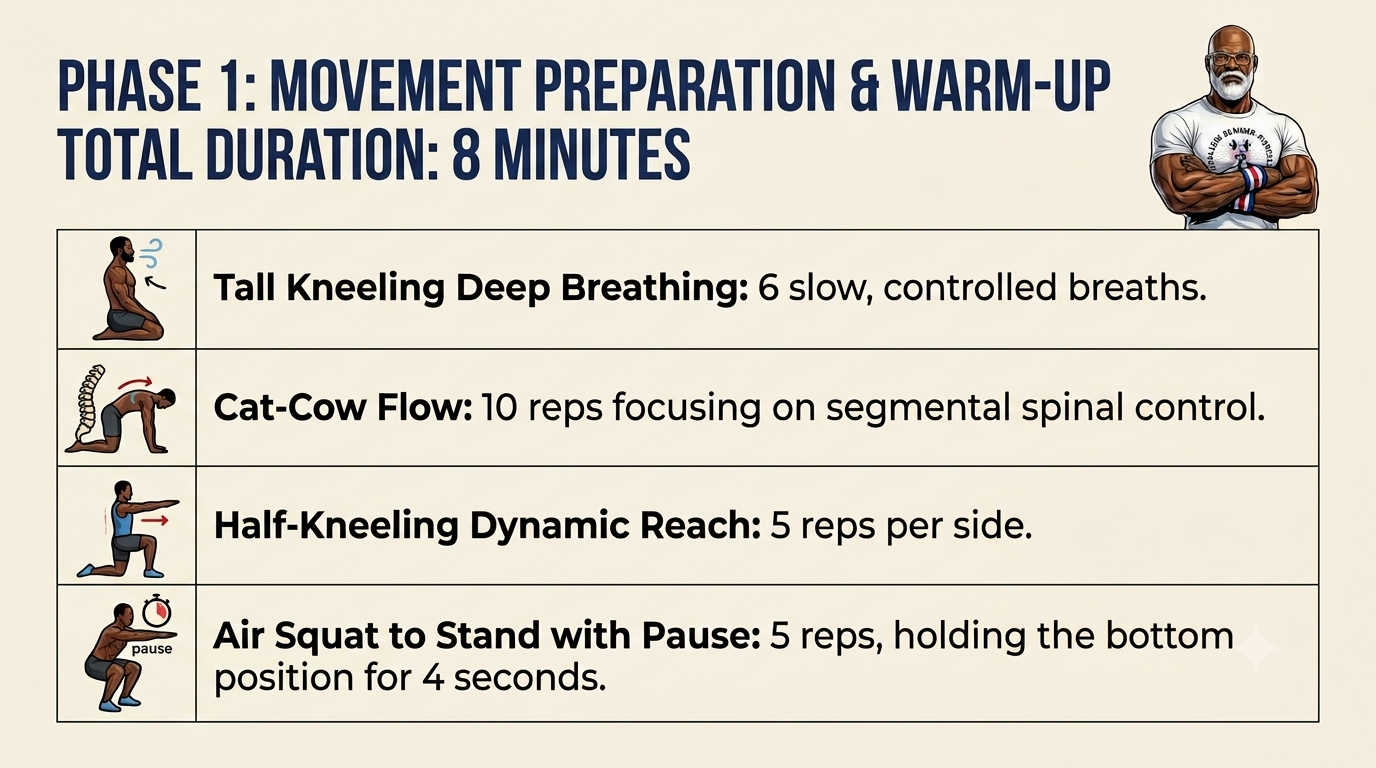
Phase 1: Movement Preparation & Warm-Up (8 Minutes)
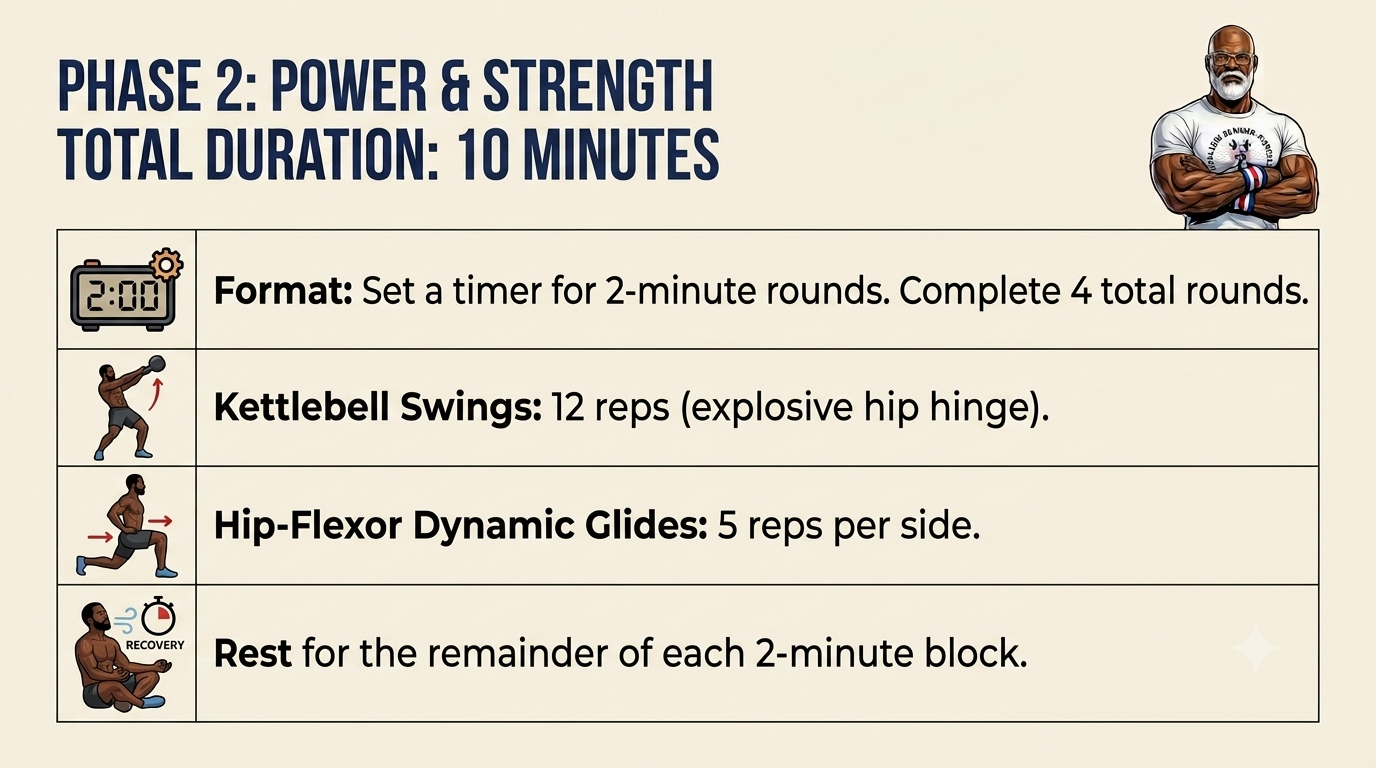
Phase 2: Power & Strength (10 Minutes)
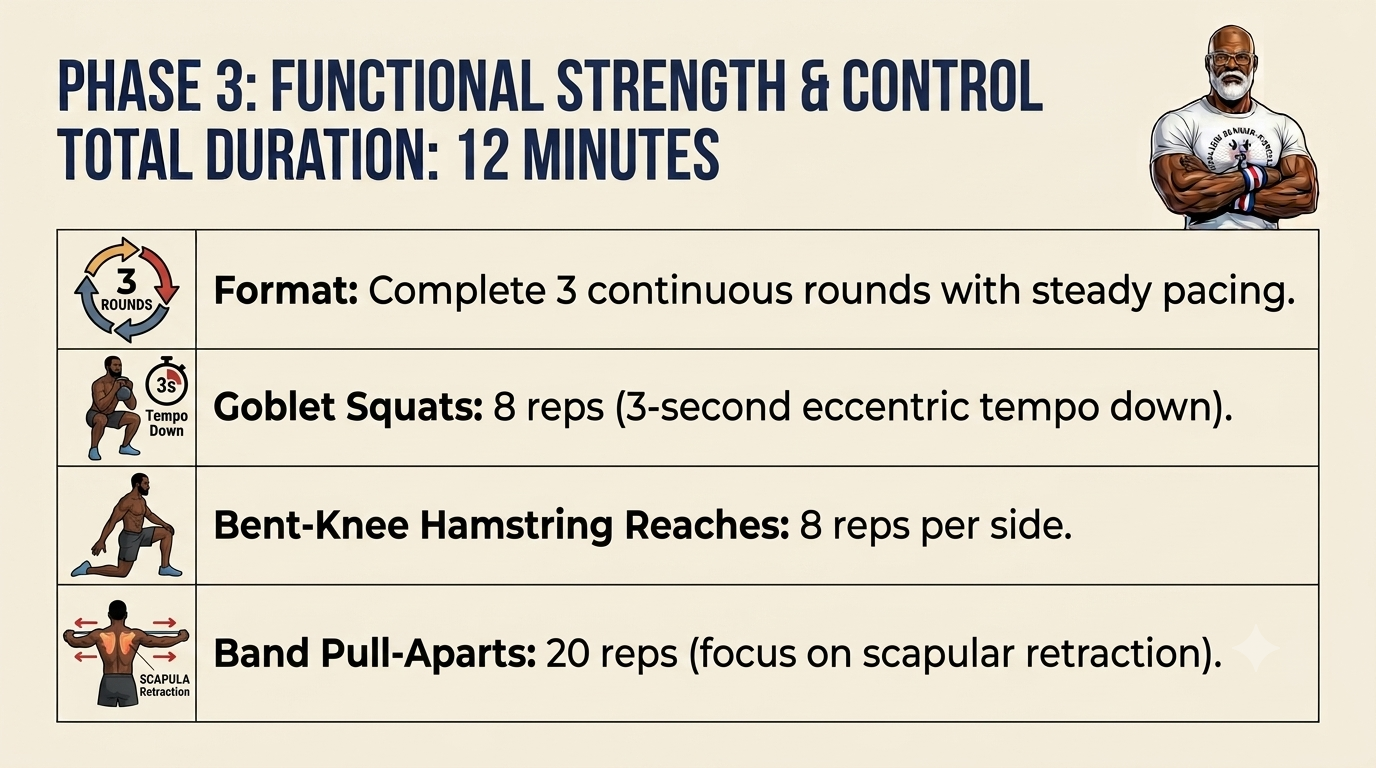
Phase 3: Functional Strength & Control (12 Minutes)
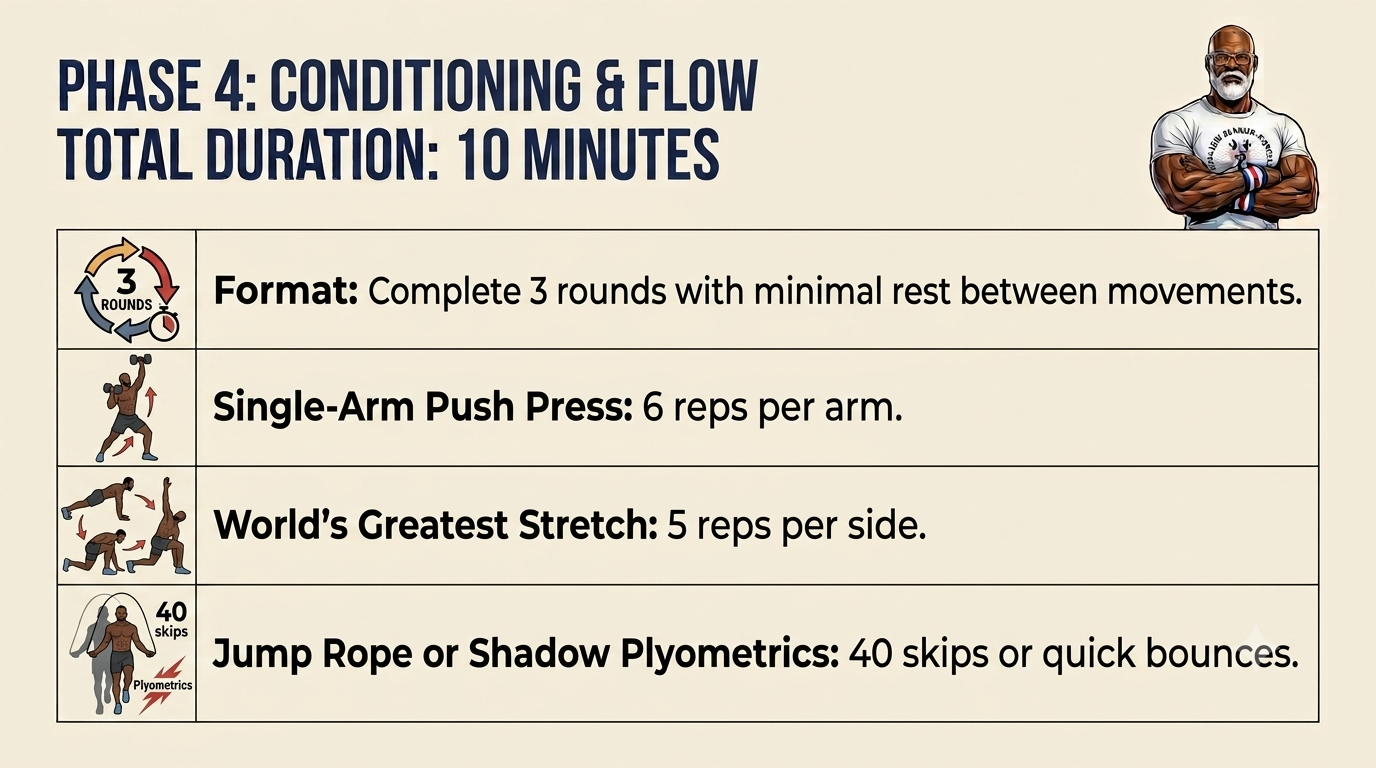
Phase 4: Conditioning & Flow (10 Minutes)
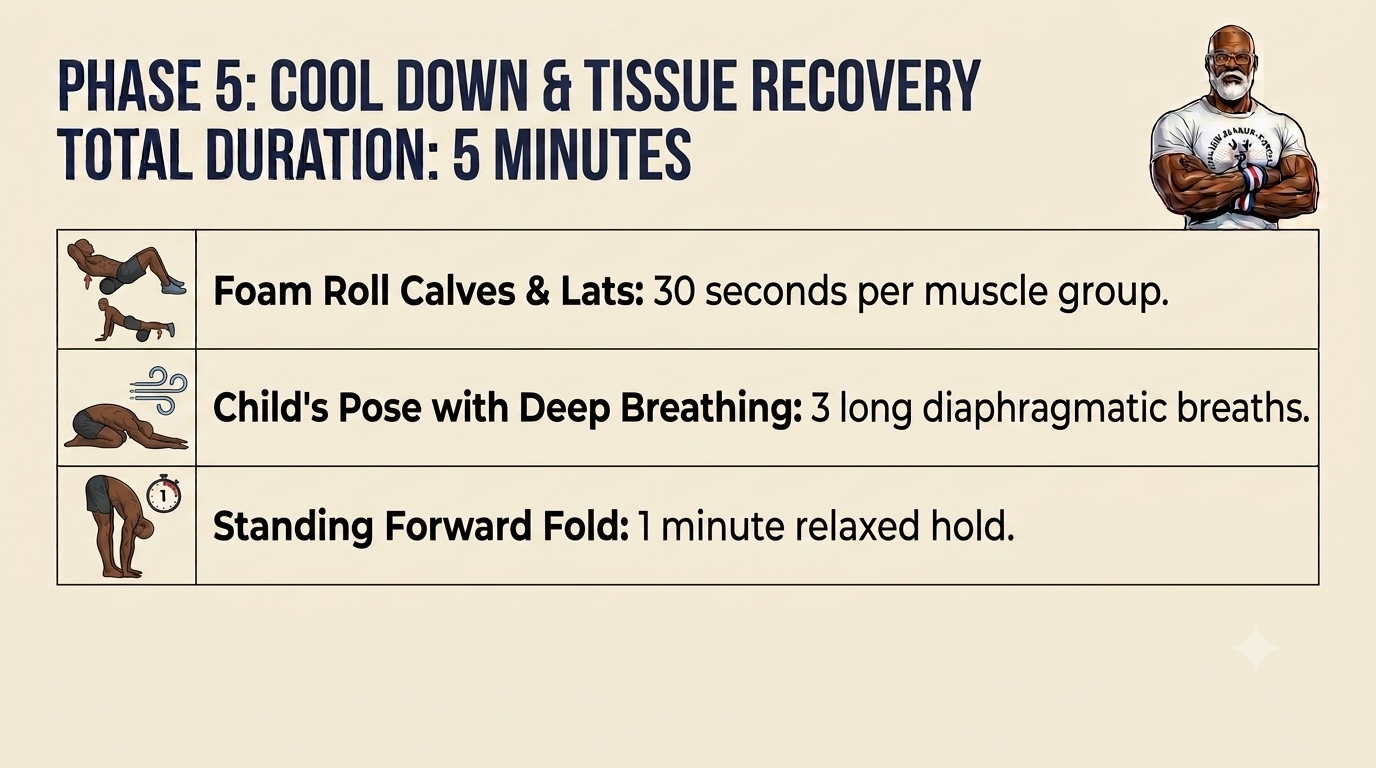
Phase 5: Cool Down & Tissue Recovery (5 Minutes)
-
Essential Equipment & Purpose
-
Tracking True Performance: Form & Volume vs Overload
Progress in hybrid training requires tracking both force production and joint freedom. Focus on execution quality and total movement volume rather than chasing artificial load increases.
Key Metrics to Monitor
- Strength & Volume: Log your total reps, sets, tempo adherence, and effort level (RPE scale of 1–10).
- Mobility & Control: Track comfortable end-range positions, balance control, and the ease of deep breathing at full extension.
- Movement Assessments: Use quick quarterly checks, like the wall ankle mobility test or overhead shoulder reach—to confirm joint access is expanding alongside strength gains.
-
Structuring Your Hybrid Training Week
To build an adaptable foundation, wave your volume across three-week cycles (two weeks of progressive volume followed by one taper week) to give your nervous system time to adapt.
- Monday: Upper-Body Functional Pull/Push & Scapular Mobility
- Tuesday: Hybrid Flow (Kettlebell Swings, Dynamic Mobility, Loaded Carries)
- Wednesday: Active Recovery & Dedicated Mobility Flow
- Thursday: Steady-State Aerobic Conditioning (Zone 2 Cardio or Row)
- Friday: Hybrid Intervals (Push/Pull Conditioning & Bodyweight Flow)
- Saturday: Single-Leg Balance, Core Stability & Band Drills
- Sunday: Full Rest & Outdoor Walking
Core Principles & Coach’s Corner
Patience, Commitment, Discipline, and Enjoyment. True strength is built over years of intentional movement, not weeks of redlining.
Quick Q&A
- Q: What is the biggest mistake people make with mobility?
A: Treating mobility work like filler or an afterthought instead of treating it as dedicated, high-value training.
- Q: How do I pick the right kettlebell weight?
A: Choose a weight you can move with complete control for 15 crisp, clean reps. Control always dictates load.
- Q: How do I unlock tight hips after sitting all day?
A: Practice half-kneeling glides paired with deep diaphragmatic breathing to signal safety to your nervous system.
Keep moving with purpose, honor your full range of motion, and stay committed to the process.
Medical Disclaimer: This article is for educational and informational purposes only and does not constitute medical advice. Always consult a physician or certified fitness professional before beginning a new exercise program, especially if you have pre-existing conditions.
If you believe in something, never give up! 12 months can change your life!
Peer-Reviewed Evidence & References
- Optimal Dietary Patterns & Overall Healthy Aging
- Study: Optimal Dietary Patterns for Healthy Aging
- Journal: Nature Medicine / PubMed Central
- Key Finding: Analyzing long-term prospective cohort data across over 100,000 participants, researchers demonstrated that adherence to high-quality, whole-food dietary patterns significantly increases the odds of achieving healthy aging—preserving physical function and metabolic health without functional decline.
- Reference Link: NCBI PMC Article PMC12092270
- Muscle Mass Preservation & Sarcopenia Prevention
- Study: Role of Dietary Protein and Muscular Fitness on Longevity and Aging
- Journal: Aging and Disease / PubMed Central
- Key Finding: Muscle strength and functional capacity are directly linked to lower all-cause mortality as adults age. The review highlights that combining consistent functional exercise with adequate protein distribution overcomes age-related anabolic resistance to maintain muscle protein synthesis and mobility.
- Reference Link: NCBI PMC Article PMC5772850
- Broad Anti-Inflammatory Dietary Patterns & Healthy Lifespan
- Study: Dietary Patterns and Healthy or Unhealthy Aging
- Journal: The Journal of Nutrition, Health & Aging / PubMed Central
- Key Finding: Transitioning from isolated nutrient targeting to whole anti-inflammatory lifestyle patterns downregulates systemic inflammatory markers, supporting long-term joint function and lowering the incidence of functional physical impairment.
- Reference Link: NCBI PMC Article PMC10794975