

Most athletes assume stiffness comes from tight muscles, but the real issue is a lack of joint control. When your nervous system senses instability, it restricts your range of motion as a protective mechanism. That’s why you can’t train hard, build strength, and still feel locked up, your body is guarding from positions it doesn’t believe you can stabilize. This article will show you 9 explosive mobility secrets for total body flexibility.
The Stiff Athlete Dilemma: Why Static Stretching Is Failing Your Joints
Static stretching only targets the superficial sensation of tightness, not the underlying neuromuscular limitation. Holding a cold stretch may temporarily soften the tissue, but it doesn’t improve your ability to coordinate movement, load a joint, or maintain tension through deeper ranges. Without that control, your nervous system simply re-tightens the area the moment you return to real-world movement.
This is why so many lifters, runners, and hybrid athletes feel stiff despite stretching regularly. They’re treating stiffness like a muscle-length problem when it’s actually a stability problem. Your hips, spine, and ankles don’t need to be pulled longer, they need to be trained to move with strength, precision, and confidence under tension.
Dynamic mobility solves the root cause by integrating strength, coordination, and joint control into every rep. Instead of passively forcing a position, you actively earn it. Over time, this restrains your nervous system to trust deeper ranges of motion, giving you flexibility that actually shows up in your lifts, your stride, and your daily movement, the kind of flexibility that makes you more athletic, not just more bendy.
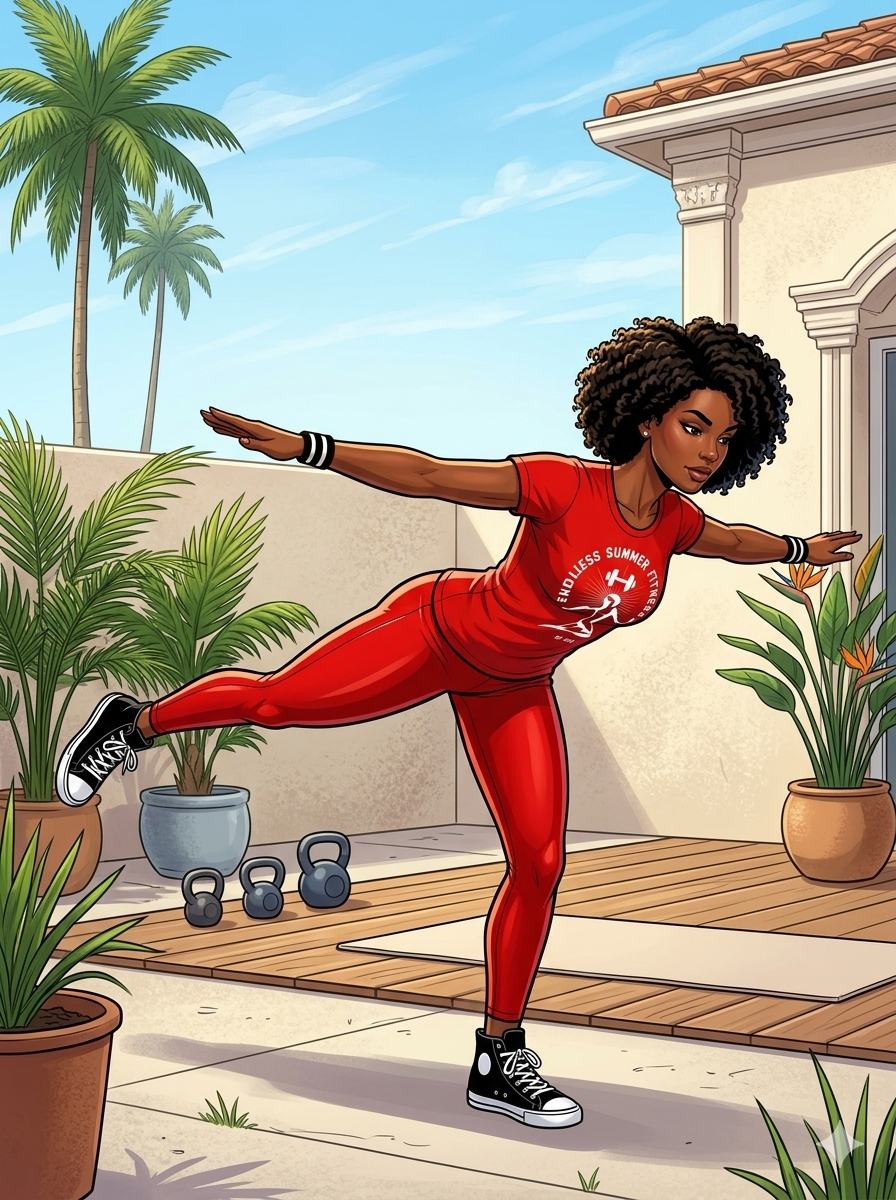
Dynamic mobility bridges the gap between raw strength and fluid movement, unlocking flexibility without sacrificing power.
If you’re new to mobility training, start with the ESF beginner guide: Hybrid Training Workouts: A Beginner’s Guide
The Total‑Body Mobility Blueprint
This system targets the three major friction points in the human kinetic chain, the areas where stiffness steals your power, posture, and stride length.
Internal Link:
Learn how these zones connect inside the hybrid training model:
👉 https://endlesssummerfitness.com/hybrid-training/ (endlesssummerfitness.com in Bing)
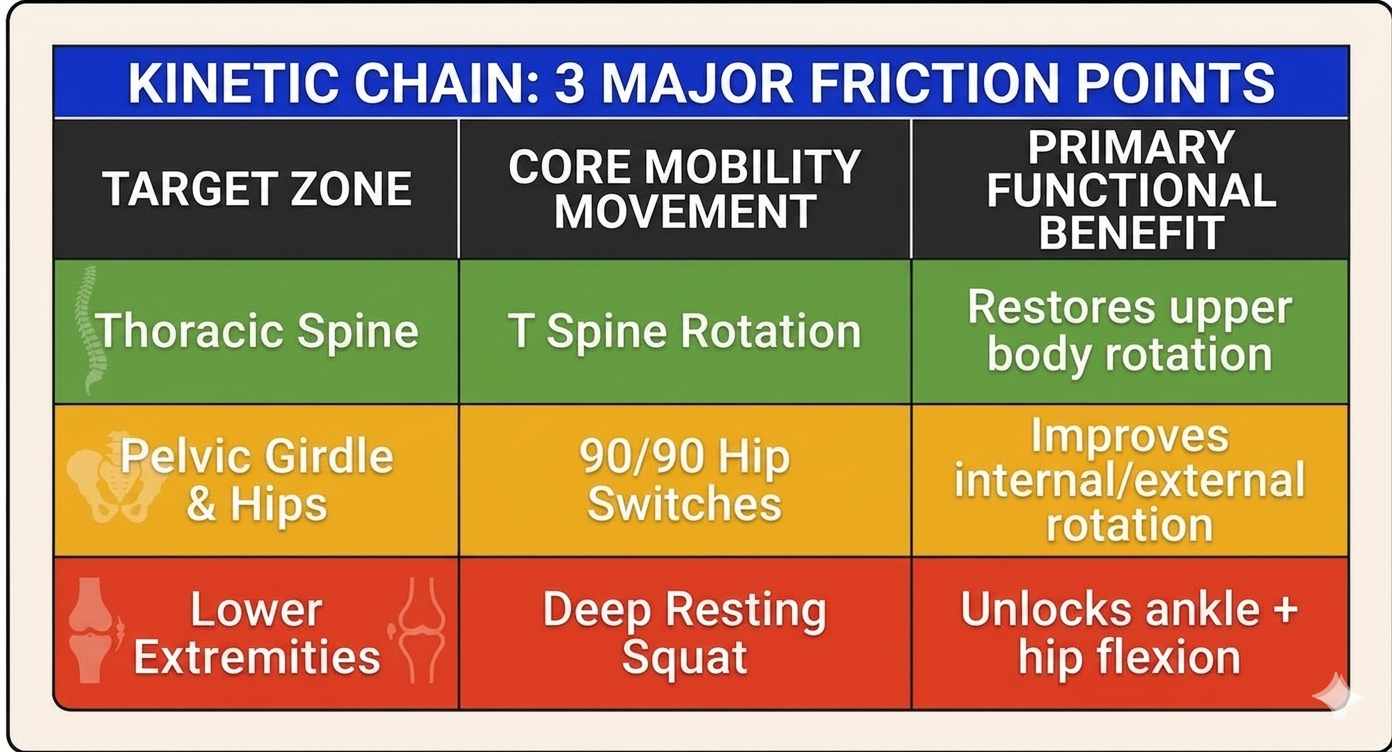
These three anchors influence everything, sprinting, lifting, walking, and daily movement.
9 Mobility Secrets for High‑Performance Flexibility
Secret 1: The World’s Greatest Stretch for Multi‑Planar Release
Target Area: T‑spine, hip flexors, hamstrings, glutes
Execution: Step into a deep lunge, hands inside the front foot. Rotate toward the ceiling, follow your hand with your eyes, then shift back into a hamstring stretch.
Reps: 5 per side
This is your all‑in‑one mobility reset.
Secret 2: 90/90 Hip Switches for Deep Pelvic Freedom
Target Area: Hip rotators, piriformis, joint capsules
Execution: Sit tall in the 90/90 setup and rotate your knees side‑to‑side without using your hands.
Reps: 8 per side
For deeper hip‑specific work, explore the ESF hip mobility guide: Hip & Lower Back Mobility: The Daily Flow You Need
Secret 3: Wall Angels for Upper‑Back Postural Realignment
Target Area: Scapular stabilizers, rhomboids, thoracic extension
Execution: Stand against a wall, ribs down, wrists + elbows touching. Slide your arms upward into a “V” without losing contact.
Reps: 10
Perfect for laptop posture and shoulder health.
Secret 4: The Deep Resting Squat for Lower‑Body Decompression
Target Area: Ankles, hips, lumbar spine
Execution: Drop into a deep squat with heels flat and chest tall. Use elbows to gently open the hips.
Hold: 45–60 seconds
If you have stiffness from sitting all day: Mobility for Desk Workers: 10 Moves to Undo Sitting Damage
Secret 5: Banded Good Mornings for Posterior Chain Length
Target Area: Hamstrings, glutes, hinge mechanics
Execution: Stand on a loop band, place it across your traps, hinge back until you feel a deep stretch, then stand tall.
Reps: 3×12
This builds flexible strengthnot passive flexibility.
Secret 6: Active Hip Flexor Couch Stretch for Sedentary Reversal
Target Area: Psoas, rectus femoris, hip flexors
Execution: Back knee to wall or couch, squeeze glute, stay tall.
Hold: 30 seconds per side
This is the antidote to modern sitting.
Secret 7: Dynamic Downward Dog for Posterior Calves and Achilles
Target Area: Calves, soleus, posterior chain fascia
Execution: Push into Downward Dog and pedal your heels.
Reps: 20
Keeps your ankles young and springy.
Secret 8: Kettlebell Overhead Carries for Shoulder Girdle Stability
Target Area: Rotator cuff, shoulder girdle, T‑spine stability
Execution: Press overhead, lock out, walk slow.
Steps: 40 per arm
Mobility + strength + posture in one drill.
Secret 9: Combat Shin Pulls for Anterior Tibialis Decompression
Target Area: Shins, anterior ankle capsule, top‑of‑foot mobility
Execution: Sit on heels, lean back, lift knees.
Reps: 10
A must‑have for runners and walkers.
StrengthLog‑Style Q&A
Should I perform this mobility plan before or after training?
Before. Dynamic mobility primes your nervous system, increases blood flow, and prepares your joints for movement. Save static holds for after training.
How long does it take to see permanent flexibility changes?
- Neural improvements: 2–4 weeks
- Structural tissue changes: 8–12 weeks
Consistency is everything.
What if my joints feel deconditioned?
Scale the range. Use wedges, door frames, or shortened angles — stay pain‑free and controlled.
If your ankles are the limiting factor, start here: Improve Ankle Mobility: 5 Best Exercises for Better Squats
Summary
Building elite, real-world flexibility doesn’t come from long static stretches — it comes from active mobility that strengthens your joints through usable ranges of motion. This plan targets the three biggest bottlenecks in the kinetic chain (thoracic spine, hips, and lower extremities) using nine high-impact mobility drills that improve rotation, hip control, ankle function, and total-body movement quality.
Each exercise trains your nervous system to stabilize new ranges while decompressing tight tissues, restoring joint mechanics, and improving posture. When performed consistently, you’ll see neural improvements within 2 – 4 weeks and deeper structural changes within 8 –12 weeks. Use these movements as your daily warm-up to prime your body for lifting, running, and hybrid training — and scale the range of motion as needed to stay pain-free.
Medical Disclaimer: This article is for educational and informational purposes only and does not constitute medical advice. Always consult a physician or certified fitness professional before beginning a new exercise program, especially if you have pre-existing conditions.
If you believe in something, never give up! 12 months can change your life!
Peer‑Reviewed + High‑Authority Sources
- StretchMed Studios — Dynamic Stretching Principles
https://stretchmedstudios.com/dynamic-stretching-legs-exercises/ - Men’s Journal — Mobility + Aging Reversal Training Insights
https://www.mensjournal.com/fitness/trainer-shares-11-must-do-exercises-that-reverse-aging-after-40 - StrongFirst — Flexibility for Kettlebell Training
https://www.strongfirst.com/flexibility-for-kettlebell-training-and-kettlebell-sport/ - YouTube — Bob & Brad Hip + Mobility Routines
https://www.youtube.com/watch?v=fI0ChjOJd30&t=350