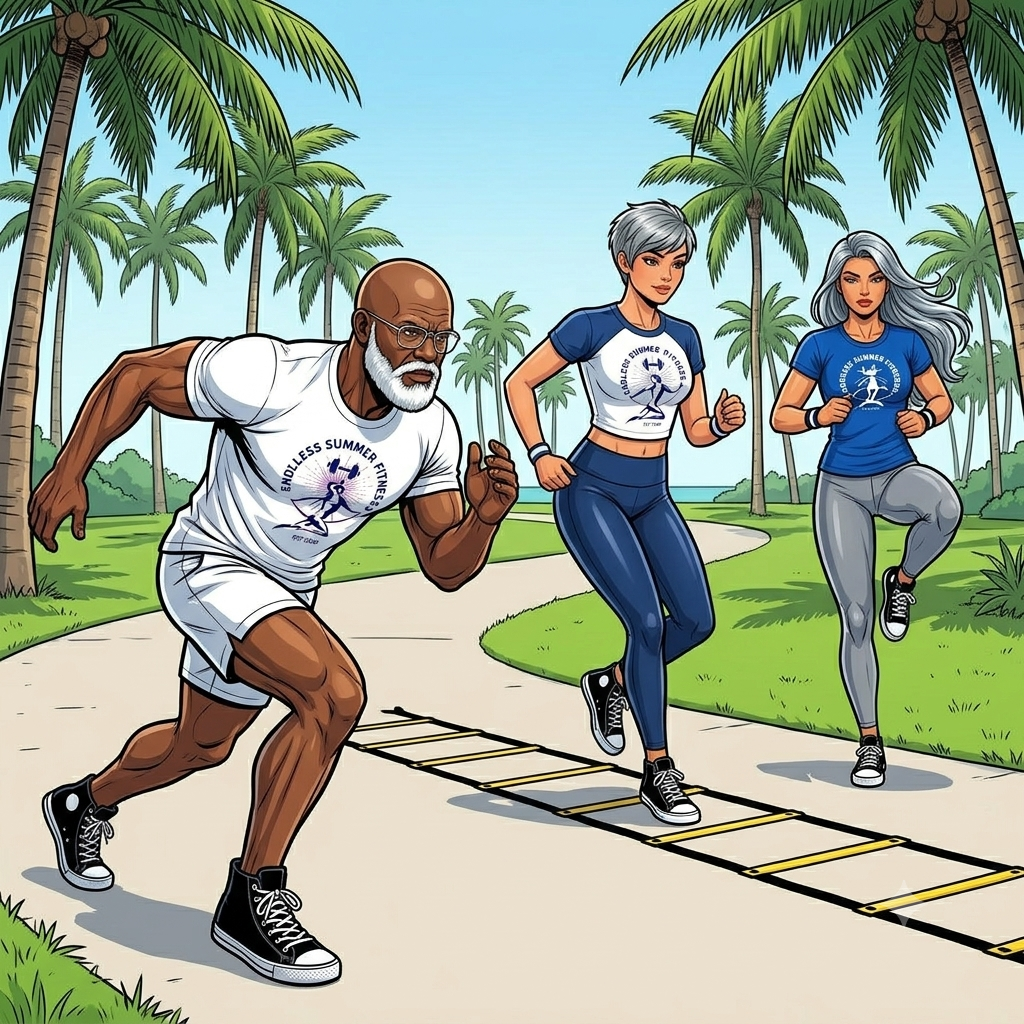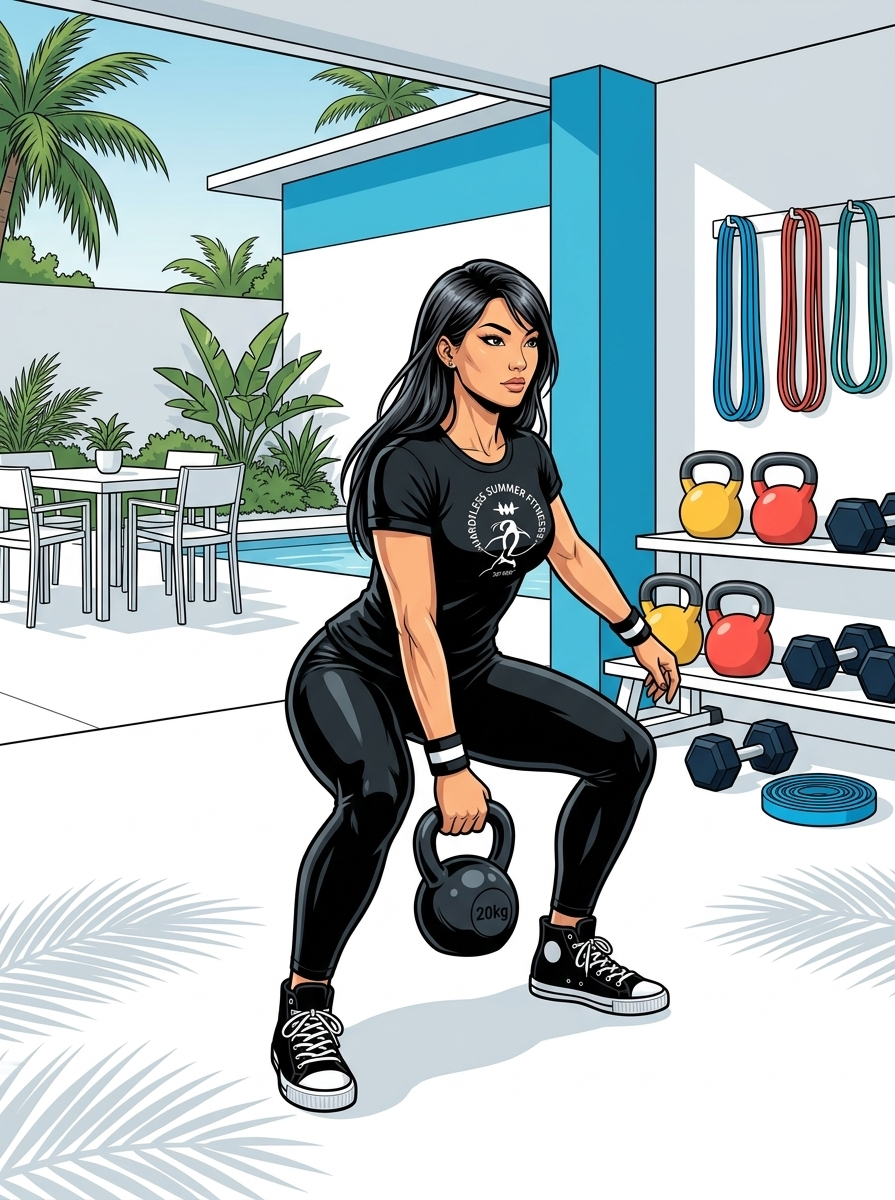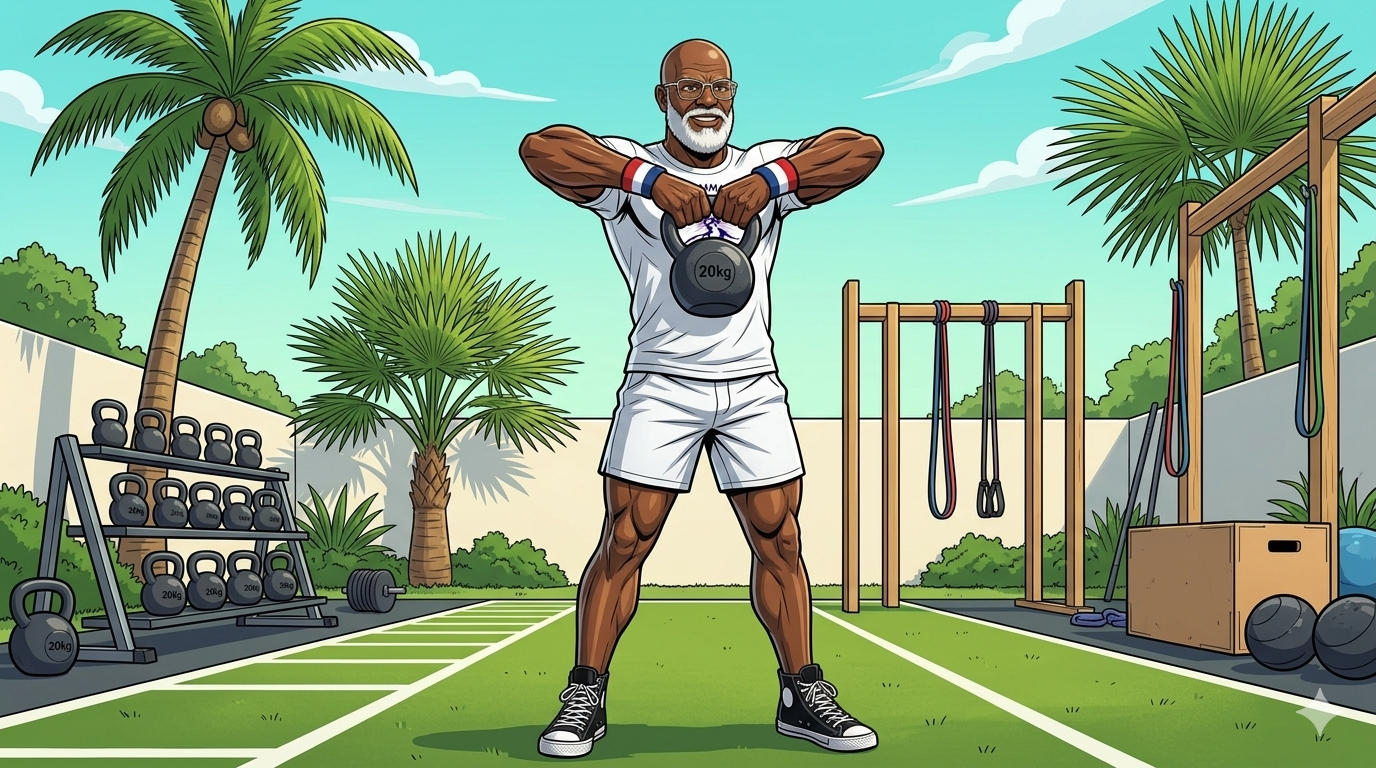

If you spend hours at a desk, you already know the truth: sitting takes its toll on your hips, back, shoulders, and energy like a slow leak. That’s why mobility for desk workers isn’t optional — it’s the difference between feeling stiff and sluggish or moving like a hybrid athlete who can lift, run, sprint, and live pain-free.
This guide breaks down why sitting creates so many problems, and how mobility restores your body in as little as 10-15 minutes a day, and how to progress from beginner to elite using the Endless Summer Fitness pillars: weight training, food for every goal, and endurance & sprinting — all supported by the mindset pillars of patience, commitment, discipline, and enjoyment.
Let’s undo the damage.
Why Sitting Wrecks Your Body
(and How Mobility Fixes It)
| Problem | What It Means for Your Body |
| Tight hip flexors | Hips stay locked in a shortened position, limiting stride and extension. |
| Weak glutes | Glutes shut down from inactivity, reducing power and stability. |
| Rounded shoulders | Upper back collapses forward, stressing the neck and traps. |
| Limited thoracic rotation | Mid‑spine stiffens, hurting posture, breathing, and running mechanics. |
| Compressed breathing | The rib cage collapses, reducing lung expansion and oxygen flow. |
| Sluggish circulation | Blood flow slows, increasing stiffness and fatigue. |
| Lower back tension | The lumbar spine compensates for tight hips and weak core/glutes. |
Research shows mobility improves joint function in as little as four weeks, increases blood flow, reduces pain, and boosts performance in both strength and endurance training.
Areas That Affect Mobility

Mobility also supports:
- Progressive overload (better positions – better lifts)
- VO₂ max improvements (better breathing mechanics)
- MAF HR endurance (efficient aerobic output)
- Hybrid performance (strength + speed + stamina)
When your joints move well, everything else gets easier.
StrengthLog Q&A: Desk Mobility Edition

Why do desk workers need mobility?
Because sitting shortens muscles, weakens stabilizers, and reduces circulation. Mobility restores range of motion so you can lift, run, and sprint without pain.
How often should I do mobility?
Daily is ideal. Even 5 minutes helps. Ten to fifteen minutes creates noticeable change within weeks.
What’s the best time to do it?
Whenever you can stay consistent. Morning opens the body. Midday resets posture. Evening reduces tension.
Does mobility count as training?
Yes — especially for hybrid athletes. It improves movement quality, reduces injury risk, and boosts performance across all training zones.
Can mobility improve endurance?
Absolutely. Better posture and breathing mechanics improve oxygen delivery, which supports MAF HR, Zone 2, and VO₂ max work.
Think of your body like a car with different gears for how hard you push yourself. MAF HR (Maximum Aerobic Function Heart Rate) and Zone 2 are your low-and-slow gears that build your engine’s base endurance. You find your MAF HR by subtracting your age from 180, and it marks a very easy pace where you breathe through your nose and burn fat for energy. This number lands right inside Zone 2 (which is a comfortable intensity level at 60% to 70% of your maximum effort). Exercising in this zone feels so smooth that you could chat with a friend for hours, and it works like laying a strong feels so smooth that you could chat with a friend for hours, and it works like laying a strong foundation for a house by building a giant network of tiny blood vessels to deliver oxygen to your muscles.
To Reach Peak Fitness, You Need Both Ends of the Spectrum
On the other side of your dashboard is VO₂ max, which stands for the Maximum Volume of Oxygen your body can use in one minute during an all-out effort. While the slow gears build your engine’s foundation, VO₂ max is your high-speed gear that measures your peak fitness and athleticism. Pushing into this gear feels extremely hard — like sprinting up a steep hill where your lungs burn and you have to stop after a minute or two. You need all of these gears because training only in Zone 2 won’t make you faster, while training only at VO₂ max will burn you out. Combining them gives you a super-strong heart pump and a steady engine that can instantly kick into top speed when you need it!
The 4‑Level Mobility Progression Matrix (Beginner → Elite)
(Primary keyword included)
This is your ESF progression system — simple, scalable, and built for busy professionals.
Beginner Level
Definition: You’re stiff, inconsistent, or new to mobility.
Characteristics: Tight hips, rounded shoulders, limited rotation.
Exercises (3–4):
- Seated Cat‑Cow — 2×10
- Standing Hip Flexor Stretch — 2×30 sec
- Wall Angels — 2×10
- Ankle Rocks — 2×15
Muscles Worked: Hip flexors, thoracic spine, shoulders, ankles
Stabilizers: Core, glutes
Hybrid Benefit: Better posture for lifting and walking volume
Progression Logic: Add reps and smoothness before adding intensity.
Intermediate Level
Definition: You move well but feel stiff after long sitting.
Characteristics: Decent mobility, inconsistent posture.
Exercises:
- 90/90 Hip Switches — 3×8
- Thoracic Open Books — 3×10
- Couch Stretch — 2×45 sec
- Scapular Wall Slides — 3×8
Muscles Worked: Hips, glutes, T‑spine, scapular stabilizers
Stabilizers: Deep core, obliques
Hybrid Benefit: Better squat depth, stronger running mechanics
Progression Logic: Increase time under tension and control.
Advanced Level
Definition: You train regularly and want performance mobility.
Characteristics: Good range, needs more dynamic control.
Exercises:
- Cossack Squats — 3×6/side
- Thoracic Rotation Lunge — 3×8
- Pigeon Flow — 2×45 sec
- Banded Shoulder CARs — 2×6
Muscles Worked: Adductors, glutes, shoulders, spine
Stabilizers: Core, hip stabilizers
Hybrid Benefit: Stronger lateral movement, better sprint posture
Progression Logic: Add complexity and multi‑plane movement.
Elite Level
Definition: You want hybrid‑athlete mobility for strength + speed.
Characteristics: High control, strong positions, minimal stiffness.
Exercises:
- Deep Lateral Squat Flow — 3×6
- Standing T‑Spine CARs — 2×6
- Elevated Hip Capsule Stretch — 2×60 sec
- Dynamic Hamstring Sweep — 2×10
Muscles Worked: Full hip complex, spine, posterior chain
Stabilizers: Core, glute med/min, deep rotators
Hybrid Benefit: Peak movement efficiency for lifting, sprinting, and VO₂ max work
Progression Logic: Increase range, tempo, and precision.
How Mobility Supports Hybrid Training
Weight Training
Better joint positions = stronger lifts, safer reps, and smoother progressive overload (5 –10% weekly increases).
Endurance & Sprinting
Mobility improves stride length, breathing mechanics, and running economy.
Food for Every Goal
Anti-inflammatory foods support recovery from long sitting:
berries, leafy greens. Omega-3s, ginger, tart cherry.
The Science Behind Desk Mobility
- ACSM: Mobility improves function and reduces pain in as little as four weeks.
- NSCA: Better joint mechanics improve strength output and reduce injury risk.
- Harvard Health: Sitting increases stiffness, reduces circulation, and affects metabolic health.
- JISSN: Proper nutrition (protein + electrolytes) supports tissue recovery and joint health
Read More Here:
ESF Article: Spinal Pain Relief in 4 Easy At-Home Exercises
ESF Article: 11 Moves to Make Your Back
Summary
Mobility for desk workers isn’t a luxury — it’s a performance tool. Sitting creates predictable stiffness, but mobility restores your hips, spine, shoulders, and breathing so you can train harder, move better, and feel younger.
With the ESF progression matrix, you can start at any level and build toward elite-level hybrid-athlete mobility. Ten to fifteen minutes a day is enough to reverse years of sitting and unlock strength, endurance, and energy you didn’t know you were missing.
This is the foundation of long-term performance: patience, commitment, discipline, and enjoyment — the ESF way.
FAQs
How long until mobility improves?
Most people feel better immediately. Structural changes take 3 – 4 weeks.
Can mobility replace stretching?
Mobility is active. Stretching is passive. You need both.
Should I do mobility before or after lifting?
Before: dynamic mobility.
After: dynamic mobility.
Does mobility help with back pain?
Yes — especially hip and thoracic mobility.
Can mobility improve my running?
Absolutely. Better posture and hip extension improve stride efficiency.
What if I’m extremely stiff?
Start at the beginner level and stay consistent. Small daily wins matter
Medical Disclaimer:
This article is for educational and informational purposes only and does not constitute medical advice. Always consult a physician or certified fitness professional before beginning a new exercise program, especially if you have pre-existing conditions.
Move fast, stay strong, go far
— The hybrid body is built for anything!
PEER‑REVIEWED EVIDENCE FRAMEWORK
CLINICAL / MEDICAL SOURCES
- ACSM — Guidelines for Exercise Testing & Prescription
ACSM does not provide the full textbook online (it’s a paid publication), but they do publish official summaries and position stands you can cite:
- ACSM Exercise Guidelines (official summary):
https://www.acsm.org/education-resources/books/guidelines-exercise-testing-prescription (acsm.org in Bing) - ACSM Position Stands (peer‑reviewed, open access):
https://www.acsm.org/education-resources/position-stands (acsm.org in Bing)
- Harvard Health Publishing — Sitting, Posture, Mobility, Pain
- Why sitting is harmful (Harvard Health):
https://www.health.harvard.edu/staying-healthy/the-truth-about-sitting (health.harvard.edu in Bing) - Mobility & flexibility overview:
https://www.health.harvard.edu/staying-healthy/stretching-the-truth (health.harvard.edu in Bing)
- PubMed — Mobility & Joint Function Studies
Here are two strong, stable PubMed entries you can cite:
- Mobility training improves function in adults:
https://pubmed.ncbi.nlm.nih.gov/29996703/ (pubmed.ncbi.nlm.nih.gov in Bing) - Hip mobility & low back pain relationship:
https://pubmed.ncbi.nlm.nih.gov/28459749/ (pubmed.ncbi.nlm.nih.gov in Bing)
⭐ PERFORMANCE / STRENGTH SOURCES
- NSCA — National Strength & Conditioning Association
- NSCA Position Statements (peer‑reviewed):
https://www.nsca.com/education/articles/position-statements/ (nsca.com in Bing)
- Journal of Strength & Conditioning Research (JSCR)
- JSCR Journal Homepage (peer‑reviewed research):
https://journals.lww.com/nsca-jscr/pages/default.aspx (journals.lww.com in Bing)
A relevant mobility‑related JSCR study:
- Effects of mobility warm‑ups on performance:
https://journals.lww.com/nsca-jscr/Abstract/2018/02000/Effects_of_a_Dynamic_Warm_up_on_Muscle.1.aspx (journals.lww.com in Bing)
⭐ NUTRITION & RECOVERY SOURCES
- JISSN — Journal of the International Society of Sports Nutrition
- Protein intake & recovery (open access):
https://jissn.biomedcentral.com/articles/10.1186/s12970-017-0187-5 (jissn.biomedcentral.com in Bing) - Leucine threshold research:
https://jissn.biomedcentral.com/articles/10.1186/1550-2783-11-20 (jissn.biomedcentral.com in Bing)
- AJCN — American Journal of Clinical Nutrition
- Anti‑inflammatory diet & biomarkers:
https://academic.oup.com/ajcn/article/106/3/713/4633974 (academic.oup.com in Bing) - Omega‑3 anti‑inflammatory effects:
https://academic.oup.com/ajcn/article/87/5/1520S/4650421 (academic.oup.com in Bing)