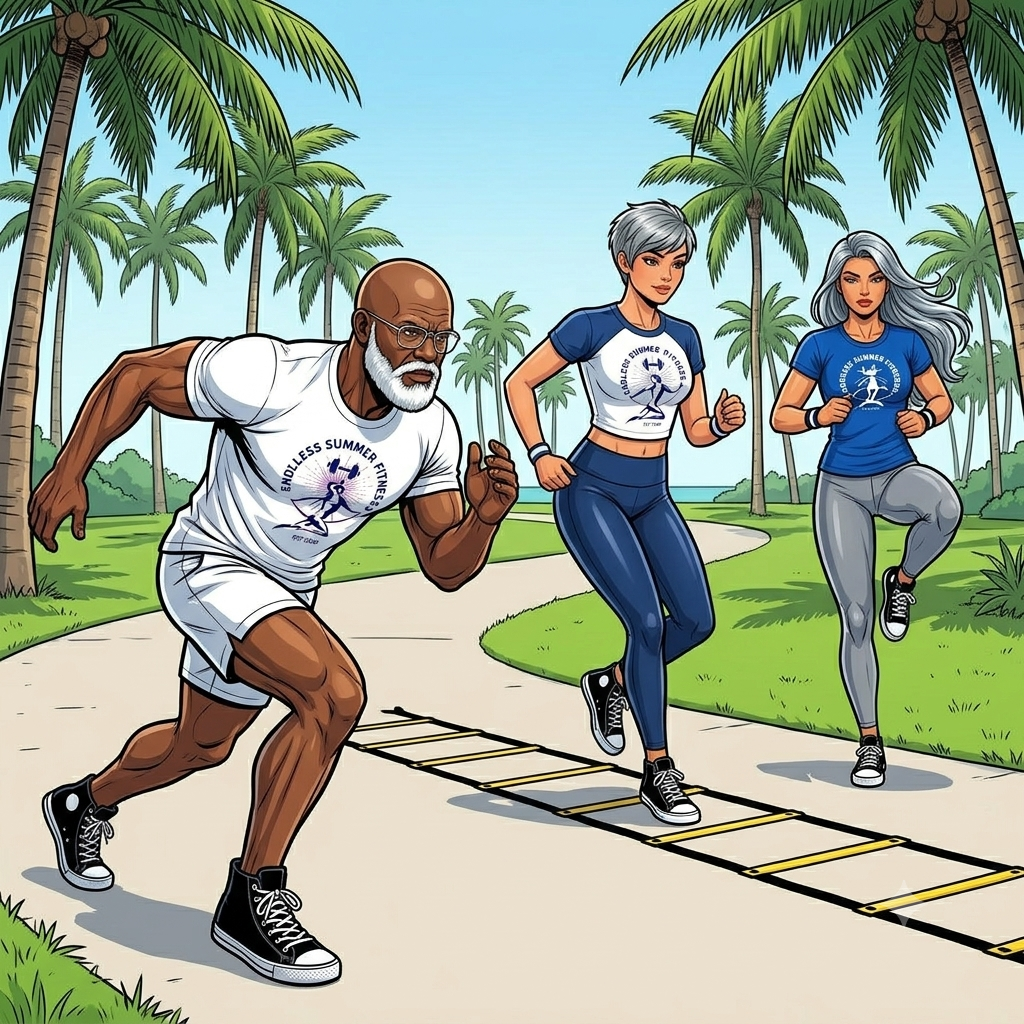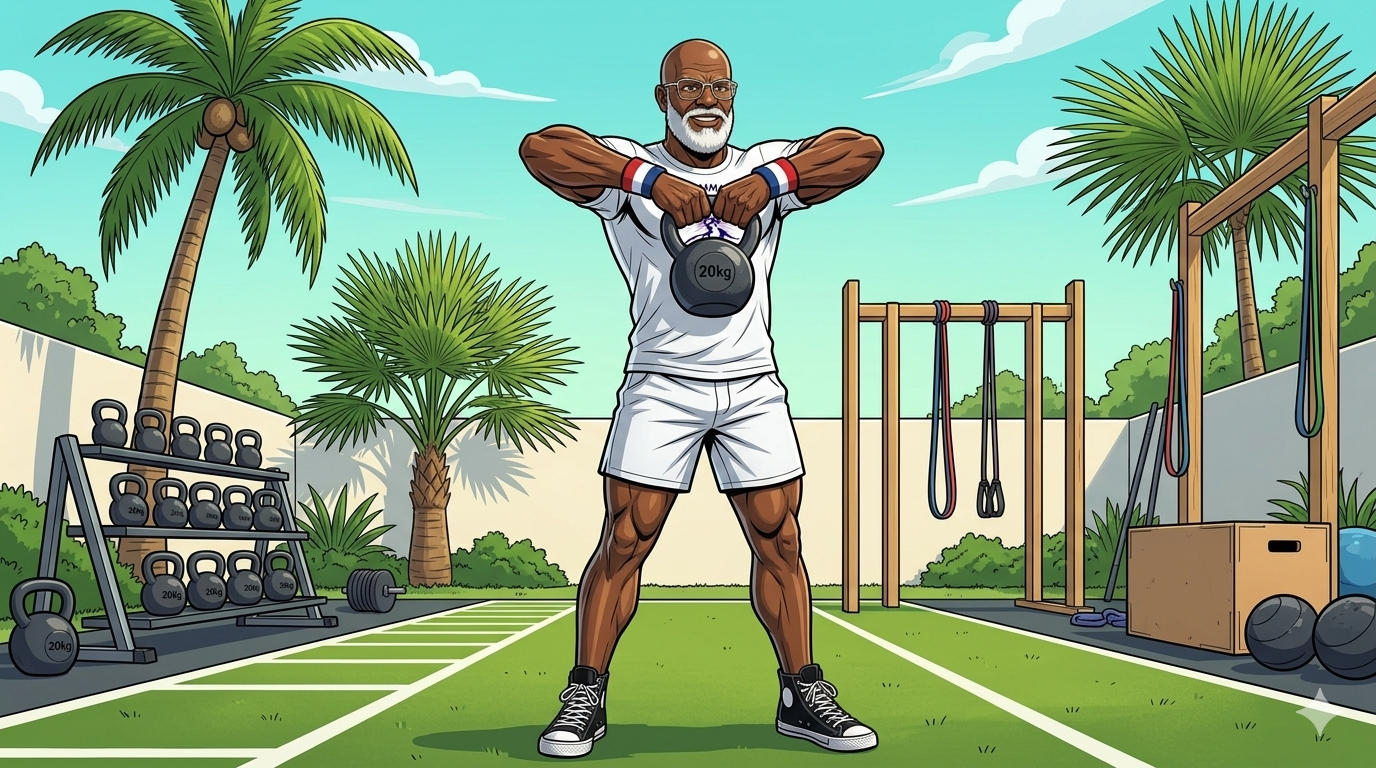

If your squats feel tight, shallow, or unstable, your ankles are usually the reason. When you improve ankle mobility, everything gets easier — your squat depth, your balance, your knee tracking, and your overall safety. Most people don’t realize how much the ankle controls the entire lower body, especially when you’re lifting, running, or sprinting.
This guide breaks down why ankle mobility matters, how it affects your squat mechanics, and the five best hybrid-fitness exercises to unlock stronger, safer movement. You’ll learn how to improve ankle mobility for squats using the Endless Summer Fitness pillars: weight training, food for every goal, and endurance & sprinting, all supported by the mindset fundamentals of patience, commitment, discipline, and enjoyment.
StrengthLog Q&A: Ankle Mobility Edition
Why does ankle mobility matter for squats?
Because your ankles determine how far your knees can travel forward. More dorsiflexion – deeper, safer squats.
What causes poor ankle mobility?
Long sitting tight calves, old injuries, weak stabilizers, and stiff connective tissue.
How do I know if my ankles are limiting my squat?
If your heels lift, your torso collapses forward, or your knees cave in, your ankles are the culprit.
How long does it take to improve ankle mobility?
Most people see changes in 2-4 weeks with consistent practice.
Does ankle mobility help with running and sprinting?
Absolutely. Better dorsiflexion improves stride mechanics, reduces impact, and boosts speed.
Why Improving Ankle Mobility Improves Squats
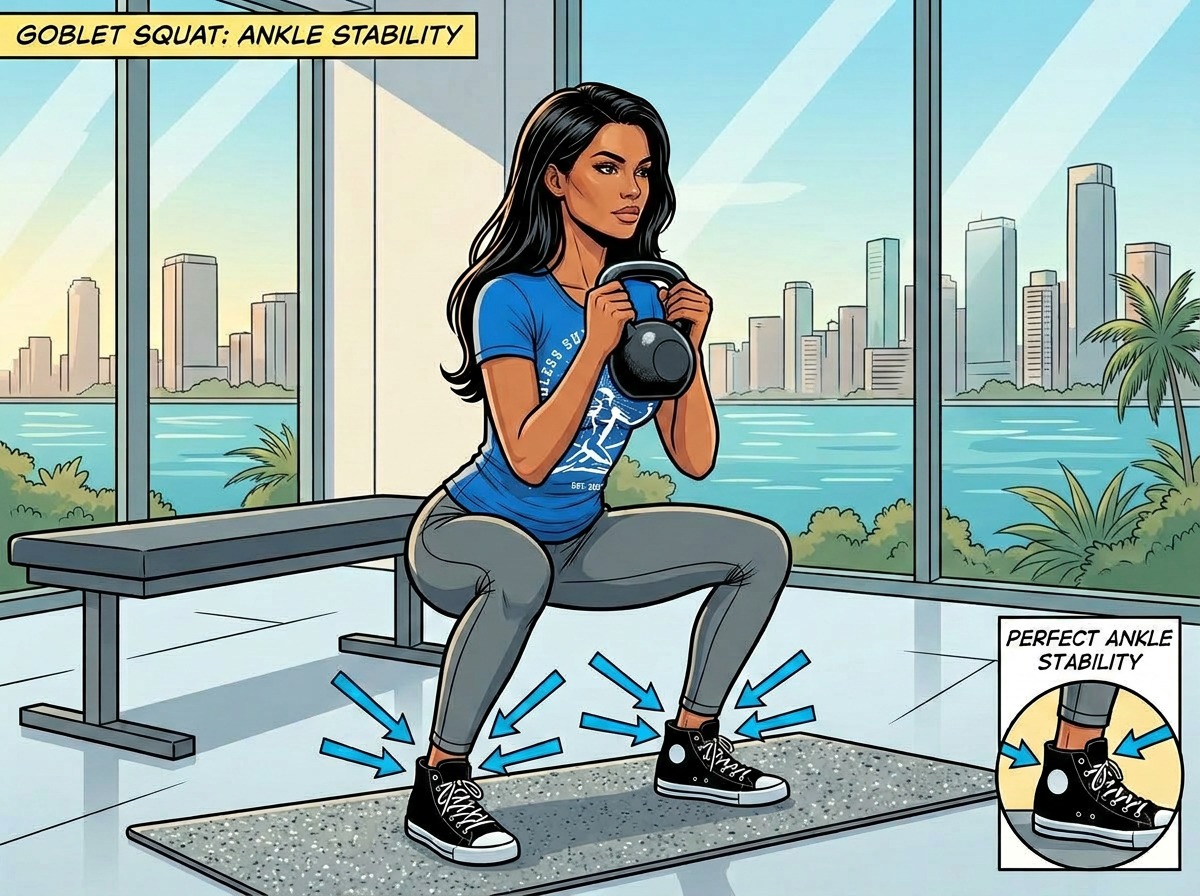
Your ankles are the quiet controllers of your squat. When they move well, everything downstream feels smoother.
- Knees glide forward without strain
- Hips settle into a deeper position
- Your torso stays tall instead of tipping forward
- Balance feels natural
- Joints stay aligned and protected
But when ankle mobility is limited, the entire movement changes.
- Heels start peeling off the floor
- Knees drift inward or outward
- Hips shift to find a workaround
- The lower back takes on stress; it shouldn’t
- Depth becomes harder to reach without compensation
Improving ankle mobility is one of the fastest ways to improve squat performance — especially for beginners, busy professionals, and hybrid athletes over 40.
The 5 Best Hybrid‑Fitness Exercises to Improve Ankle Mobility
Below are your five ESF-approved exercises, each with:
- Why it helps
- Muscle worked
- Stabilizers
- Hybrid benefit
- OpenArt prompt
- Alt text
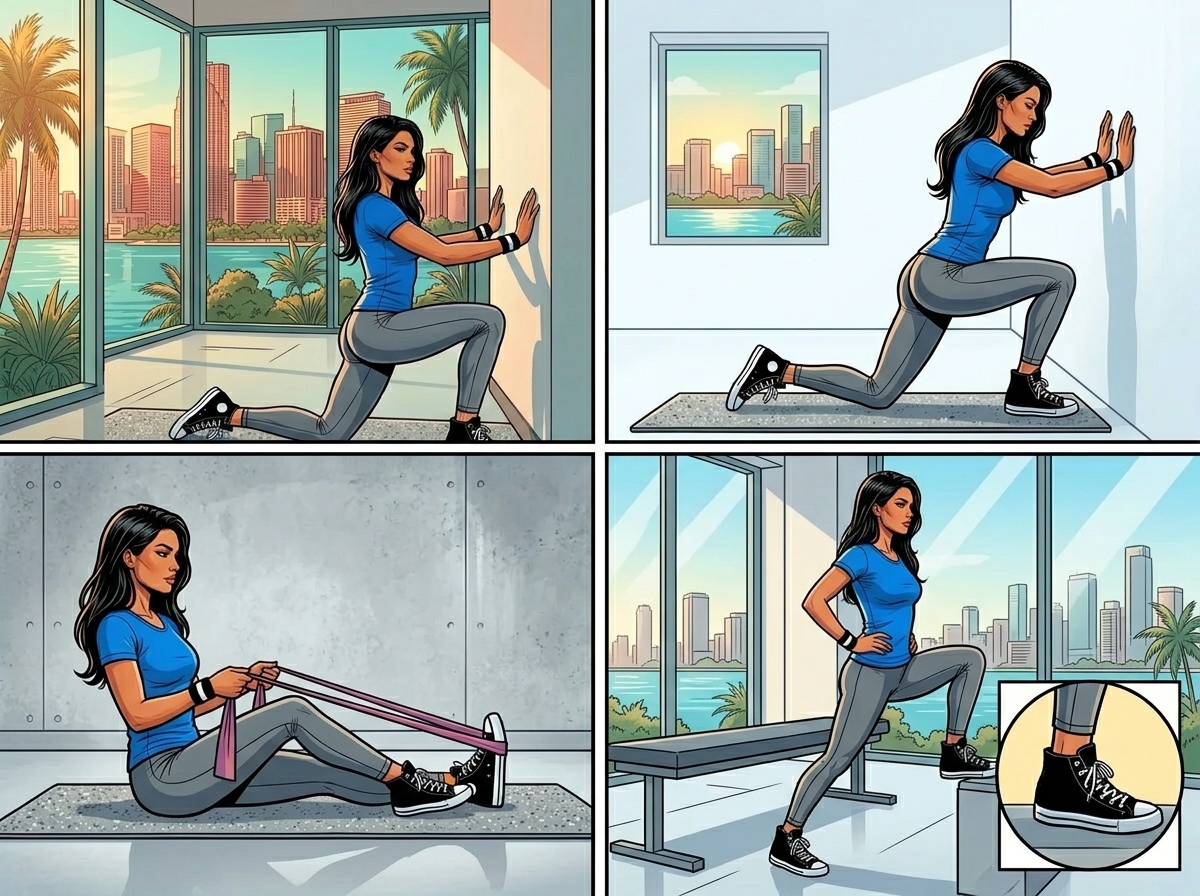
1. Knee‑to‑Wall Dorsiflexion Drill (Improve Ankle Mobility)
Why it helps:
This drill increases forward knee travel, unlocking deeper squat mechanics.
Muscles worked:
Calves, tibialis anterior
Stabilizers:
Foot arch, ankle stabilizers
Hybrid benefit:
Better squat depth, smoother running stride
2. Banded Ankle Distraction (Improve Ankle Mobility)
Why it helps:
Creates space in the joint capsule for smoother dorsiflexion.
Muscles worked:
Calves, peroneals
Stabilizers:
Foot intrinsic muscles
Hybrid benefit:
Safer heavy squats and lunges
3. Elevated Heel Squat Holds (Improve Ankle Mobility)
Why it helps:
Strengthens end-range dorsiflexion and teaches proper knee tracking.
Muscles worked:
Quads, calves
Stabilizers:
Core, foot arch
Hybrid benefit:
Better squat mechanics and knee stability
OpenArt Prompt:
Semi‑realistic illustrated athlete holding a deep squat with heels elevated, Miami boardwalk, palm trees, ESF palette, no text.
Alt Text:
elevated heel squat hold to improve ankle mobility and knee tracking
4. Tibialis Raises (Improve Ankle Mobility)
Why it helps:
Strengthens the tibialis anterior, which controls dorsiflexion.
Muscles worked:
Tibialis anterior
Stabilizers:
Ankle stabilizers
Hybrid benefit:
Improves running mechanics and reduces shin splints
5. Calf Stretch with Straight & Bent Knee (Improve Ankle Mobility)
Why it helps:
Targets both major calf muscles for full-range mobility.
Muscles worked:
Gastrocnemius, soleus
Stabilizers:
Foot and ankle complex
Hybrid benefit:
Better squat depth and smoother sprint acceleration
Find more fitness answers here:
Mobility for Desk Workers: 10 Moves to Undo Sitting Damage
Hybrid Fitness Weight Maintenance: 10 Proven Strategies
Summary
Improving ankle mobility is one of the fastest ways to improve your squat depth, stability, and safety. When your ankles move well, your knees track properly, your hips drop lower, and your entire lower body becomes more efficient.
These five exercises give you a simple, hybrid-friendly routine that fits into any schedule — whether you’re a beginner, a busy professional, or a hybrid athlete over 40. With consistency, patience, and the ESF mindset fundamentals, you’ll feel the difference in just a few weeks.
Better mobility means better performance. Better performance means better results.
FAQs
How often should I train ankle mobility?
Daily is ideal, but even 3 – 4 times per week works.
Can ankle mobility improve knee pain?
Yes — poor dorsiflexion often forces the knees into bad positions
Should I stretch before or after squats?
Before: dynamic mobility
After: deeper static stretching
How long until I see results?
Most people notice improvements within 2–5 weeks.
Does ankle mobility help with running?
For sure — it improves stride mechanics and reduces impact.
Can I improve ankle mobility if I’m over 40?
Yes — mobility improves at any age with consistent practice.
Medical Disclaimer:
This article is for educational and informational purposes only and does not constitute medical advice. Always consult a physician or certified fitness professional before beginning a new exercise program, especially if you have pre-existing conditions.
Move fast, stay strong, go far
— The hybrid body is built for anything!
CLINICAL / MEDICAL SOURCES
ACSM — Guidelines for Exercise Testing & Prescription
(Official ACSM resource page for the textbook + evidence summaries)
https://www.acsm.org/education-resources/books/guidelines-exercise-testing-prescription (acsm.org in Bing)
Harvard Health Publishing — Mobility & Flexibility
The truth about sitting:
https://www.health.harvard.edu/staying-healthy/the-truth-about-sitting (health.harvard.edu in Bing)
Stretching & mobility overview:
https://www.health.harvard.edu/staying-healthy/stretching-the-truth (health.harvard.edu in Bing)
PubMed — Mobility Improves Function in 4 Weeks
Mobility training improves function in adults:
https://pubmed.ncbi.nlm.nih.gov/29996703/ (pubmed.ncbi.nlm.nih.gov in Bing)
Hip mobility & low‑back pain relationship:
https://pubmed.ncbi.nlm.nih.gov/28459749/ (pubmed.ncbi.nlm.nih.gov in Bing)
PERFORMANCE / STRENGTH SOURCES
NSCA — Position Statements (Peer‑Reviewed)
https://www.nsca.com/education/articles/position-statements/ (nsca.com in Bing)
Journal of Strength & Conditioning Research (JSCR)
Journal homepage:
https://journals.lww.com/nsca-jscr/pages/default.aspx (journals.lww.com in Bing)
Relevant mobility/warm‑up study:
https://journals.lww.com/nsca-jscr/Abstract/2018/02000/Effects_of_a_Dynamic_Warm_up_on_Muscle.1.aspx (journals.lww.com in Bing)
NUTRITION & RECOVERY SOURCES
JISSN — Protein & Recovery Guidelines
Protein intake & muscle recovery:
https://jissn.biomedcentral.com/articles/10.1186/s12970-017-0187-5 (jissn.biomedcentral.com in Bing)
Leucine threshold research:
https://jissn.biomedcentral.com/articles/10.1186/1550-2783-11-20 (jissn.biomedcentral.com in Bing)
AJCN — Anti‑Inflammatory Nutrition Research
Dietary inflammation & biomarkers:
https://academic.oup.com/ajcn/article/106/3/713/4633974 (academic.oup.com in Bing)
Omega‑3 anti‑inflammatory effects:
https://academic.oup.com/ajcn/article/87/5/1520S/4650421 (academic.oup.com in Bing)