
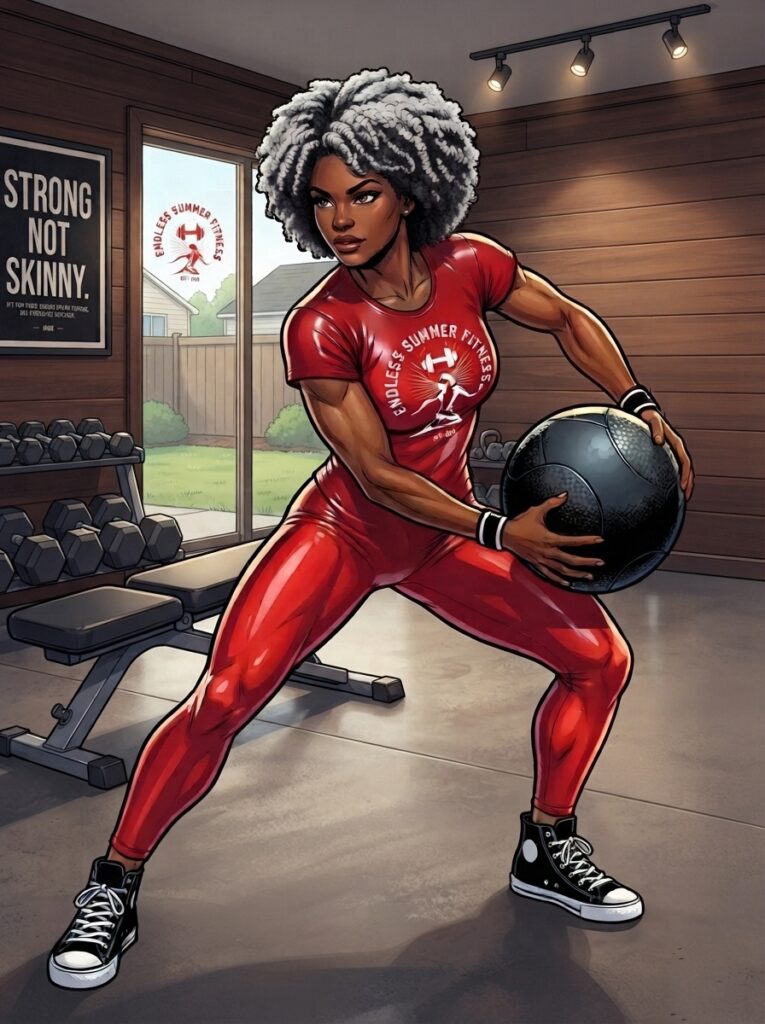
Flexibility and joint mobility are fundamental pillars of long-term physical capacity. In The Ultimate Mobility Guide for Joint Health, we emphasize that while resistance training builds muscle and connective tissue strength, mobility ensures your joints move freely through their full, natural range of motion without compensation or pain.
Focusing solely on pressing or heavy loading without addressing joint mechanics leads to postural imbalances, tight hip flexors, and shoulder impingement. Incorporating targeted mobility work into your weekly routine restores movement efficiency, improves balance, and significantly reduces the risk of repetitive stress injuries.
The Difference Between Flexibility and Mobility
Understanding how these two concepts differ is essential for choosing the right drill at the right time:
- Flexibility: The passive length of a muscle (e.g., reaching down to touch your toes in a static hold).
- Mobility: The active ability of a joint to move through a full range of motion under control (e.g., lifting your leg into a high step without rounding your spine).
To build durable joints, your routine must combine dynamic mobility during warm-ups to prepare tissue for movement, and static stretching after sessions to restore baseline muscle length.
1. Dynamic Lower-Body & Hip Mobility
Use these dynamic movements prior to workouts or as an everyday morning sequence to lubricate the hip joints and prepare the lower body for movement.
Dynamic Hip Flexor Lunge
- Method: Dynamic
- Primary Focus: Opening tight hip flexors and improving hip extension.
- Prescription: 3 sets of 10–12 controlled reps per side
- Execution: Kneel on your left knee with your right foot flat on the floor in front of you, forming 90-degree angles at both knees. Keep your torso tall, squeeze your left glute, and gently shift your hips forward until you feel a comfortable stretch in the front of your left hip. Hold for 1–2 seconds, return to the start, and repeat.
Dynamic Lunge with Torso Twist
- Method: Dynamic
- Primary Focus: Hip mobility combined with thoracic spine rotation.
- Prescription: 3 sets of 8–10 reps per side
- Execution: Step forward into a shallow lunge. Pause at the bottom, brace your core, and rotate your torso toward your front leg. Return your torso to center, push through your front foot to stand tall, and alternate to the opposite leg.
Lateral Resistance Band Tube Walk
- Method: Dynamic / Active Activation
- Primary Focus: Gluteus medius activation and hip stability.
- Prescription: 3 sets of 12–15 steps in each direction
- Execution: Loop a mini-resistance band around your legs just above your knees or ankles. Maintain a slight bend in your knees and a shallow hinge at your hips. Step sideways in a slow, controlled cadence, keeping constant tension on the band. Avoid dragging your feet or letting your knees collapse inward.
2. Upper-Body Posture & Shoulder Mobility
Modern sitting positions cause the shoulders to round forward and the upper back to stiffen. These protocols restore scapular movement and open the chest.
Resistance Band Chest Opener
- Method: Static
- Primary Focus: Decompressing tight chest muscles (pectoralis major/minor) and resetting shoulder alignment.
- Prescription: 3 sets of 20–30 second holds
- Execution: Anchor a resistance band at chest height. Stand facing away from the anchor point, holding the band with one hand. Step forward gently until you feel a comfortable stretch across the chest and front shoulder. Keep your ribs down and core engaged—do not arch your lower back.
Overhead Rope Shoulder Pass-Through
- Method: Dynamic
- Primary Focus: Shoulder girdle mobility and chest opening.
- Prescription: 3 sets of 10–12 smooth repetitions
- Execution: Stand tall holding a rope or strap with a wide grip in front of your thighs. Keeping your arms straight (without locking the elbows), slowly lift the rope overhead and sweep it back behind your body as far as comfortable mobility allows. Return to the starting position using the same slow cadence.
Prone Stability Ball Back Extension
- Method: Active Mobility & Spinal Extension
- Primary Focus: Strengthening the erector spinae and thoracic extension.
- Prescription: 3 sets of 10–12 reps
- Execution: Lie face down with your abdomen supported on a stability ball and your toes anchored on the floor behind you. Place your hands behind your head or across your chest. Lower your upper torso over the ball, then contract your glutes and upper back muscles to raise your chest until your body forms a straight line. Pause briefly at the top before lowering.
3. Targeted Flexibility & Core Stability
These exercises restore baseline muscle length in the hamstrings and build trunk anti-rotation strength to protect the lower back.
Floor Towel Hamstring Stretch
- Method: Static
- Primary Focus: Safe hamstring lengthening without lower-back strain.
- Prescription: 3 sets of 30-second holds per leg
- Execution: Lie flat on your back on a padded mat. Loop a towel or strap around the arch of one foot. Keeping the opposite leg flat on the floor, gently pull the towel to lift your extended leg toward the ceiling until you feel a smooth stretch through the back of your thigh. Keep your lower back relaxed on the mat.
Medicine Ball Chop and Lift
- Method: Dynamic / Anti-Rotation Core Control
- Primary Focus: Core stability, hip rotation, and diagonal pattern movement.
- Prescription: 3 sets of 10–12 reps per side
- Execution: Hold a light medicine ball with both hands near your right hip. Pivot on your back foot and drive the ball diagonally across your body, finishing with the ball held above your left shoulder. Control the movement back down to your right hip over 2 full seconds before starting the next rep.
Guidelines for Long-Term Mobility Progress
- Match the Stretch to the Time: Perform dynamic stretches (lunges with twists, tube walks) before your sessions to prepare joints for movement. Save static holds (towel hamstring stretches, chest openers) for after your workout to relax tension.
- Never Force Range of Motion: Stretch to the point of mild tension, never sharp joint pain. Forcing a joint past its current limit triggers a protective muscle contraction, defeating the purpose of the movement.
- Consistency Over Duration: Spending 5 to 10 minutes on mobility every single day delivers far greater long-term joint health than doing an hour-long stretching session once a month.
Peer-Reviewed Guidelines & Industry Standards
-
American College of Sports Medicine (ACSM)
Guideline: Physical Activity & Flexibility Guidelines for Adult Populations.
Takeaway: Performing static and dynamic flexibility training at least 2–3 days per week significantly enhances joint range of motion and functional capacity.
Link: ACSM Physical Activity Standards -
National Academy of Sports Medicine (NASM)
Guideline: Integrated Warm-Up Strategies and Flexibility Concepts.
Takeaway: Combining dynamic warm-ups with active mobility exercises reduces the incidence of lower-limb injuries during physical activity.
Link: NASM Exercise Science Library -
Harvard Health Publishing
Guideline: Benefits of Mobility and Flexibility in Aging Populations.
Takeaway: Targeted mobility and balance routines help mitigate age-related muscle loss and reduce fall risks in older adults.
Link: Harvard Health Mobility Overview
Medical Disclaimer: This article is for educational purposes only and does not constitute medical advice. Always consult a physician or certified healthcare professional before beginning any new exercise routine, especially if you have pre-existing joint conditions or injuries.