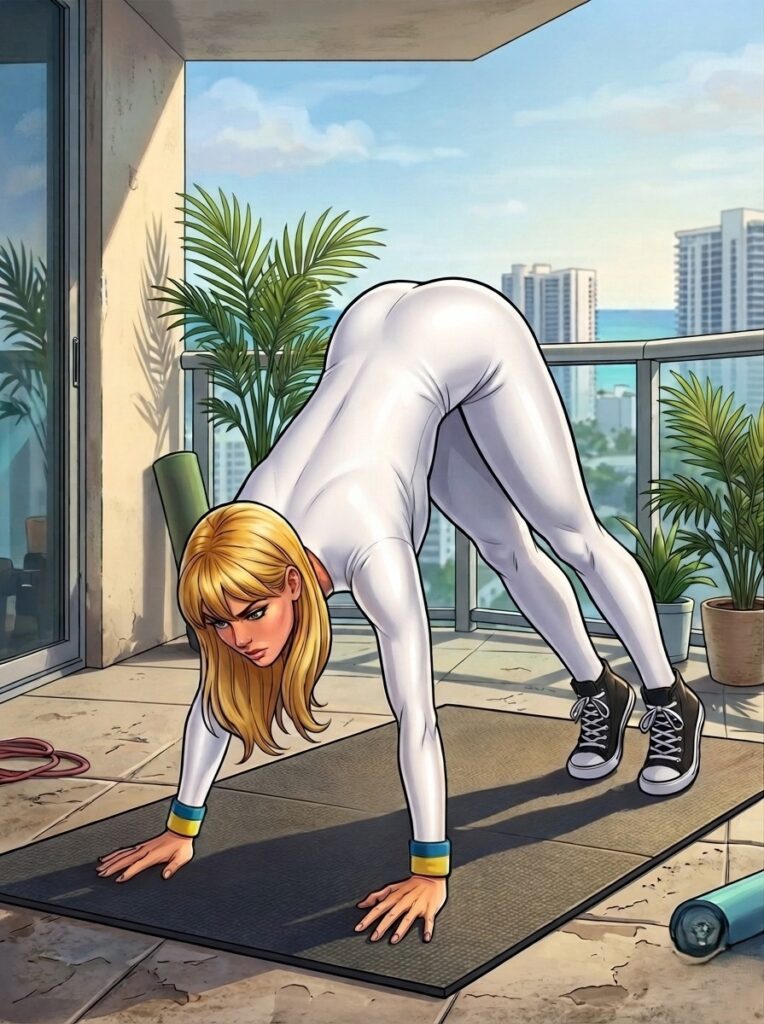
Bodyweight training is one of the most practical ways to build strength, mobility, and functional movement. You use your own body mass as resistance, so you develop total-body control without specialized gym equipment. To get you started let’s look at Calisthenics for Adults 40+.
Related Training Guide: If you are managing joint stiffness or returning from a layoff, pair this routine with our How to Start Working Out After 40 to establish a solid foundation before increasing volume.
Many traditional calisthenics programs make a critical mistake. They rely too heavily on high-volume push-ups and rapid crunches.
Too much pressing without pulling creates forward-rounded shoulders. Fast, repetitive crunches place unnecessary rotational stress on the lumbar spine. For adults who are deconditioned or returning to exercise, jumping straight into high-impact warm-ups or extreme joint angles invites shoulder and wrist strain.
Durable strength comes from a balanced routine. Pair controlled pressing with upper-back pulling. Maintain solid ground support. Use 3-second lowering tempos to protect your joints while building physical capacity.
Warm-Up Mechanics
Perform 5 to 8 minutes of dynamic movement before this routine. Dynamic warm-ups raise muscle temperature, increase synovial fluid production, and prepare the nervous system for controlled loading.
Recommended warm-up sequence:
- Arm circles forward and backward, 10 each direction
- Shoulder pass-throughs with a towel or dowel, 10 reps
- Cat-cow spinal flexion and extension, 8 reps
- Bodyweight hip hinges, 10 reps
- Standing marches with arm swings, 30 seconds
Save static stretching for after your workout. Holding stretches before resistance training can temporarily reduce force output and does not reduce injury risk during the session.
The Joint-Friendly Calisthenics Blueprint
Perform this balanced routine 2 to 3 times per week as a controlled, full-body circuit. Rest 60 to 90 seconds between sets. Allow 48 hours between sessions so connective tissue and joints recover fully.
1. Incline Hands-Elevated Push-Up
- Primary Focus: Horizontal pressing, chest engagement, and shoulder stability.
- Volume: 3 sets of 8 to 12 reps
- Tempo: 3 seconds lowering, 1-second pause, 1 second pressing
- How to do it: Place your hands shoulder-width apart on a sturdy elevated surface such as a kitchen counter, solid desk, or wall. Walk your feet back until your body forms a straight line from head to heels. Brace your midsection and lower your chest toward the surface over 3 full seconds. Keep your elbows angled back at 45 degrees from your torso. Pause briefly, then press back to the starting position without harshly locking your elbows.
2. Doorframe Iso-Row
- Primary Focus: Upper-back strength, scapular retraction, and posture correction.
- Volume: 3 sets of 10 to 12 reps per side
- Tempo: 2 seconds pulling, 2-second hold at the top, 3 seconds lowering
- How to do it: Stand in an open doorway. Grip the doorframe firmly with one hand at chest height. Place your feet close to the base of the frame. Lean back gently until your arm is fully extended. Pull your chest toward the frame by squeezing your shoulder blade back and down. Hold the contraction for 2 full seconds. Slowly lower back to the starting position over 3 seconds. Complete all reps on one side before switching.
3. Bodyweight Box Squat
- Primary Focus: Quadriceps, glute activation, and knee-friendly hip hinge mechanics.
- Volume: 3 sets of 10 to 12 reps
- Tempo: 3 seconds lowering, 1-second pause on bench, 1 second standing
- How to do it: Stand directly in front of a sturdy chair or bench with feet shoulder-width apart. Reach your hips back and slowly lower your body over 3 seconds until your glutes touch the seat. Keep your heels flat and knees aligned with your toes. Pause briefly on the seat without releasing core tension. Drive through your heels to stand tall.
4. Prone Y-T-W Extension
- Primary Focus: Posterior deltoids, mid-trapezius strength, and shoulder girdle endurance.
- Volume: 3 sets of 8 to 10 reps per letter position
- Tempo: 1 second raising, 2-second hold, 3 seconds lowering
- How to do it: Lie face down on a padded exercise mat with legs extended straight.
- Y Position: Form a “Y” with your arms overhead and thumbs pointing toward the ceiling. Lift your arms off the mat by squeezing your upper back. Hold for 2 seconds, then lower over 3 seconds.
- T Position: Move your arms out to the sides at 90 degrees to form a “T.” Raise, hold for 2 seconds, then lower.
- W Position: Pull your elbows down toward your ribs with hands lifted to form a “W.” Raise, hold for 2 seconds, then lower.
5. Dead Bug Core Stabilization
- Primary Focus: Anti-extension core control and lower-back protection.
- Volume: 3 sets of 10 to 12 reps per side
- Tempo: 3 seconds reaching, 1-second pause, 3 seconds returning
- How to do it: Lie flat on your back on a cushioned mat. Lift your legs with knees bent at 90 degrees. Reach both arms straight up toward the ceiling. Press your lower back flat into the floor. Slowly extend your right arm backward overhead while reaching your left leg straight out forward. Lower both toward the floor over 3 seconds. Stop just before your back arches. Slowly return to the starting position and switch sides.
Progression Rules for Long-Term Capacity
- Adjust Incline Heights First: To make push-ups easier or harder, change the height of your surface. Higher surfaces such as walls or high counters reduce load. Lower surfaces such as benches or step blocks increase resistance.
- Prioritize Symmetrical Balance: Always perform an equal volume of pulling exercises to match your pressing work. Doorframe rows and Y-T-W extensions offset the forward shoulder position that pressing creates.
- Respect Rest Days: Allow 48 hours between bodyweight sessions. Connective tissue and joints adapt more slowly than muscle, making recovery time mandatory.
Summary
Calisthenics does not require high-impact jumping or aggressive push-up variations to deliver results. Use balanced movement patterns, solid points of leverage, and controlled 3-second lowering tempos to build total-body physical capacity and joint longevity from your home.
Continue Building Your Capacity
Expand your conditioning with these evidence-based, joint-friendly training guides:
- Next Up for Balanced Conditioning: Pair this session with our joint-friendly lower-body routine to build total-body functional stamina without overloading your hips or knees. [Read the Full Lower-Body Protocol Here]
- Optimize Your Recovery & Endurance: Keep your heart rate elevated on non-lifting days using zero-impact cardiovascular modalities. [Explore 7 Joint-Friendly Cardio Workouts]
- Protect Your Shoulders: Strengthen your posterior deltoids and scapular stabilizers with our targeted shoulder health guide. [View the Upper-Body & Joint Stability Routine]
Peer-Reviewed References and Standards
-
American College of Sports Medicine (ACSM)
Guideline: Resistance Training Guidelines for Older Adults and Deconditioned Populations.
Takeaway: Closed-kinetic-chain bodyweight exercises performed with controlled cadences safely improve muscle mass and bone mineral density without excessive joint stress.
Link: ACSM Physical Activity Guidelines -
National Strength and Conditioning Association (NSCA)
Guideline: Biomechanics of Bodyweight Training and Postural Correction.
Takeaway: Maintaining a 1:1 ratio between horizontal pressing and horizontal pulling exercises prevents scapular dyskinesis and shoulder impingement.
Link: NSCA Education and Research -
Journal of Strength and Conditioning Research
Study: Effect of Eccentric Velocity on Muscle Activation and Joint Shear Stress
Takeaway: Using 3-second eccentric tempos during bodyweight movements maximizes muscle activation while lowering peak force impact on joint structures.
Link: PubMed Central Research
Medical Disclaimer: This article is for educational and informational purposes only and does not constitute medical advice. Always consult a physician or certified fitness professional before starting a new exercise routine.