

Proper daily nutrition and hydration dictate metabolic health, joint lubrication, cognitive performance, and physical endurance. Prioritizing nutrient-dense whole foods alongside calculated fluid intake establishes the foundational capacity required to sustain high-volume physical training without systemic fatigue.
The Physiological Impact of Daily Nutrition and Hydration
Nutritional intake directly supplies the substrate for cellular repair, immune response, and hormonal balance, while water maintains blood volume and thermoregulation. Neglecting either pillar degrades physical capacity and accelerates joint and muscle fatigue.
When training after age 40, your body’s margins for recovery narrow. Inadequate nutrient density combined with sub-clinical dehydration compounds systemic inflammation, degrades sleep quality, and increases susceptibility to overuse injuries. Treating daily nutrition and hydration as deliberate daily protocols rather than casual afterthoughts ensures your musculoskeletal system adapts to training volume efficiently.
Key Benefits of Structural Nutrition
A structured approach to daily eating prioritizes nutrient density over restrictive dieting. Consuming unrefined, complete food sources delivers predictable metabolic energy and essential structural compounds.
- Sustained Energy Production: Balanced macronutrient distribution stabilizes blood glucose levels. This eliminates the sharp energy spikes and crashes common with refined sugar consumption, providing steady physical drive throughout the day.
- Systemic Disease Prevention: Micronutrients, polyphenols, and dietary antioxidants reduce systemic inflammatory markers. Consistent intake supports long-term arterial function, insulin sensitivity, and immune defense.
- Cognitive Focus and Mood: Essential fatty acids, particularly omega-3s, support neural membranes and neurotransmitter synthesis. Combined with B-complex vitamins, proper nutrition protects executive function, memory, and stress resilience.
- Tissue Preservation and Repair: Adequate dietary protein provides the full amino acid profile needed to preserve lean skeletal muscle mass. Concurrently, essential minerals like calcium, magnesium, and vitamin D maintain structural bone density.
The Critical Mechanics of Daily Hydration
Water functions as the biological solvent for every major physiological process. From nutrient transport to cellular waste removal, maintaining fluid equilibrium is non-negotiable for active adults.
- Thermoregulation and Joint Viscosity: Water enables efficient evaporative cooling during physical effort. Additionally, proper fluid levels maintain the volume and viscosity of synovial fluid in joint capsules, protecting articular cartilage from excessive friction.
- Metabolic Waste Clearance: Adequate water volume allows the kidneys to efficiently filter metabolic byproducts from muscle breakdown and cellular activity, reducing unnecessary physiological stress.
- Dermal and Tissue Elasticity: Cellular hydration supports tissue turgor and skin elasticity, assisting in structural barrier defense and systemic healing.
- Appetite Regulation and Performance: Dehydration often manifests subtly as false hunger signals, leading to unnecessary caloric intake. Even a 2% drop in total body water severely degrades physical output and motor coordination.
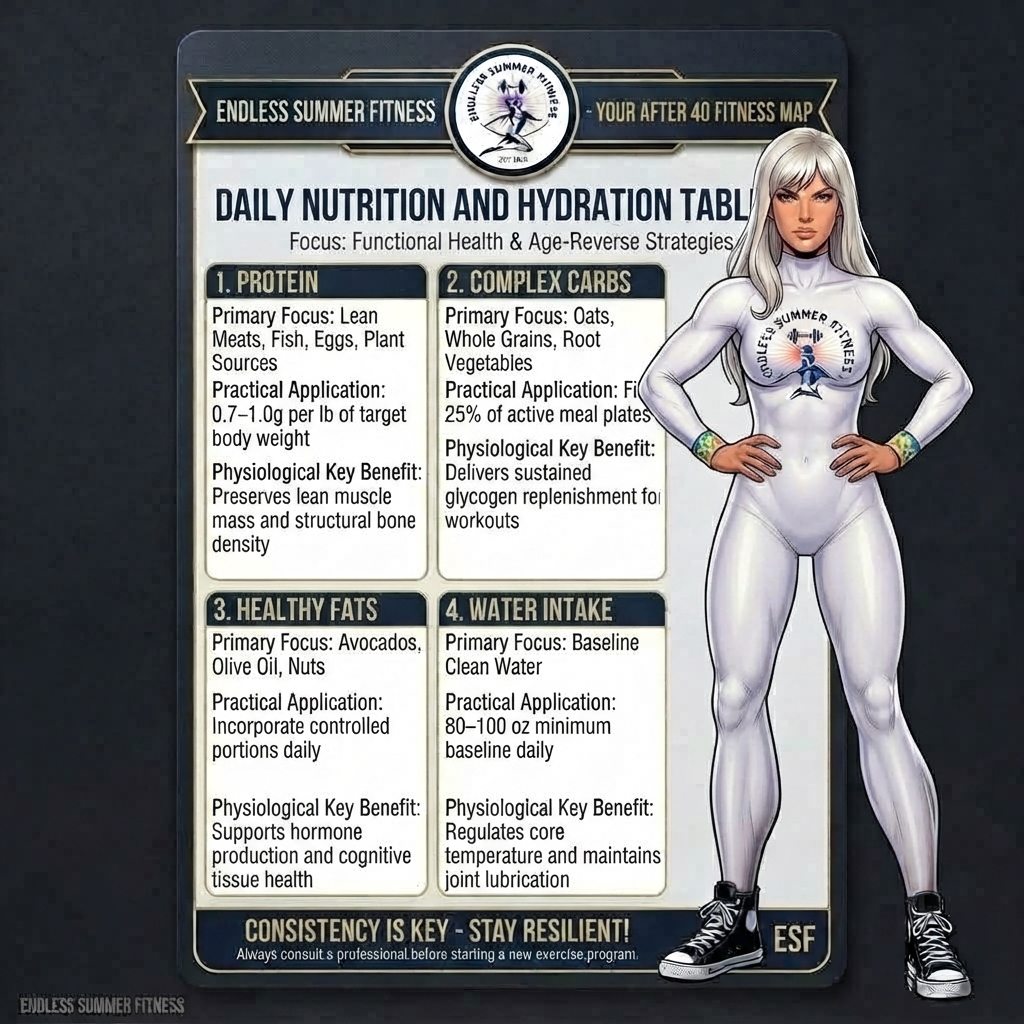
Daily Nutrition and Hydration Table
Optimizing daily nutrition and hydration requires balancing key dietary components with precise physiological functions.
Core Pillar Breakdown
Detailed Macronutrient Guidelines
To maximize physical capability and daily recovery, each macronutrient must serve a clear purpose:
- Protein Efficiency: Distribute protein intake evenly across 3 to 4 meals daily. Aiming for 25 to 40 grams of high-quality protein per meal stimulates muscle protein synthesis and protects against age-related muscle loss.
- Targeted Carbohydrates: Carbohydrates fuel high-volume movement and restore depleted muscle glycogen. Focus on complex, slow-digesting sources during baseline meals, saving faster-digesting options for immediate post-training windows.
- Essential Dietary Fats: Monounsaturated and polyunsaturated fats support fat-soluble vitamin absorption (A, D, E, K) and maintain cellular membrane integrity. Keep saturated fat within moderate parameters while completely eliminating artificial trans fats.
Systematic Hydration Protocols
Hydration requires an active strategy rather than reactive drinking when dry mouth occurs:
- Morning Reset: Consume 16 to 20 ounces of clean water immediately upon waking to offset overnight respiration losses.
- Pre-Workout Preparation: Ingest 12 to 16 ounces of water roughly 30 minutes before entering a training session to ensure baseline plasma volume is optimal.
- Intra-Workout Maintenance: Sip 6 to 8 ounces of water every 15 to 20 minutes during prolonged physical activity to replace sweat losses.
- Post-Workout Recovery: Rehydrate with 16 to 24 ounces of water for every pound of body weight lost through perspiration during intense heat or high-volume movement.
Practical Execution Strategies
- Structure Whole Food Plates: Fill half your plate with fibrous vegetables and fruits, one-quarter with lean protein sources, and one-quarter with complex carbohydrates.
- Establish Fluid Benchmarks: Carry a dedicated fluid vessel to monitor intake across morning, mid-day, and evening training windows.
- Minimize Highly Processed Items: Eliminate excess refined sugars, artificial additives, and ultra-processed foods to optimize nutrient density and gut barrier function.
- Practice Mindful Consumption: Eat slowly and focus on physiological fullness cues to regulate digestion and optimize gut absorption efficiency.
Common Nutrition and Hydration Pitfalls
- Mistaking Thirst for Hunger: Mild dehydration frequently triggers neural signals that mimic hunger cravings. Drinking a glass of water before reaching for snacks prevents unnecessary caloric surplus.
- Over-Relying on Liquid Calories: Consuming high-sugar juices, sodas, or heavily flavored coffee drinks adds rapid caloric load without providing satiety or real nutritional value.
- Neglecting Electrolyte Balance: Consuming massive quantities of plain water during heavy sweating without replacing sodium, potassium, and magnesium can dilute blood sodium levels. Ensure balanced mineral intake during high-volume summer training.
- Inconsistent Intake Patterns: Bingeing on water or healthy meals sporadically does not make up for days of poor intake. Consistency over weeks and months drives cellular adaptation.
Action Plan
Begin by implementing two simple changes this week. First, establish a morning hydration habit by drinking 16 ounces of water before your first coffee or meal. Second, audit your main meals to ensure every plate contains a clean protein source and a portion of fibrous greens. Small, repeatable actions build long-term physiological resilience.
Related ESF Guides
Peer-Reviewed References
- Mayo Clinic. Water: How much should you drink every day? Mayo Clinic Health System. 2024.
- Centers for Disease Control and Prevention. About Water and Healthier Drinks. CDC.gov. 2024.
Get Free Training Tips in Your Inbox!
Enjoyed this breakdown? Join our community of dedicated lifters to get evidence-based fitness strategies delivered straight to your email. [Sign Up for Our Free Email List Today]
Medical Disclaimer: This article is for educational and informational purposes only and does not constitute medical advice. Always consult a physician or qualified healthcare professional before altering your nutrition or training protocol.