Aquatic Conditioning for Adults Over 40
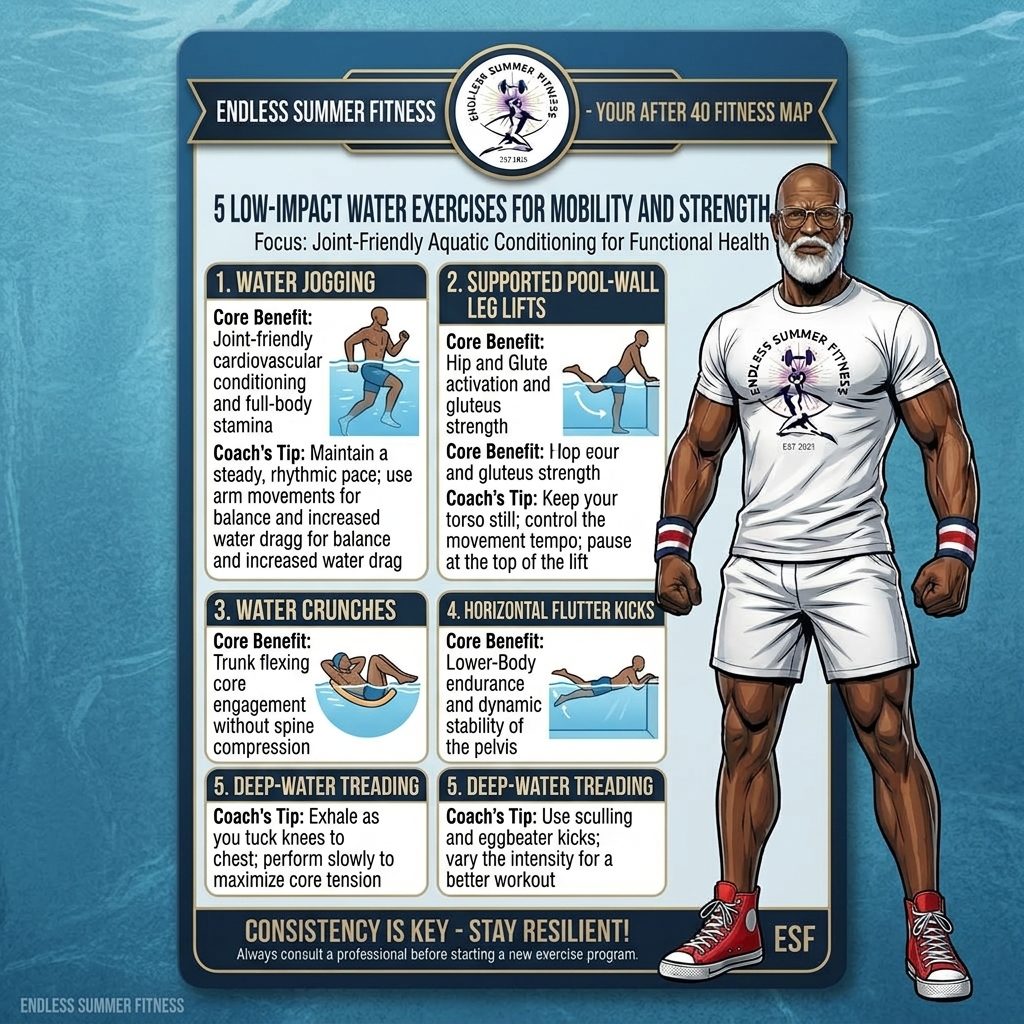
Aquatic training provides a unique mechanical environment for maintaining physical capacity, rebuilding joint tolerance, and conditioning the cardiovascular system. The natural buoyancy of water reduces hydrostatic stress on weight-bearing joints, allowing adults over 40 to execute multi-planar movement patterns without vertical spine or knee compression. By utilizing water resistance, you can build baseline endurance and active mobility safely. We discuss 5 Low-Impact Water Exercises for Mobility and Strength.
To structure a comprehensive weekly routine that balances aquatic work with land-based resistance, explore our Low-Impact Lower Body Strength Training guide.
The Physiological Advantages of Water-Based Training
Exercising in water provides accommodating resistance, meaning the force required increases directly with the speed of movement. This property ensures that every repetition remains controlled, self-limiting, and gentle on connective tissue.
Furthermore, hydrostatic pressure exerted by the water against the body promotes venous return, assisting blood flow back to the heart and reducing peripheral swelling in lower extremities.
1. Water Jogging: Joint-Friendly Cardiovascular Conditioning
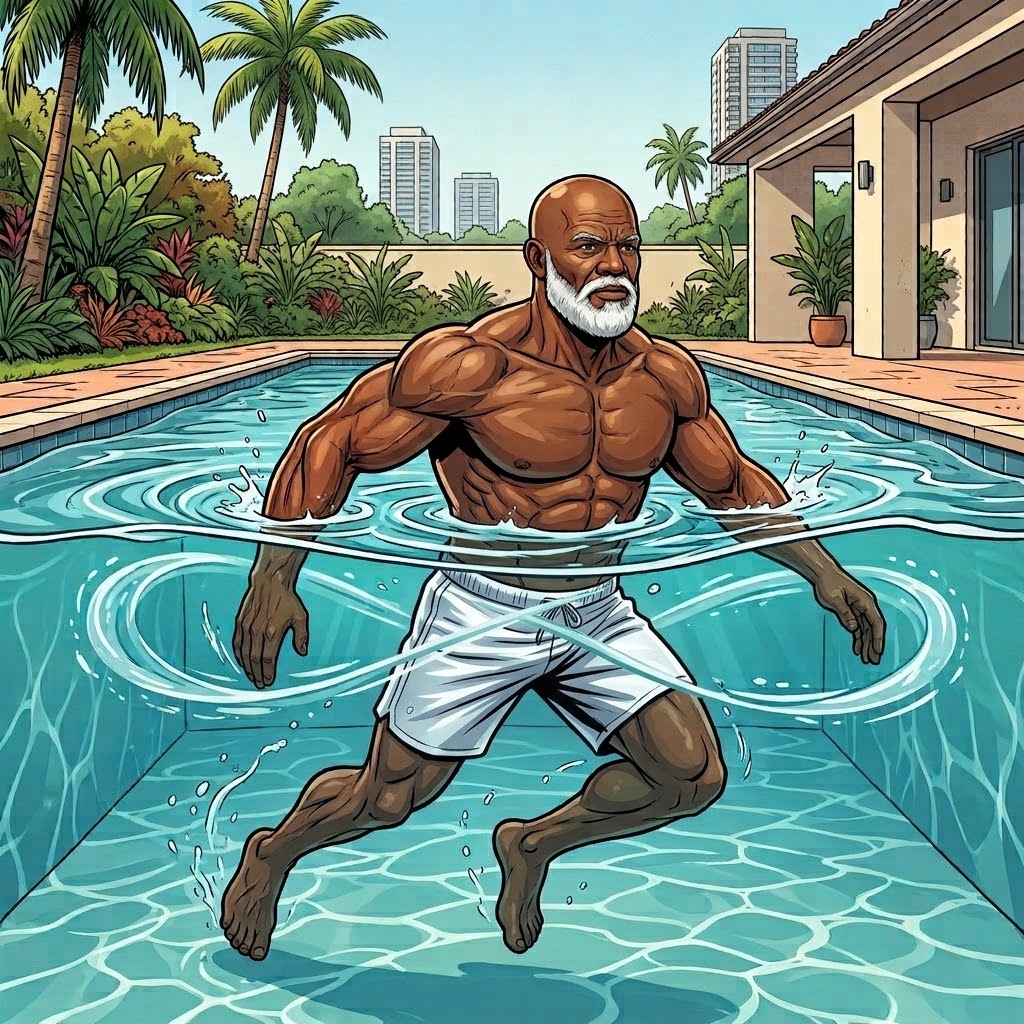
Water jogging delivers elevated cardiovascular strain while shielding the ankles, knees, and lumbar spine from impact forces.
Execution Protocol
- Submerge your body to chest depth in the shallow or mid-depth end of the pool.
- Maintain an upright posture with shoulders drawn back and core engaged.
- Drive your knees upward in a controlled cadence, pumping your arms through the water to create opposing movement.
- Volume: Perform 3 sets of 3 to 5 minutes at a steady, rhythmic pace with 60 seconds of passive rest between blocks.
2. Supported Pool-Wall Leg Lifts: Hip and Glute Activation
Hip abductor and extension strength are critical for lateral stability, balance recovery, and pelvic alignment. Pool-wall leg lifts isolate the lower body while using water buoyancy to assist hip range of motion.
Execution Protocol
- Stand in shallow water with your back flat against the pool wall for lumbar support.
- Keeping your torso fixed, elevate one leg straight out in front to hip height with a controlled tempo.
- Pause briefly at top range, then lower the leg under constant tension.
- Volume: Complete 3 sets of 12 to 15 controlled repetitions per leg.
3. Suspended Aquatic Crunches: Core Engagement Without Lumbar Strain
Traditional floor crunches can place excessive flexion pressure on the lumbar spine and cervical neck. Floating core movements utilize water support to target trunk flexors safely.
Execution Protocol
- Float on your back in waist-to-chest-deep water, extending your arms outward to grip pool noodles or rest along the pool edge for balance.
- Extend both legs straight outward.
- Contract your abdominal wall to draw your knees toward your chest in a smooth, intentional motion.
- Extend your legs back to the starting position without arching your lower back.
- Volume: Perform 3 sets of 10 to 12 reps focusing on slow contraction velocity.
4. Horizontal Flutter Kicks: Lower-Body Endurance and Dynamic Stability
Flutter kicks strengthen the hip flexors, quadriceps, and anterior core while improving endurance in the stabilizing muscles of the pelvis.
Execution Protocol
- Hold onto the gutter or edge of the pool with arms extended, allowing your body to float horizontally along the surface.
- Initiate short, rapid kicks from the hips rather than bending excessively at the knees.
- Maintain a steady breathing pattern throughout the movement duration.
- Volume: Execute 3 to 4 intervals of 30 to 45 seconds of continuous kicking.
5. Deep-Water Treading: Full-Body Neuromuscular Coordination
Deep-water treading requires continuous multi-limb recruitment, forcing the upper body, core, and lower body to work synchronously to maintain buoyancy.
Execution Protocol
- Move into deep water where your feet do not touch the bottom.
- Utilize a sculling arm motion (drawing figure-eights with hand palms under water) alongside a controlled scissor-kick or rotary eggbeater kick.
- Keep your head comfortably above water without tilting your neck backward.
- Volume: Complete 3 to 5 rounds of 1 to 2 minutes of sustained treading.
Programming Guidelines for Aquatic Training
To maximize training stimulus while prioritizing recovery, apply these foundational execution standards:
- Hydrate Adequately: Fluid loss through sweat still occurs in aquatic environments; keep drinking water accessible poolside.
- Maintain Strict Movement Control: Avoid rushing repetitions; move with deliberate speed to generate fluid drag without jerky transitions.
- Integrate Progressively: Use aquatic workouts two to three times per week as a primary workout or active recovery session between resistance training days.
References
-
Physical Activity Guidelines for Americans (U.S. Department of Health and Human Services)
- Focus: Federal research on low-impact exercise modes for maintaining functional capacity and joint health in aging populations.
-
ACSM Guidelines for Exercise Testing and Prescription (American College of Sports Medicine)
- Focus: Clinical recommendations on hydrotherapy, aquatic resistance, and exercise adaptations for adults managing joint limitations.
-
Hydrotherapy and Aquatic Resistance Training Adaptations (PubMed / NIH)
- Focus: Peer-reviewed physiological analysis on hydrostatic pressure benefits, cardiac output efficiency, and joint-decompressing movement patterns.
Medical Disclaimer: This article is for educational and informational purposes only and does not constitute medical advice. Always consult a physician or certified fitness professional before beginning a new exercise program, especially if you have pre-existing health conditions or joint concerns.