
Standing in front of your exercise mat feeling zero desire to move is a universal experience. Most people chalk this hesitation up to a lack of willpower or plain laziness. However, psychological research shows that task procrastination is primarily an emotional regulation mechanism, your brain’s attempt to protect you from anticipated discomfort or fatigue. This will show you how to workout when unmotivated.
Related Reading: Tired of hitting the wall every few months? Explore our foundational strategy: 6 Best Home Exercises to Get Fit Without a Gym Membership.
When training after 40, forcing an all-or-nothing mindset on low-energy days usually leads to total skipping or injury. The key to long-term consistency is reducing friction so starting becomes effortless.
5 Practical Protocols to Bypass Fitness Friction
Protocol 1: The 5-Minute Rule
Tell yourself you are only going to complete a 5-minute joint mobilization or light warm-up sequence. If you still feel completely drained after five minutes, you have permission to stop.
- Why It Works: Bypasses task-initiation paralysis. Over 80% of the time, simply crossing the starting threshold clears the mental block, and you will finish a modified session comfortably.
Protocol 2: Autoregulate Volume Downward
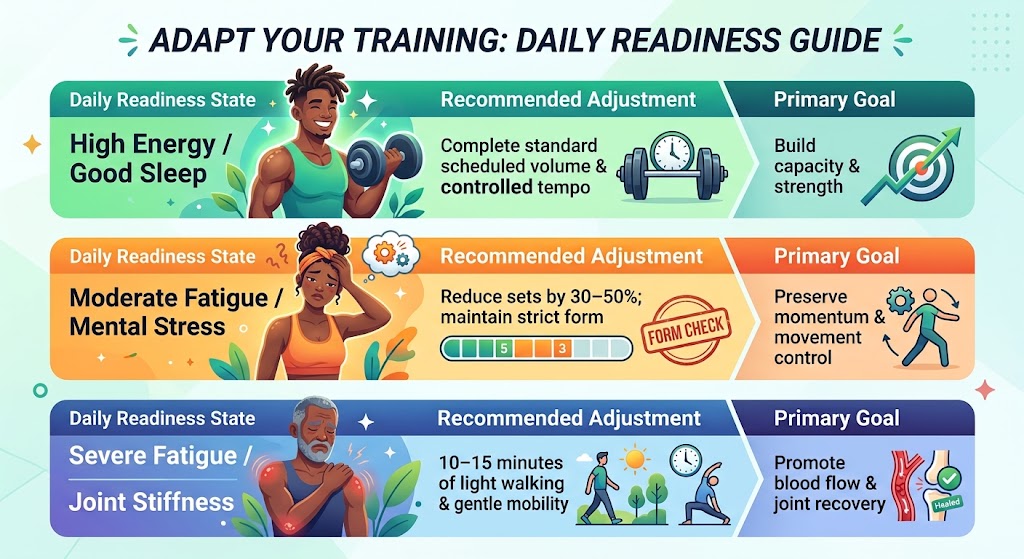
If your scheduled routine calls for 3 sets of bodyweight squats and push-ups, but your energy is flat, intentionally drop the volume. Perform 1 or 2 controlled sets focusing strictly on tempo and movement quality rather than push-to-failure fatigue.
- Why It Works: Maintains the physical habit and neurological pattern without overburdening your nervous system or stressing recovery reserves.
Protocol 3: Switch to Spine-Sparing Decompression
On days when dynamic resistance feels overwhelming, replace heavy loading with low-shear mobility, floor-based core activation, or light walking.
- Why It Works: Relieves joint stiffness and improves circulation without generating systemic fatigue.
Protocol 4: Eliminate Setup Steps
Friction thrives on extra decisions. If finding your resistance bands, clearing room on the floor, or searching for a workout plan takes 10 minutes, your brain will convince you to quit.
- Actionable Fix: Set your exercise mat, bands, or water bottle out the night before. Keep your routine simple enough to execute without overthinking.
Protocol 5: Record Your Effort Post-Session
Immediately after completing even a abbreviated routine, log your completed sets and a quick rating of joint comfort in your logbook.
- Why It Works: Creates tangible visual evidence of discipline. Reviewing weeks of completed entries reinforces an identity built on consistency rather than temporary moods.
Choosing the Right Response
Conclusion
Consistency is not built by waiting for inspiration; it is built by managing daily friction. By lowering the barrier to entry, adapting session volume based on physical readiness, and focusing on joint-friendly movement quality, you ensure that even your lowest-energy days contribute to long-term functional capacity.
References & Sources
- Harvard Health Publishing: How to Overcome Exercise Obstacles and Build Lasting Habits
- National Institutes of Health (NIH): Behavioral Strategies for Maintaining Physical Activity Consistency
Medical Disclaimer: This article is for educational and informational purposes only and does not constitute medical advice. Always consult a physician or certified fitness professional before starting any new exercise routine.