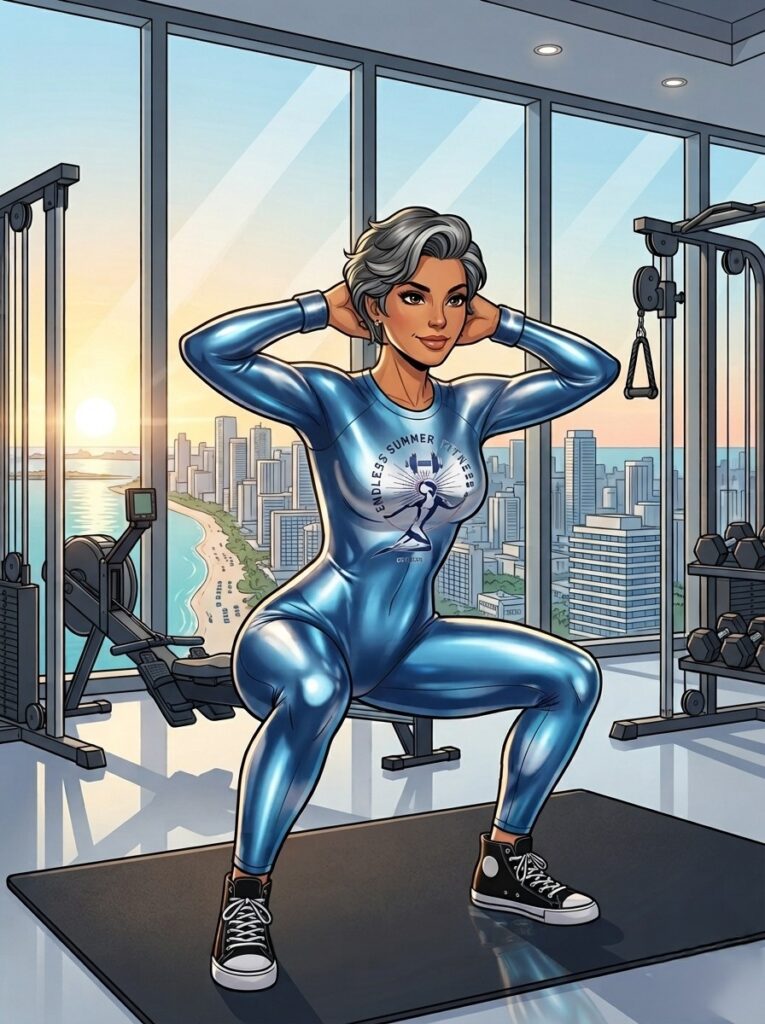
Gyms offer a wide variety of equipment, but they are not a prerequisite for getting into great shape. For many people, crowded weight rooms, intimidating machinery, high monthly fees, and commute times create friction that leads to missed workouts and stalled progress.
Why You Don’t Need a Gym Membership
Bodyweight training, historically known as calisthenics, has served as a foundational conditioning tool for centuries. From ancient athletic traditions to modern military physical training, using your own body weight against gravity builds functional strength, improves joint mobility, and enhances cardiovascular endurance without requiring a single piece of heavy machinery.
If you have a few square feet of floor space and the willingness to move, you have everything you need to build a consistent, highly effective fitness routine.
The Principles of Bodyweight Training
To get consistent results from home workouts, focus on these fundamental principles:
- Controlled Tempo: Avoid rushing through repetitions. Control the movement on the way down (eccentric phase) and drive with intent on the way up (concentric phase).
- Full Range of Motion: Perform each exercise through a complete, comfortable range of motion while maintaining proper joint alignment.
- Core and Pelvic Stability: Keep your midsection engaged throughout every movement to protect your lower back and maintain efficient force transfer.
- Consistency Over Intensity: Training consistently 3 to 4 days per week produces far better long-term adaptations than sporadic, exhaustive sessions.
The 6-Move Home Workout Plan
Perform this routine as a circuit or set-by-set. Complete 3 rounds, performing 8 to 15 controlled repetitions per exercise (or holding for time where indicated). Rest 60 to 90 seconds between sets.
1. Bodyweight Squats
- Primary Muscles Worked: Quadriceps, Glutes, Hips, Core
-
How to Perform:
- Stand with your feet shoulder-width apart, toes turned outward slightly (10–15 degrees).
- Inhale, engage your core, and hinge at your hips, bending your knees to lower your body as if sitting back into a chair.
- Lower down until your thighs are parallel to the floor while keeping your chest upright and your heels planted.
- Exhale and drive through your mid-foot and heels to return to the standing position, squeezing your glutes at the top.
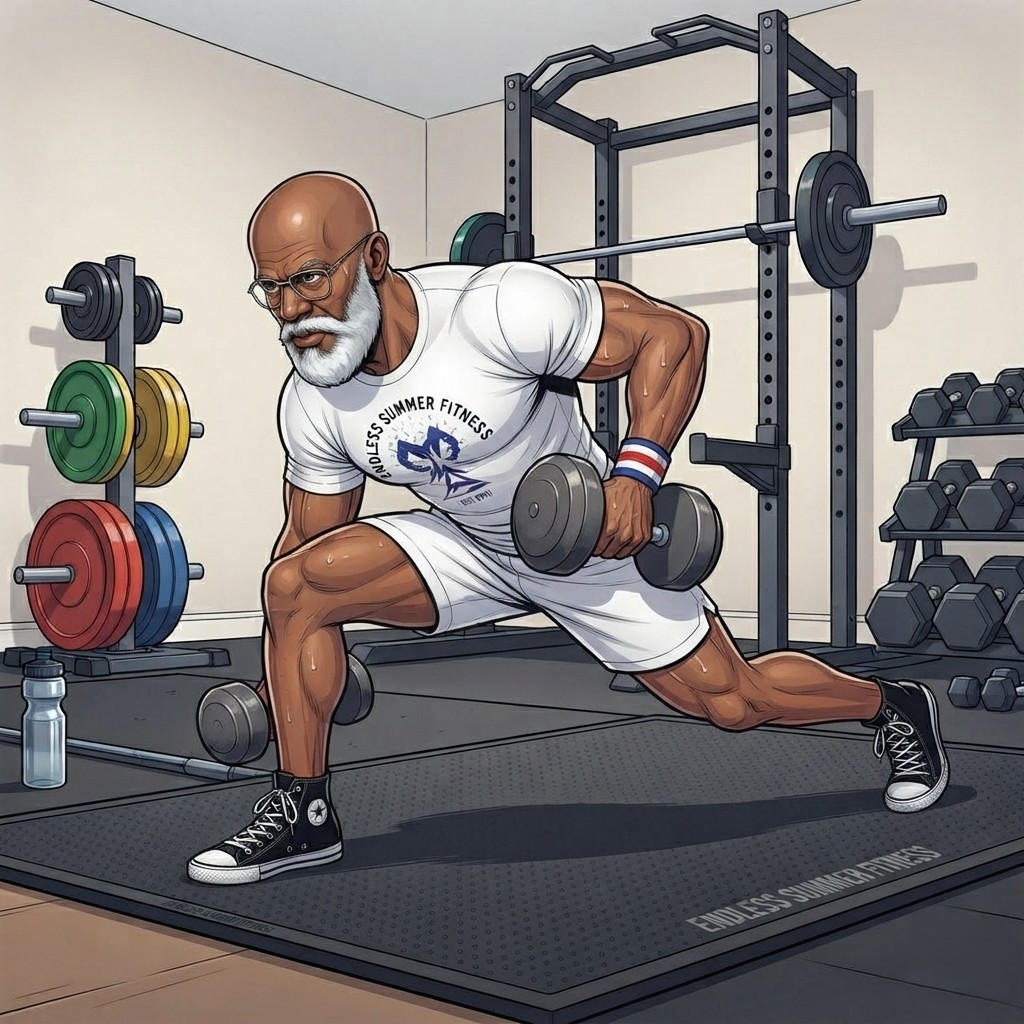
2. Bodyweight Reverse Lunges
- Primary Muscles Worked: Quadriceps, Hamstrings, Glutes, Core Stabilizers
-
How to Perform:
- Stand tall with hands on your hips or held together at chest height.
- Take a controlled step backward with your right leg, landing on the ball of your foot.
- Lower your hips vertically until both knees form approximately 90-degree angles.
- Press firmly through your front heel to step back up to the starting position. Alternate legs for all repetitions.
3. Standard Push-ups
- Primary Muscles Worked: Chest, Anterior Deltoids, Triceps, Core
-
How to Perform:
- Place your hands on the floor slightly wider than shoulder-width apart, with wrists aligned under your shoulders.
- Extend your legs behind you, balancing on your toes so your body forms a straight line from head to heels.
- Lower your chest toward the floor by bending your elbows back at roughly a 45-degree angle to your torso.
-
Push through your palms to return to the top position without locking your elbows aggressively.
(Regression: Place your hands on an elevated surface like a bench or counter to reduce resistance).
4. Chair or Bench Dips
- Primary Muscles Worked: Triceps, Chest, Anterior Deltoids
-
How to Perform:
- Sit on the edge of a sturdy chair or bench and grip the edge beside your hips with knuckles forward.
- Slide your glutes forward off the edge, supporting your weight with your arms and feet flat on the floor (knees bent at 90 degrees).
- Lower your body by bending your elbows until your upper arms are roughly parallel to the floor. Keep your chest open and shoulders down, away from your ears.
- Press through your palms to return to the starting position.
5. Forearm Plank
- Primary Muscles Worked: Rectus Abdominis, Transverse Abdominis, Obliques, Shoulders
-
How to Perform:
- Lie face down and place your forearms on the floor, elbows aligned directly under your shoulders.
- Lift your knees off the ground, supporting your body on your forearms and toes.
- Engage your core and glutes to keep your body in a neutral, straight line from head to heels. Avoid letting your hips sag or piking up toward the ceiling.
- Hold this position for 20 to 30 seconds while breathing continuously.
6. Resistance Band Bent-Over Rows
- Primary Muscles Worked: Latissimus Dorsi, Rhomboids, Rear Deltoids, Biceps
-
How to Perform:
- Stand on the center of a loop or flat resistance band with feet hip-width apart.
- Cross the handles/ends of the band (left hand grips the right end, right hand grips the left end) to create tension.
- Hinge forward at the hips with a slight bend in your knees, keeping a flat back and long neck.
- Pull your elbows back toward your hips, driving your shoulder blades together at the top of the movement. Slowly lower back to the starting position.
How to Structure Your Weekly Routine
To make continuous progress, aim for 3 non-consecutive workout days per week (e.g., Monday, Wednesday, Friday).
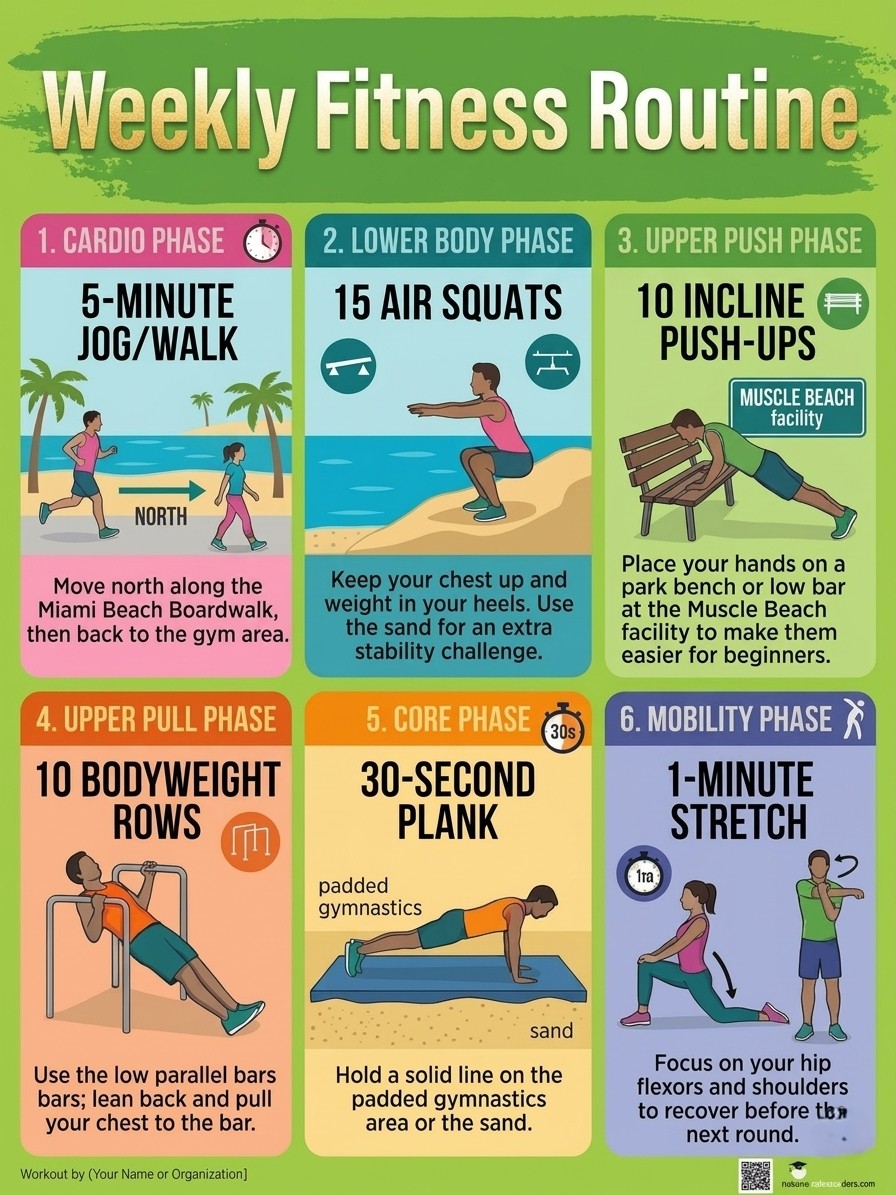
As your conditioning improves over time, you can progress by increasing the number of rounds (from 3 to 4), increasing the total repetitions per set, or slowing down the eccentric speed of each rep to increase time under tension.
Conclusion
Building a fit, strong body does not require expensive gym memberships or complex weight systems. By mastering foundational movements like squats, push-ups, lunges, and core holds, you can establish an effective, sustainable fitness habit directly from your living room. Focus on proper form, remain consistent, and allow your body the time it needs to adapt and strengthen.
References & Sources
-
American Council on Exercise (ACE)
- Guideline: ACE Scientific Study: Energetics and Biomechanics of Calisthenic and Bodyweight Training.
- Core Principle: Validates bodyweight exercises for developing muscular endurance, functional strength, and motor control without external loading.
- Source: ACE Physical Activity & Exercise Research
-
National Strength and Conditioning Association (NSCA)
- Guideline: NSCA Position Statement on Kinetic Chain Mechanics and Resistance Training Progressions.
- Core Principle: Supports progressive bodyweight movements (squats, push-ups, lunges) as foundational patterns for hip, core, and shoulder stabilization.
- Source: NSCA Educational Resources & Research
-
Harvard Health Publishing
- Guideline: The Calisthenics Advantage: Strength Training Without Weights.
- Core Principle: Outlines how multi-joint bodyweight workouts improve cardiovascular fitness, metabolic rate, and functional independence across all fitness levels.
- Source: Harvard Health Medical Knowledge
Medical Disclaimer: This article is for educational and informational purposes only and does not constitute medical advice. Always consult a physician or qualified healthcare professional before beginning any new exercise program, especially if you have pre-existing health conditions or injuries.