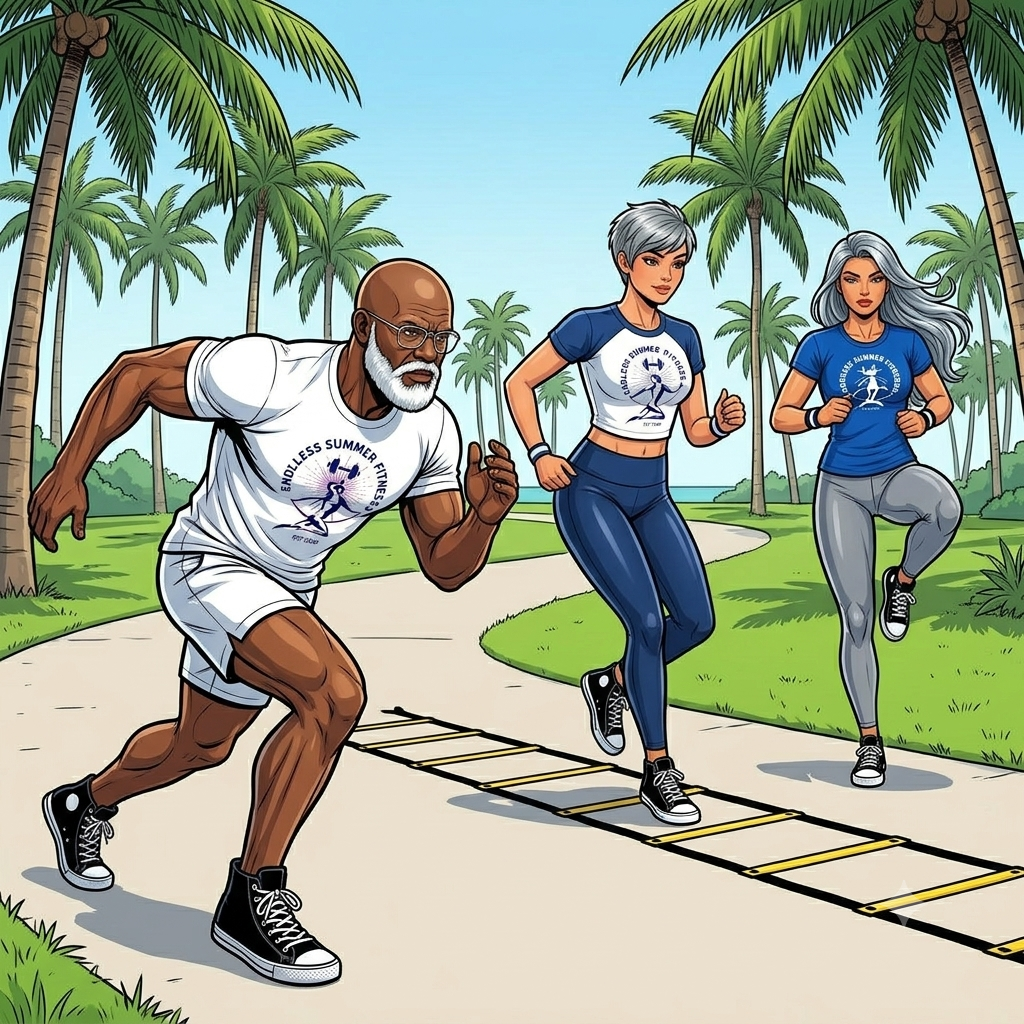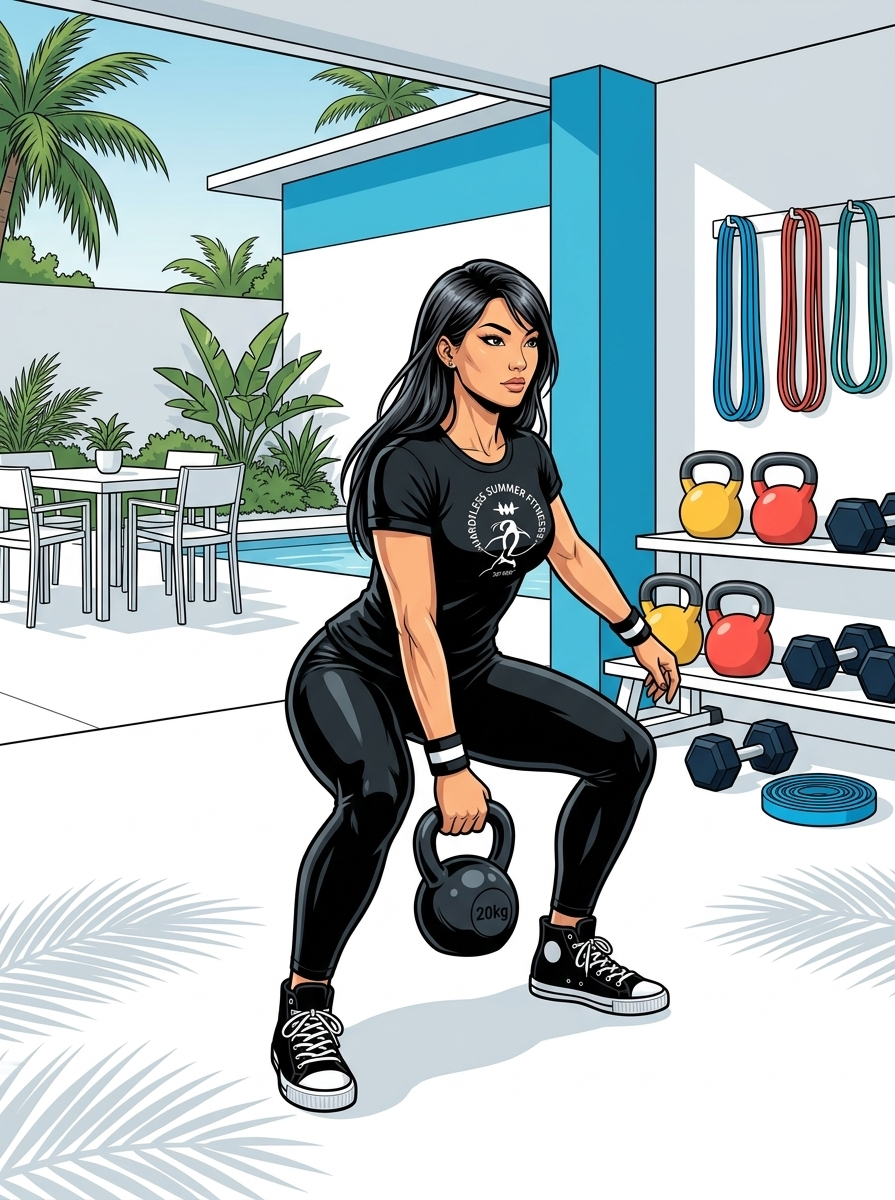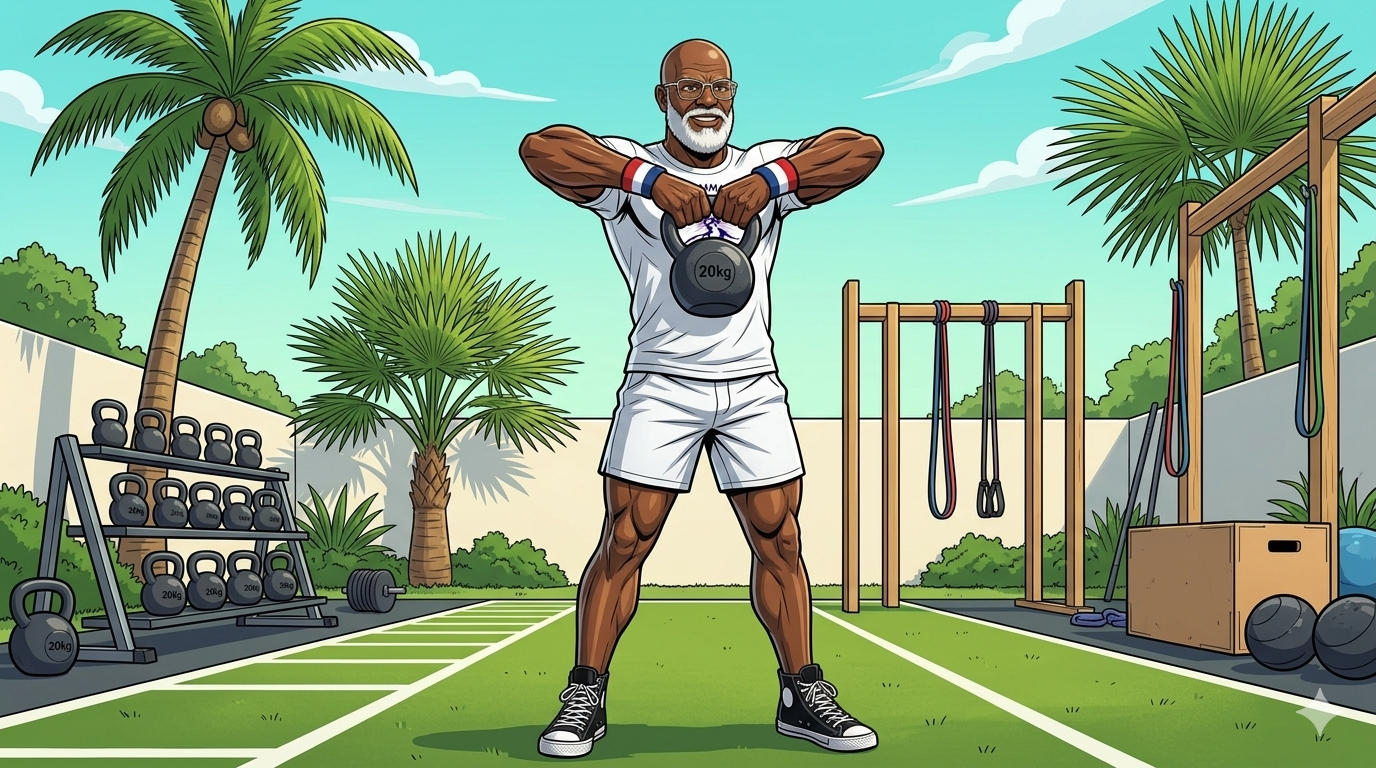
Before we get into the lineup, here’s a quick confession: I added sprinting because it was my childhood superpower. I could outrun everyone at recess with my eyes closed—the kind of speed that made the old timers suspicious and the other kids annoyed. Now? My “sprint” speed can’t be mistaken for anything resembling competition. But I still believe in its cardio effectiveness at any age. And that’s why I included sprinting as one of the 5 Best Outdoor Cardio for Beginners.
And honestly, sprinting deserves a spot. It burns more total daily calories than walking, running, or hiking thanks to fast-twitch muscle recruitment, mechanical inefficiency, and the EPOC afterburn effect that keeps your metabolism elevated long after you stop. It boosts VO₂ max, builds explosive power, and gives you that “I did something today” confidence.
Other Important ESF Articles
- Read next: Mobility for Runners: 5 Exercises to Prevent Leg Injuries
- Also read: 30 Day Challenge: 5 Quick Routines for Busy Pros
Now let’s get into the four best outdoor cardio options for beginners — plus your bonus sprint routine.
Why Outdoor Cardio Is Perfect for Beginners
Outdoor cardio for beginners works because it’s simple, low-pressure, and naturally motivating. You don’t need a gym membership. You don’t need equipment. You just step outside and move.
Miami makes it even easier. Warm weather, ocean air, and endless flat paths help toy stay consistent — and consistency is the foundation of hybrid training,
Outdoor cardio also builds your aerobic engine, which supports:
- Strength training
- Sprinting
- Recovery
- Fat metabolism
- Daily energy
When your aerobic base is strong, everything else becomes easier.
How Should Beginners Train Their Heart Rate?
Use the MAF 180 Formula to find your aerobic training zone:
180 –your age = your Zone 2 heart rate.
Zone 2 is where beginners should spend most of their time. It improves endurance, increases mitochondrial density, and helps you recover faster between workouts.
As you get fitter, you’ll move faster at the same heart rate — a sign your engine is improving:
The 4 Best Outdoor Cardio Options for Beginners
Below are the four most accessible, beginner-friendly outdoor cardio choices. Each one builds endurance, supports hybrid training, and fits easily into a busy schedule.
1. Power Walking
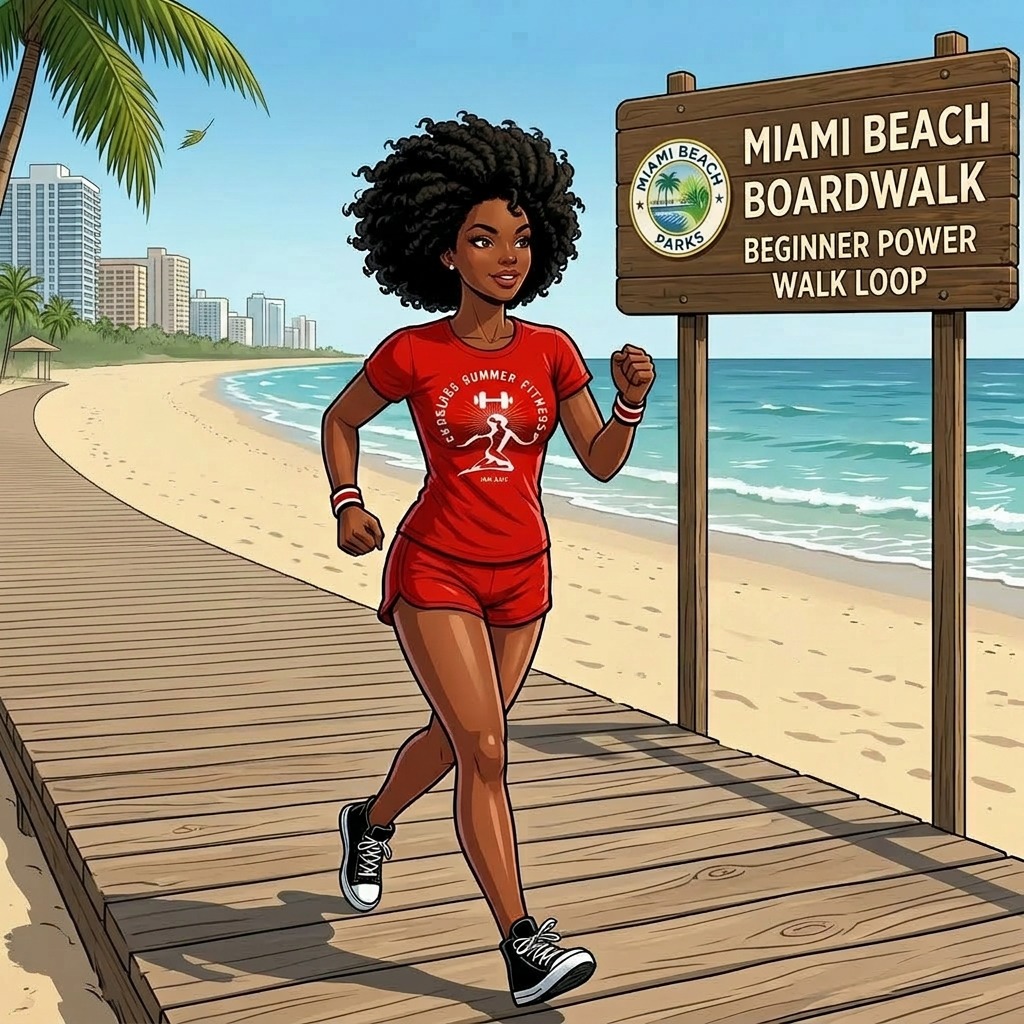
Power walking is the most accessible outdoor cardio for beginners. It’s low-impact, joint-friendly, and easy to scale.
Why It Helps
Walking strengthens your aerobic system without overwhelming your body. It boosts mood, improves circulation, and builds consistency.
Muscles Worked
Glutes, hamstrings, quads, calves, core.
Stabilizers
Hip stabilizers, lower leg muscles, and deep core.
Hybrid Benefit
Walking builds the aerobic base that supports strength training, sprinting, and recovery.
How to Start
Walk 15–20 minutes at a brisk but conversational pace.
Miami Spots
Miami Beach Boardwalk, Oleta River State Park.
2. Recreational Cycling

Cycling is a low-impact outdoor cardio option that takes weight off your joints.
Why It Helps
Cycling improves cardiovascular endurance while reducing stress on your knees and hips.
Muscles Worked
Quads, glutes, hamstrings, calves.
Stabilizers
Core, hip stabilizers, and upper back.
Hybrid Benefit
Cycling builds leg stamina and aerobic endurance — perfect for hybrid athletes.
How to Start
Ride on flat, paved paths at a light cadence.
Miami Spots
Rickenbacker Causeway, Crandon Park.
3. Jump Rope

Jump rope is a full-body cardio workout that challenges coordination and burns calories fast,
Why It Helps
It improves footwork, rhythm, and cardiovascular fitness.
Muscles Worked
Calves, quads, glutes, shoulders, core.
Stabilizers
Ankles, feet, deep core.
Hybrid Benefit
Jump rope builds agility and power — two key hybrid traits.
How to Start
Alternate 30 seconds of jumping with 60 seconds of walking or resting.
Miami Spots
Flamingo Park, South Beach.
4. Gentle Hiking

Gentle hiking adds variety and light resistance to your walking routine.
Why It Helps
Hiking improves balance, coordination, and lower-body strength.
Muscles Worked
Gutes, quads, hamstrings, calves, core.
Stabilizers: Ankles, hips, deep core.
Hybrid Benefit
Hiking builds functional strength and aerobic endurance.
How to Start
Choose flat, well-marked beginner trails.
Miami Spots
Simpson Park, Castellow Hammock Preserve.
BONUS: Sprinting (The Hybrid Athlete’s Secret Weapon)

Sprinting is the most time-efficient cardio option on this list. It burns more calories per minute than walking, running, or hiking because it recruits fast-twitch fibers, creates mechanical inefficiency, and triggers a massive EPOC afterburn.
Why It Helps
- Boosts VO₂ max
- Builds explosive power
- Improves metabolic rate
- Strengthens hamstrings, glutes, and core
- Enhances athleticism
Muscles Worked
Glutes, hamstrings, quads, calves, core, and upper back.
Stabilizers
Ankle, hips, deep core.
Hybrid Benefit
Sprinting improves speed, power, and conditioning of hybrid performance.
15-Minute Sprint Interval Training (SIT) Routine
Warm-Up (5 minutes)
Dynamic stretches (high knees, butt kicks) + brisk walk.
The Sprints
15-30 seconds at 90-95% effort.
The Recovery
Walk or slow-jog for 60–90 seconds.
The Cycle
Repeat 5–6 rounds.
Cool Down (5 minutes)
Slow walk + light static stretching.
Sprinting Safety Tips
Sprinting is high-intensity and heavily loads the neuromuscular system.
- Start slow — don’t go all out on day one.
- Limit sprint days to 1-3 per week.
- Crosstrain with cycling, rowing, or elliptical if needed.
How Do Beginners Progress Safely?
Progressive overload applies to cardio, too. Increase one variable at a time:
- Duration (+5-10 minutes)
- Distance (+5–10%)
- Intensity (slightly faster pace)
- Terrain (small inclines)
Stay mostly in Zone 2 and sprinkle in short bursts of Zone 3
What Should Beginners Eat for Outdoor Cardio?
Fuel matters:
- Protein: 25–35g per meal
- Healthy fats: avocado, nuts, olive oil
- Carbs: fruit, oats, rice, potatoes
- Electrolytes: sodium, potassium, magnesium
- Hydration: water + citrus + pinch of sea salt
These support energy, recovery, and performance.
Summary
Outdoor cardio for beginners doesn’t need to be complicated. Walking, cycling, jump rope, and gentle hiking give you everything you need to build endurance and confidence. These activities strengthen your aerobic base, support hybrid training, and help you stay consistent.
Miami’s outdoor environment makes it even easier. Warm weather, scenic routes, and accessible parks give endless ways to move. Whether you’re restarting your fitness journey or building a new routine, these four options help you stay active without pressure.
And if you’re ready for a challenge, sprinting adds power, speed, and metabolic fire — all in just a few minutes.
Stick with it, stay patient, and enjoy the process.
FAQs
- How often should beginners do outdoor cardio?
3-4 days per week for 20-30 minutes. - Is walking enough to improve endurance?
Indeed — it’s the best starting point for aerobic capacity. - Should beginners track heart rate?
Using the MAF 180 formula helps you stay in the right zone. - Can I combine outdoor cardio with strength training?
Oh, yes — hybrid athletes do both. - What shoes are best for outdoor cardio?
Lightweight, supportive shoes with good cushioning. - How do I avoid burnout?
Stay in Zone 2 and increase volume slowly.
Move fast, stay strong, go far — The hybrid body is built for anything!
Medical Disclaimer
This article is for educational and informational purposes only and does not constitute medical advice. Always consult a physician or certified fitness professional before beginning a new exercise program, especially if you have pre‑existing conditions.
PEER‑REVIEWED EVIDENCE FRAMEWORK
Clinical / Medical Sources (Beginner Cardio, Aerobic Training, VO₂ Max)
ACSM — Benefits of Walking for Cardiovascular Health
https://www.acsm.org/docs/default-source/files-for-resource-library/benefits-of-walking.pdf (acsm.org in Bing)
PubMed — Effects of Low‑Intensity Walking on Cardiovascular Fitness
https://pubmed.ncbi.nlm.nih.gov/31888376/ (pubmed.ncbi.nlm.nih.gov in Bing)
PubMed — Sprint Interval Training Improves VO₂ Max in Adults
https://pubmed.ncbi.nlm.nih.gov/29203383/ (pubmed.ncbi.nlm.nih.gov in Bing)
Performance / Strength Sources (Endurance, Sprinting, Hybrid Conditioning)
NSCA — Energy System Development for Endurance and Sprint Athletes
https://www.nsca.com/education/articles/energy-system-development/ (nsca.com in Bing)
NASM — Benefits of Zone 2 Cardio for Beginners
https://blog.nasm.org/zone-2-training (blog.nasm.org in Bing)
Secondary High‑Authority Trainer Sources (Beginner Cardio, Outdoor Training)
ACE — Walking Workouts for Beginners
https://www.acefitness.org/resources/pros/expert-articles/7920/walking-workouts-for-beginners/ (acefitness.org in Bing)
Nutrition & Recovery Journals (Hydration, Electrolytes, Recovery After Cardio)
JISSN — Electrolytes and Hydration for Endurance Exercise
https://jissn.biomedcentral.com/articles/10.1186/s12970-019-0322-0 (jissn.biomedcentral.com in Bing)
AJCN — Carbohydrate Intake and Endurance Performance
https://academic.oup.com/ajcn/article/109/2/303/5307133 (academic.oup.com in Bing)
Recovery Science (DOMS, Mobility, Cold Water Immersion)
PubMed — Massage Reduces DOMS After Aerobic Exercise
https://pubmed.ncbi.nlm.nih.gov/24734995/ (pubmed.ncbi.nlm.nih.gov in Bing)
PubMed — Cold Water Immersion Reduces Inflammation After Training
https://pubmed.ncbi.nlm.nih.gov/26309383/ (pubmed.ncbi.nlm.nih.gov in Bing)