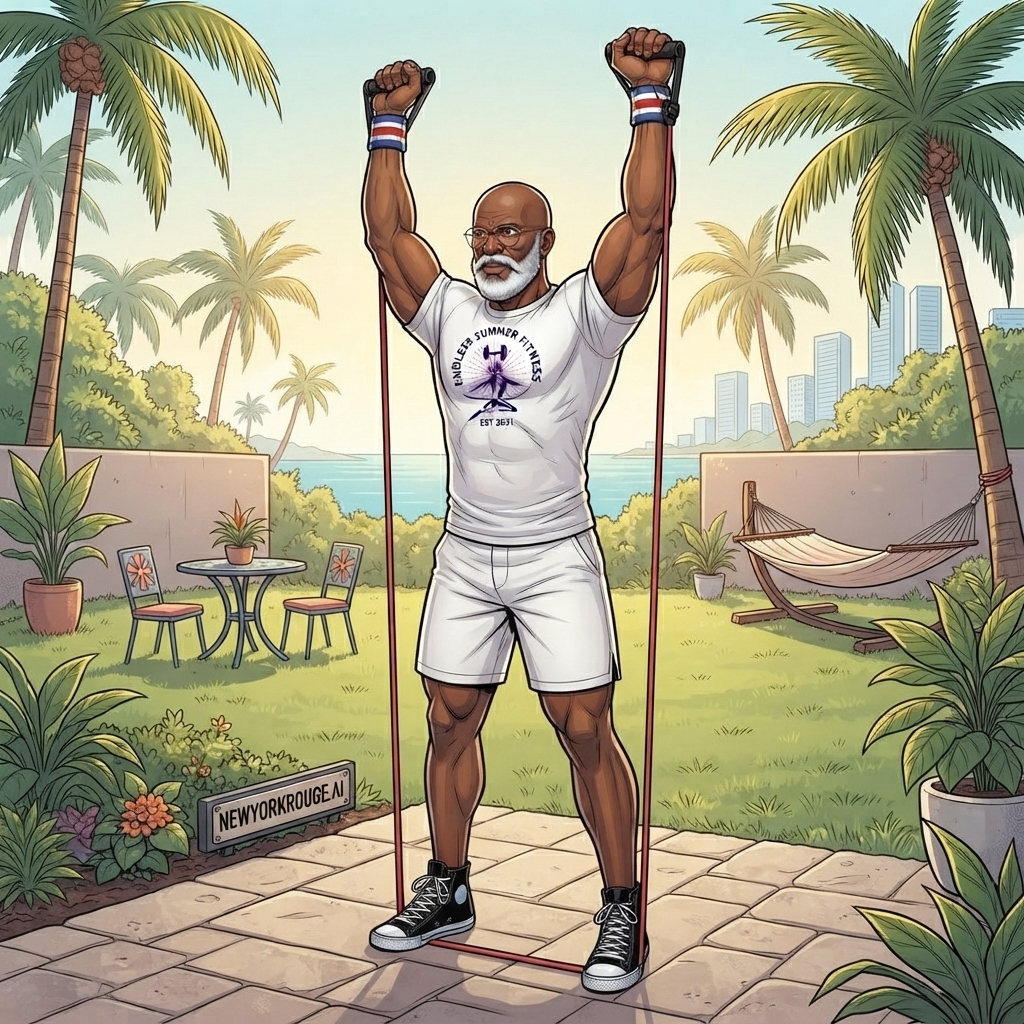
Saturdays do not need a full workout, just a quick movement session to wake up your muscles and set the tone for the rest of the day. For men and women over 40, a week of sitting, driving, working at a desk, and tackling daily responsibilities can leave the body feeling stiff by the weekend. Here is a 5-minute band routine for weekend mobility
Many people wake up Saturday morning with tight hips, achy knees, rounded shoulders, and less energy than they would like. The natural reaction is to think a hard workout is the answer.
Most of the time, it is not.
What your body often needs first is movement.
These three resistance band exercises take less than five minutes to complete, require very little space, and help prepare your body for the activities you actually enjoy. Whether you are heading out for a morning walk, tackling yard work, playing golf, going for a bike ride, or simply spending more time on your feet, this quick routine helps you start the day moving better.
Why Morning Band Activation Works for Adults Over 40
Resistance bands remain one of the most useful training tools available for adults over 40.
Unlike heavier forms of resistance training, bands create progressively increasing tension throughout a movement. This allows you to challenge muscles while keeping joint stress relatively low. For many adults, that combination makes bands an excellent choice for morning movement sessions.
Current physical activity guidelines from the American College of Sports Medicine and the U.S. Department of Health and Human Services continue to support regular muscle-strengthening activities as part of healthy aging. Maintaining strength helps preserve mobility, improve physical function, support balance, and increase long-term independence.
By performing a short activation circuit on Saturday morning, you accomplish three important physical goals before your day even begins:
1. Joint Mobility Preparation:
Controlled movement helps distribute synovial fluid throughout the joints, which may reduce feelings of morning stiffness in the hips, knees, ankles, and upper back.
2. Postural Muscle Activation:
Pulling and pressing movements help activate muscles that often become less active after long periods of sitting, driving, and computer work.
3. Gentle Energy Boost:
A brief movement circuit increases circulation, elevates heart rate slightly, and helps you feel more alert without creating excessive fatigue. The goal is not to leave you tired. The goal is to help you feel ready.
1. Band Squat Press (12 Reps)
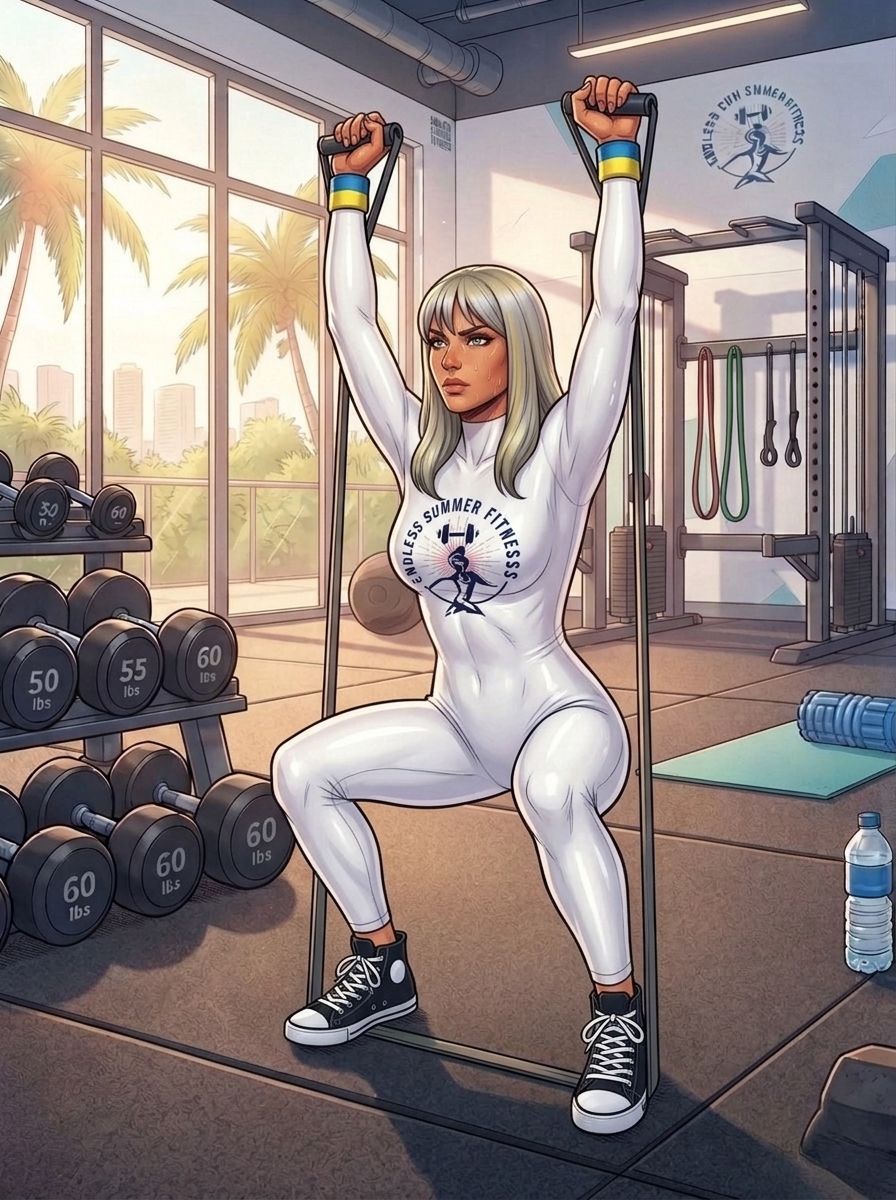
This full-body movement combines lower-body strength, shoulder mobility, and core stability into a single exercise. It is one of the most efficient ways to wake up multiple muscle groups at the same time.
Execution:
- Stand on the resistance band with your feet about shoulder-width apart and your weight balanced through your mid-foot.
- Hold the handles at shoulder height with your chest tall and your spine in a neutral position.
- Lower into a comfortable squat while keeping your knees tracking directly over your feet.
- As you stand, press the handles overhead until your elbows are fully extended and the band handles align above your shoulders.
- Lower the handles back to shoulder height under control before beginning the next repetition.
Coaching Tip: Move smoothly throughout the exercise. Keep your chest proud, avoid rounding your back, and maintain steady pressure through your feet. The goal is controlled movement, not speed.
The Band Squat Press trains the glutes, quadriceps, shoulders, and core while reinforcing movement patterns used in everyday life.
2. Standing Band Row (12 Reps)
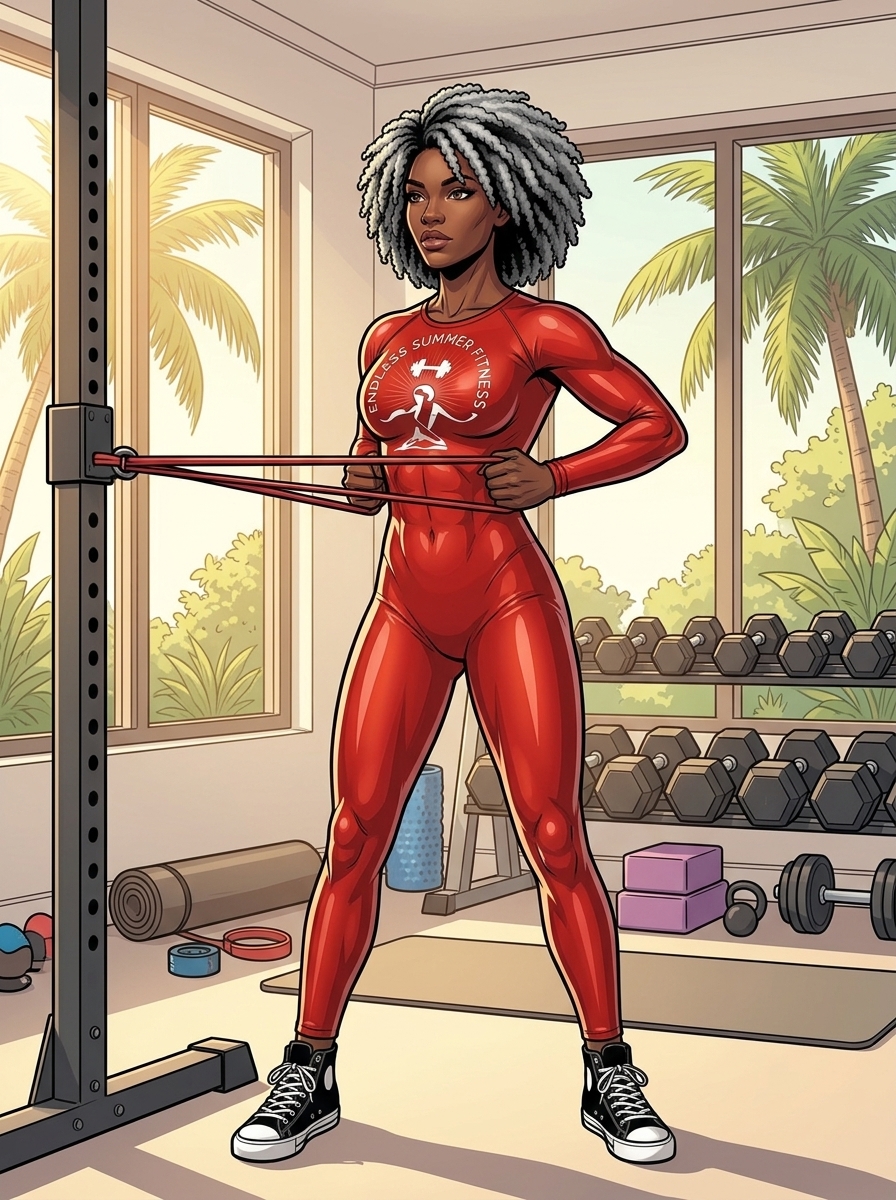
Most adults spend much of their day reaching forward. We type, drive, text, scroll, and work at computers. Very little of daily life involves pulling.
The Standing Band Row helps restore balance by strengthening the muscles of the upper back, rear shoulders, and postural support system.
2. Standing Band Row (12 Reps)
Most adults spend much of the day reaching forward. We type, drive, text, scroll, and work at computers. Very little of daily life involves pulling.
The Standing Band Row helps restore balance by strengthening the muscles of the upper back, rear shoulders, and postural support system.
Execution:
- Anchor the resistance band securely at chest height.
- Stand tall with your feet about shoulder-width apart and your weight balanced through your mid-foot.
- Hold the handles with your arms fully extended in front of your body.
- Keep your chest tall, your spine neutral, and your shoulders down away from your ears.
- Pull your elbows back close to your ribs while drawing your shoulder blades together.
- Pause briefly at the end of the movement, then return to the starting position under control.
Coaching Tip: Focus on leading the movement with your elbows rather than your hands. Avoid shrugging your shoulders toward your ears. The goal is to feel the muscles between your shoulder blades doing the work.
Strong upper-back muscles support healthy shoulder function and help counter some of the effects of prolonged sitting.
3. Glute Bridge with Band (15 Reps)
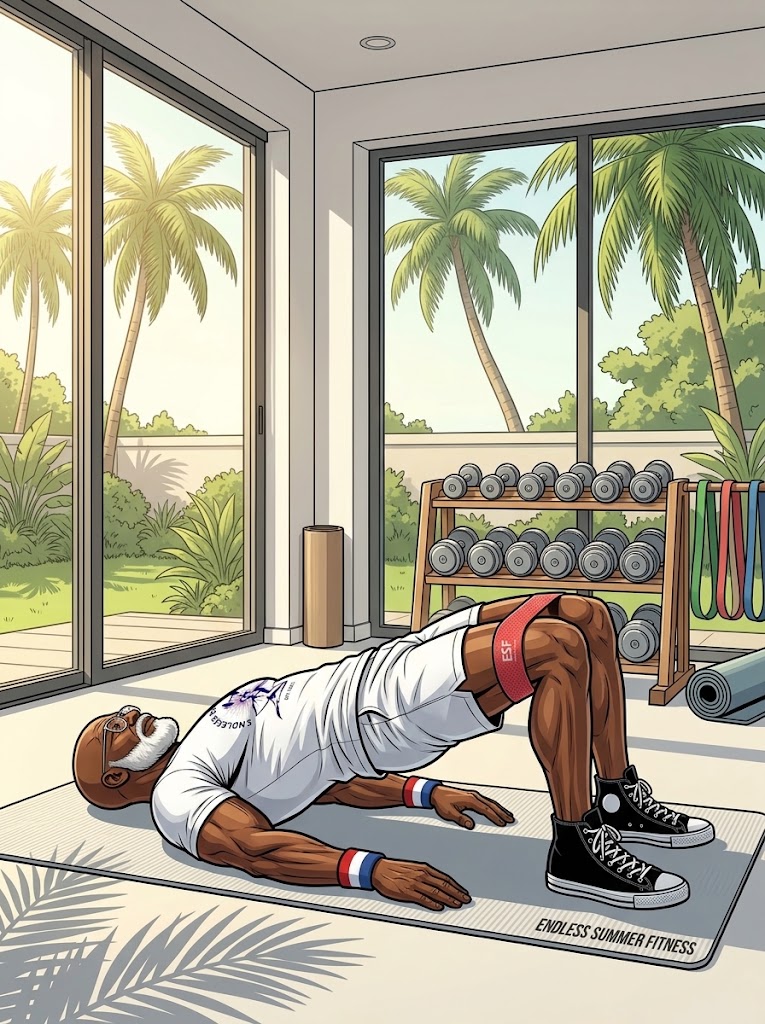
Long periods of sitting can leave the hips feeling stiff and the glutes less active than they should be.
The Glute Bridge with Band helps wake up these important muscles while encouraging better hip stability and lower-body control.
Execution:
- Place a loop band just above your knees and lie on your back on an exercise mat.
- Bend your knees and position your feet flat on the floor about hip-width apart.
- Maintain gentle outward pressure against the band so your knees stay aligned over your feet.
- Brace your core and keep your head and neck relaxed against the floor.
- Drive through your heels and lift your hips until your body forms a straight line from your shoulders to your knees.
- Pause briefly at the top while maintaining tension on the band and squeezing your glutes.
- Lower your hips slowly and under control before beginning the next repetition.
Coaching Tip: Push through your heels and focus on squeezing your glutes at the top of each repetition. Keep your knees gently pressed outward against the band and maintain a straight line from shoulders to knees. Avoid trying to gain extra height by arching your lower back. The goal is strong glute activation, not maximum hip elevation.
The Glute Bridge with Band trains the gluteus maximus, gluteus medius, and hip stabilizers while improving lower-body strength, balance, and movement efficiency for everyday activities.
The glutes play a major role in walking, climbing stairs, maintaining balance, and producing lower-body power during everyday activities.
The 5-Minute Execution Protocol
To perform this routine efficiently, move through all three exercises as a continuous circuit:
1. Complete 12 Band Squat Presses.
2. Complete 12 Standing Band Rows.
3. Complete 15 Glute Bridges with a Band.
4. Rest briefly if needed.
5. Continue with your day.
The entire routine takes less than five minutes.
That may not sound impressive, but consistency often produces better results than occasional intense workouts. A simple routine performed every weekend can have a meaningful impact on mobility, strength, and overall movement confidence over time.
This routine is designed to energize you, not exhaust you. Focus on smooth repetitions, controlled breathing, and quality movement from start to finish.
Start Here
- Tomorrow morning, grab a resistance band before you reach for your phone.
- Spend five minutes moving.
- You are not trying to set a personal record or win a fitness competition.
- You are simply reminding your body how to move well.
For adults over 40, that simple habit can help make weekend walks feel easier, outdoor activities more enjoyable, and daily movement more comfortable.
Keep Moving Outside
Looking to pair your quick indoor band routine with fresh air, sunshine, and low-impact conditioning? Read our related guide: Outdoor Cardio for Beginners: 5 Best Ways to Start
Pairing a short morning resistance band routine with a walk outdoors is one of the simplest ways to improve strength, cardiovascular fitness, mobility, and overall energy levels.
Medical Disclaimer: This article is for educational and informational purposes only and does not constitute medical advice. Always consult a physician or certified fitness professional before beginning a new exercise program, especially if you have pre-existing conditions, injuries, or mobility limitations.
Peer-Reviewed External Sources
-
Fragala, M. S., Cadore, E. L., Dorgo, S., et al. (2019). “Resistance Training for Older Adults: Position Statement From the National Strength and Conditioning Association.” Journal of Strength and Conditioning Research. View on PubMed
-
American College of Sports Medicine. ACSM’s Guidelines for Exercise Testing and Prescription. View on ACSM Books
-
U.S. Department of Health and Human Services. Physical Activity Guidelines for Americans, 2nd Edition. View via National Library of Medicine / PubMed