
A sore back can hit you out of nowhere — after a long day at your desk, a tough workout, a bad night’s sleep, or even something as simple as bending over the wrong way. For adults over 40, back tightness becomes even more common as mobility decreases, core strength drops, and daily stress builds up in the spine. Here are 5 moves to relieve a sore back.
Al Read: 5 Reasons Why You Need to Foam Roll
The good news: you don’t need an hour‑long routine or fancy equipment to feel better. A few targeted movements can release tension, restore mobility, and help your back feel lighter almost immediately.
Here are five evidence‑supported moves you can do right now to relieve a sore back.
1. Cat‑Cow (Spinal Mobility Reset)
Cat‑Cow is one of the simplest and most effective ways to mobilize the spine. It gently moves the vertebrae through flexion and extension, increases circulation to the back muscles, and helps reduce stiffness caused by prolonged sitting.
Research published in the Journal of Bodywork and Movement Therapies shows that controlled spinal mobility exercises can reduce back discomfort and improve functional movement. Cat‑Cow also helps calm the nervous system, which can reduce muscle guarding — a common contributor to back pain.
How to do it:
Start on hands and knees. Inhale as you drop your belly and lift your chest (Cow). Exhale as you round your spine and tuck your chin (Cat). Move slowly for 10–15 reps.
2. Child’s Pose with Side Reach (Lat + Low‑Back Release)
Child’s Pose is a restorative stretch that lengthens the lower back, hips, and lats — all areas that commonly tighten and pull on the spine. Adding a side reach increases the stretch along the QL (quadratus lumborum), a deep core muscle often responsible for one‑sided back pain.
Studies in PLOS One highlight that gentle static stretching can reduce perceived muscle tension and improve relaxation, making this move ideal for immediate relief.
How to do it:
Sit back into Child’s Pose. Walk your hands to the right to stretch the left side of your back. Hold 20–30 seconds. Switch sides.
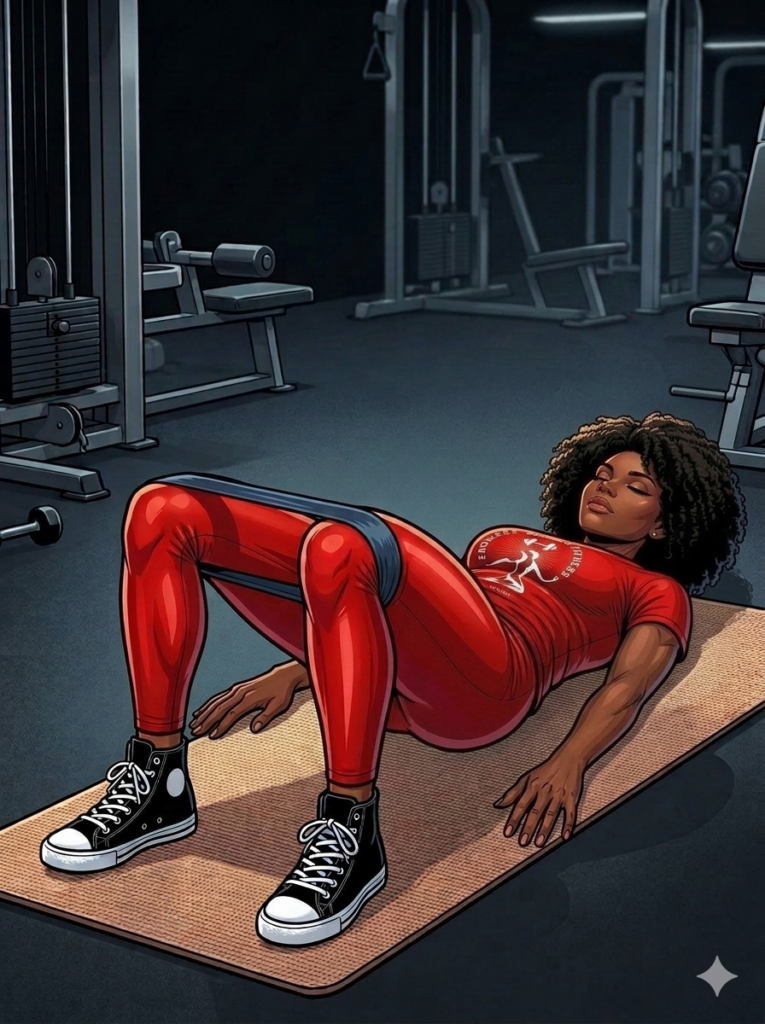
3. Glute Bridge (Activate the Muscles That Protect Your Back)
A weak posterior chain — especially the glutes — forces the lower back to compensate during daily movement. Glute bridges activate the hips, reduce pressure on the lumbar spine, and help restore proper movement mechanics.
Research in the Journal of Strength and Conditioning Research shows that hip‑dominant exercises like glute bridges improve spinal stability and reduce low‑back strain. When your glutes fire properly, your back doesn’t have to do all the work.
How to do it:
Lie on your back with knees bent. Press through your heels and lift your hips until your body forms a straight line. Hold briefly, then lower. Perform 12–15 reps.
4. Figure‑4 Stretch (Release the Hips to Free the Back)
Tight hips — especially the piriformis — can pull on the pelvis and create tension in the lower back. The Figure‑4 stretch targets deep hip rotators and helps relieve pressure on the sciatic nerve.
A study in the International Journal of Sports Physical Therapy found that hip mobility work can significantly reduce low‑back discomfort by improving pelvic alignment and reducing compensatory movement patterns.
How to do it:
Lie on your back. Cross your right ankle over your left knee. Pull your left thigh toward your chest until you feel a stretch in your right hip. Hold 20–30 seconds. Switch sides.
5. Thoracic Extension Over a Pillow or Foam Roller (Upper‑Back Reset)

When the upper back becomes stiff — often from screens, driving, or poor posture — the lower back compensates by over‑arching. Restoring thoracic extension reduces pressure on the lumbar spine and improves overall spinal mechanics.
Research in Frontiers in Physiology shows that thoracic mobility work can improve posture, reduce spinal load, and enhance movement efficiency. This move is especially helpful for anyone who sits for long periods.
How to do it:
Place a pillow or foam roller under your shoulder blades. Support your head with your hands. Gently lean back and open your chest. Hold 10–20 seconds, breathing deeply.
When to Use These Moves
These five exercises can be used:
- First thing in the morning
- After long periods of sitting
- Before or after workouts
- Anytime your back feels tight, stiff, or compressed
They require no equipment, take only a few minutes, and target the most common sources of back discomfort: tight hips, weak glutes, stiff thoracic spine, and restricted lumbar mobility.
The Bottom Line
Back pain doesn’t always require a long routine or complicated program. Sometimes, the fastest relief comes from simple, targeted movements that restore mobility, activate key muscles, and calm the nervous system. These five moves work together to decompress the spine, release tension, and help you feel better — fast. Consistency is key: a few minutes a day can dramatically improve how your back feels and functions.
Sources
Journal of Bodywork and Movement Therapies https://www.sciencedirect.com/journal/journal-of-bodywork-and-movement-therapies (sciencedirect.com in Bing)
PLOS One https://journals.plos.org/plosone/
Journal of Strength and Conditioning Research (JSCR) https://journals.lww.com/nsca-jscr/pages/default.aspx (journals.lww.com in Bing)
International Journal of Sports Physical Therapy (IJSPT) https://ijspt.scholasticahq.com/
Frontiers in Physiology https://www.frontiersin.org/journals/physiology
If you need specific study links for each claim in the back‑relief article, I can pull those too.