
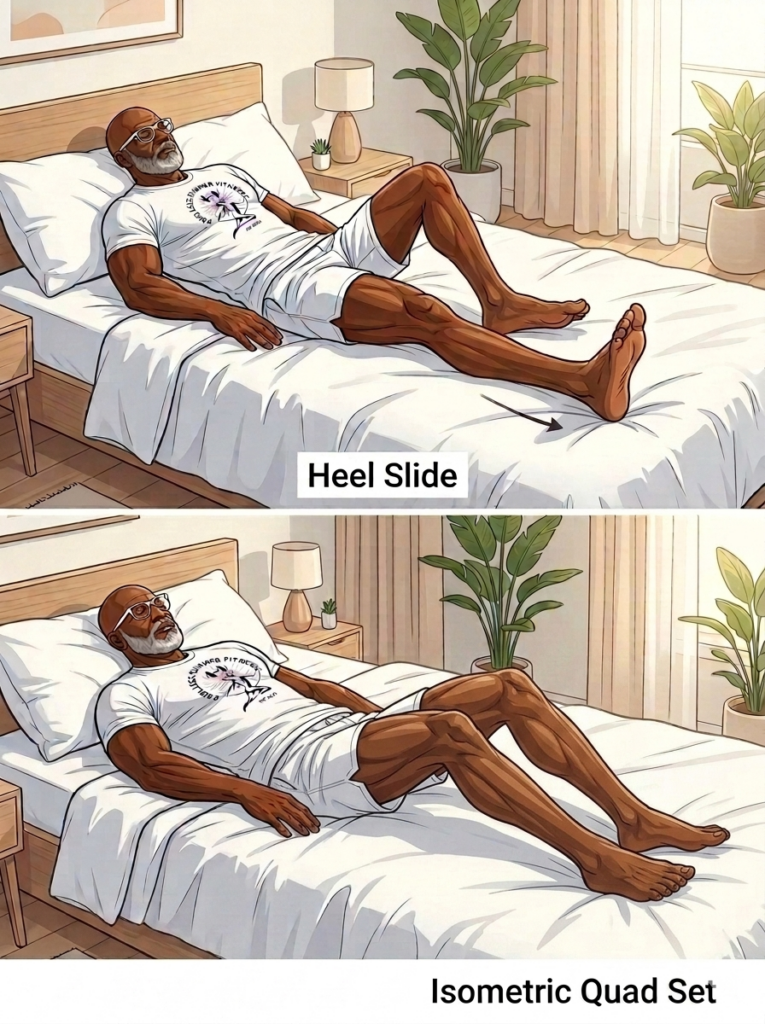
When your body is dealing with extreme fatigue, chronic illness flares, or deep deconditioning, even sitting upright can feel like a full workout. On days like these, movement must shift from “training” to preserving function, protecting your joints, and keeping your circulation active without overwhelming your nervous system. Below are the 5 best gentle bed moves for recovery
A fully based routine isn’t a downgrade, it’s a clinical, evidence-based, supported recovery strategy used in hospital rehabilitation, chronic fatigue protocols, and long-term mobility programs. Resources like the North Tees and Hartlepool NHS Foundation Trust Bed Exercise Guide and the Newcastle Hospitals Chronic Fatigue Exercise Protocol outline how low-impact, zero-load movements can maintain lean tissue, reduce stiffness, and support circulation when traditional training isn’t possible.
Read our other article on mobility: 9 Explosive Mobility Secrets for Total Body Flexibility
This guide gives you a well-structured, hybrid-fitness approach to those days, simple, restorative, and designed to keep your body moving forward even when energy is limited.
Foundational Principles of Bed-Based Restorative Movement
Pacing Over Intensity
Every movement should stay inside a pain-free range. No forcing, no stretching through discomfort, and no “pushing through it.” The goal is gentle activation, not exertion.
The 3‑Second Rule
Most contractions are held for a slow, audience three-count. This keeps the nervous system calm while still stimulating muscle fibers.
Systemic Tracking
Use a modified Borg Dyspnea Scale or your own internal cues. If your breathing or heart rate rises noticeably, you stop. Bed-based training is about preserving energy, not spending it.
The Bedridden Recovery Matrix
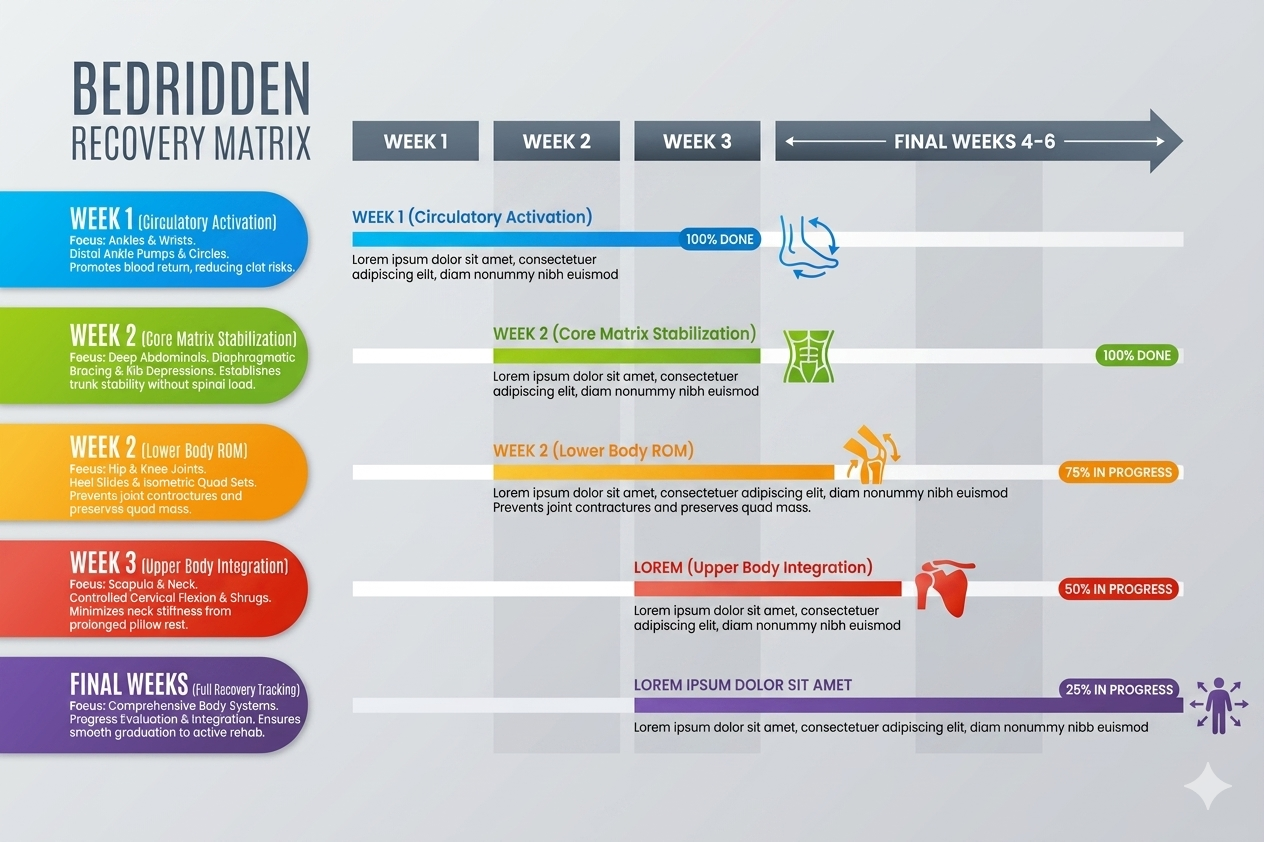
Step-by-Step Exercise Execution
- Distal Ankle Pumps
This is your circulatory warm‑up, the smallest movement with the biggest payoff.
- Position: Lie flat with legs extended.
- Movement: Pull your toes toward your nose.
- Action: Push your toes away into extension.
- Volume: 2 sets of 5 slow reps per leg.
This keeps blood moving through the lower legs, reducing stiffness and lowering clot risk during prolonged rest.
- Deep Abdominal Bracing
A gentle way to wake up your deep core without loading the spine.
- Position: Knees bent, feet resting on the mattress.
- Movement: Inhale to expand the lower ribs.
- Action: Exhale and draw the navel toward your spine.
- Volume: Hold 3 seconds; repeat 5 times.
This supports posture, breathing mechanics, and trunk stability, all without leaving the bed.
- Isometric Quadriceps Sets
A zero‑impact way to maintain quad activation and prevent muscle loss.
- Position: Legs extended straight.
- Movement: Press the back of your knee down into the mattress.
- Action: Tighten the front of the thigh and lightly squeeze the glutes.
- Volume: Hold 3 seconds, relax, repeat for 30 seconds.
Even small isometric contractions help preserve strength during low‑mobility periods.
- Controlled Heel Slides
A smooth, joint‑friendly way to maintain hip and knee mobility.
- Position: Legs extended.
- Movement: Keep your heel in contact with the mattress.
- Action: Slide your heel toward your glutes, bending the knee.
- Volume: 5 reps per leg.
This prevents joint stiffness and keeps your lower body moving without strain.
- Cervical Alignment Flexion
A simple reset for neck tension caused by long hours in bed.
- Position: Head supported by a pillow.
- Movement: Gently tuck your chin toward your chest.
- Action: Return to neutral alignment.
- Volume: 5 slow, non‑forced reps.
This helps counteract the forward‑head posture that develops during prolonged rest.
What This Routine Helps You Maintain
These bed-based movements help your body stay engaged even when energy is low or symptoms are unpredictable. You’re keeping circulation active, protecting joint mobility, and reminding your muscles how to fire without draining your system. It’s a simple structure that preserves function, supports healing, and keeps you connected to your training rhythm on the days when your body needs a gentle approach.
Medical Disclaimer: This article is for educational and informational purposes only and does not constitute medical advice. Always consult a physician or certified fitness professional before beginning a new exercise program, especially if you have pre-existing conditions.
If you believe in something, never give up! 12 months can change your life!
Clinically Trusted Sources
(Clinical Bed Exercises)
North Tees & Hartlepool NHS Foundation Trust – Bed Exercise Guide
https://www.nth.nhs.uk/resources/bed-exercise/
A foundational clinical resource covering ankle pumps, circulation activation, and early bed‑based mobility.
(Bed-Based Strength & Mobility)
Memorial Sloan Kettering Cancer Center – Advanced Bed Exercises
https://www.mskcc.org/cancer-care/patient-education/advanced-bed-exercises
Provides clear, medically reviewed instructions for quad sets, heel slides, and gentle strengthening from bed.