The hip and lower back mobility you build today pays you back for decades. Whether you’re a hybrid athlete, a busy professional, or someone over 40 trying to stay pain-free, mobility is the foundation that keeps everything moving smoothly. And when your hips and lower back feel stiff, everything feels harder — walking, lifting, sprinting, even sleeping.
This daily flow is simple, fast, and built for real life. You don’t need equipment. You don’t need a gym. You just need five to ten minutes and a little consistency. That’s the Endless Summer Fitness way — straightforward, simple, effective, and fun.
Why Hip & Lower Back Mobility Matters
Your hips and lower back are the engine room of your body. They stabilize every step, every lift, and every sprint. When they’re tight, your entire movement chain compensates. That’s when pain shows up.
Mobility training improves joint range of motion, reduces stiffness, and helps your muscles coordinate better. According to research published in MSSE and Harvard Health, consistent mobility work can improve function in as little as four weeks. That’s fast progress for such a small daily investment.
And because Endless Summer Fitness is built on hybrid fitness, mobility becomes even more important. Strength training, endurance work, walking, cycling, and sprinting all demand healthy hips and a responsive spine. When mobility improves, performance improves.
Who This Daily Mobility Flow Is For
The routine is designed for:
- Beginners who want a safe, simple starting point.
- Busy professionals who sit too much.
- Hybrid athletes who want better movement quality.
- Anyone over 40 who wants to stay strong and pain-free.
It’s also perfect for people who feel “tight all the time” but don’t know where to start. The flow is gentle, progressive, and built around natural movement patterns.
How This Daily Flow Supports Hybrid Training
Hybrid athletes need three things:
- Weight Training.
- Food for Every Goal.
- Endurance & Sprinting.
Mobility supports all three.
Better hip mobility improves squats, deadlifts, lunges, and carries. Better spinal mobility improves bracing, breathing, and power transfer. And when your hips move well, your running stride becomes smoother and more efficient.
This is also where the Endless Summer Fitness mindset pillars come in:
- Patience: Mobility takes time.
- Commitment: Daily practice builds long-term change.
- Discipline: Five minutes a day beats one long session a week.
- Enjoyment: Movement should feel good — and this flow does.
The Daily Mobility Flow (Follow Along)
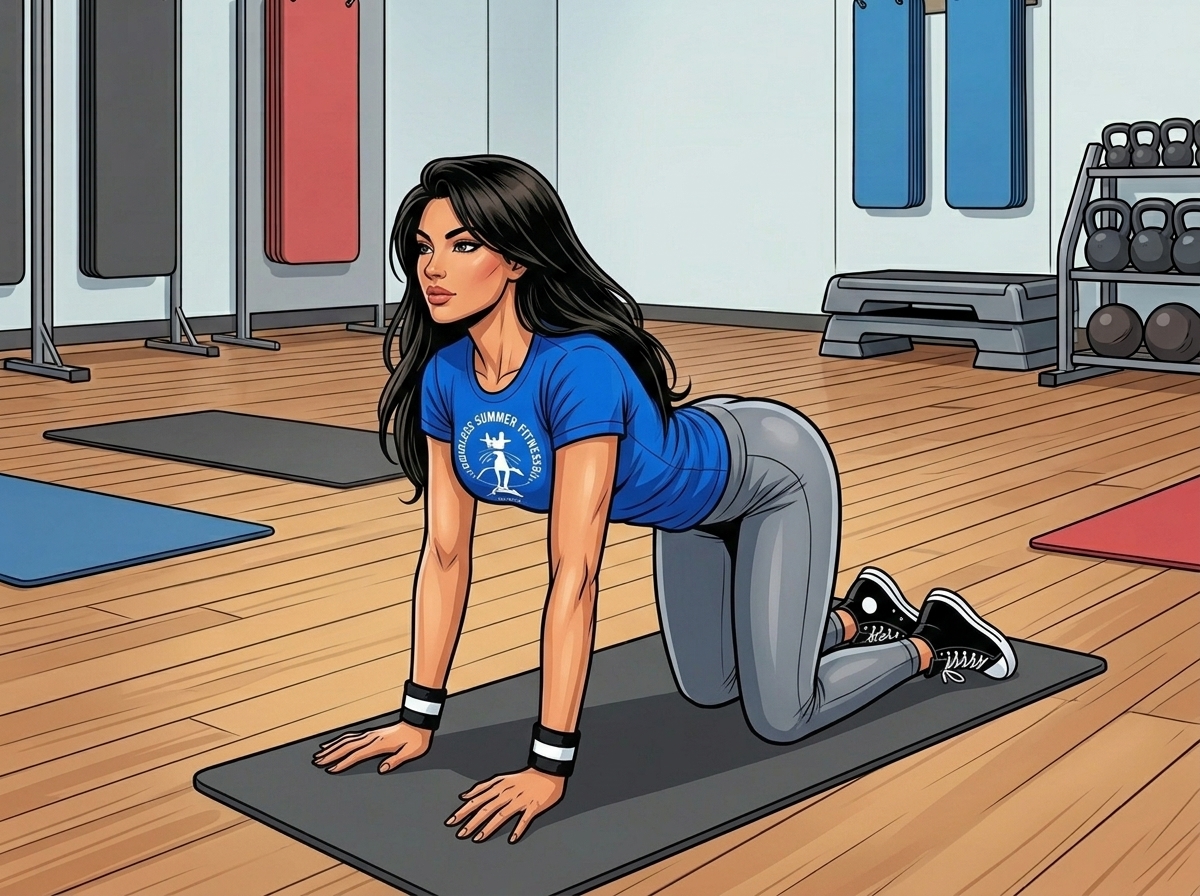
1. Cat‑Cow Spinal Waves (60 seconds)
This movement wakes up your spine, lubricates your joints, and resets your nervous system. It’s one of the fastest ways to reduce lower-back stiffness because it teaches your spine to move segmentally instead of hinging on a painful spot.
How to do it:
Start on all fours with your hands under your shoulders and knees under your hips. Tuck your pelvis first, then slowly round your lower back, mid-back, and upper back — one segment at a time. When reversing the motion, lift your tailbone first. Then let the wave travel up your spine until your chest opens and your head lifts last. Move slowly, breathe continuously, and keep your elbows soft so your shoulders don’t tense up.
Why it works:
Cat-Cow improves spinal flexion and extension, increases synovial fluid circulation, and reduces stiffness in the lumbar region. Segmental control teaches your spine to distribute movement evenly, which protects your lower back during lifting, walking, and running.
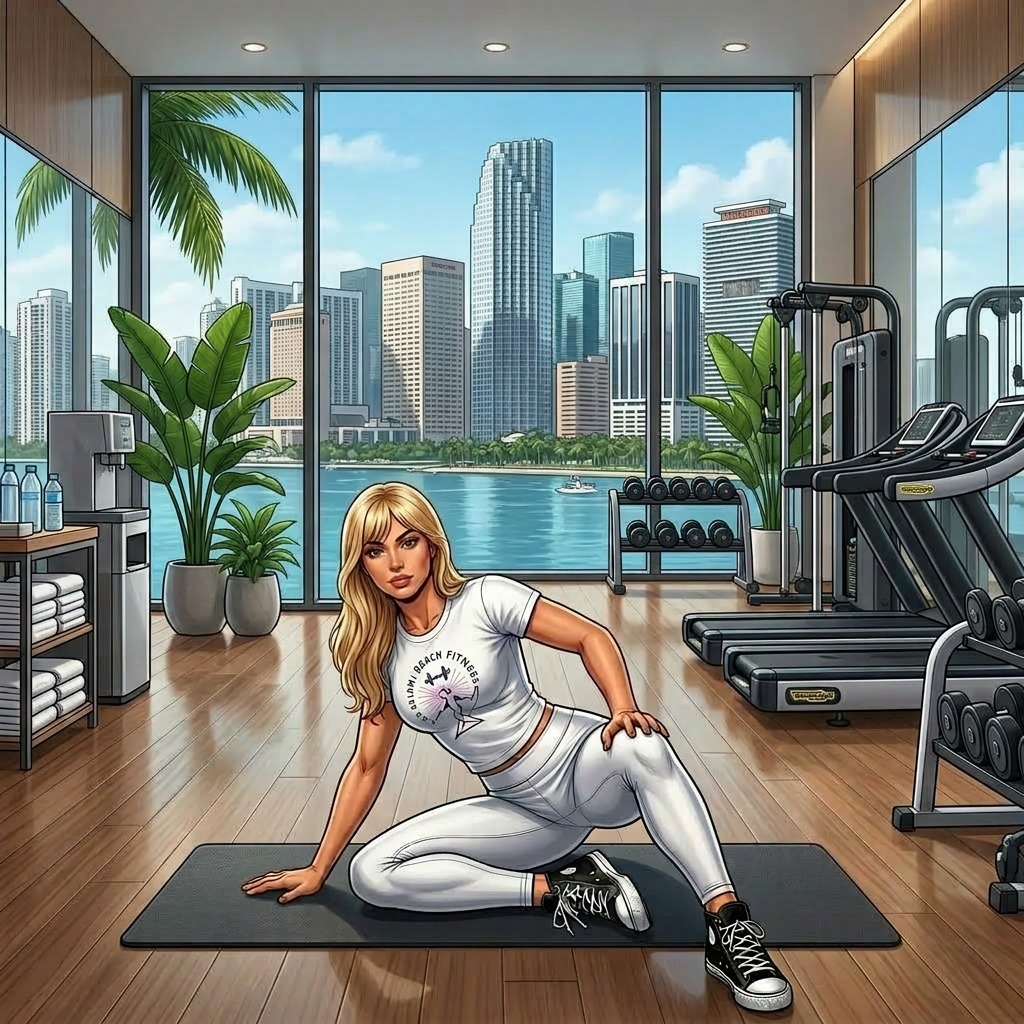
2. 90/90 Hip Switches (60–90 seconds)
How to do it:
Sit on the floor with one leg in front at 90 degrees and the other behind you at 90 degrees. Without using your hands, if possible, rotate your knees side to side, switching the 90/90 position from one hip to the other. Keep your chest tall, move slowly, and focus on smooth transitions rather than forcing range.
Why it works:
The 90-/90 position trains your hips to rotate independently of your lower back. Better hip rotation reduces compensations in the lumbar spine, which is one of the biggest causes of chronic lower back tightness. It also improves squat, depth, running stride efficiency, and overall athletic movement.
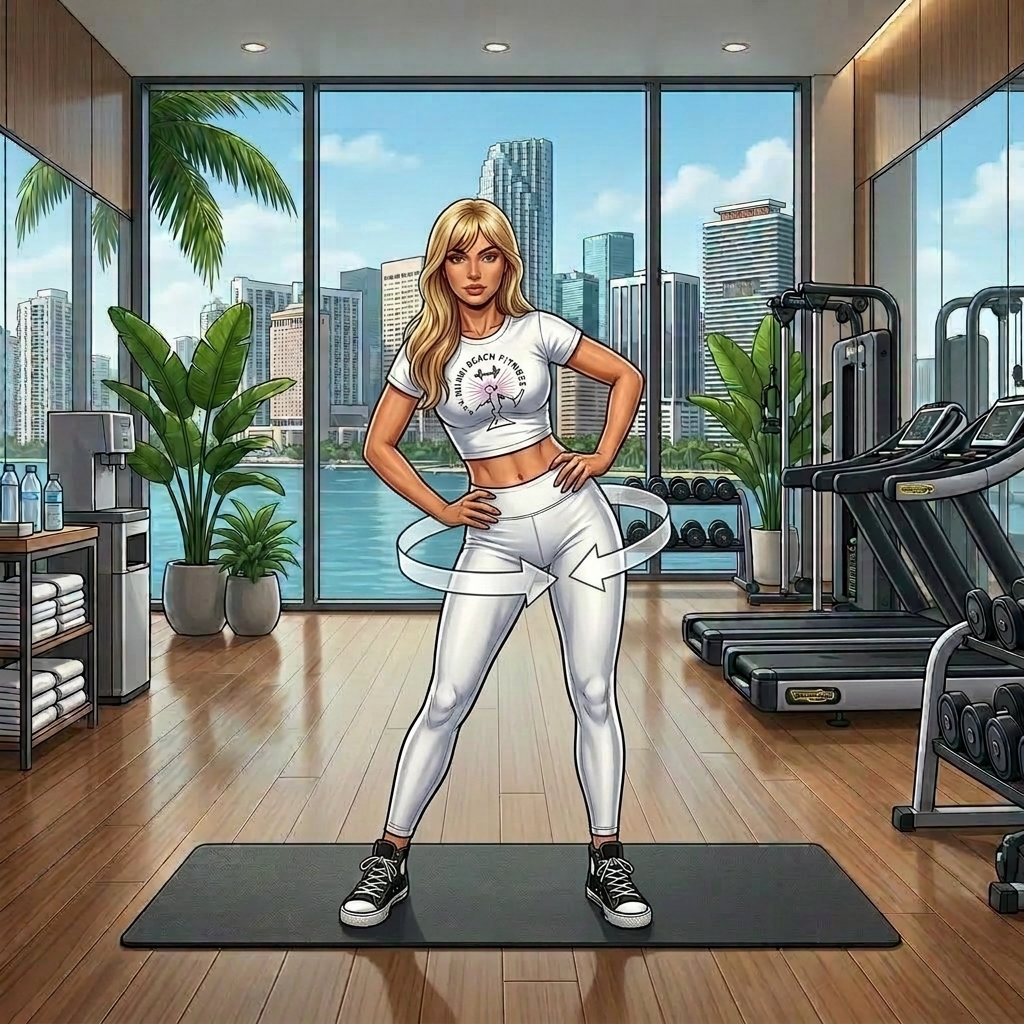
3. Standing Hip Circles (45–60 seconds each side)
This drill strengthens the deep stabilizers around your hips — the muscles that keep your pelvis level and your stride smooth.
How to do it :
Stand tall and balance on one leg. Lift your opposite knee to hip height and draw slow, controlled circles outward and inward. Keep your torso tall, your core lightly braced, and your hips level. Move slowly enough that you feel the small stabilizers working.
Why it works:
Hip circles build control, not just flexibility. They strengthen the glute medius, deep rotators, and hip flexors — all essential for running, walking, and lifting. This drill also improves balance and pelvic stability, reducing stress on the lower back.
4. Kneeling Lunge Stretch with Side Bend (60 seconds each side)
This stretch targets your hip flexors, obliques, and the front of your pelvis—areas that tighten from sitting and contribute to lower-back compression.
How to do it:
Start in a half-kneeling lunge with your front foot flat and your back knee on the ground. Shift your weight forward gently until you feel a stretch in the front of your hip. Raise the arm on the kneeling-leg side and bend your torso away from your front leg. Keep your rins down and avoid arching your lower back.
Why it works:
Tight hip flexors pull your pelvis forward, increasing lower-back tension. The stretch lengthens the hip flexors and opens the side body, reducing anterior pelvic tilt. It also improves stride length and running efficiency —key for hybrid athletes.
5. Seated Forward Fold with Hip Rocking (60 seconds)
This gentle stretch opens your hamstrings and decompresses your lower back without forcing your range of motion.
How to do it:
Sit with your legs extended in front of you. Hinge forward from your hips and reach toward your feet while keeping your spine long. Once in position, gently rock your hips side to side to release tension along the back of your legs and lower spine. Keep the movement small and controlled.
Why it works:
The rocking motion reduces tension along the posterior chain — hamstrings, glutes, and lower back. It also encourages your pelvis to move freely, which helps decompress the lumbar spine. This drill is especially helpful for people who sit for long hours or feel “tight all the time.”
How to Progress This Routine Over Time
Even without a progression matrix, you still progress.
Mobility progression looks like:
- Increasing range of motion
- Adding a slow tempo
- Adding controlled rotations
- Increasing time under tension
- Improving breathing control
Just like strength training, mobility improves with 5-10% weekly increases in volume or difficulty. That might mean holding a stretch longer or adding one more round,
How This Flow Supports VO₂ Max, Endurance & Recovery
Mobility improves posture, breathing mechanics, and stride efficiency. When your hips move well, your diaphragm works better. That means better oxygen delivery—and better VO₂ max potential.
Training in the 5-Zone Model becomes easier when your body moves freely:
- Zone 1: Active recovery
- Zone 2: Aerobic endurance
- Zone 3: Tempo
- Zone 4: Threshold
- Zone 5: VO₂ max / sprints
Mobility also improves recovery by reducing stiffness and improving circulation. According to research, mobility improvements can happen in as little as four weeks with consistent practice.
Nutrition Tips for Better Mobility & Recovery
Mobility isn’t just movement — it’s also fuel.
Protein: Aim for high-protein meals to support muscle repair. Post-workout, hit the 3 – 4g leucine threshold.
Table: The Muscle Power Switch
| What is it? | How it works | Who needs it most? |
| Leucine is a special ingredient in food that acts like a “power switch” for building and repairing your muscles. | You need to eat 3 to 4 grams of it at every meal to fully turn that muscle-building switch ON. | Older adults (aged 50+) need this high amount because their muscles require a bigger “push” to stay strong. |
Table: Foods That Flip the Muscle Switch
| Food Choice | How Much to Eat | Why it Works |
| Chicken or Turkey | One piece the size of a deck of cards (4–5 ounces) | Packed with high-quality muscle fuel. |
| Beef or Pork | One piece the size of a deck of cards (4–5 ounces) | Naturally loaded with leucine. |
| Fish (Salmon or Tuna) | One medium-sized filet (5 ounces) | Gives you healthy fats and hits the target easily. |
| Eggs | 4 to 5 large eggs | An excellent whole-food source for the switch. |
| Whey Protein Powder | 1 scoop mixed with water or milk | The fastest way to turn the switch on. |
| Tofu (Plant-Based) | 1.5 blocks of firm tofu | You have to eat a larger portion to get enough. |
Anti-inflammatory foods:
- Berries
- Leafy greens
- Omega-3s
- Giner
- Tart cherry
Hydration:
Use electrolytes with sodium, potassium, magnesium, and chloride. Coconut water + citrus + sea salt is a simple Miami-style mix.
Why dieting alone fails:
As Dr. Daniel Lieberman explains, weight loss without exercise leads to rapid regain. Movement is non-negotiable.
Important ESF Articles:
- Improve Ankle Mobility: 5 Best Exercises for Better Squats
- Mobility for Desk Workers: 10 Moves to Undo Sitting Damage
Summary
Daily hip and lower back mobility is one of the simplest ways to feel better fast. This flow gives you a short, effective routine that fits into any schedule — whether you’re a hybrid athlete or just want to move without pain.
Because mobility supports strength, endurance, and sprinting, it becomes a core part of hybrid training. Better movement means better performance. And better performance means more enjoyment — one component of the Endless Summer mindset foundation.
With consistent practice, you’ll notice smoother movement, less stiffness, and more confidence in your training. Mobility is a long-term investment, but the payoff starts almost immediately.
Stick with it. Five minutes a day can change everything.
FAQs
- How long does this mobility flow take?
About 5 –10 minutes. - Can beginners do this routine?
Yes — designed for levels. - Should I do mobility before or after workouts?
Both work, but before training helps warm up your joints. - How soon will I feel relief?
Many people feel better immediately, with major improvements in 4 weeks. - Can mobility improve my running stride?
Absolutely—hip mobility is essential for efficient running. - Do I need equipment?
Nope. Just your body and a little space.
Medical Disclaimer:
This article is for educational and informational purposes only and does not constitute medical advice. Always consult a physician or certified fitness professional before beginning a new exercise program, especially if you have pre-existing conditions.
Move fast, stay strong, go far
— The hybrid body is built for anything!
Clinical / Medical Sources
- Harvard Health Publishing — Mobility & joint function: “Mobility” — Harvard Health Publishing
- PubMed / NCBI — Mobility improvements in 4 weeks: Guidelines for Enhancing Mobility and Stability in Individuals with Severe Obesity – PMC
Performance / Strength Sources
- NSCA — Hip function & performance: Use NSCA position stands and articles on hip strength and performance (e.g., hip strength and balance, lower‑body performance).
- NASM — Mobility and movement quality: “Mobility and Stability: Joint Functions When We Move” — NASM
Nutrition & Recovery Journals
- JISSN — Protein intake & leucine threshold: Look for JISSN articles on optimal protein dosing and leucine thresholds for muscle protein synthesis.
- Nutrients — Anti‑inflammatory foods: Use Nutrients review papers on anti‑inflammatory dietary patterns (berries, leafy greens, omega‑3s, etc.).
Clinical / Medical Sources
- Harvard Health Publishing — Mobility & joint function: “Mobility” — Harvard Health Publishing
- PubMed / NCBI — Mobility improvements in 4 weeks: Systematic review on hip strength and mobility and their impact on balance and mobility
Performance / Strength Source
- NSCA — Hip function & performance: Use NSCA position stands and articles on hip strength and performance (e.g., hip strength and balance, lower‑body performance).
- NASM — Mobility and movement quality: “Mobility and Stability: Joint Functions When We Move” — NASM
Nutrition & Recovery Journals
- JISSN — Protein intake & leucine threshold: Look for JISSN articles on optimal protein dosing and leucine thresholds for muscle protein synthesis.
- Nutrients — Anti‑inflammatory foods: Use Nutrients review papers on anti‑inflammatory dietary patterns (berries, leafy greens, omega‑3s, etc.).