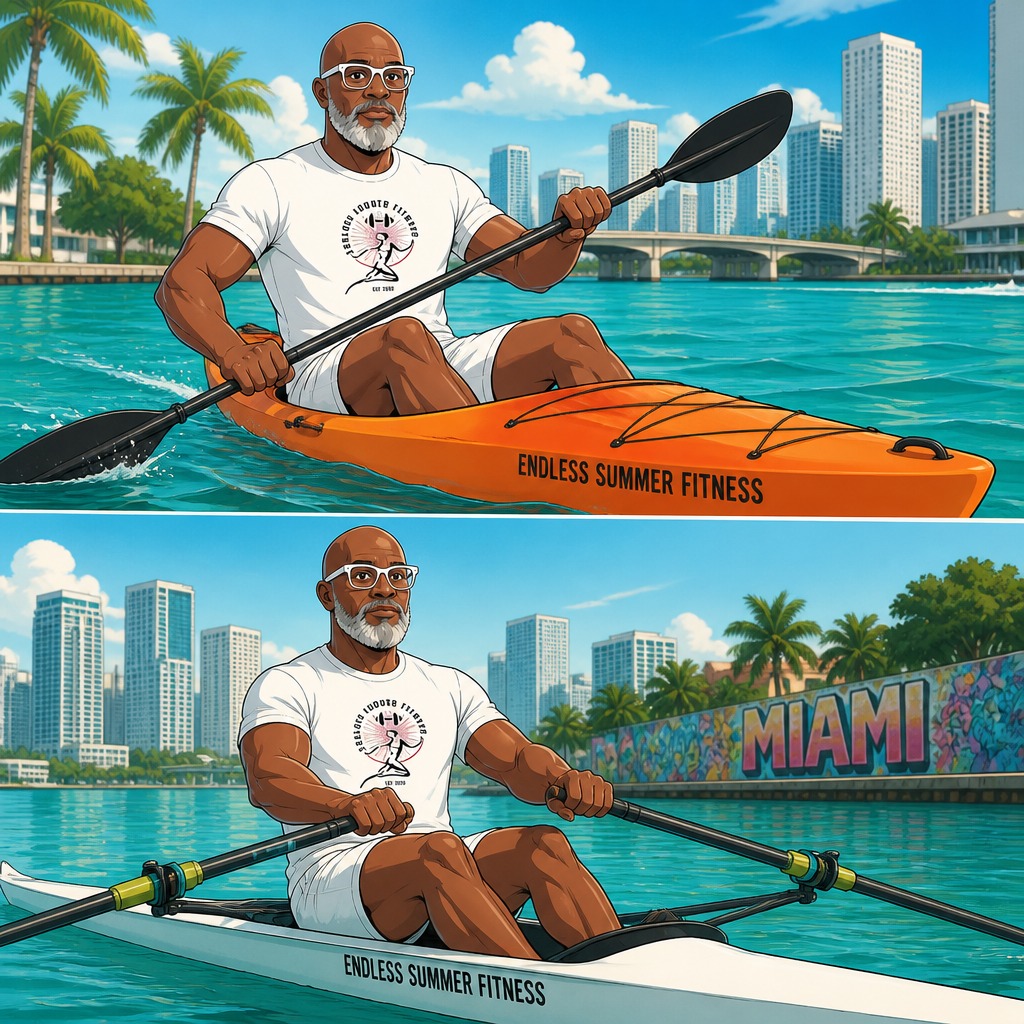
This article is about the muscles used and the best low-impact exercises for each sport; kayaking and rowing look similar on the surface, but their biomechanics couldn’t be more different. Kayaking is rotational, unilateral, and shoulder-driven. Rowing is bilateral, leg-dominant, and powered by hip drive. Because of that, each sport demands its own strength, stability, and endurance training. And that’s the key takeaway: kayaking vs. rowing use different muscles, movement patterns, and even muscle fiber types, which makes both uniquely effective for low-impact cardio for beginners. .
What’s the main difference between kayaking and rowing?
Kayaking relies on rotation and unilateral pulling. Every stroke requires shoulder stability, core control, and quick power. Rowing is smoother and more rhythmic. The legs generate most of the force, and the upper body finishes the pull
Kayaking leans more on fast-twitch fibers for short bursts and directional changes. Rowing leans more on slow-twitch fibers for long, steady efforts.
Below are abbreviated descriptions of the muscles involved in specific functional exercises for kayaking and rowing, respectively.
3 Functional Low-Impact Exercises for Kayaking
Half-Kneeling Cable Chop
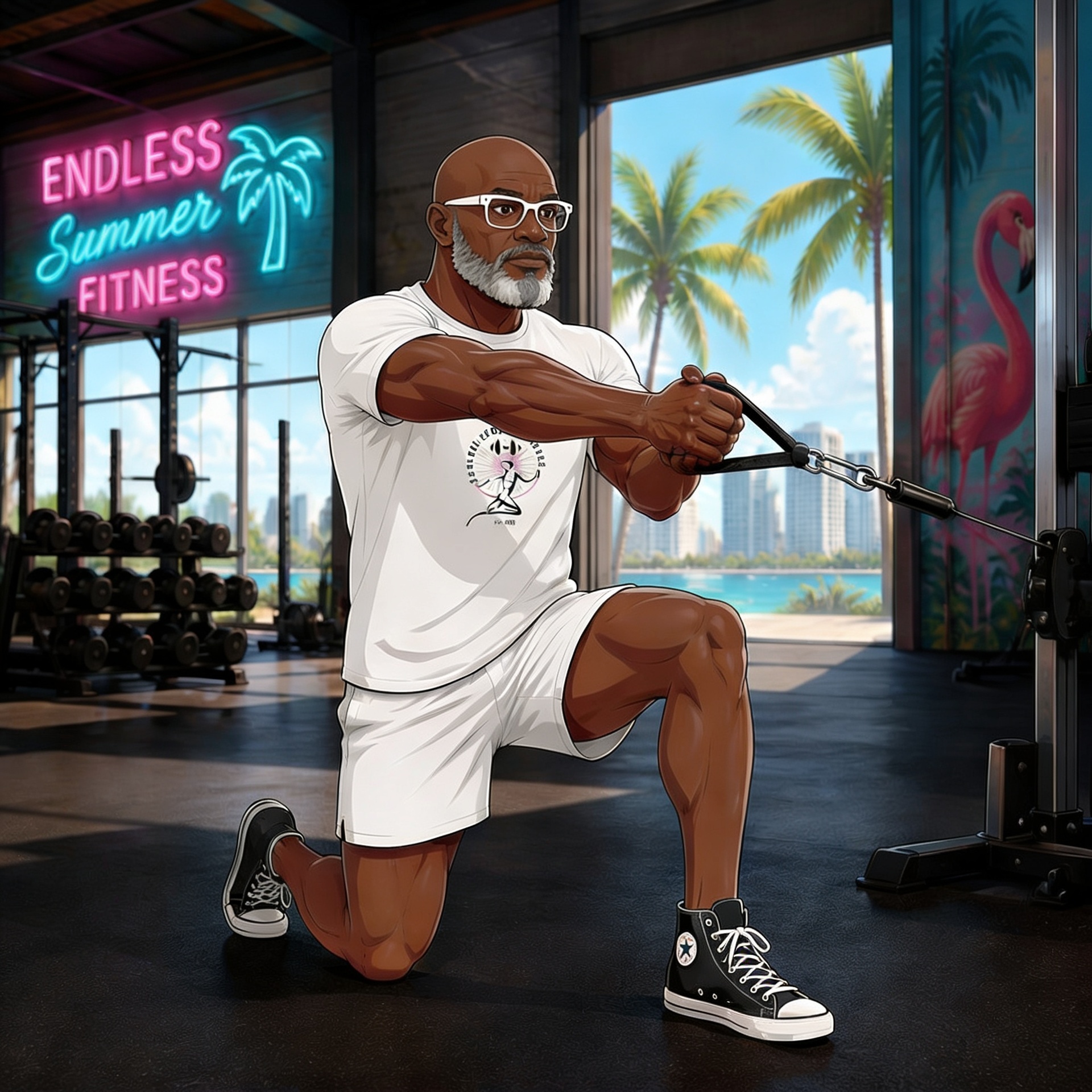
Why it’s needed: Kayaking is rotational. This builds torque for stronger strokes.
Primary power muscles: Obliques, lats.
Endurance muscles: Serratus, deep core.
Stability muscles: Glutes, QL
Fiber type: Fast-twitch dominant.
Single-Arm Landmine Row with Rotation
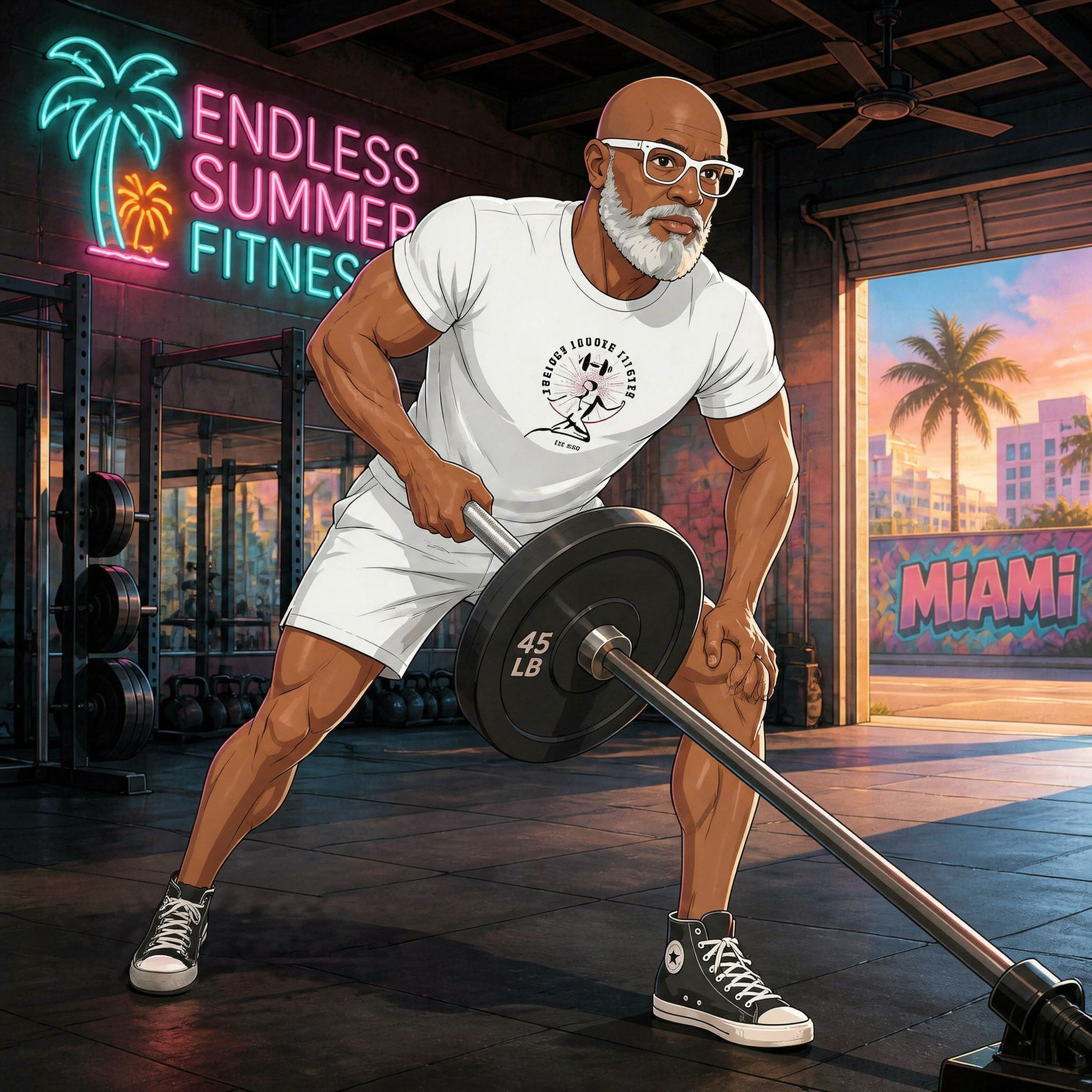
Why it’s needed: Kayaking is a unilateral activity. This trains pulling strength with torso rotation.
Primary power muscles: Lats, rhomboids
Endurance muscles: Mid-back.
Stability muscles: Obliques, glutes.
Fiber type: Mixed, leaning fast-twitch.
OpenArt Prompt: “Rotational landmine row, hybrid athlete, Miami palette.”
Alt Text: “Rotational landmine row strengthening kayaking muscles.”
Stability-Ball Lat Pull-In
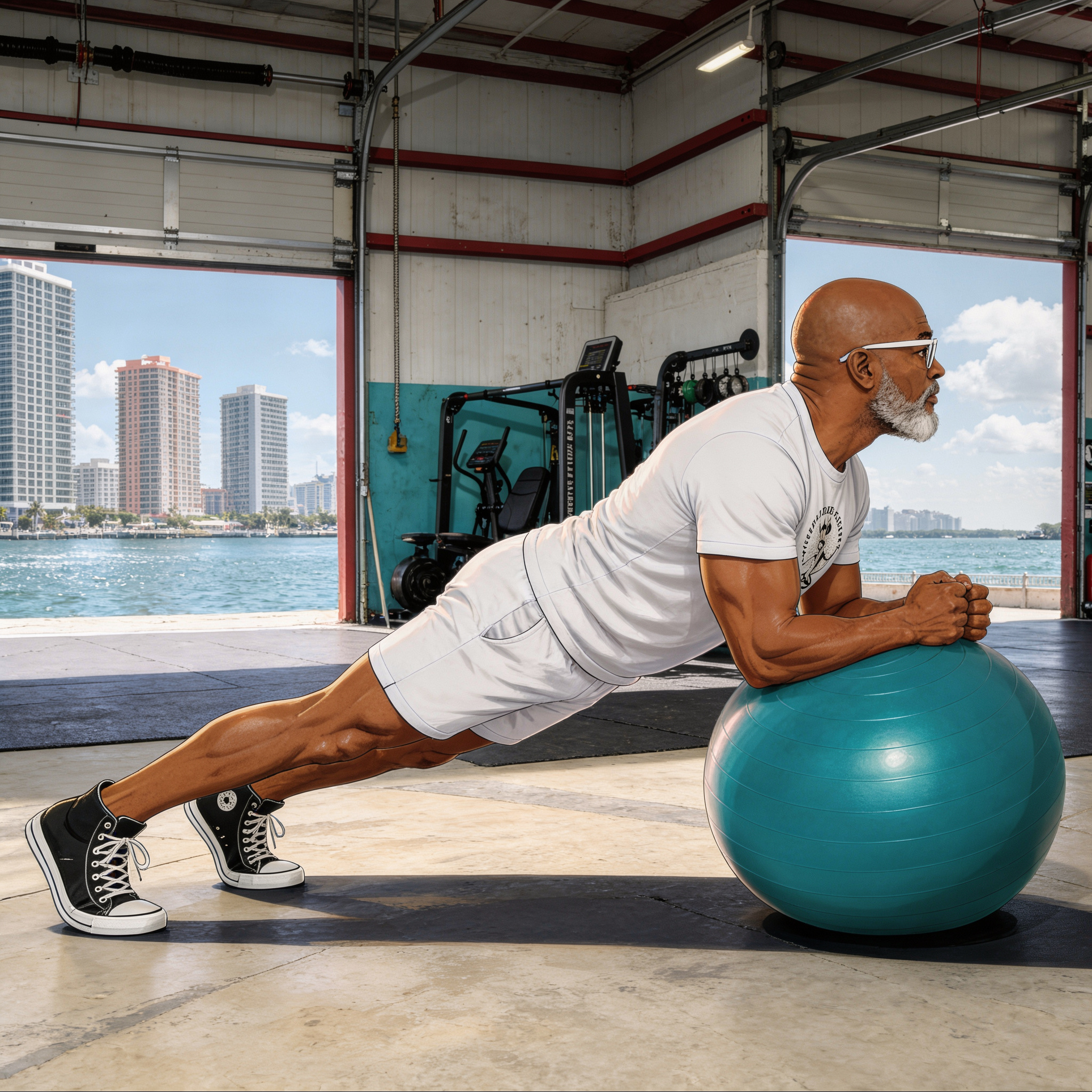
Why it’s needed: Mimics the pulling phase of a kayak stroke while forcing core control.
Primary power muscles: Lats, rear delts.
Endurance muscles: Serratus, mid-back
Stability muscles: Hip flexors, deep core.
Fiber type: Mixed.
OpenArt Prompt: “Stability‑ball lat pull, teal tones, clean studio.”
Alt Text: “Lat pull variation improving upper‑body control for kayaking.”
3 Functional Low-Impact Exercises for Rowing
Hip-Drive Rowing Drill (Erg)
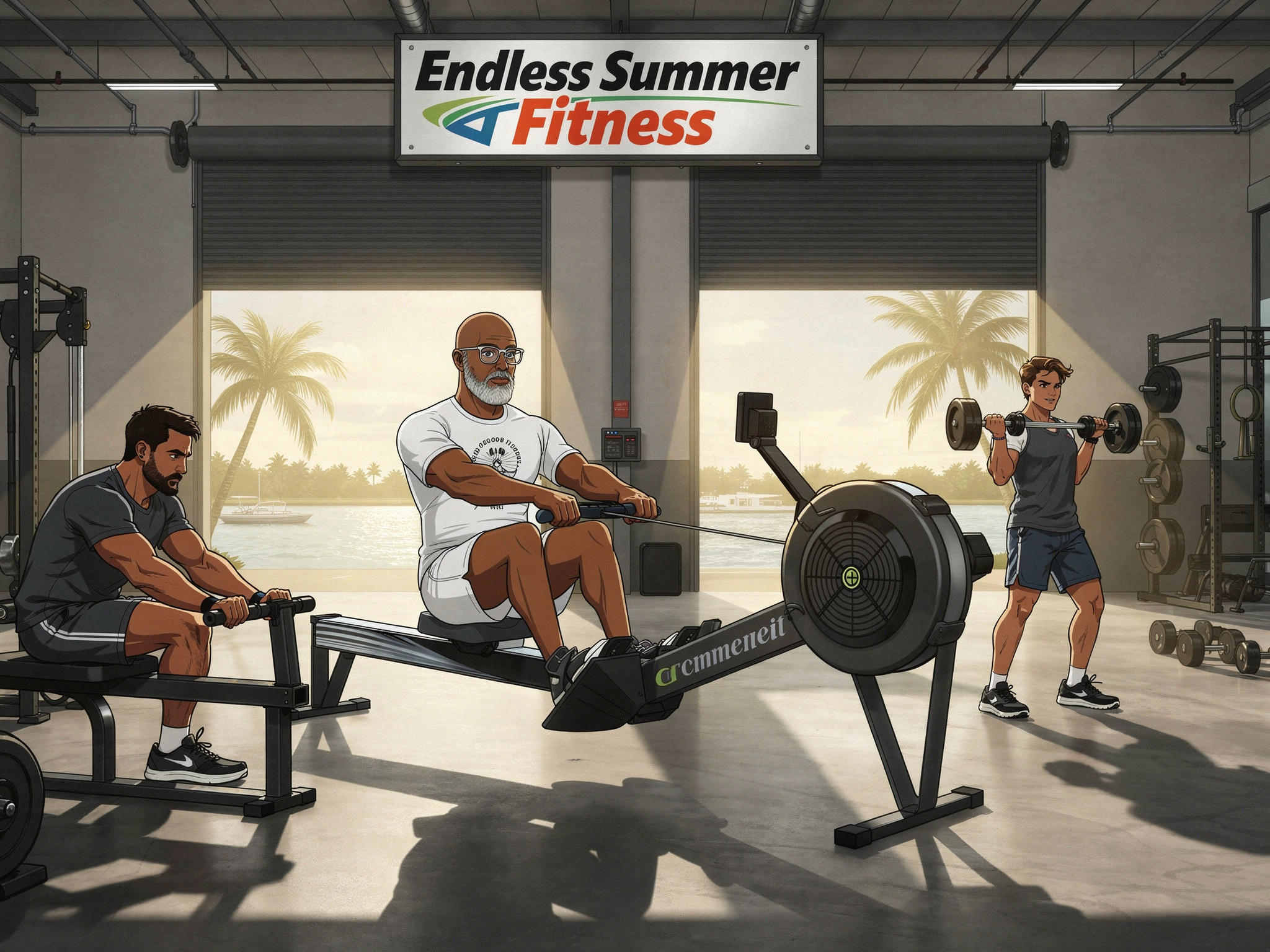
Why it’s needed: Rowing is leg-driven. This teaches power from the hips, not the arms.
Primary strength muscles: Glutes, hamstrings.
Endurance muscles: Quads, lower back.
Stability muscles:
Fiber type: Slow-twitch dominant.
OpenArt Prompt: “Rowing hip‑drive drill, hybrid athlete, teal lighting.”
Alt Text: “Rowing drill improving leg‑powered endurance.”
Romanian Deadlift (RDL)
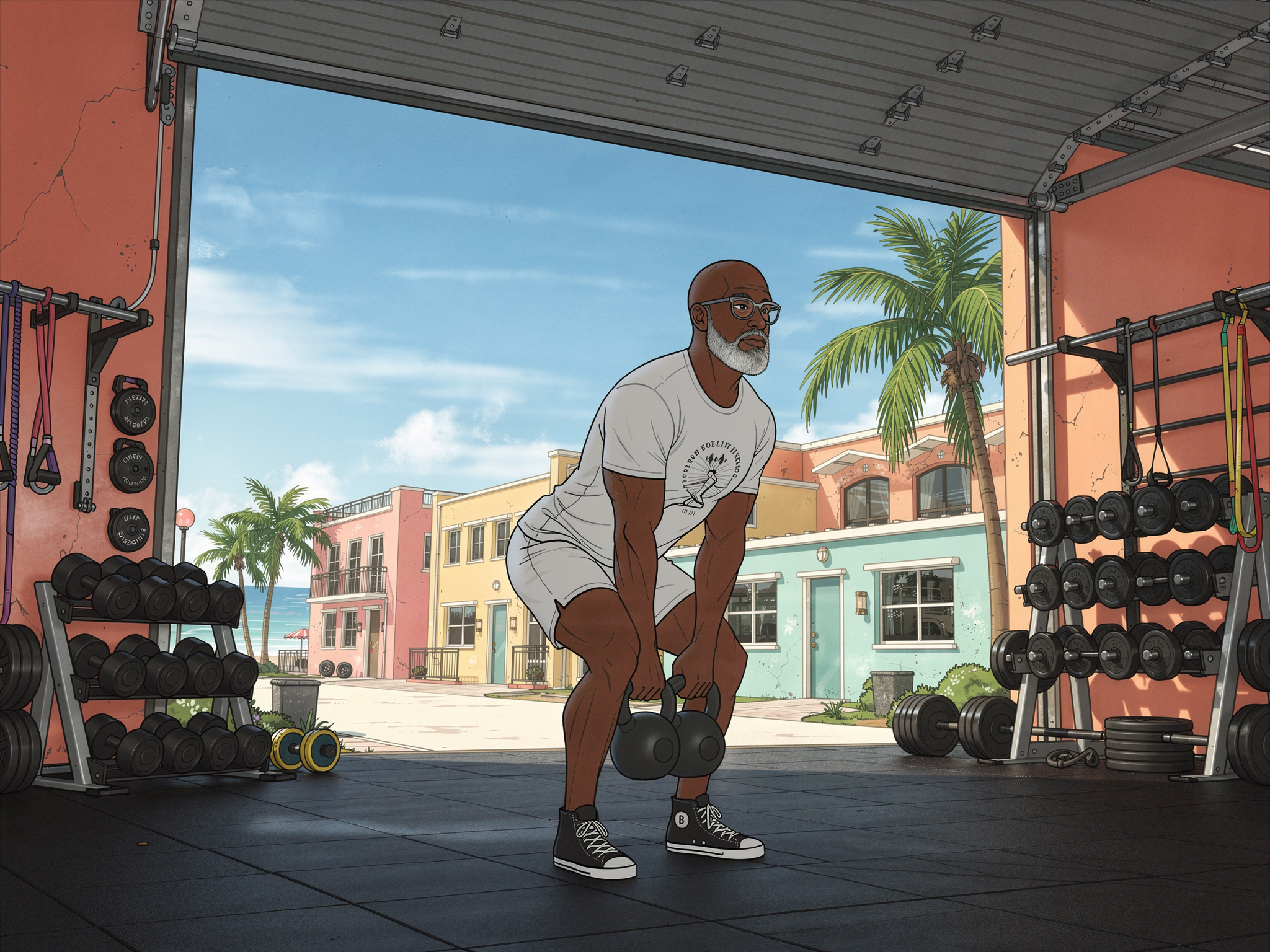
Why it’s needed: Rowing requires a strong posterior chain for every stroke.
Primary strength muscles: Hamstrings, glutes.
Endurance muscles: Erectors.
Stability muscles: Core, lats.
Fiber type: Mixed
OpenArt Prompt: “RDL in Miami gym, hybrid athlete, crisp detail.”
Alt Text: “RDL strengthening posterior chain for rowing.”
Seated Cable Row (Endurance Tempo)
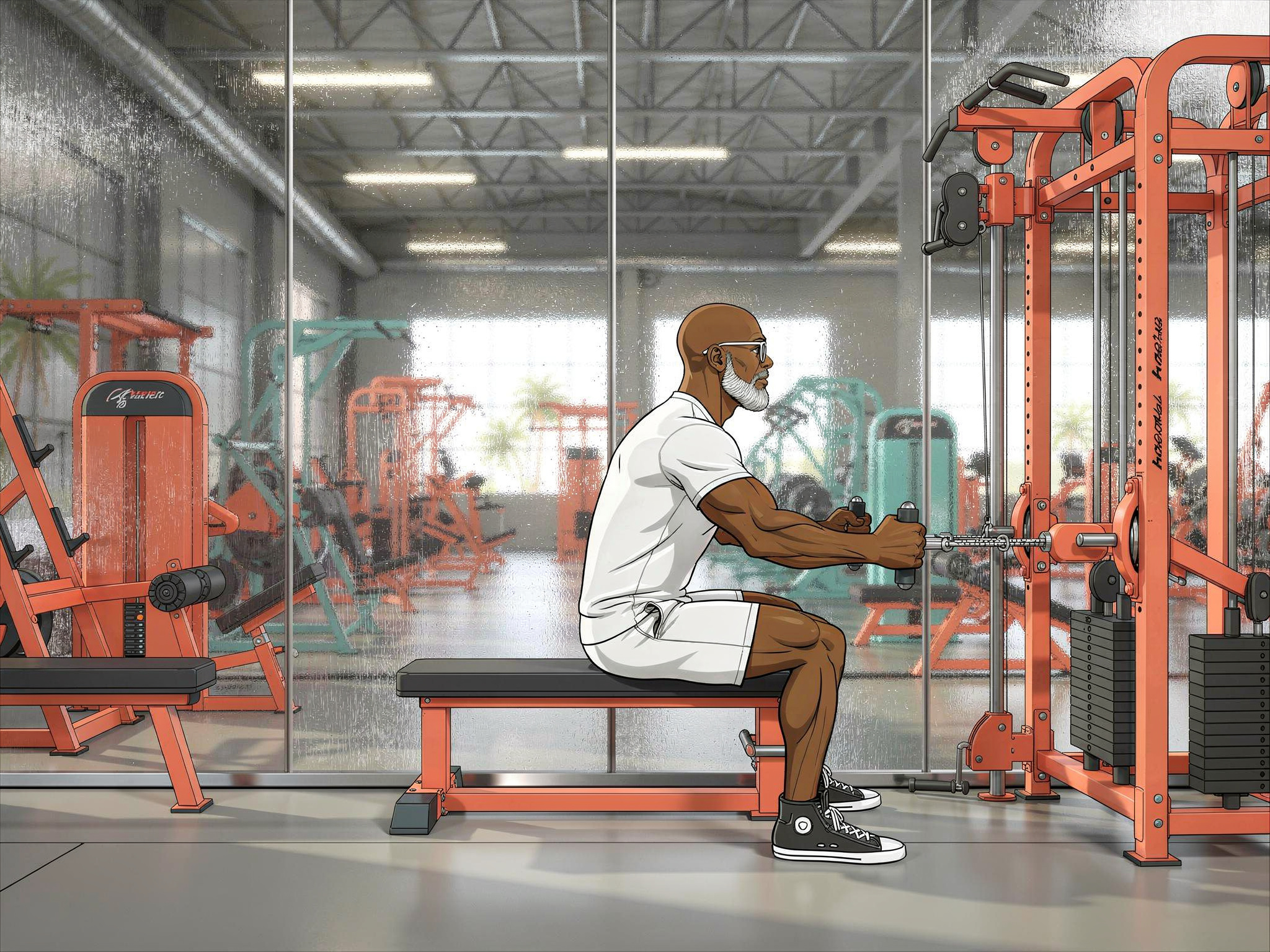
Why it’s needed: Builds repetitive pulling endurance for long rowing sessions.
Primary strength muscles: Lats, mid-back.
Endurance muscles: Rear delts, biceps.
Stability muscles: Core, traps.
Fiber type: Slow-twitch dominant.
OpenArt Prompt: “Seated cable row, endurance tempo, clean studio.”
Alt Text: “Endurance row variation improving rowing stamina.”
Transform Your Life!
- Read next: The 10 Best Compound Exercises for Hybrid Athletes
- Also try: Low‑Impact Upper Body Strength Training for Beginners
Summary
Kayaking and rowing are both excellent low-impact cardio options, but they train your body in completely different ways. Kayaking builds rotational power, shoulder stability, and fast-twitch control. Rowing builds leg-driven endurance, posterior-chain strength, and slow-twitch capacity.
Training for both gives hybrid athletes a balanced engine: power from kayaking, stamina from rowing, and joint-friendly conditioning that fits any busy schedule.
Absolutely—here are fully answered FAQs, written in your ESF voice, Miami-vibe, concise, and ready to drop straight into the article.
No fluff. No unanswered questions. Just clean, authoritative fitness explanations.
Is kayaking harder than rowing?
Kayaking is harder for most beginners because it requires more rotational strength, shoulder stability, and fast-twitch power to control each stroke. Rowing feels easier to learn because the movement is bilateral and rhythm-based, but it becomes challenging once intensity increases.
Does rowing build leg strength?
Yes—rowing is leg-dominant. Nearly 60& of each stroke comes from the legs, especially the quads and glutes. While it won’t replace heavy strength training, rowing builds excellent endurance strength in the posterior chain and improves hip-drive power.
Which is better for shoulder health?
Rowing is generally safer for sensitive shoulders because the movement is symmetrical and doesn’t require overhead or rotational loading. Kayaking can be shoulder-friendly too, but only when the athlete has good scapular control, rotator-cuff endurance, and core stability.
Can kayaking improve core strength?
Absolutely. Kayaking is one of the best low-impact ways to build rotational core strength, anti-rotation stability, and deep core endurance. Every stroke forces the torso to resist twisting while generating power through the obliques muscles and lats.
How often should beginners train in each sport?
Most beginners do well with 2-3 sessions per week of either sport. Kayaking benefits from shorter, technique-focused sessions, while rowing supports longer, steady-state workouts. Hybrid athletes can alternate between power and endurance to balance.
Do both sports improve endurance?
Yes—but in different ways. Rowing builds aerobic endurance through long, rhythmic strokes that rely on slow-twitch fibers. Kayaking builds mixed endurance, combining aerobic work with bursts of fast-twitch power for steering, acceleration, and stroke changes.
Medical Disclaimer: This article is for educational and informational purposes only and does not constitute medical advice. Always consult a physician or certified fitness professional before beginning a new exercise program, especially if you have pre-existing conditions.
PEER‑REVIEWED EVIDENCE FRAMEWORK
Clinical / Medical:
Performance / Strength:
Nutrition & Recovery: