Targeted plantar fasciitis exercises reduce acute heel pain by lengthening tight calf complex structures, mobilizing the plantar fascia, and strengthening intrinsic foot musculature. Performing these low-impact movements consistently restores weight-bearing tolerance and improves mobility without aggravating joint structures.
Understanding Plantar Fasciitis Mechanics
The plantar fascia is a dense, fibrous band of connective tissue running along the sole of the foot, connecting the calcaneus (heel bone) to the metatarsals. When subjected to repetitive tensile stress or excess mechanical load, micro-tears develop, leading to localized inflammation, stiffness, and sharp heel pain—particularly during the first steps after waking.
Tightness in the gastroc-soleus (calf) complex increases pulling forces on the heel, compounding strain along the plantar arch. Implementing structured plantar fasciitis exercises addresses both local tissue restriction and upstream muscular tightness, offering a comprehensive physical approach to symptom management.
Key Benefits of Foot Mobilization and Strengthening
- Targeted Pain Reduction: Gentle mechanical loading and stretching alleviate acute arch and heel sensitivity.
- Improved Arch Function: Strengthening intrinsic foot muscles provides structural support to the medial longitudinal arch.
- Enhanced Tissue Elasticity: Controlled stretching restores length-tension relationships in the soleus and gastrocnemius muscles.
- Accelerated Recovery: Increasing localized blood circulation facilitates waste removal and cellular repair in connective tissues.
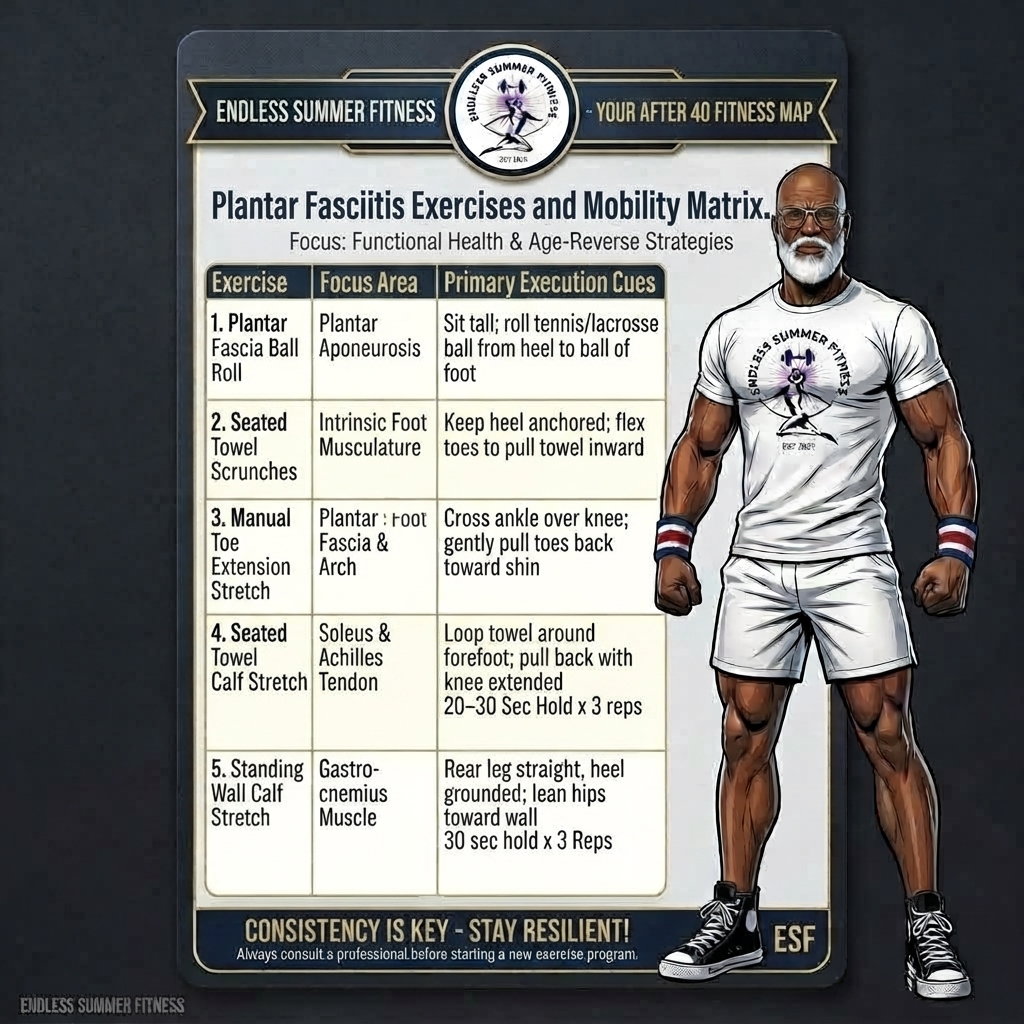
Plantar Fasciitis Exercises and Mobility Matrix
Integrating targeted plantar fasciitis exercises into your daily routine requires balancing soft tissue release with active stretching and intrinsic strengthening.
Movement Matrix
Step-by-Step Exercise Protocol
1. Plantar Fascia Ball Roll
- Why it works: Provides targeted myofascial release to the thick plantar tissue, reducing local tissue density and morning stiffness.
- Execution: Sit in a firm chair. Place a tennis ball, lacrosse ball, or frozen water bottle under the arch of your foot. Apply moderate downward pressure and slowly roll the ball from the base of your heel to the ball of your foot.
- Key Cues: Maintain steady pressure. Pause on sensitive spots for 10 to 15 seconds.
2. Seated Towel Scrunches
- Why it works: Strengthens the flexor digitorum brevis and other intrinsic foot muscles that stabilize the foot arch during locomotion.
- Execution: Sit in a chair with your feet flat on the floor. Lay a small hand towel flat in front of your affected foot. Keeping your heel planted on the ground, use your toes to scrunch the towel toward you.
- Key Cues: Focus on pulling with the toes rather than lifting the entire foot.
3. Manual Toe Extension Stretch
- Why it works: Directly stretches the plantar aponeurosis band, improving tissue compliance before weight-bearing activity.
- Execution: Sit and cross your affected ankle over the opposite knee. Grasp your toes with your hand and gently pull them backward toward your shin until you feel a distinct stretch along the arch of your foot.
- Key Cues: Touch the plantar fascia with your opposite hand to confirm the band is taut.
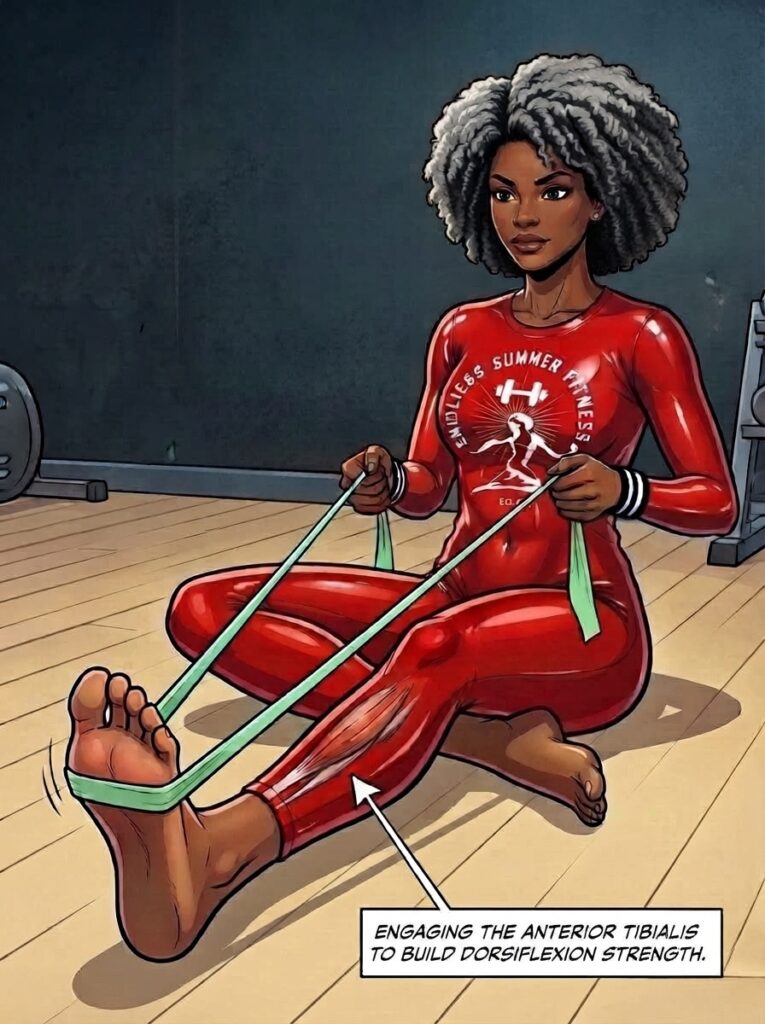
4. Seated Towel Calf Stretch
- Why it works: Lengthens the lower calf complex and Achilles tendon without putting weight-bearing stress on an inflamed heel.
- Execution: Sit on the floor with your legs extended in front of you. Loop a towel or resistance band around the ball of your foot. Holding the ends of the towel, gently pull back toward your torso while keeping your knee straight.
- Key Cues: Keep your spine erect and avoid bending at the knee.
5. Standing Wall Calf Stretch
- Why it works: Targets the upper gastrocnemius muscle, removing mechanical pull on the calcaneus from standing postures.
- Execution: Stand facing a wall at arm’s length. Place both palms flat against the wall. Step your affected leg back, keeping the heel firmly planted on the floor and the knee completely straight. Lean your hips forward until you feel a deep stretch in the upper calf.
- Key Cues: Keep back foot pointed straight forward; do not let the heel rotate inward or outward.
Execution Guidelines and Safety Parameters
- Prioritize Morning Execution: Perform soft tissue rolling and toe extension stretches before taking your first steps out of bed to prevent acute tearing of resting tissues.
- Avoid Aggressive Stretching: Stretch to the point of gentle tension, never sharp pain. Aggressive stretching can exacerbate micro-tearing in inflamed fascia.
- Regulate Training Volume: Complete 1 to 2 sessions daily. Consistency delivers far superior long-term tissue adaptation compared to infrequent, aggressive sessions.
- Incorporate Supportive Footwear: Avoid walking barefoot on hard tile or hardwood floors during flare-ups. Pair these plantar fasciitis exercises with supportive footwear or orthotic inserts.
Common Management Errors
- Ignoring Upstream Tightness: Focusing solely on the foot while ignoring tight calf muscles and hip flexors leaves root biomechanical causes unaddressed.
- Pushing Through Sharp Heel Pain: Working through acute, sharp pain increases tissue inflammation and delays healing.
- Over-Relying on Passive Rest: Complete immobility causes muscle atrophy and tendon stiffness. Controlled, low-impact mobility maintains tissue capacity while healing occurs.
Action Plan
Implement these movements twice daily—once immediately upon waking and once in the evening. Combining soft tissue release with controlled stretching will reduce heel discomfort and restore confidence in your daily movement.
Related ESF Guides
Peer-Reviewed References
- Martin RL, et al. Heel Pain – Plantar Fasciitis: Revision 2023. Journal of Orthopaedic & Sports Physical Therapy. 2023;53(11):CPG1-CPG39.
- Sweeting D, et al. The effectiveness of manual stretching in the treatment of plantar heel pain: a systematic review. Journal of Foot and Ankle Research. 2011;4(19).
Get Free Training Tips in Your Inbox!
Enjoyed this breakdown? Join our community of dedicated lifters to get evidence-based fitness strategies delivered straight to your email. [Sign Up for Our Free Email List Today]
Medical Disclaimer: This article is for educational and informational purposes only and does not constitute medical advice. Always consult a physician or qualified physical therapist before starting a new exercise protocol, especially if experiencing severe or chronic pain.