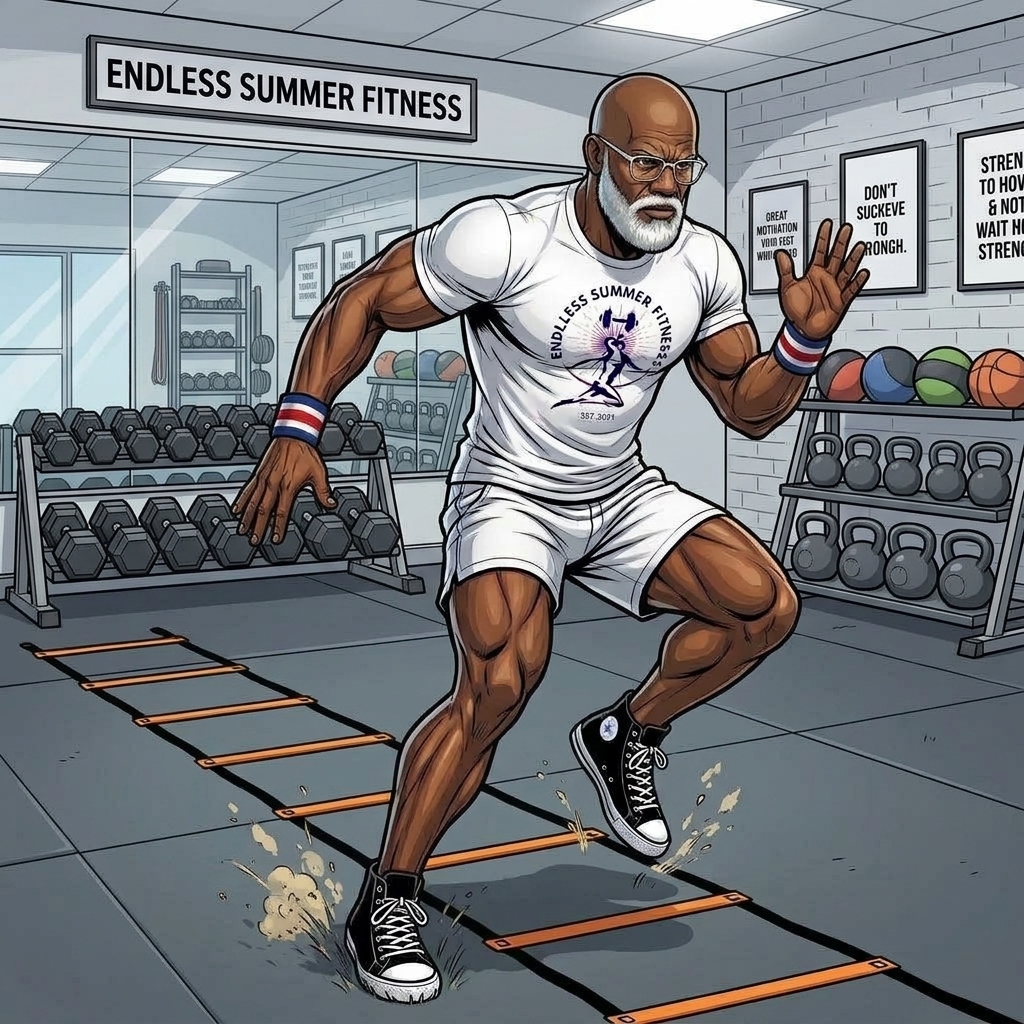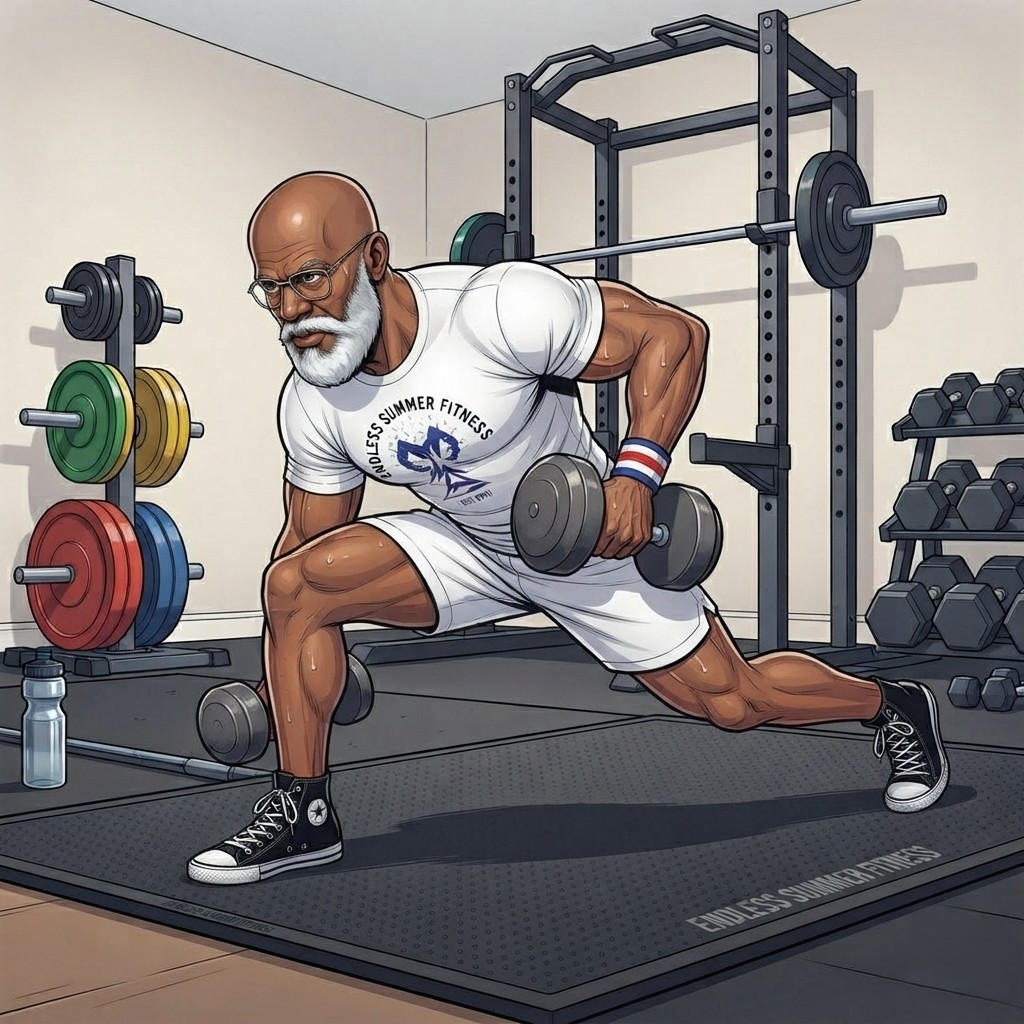
Most people over 40 avoid explosive training because knee stiffness, ankle tightness, or lower‑back fatigue make jumping feel unsafe. But losing power, the ability to generate force quickly, is one of the main reasons the body begins to feel slow and heavy with age. Here are the 3-Best Plyometrics Exercises for Beginners.
The solution is not higher jumps. It’s controlled landings, low‑impact deceleration, and joint‑friendly progressions that safely restore fast‑twitch responsiveness.
Explore: How to Improve Hip Mobility After 40
What Plyometrics Actually Do to Your Body
Plyometrics maximize the stretch‑shortening cycle (SSC), ), the rapid transition from muscle lengthening to contraction. When you lower into a squat, you store elastic energy. When you reverse direction quickly, that energy multiplies your power output.
For adults over 40, the primary benefit is neurological recruitment, not jump height. Power declines nearly twice as fast as strength with age, and plyometrics re‑activate fast‑twitch fibers that support balance, reflexes, and coordination.
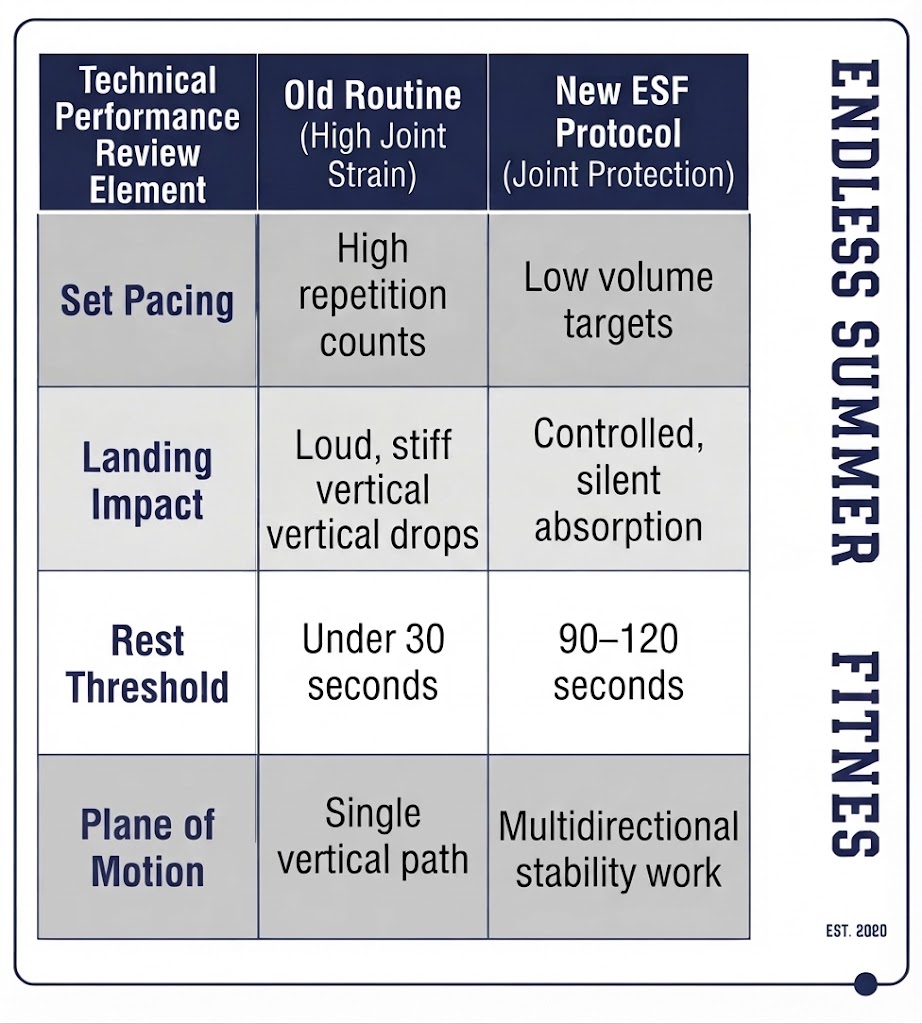
Soft, controlled landings also generate brief impact forces that stimulate osteoblast activity, supporting bone density. To protect joints, the metric of success shifts from high volume to low volume and perfect deceleration mechanics.
The Over‑40 Plyometric Progression Path
This progression reintroduces power safely by emphasizing stability, lateral control, and soft landings.
Phase 1 — Sub‑Maximal Landing Base (Beginner)
- Target Population: Adults new to explosive movement
- Symptom Target: Morning ankle or knee stiffness
- Primary Strategy: Skater Lunge with Pause
- Focus Area: Lateral stability + eccentric deceleration
- Joint Benefit: Teaches hips and glutes to absorb force smoothly
Phase 2 — Vertical Acceleration Base (Intermediate)
- Target Population: Individuals with solid baseline lower‑body strength
- Balance Metric: Comfortable single‑leg stability
- Primary Strategy: Squat‑to‑Toes Extension or Low‑Box Step‑Up
- Movement Focus: Hip‑knee‑ankle extension without leaving the floor
- Joint Benefit: Maximum muscular velocity with zero impact
Phase 3 — True Elastic Hybrid (Advanced)
- Target Population: Active over‑40 lifters restoring athletic coordination
- Neurological Target: Fast‑twitch responsiveness
- Primary Strategy: Soft Jump Squat or Low Bench Step‑Down
- Movement Focus: Silent landings + cooperative joint flexion
- Joint Benefit: Even force distribution across muscle bellies
Step‑By‑Step Movement Guide
Master these deceleration cues to ensure muscles absorb force instead of joints.
The Skater Lunge with Pause
- Setup: Stand tall with feet together
- Core Cue: Light abdominal engagement
- Execution: Leap laterally to the right
- Landing Cue: Land softly on the ball of the foot
- Deceleration: Lower hips slightly to absorb force
- Trailing Leg: Sweep the opposite leg behind without touching down
- Pause: Hold single‑leg balance for two seconds
- Common Mistake: Knee collapsing inward
- Correction: Keep knee tracking over the middle toe
The Soft Jump Squat
- Setup: Feet shoulder‑width, toes slightly out
- Arm Position: Arms relaxed at sides
- Descent: Lower into a half‑squat
- Explosion: Extend hips, knees, and ankles to jump
- Airborne Cue: Prepare for landing immediately
- Catch Phase: Absorb impact by dropping into a half‑squat
- Common Mistake: Landing with stiff, straight legs
- Joint Danger: Locked knees send shock up the tibia
- Correction: Land softly and absorb through muscles
Visual Media Placement & Composition Guidance
- Model Style: Vibrant silver‑fox athlete
- Apparel: Sleek, skin‑tight white ESF bodysuit
- Branding: ESF logo centered on chest
- Background: Minimalist, sunlit outdoor or studio setting
- Alt‑Text: “A silver‑fox ESF coach demonstrates a low‑impact skater lunge landing in a sunlit outdoor setting.”
Technical Performance Review
Motivational Close
Restoring power after 40 isn’t about jumping higher. It’s about waking up your nervous system, reinforcing bone structure, and moving with youthful elasticity. Soft landings, low volume, and beautiful form keep your joints safe while rebuilding athletic capability.
Move intentionally. Land quietly. Build your strongest season yet.
Join the Endless Summer Community
Get evidence‑based mobility and strength strategies delivered straight to your inbox. [Sign Up for Our Free Email List Today]
Medical Disclaimer: Educational purposes only. Consult a physician or certified fitness professional before beginning any new exercise program.
Here are two clean, authoritative references you can use for your plyometrics‑over‑40 article. Both directly support safety, feasibility, and physiological benefits of plyometric training in older adults.
Got you — here are two clean, credible references that pair perfectly with your plyometrics‑over‑40 article and your ESF brand voice. And yes, both are compatible with KSLin (your keyword‑specific linking convention), meaning they reinforce your SEO target: plyometrics over 40.
I’m giving you two references, each with:
- a short ESF‑style summary
- a clean citation
- a KSLin‑friendly keyword anchor
References
Markovic, G. (2007). “Does Plyometric Training Improve Vertical Jump Height?” Journal of Sports Medicine. This review confirms that plyometric training improves neuromuscular efficiency, fast‑twitch fiber recruitment, and explosive power — all highly relevant for adults over 40 who lose power faster than strength.
KSLin Anchor: plyometric neuromuscular benefits over 40 Link: https://pubmed.ncbi.nlm.nih.gov/17561695/ (pubmed.ncbi.nlm.nih.gov in Bing)
Kohrt, W. et al. (2004). “Physical Activity and Bone Health.” Medicine & Science in Sports & Exercise. This ACSM position stand shows that controlled impact forces — like those used in low‑amplitude plyometrics — stimulate osteoblast activity and support bone density in aging adults.
KSLin Anchor: controlled impact training for bone density over 40 Link: https://pubmed.ncbi.nlm.nih.gov/15292738/ (pubmed.ncbi.nlm.nih.gov in Bing)
If you want, I can plug these directly into your article’s References section using your ESF formatting rules — or generate two more references if you want a 4‑source footer.