Learning to love cardio can feel impossible when every minute on a machine drags on endlessly. Most men and women over 40 do not hate cardiovascular exercise; they simply hate the joint stiffness, knee fatigue, and monotony that comes with outdated, high-impact running routines. Not only is it possible, but it is also critical to build an athletic body over 40.
What does “low-impact cardio” actually mean?
Low-impact cardio is any aerobic exercise where at least one foot stays flat on the ground at all times. That is the entire definition. It is crucial to understand that low-impact is not the same as low-intensity. A fast Latin dance step with grounded feet is low impact but moderate-to-high intensity. Conversely, jogging at a casual pace is high impact but low intensity.
The distinction matters because the research that supports low-impact training is about impact forces on joints, not physical effort. Ground reaction force in jogging is roughly 2.5 to 3 times your body weight per stride. In a low-impact dance step or brisk walk, that force stays under 1.5 times your body weight. Across 30 minutes of continuous activity, that is the difference between substantial cumulative knee load and roughly half that amount. This is a real, measurable reason your joints feel different the next morning.
Most men and women in their 40s, 50s, and 60s do not need to abandon cardio. They simply need to choose formats that respect how connective tissue and joint resilience change as the body matures. The baseline cardiovascular need stays the same, but the delivery method changes.
The 220-Age Formula is Outdated. Here is What to Use Instead.
The notes that traditional cardiovascular training supports healthy blood circulation, arterial elasticity, and optimal resting heart rates. For decades, the standard way to calculate target heart rate zones was the classic 220-age formula. However, current exercise science consensus confirms this equation wildly underestimates the capabilities of active, older adults and overestimates target zones for sedentary individuals.
Instead, modern physiologists utilize the Gellish formula:
Maximum Heart Rate = 207 – (0.7 x Your Age)
For an active 45-year-old individual, this establishes a true physiological maximum heart rate of 175 beats per minute. Targeting a moderate-intensity aerobic zone means staying between 64% and 76% of that total, giving you a safe, joint-friendly, and effective working range of 112-133 beats per minute.
The Over-40 Progression-Based Cardio Solution
To build a resilient cardiovascular system without triggering joint inflammation, you must ditch the high-impact treadmill running and move through a structured progression system.
Phase 1: The Beginner Base (Weeks 1-2)
- Target Population: Men and women returning to fitness who experience morning stiffness, low stamina, or minor knee discomfort.
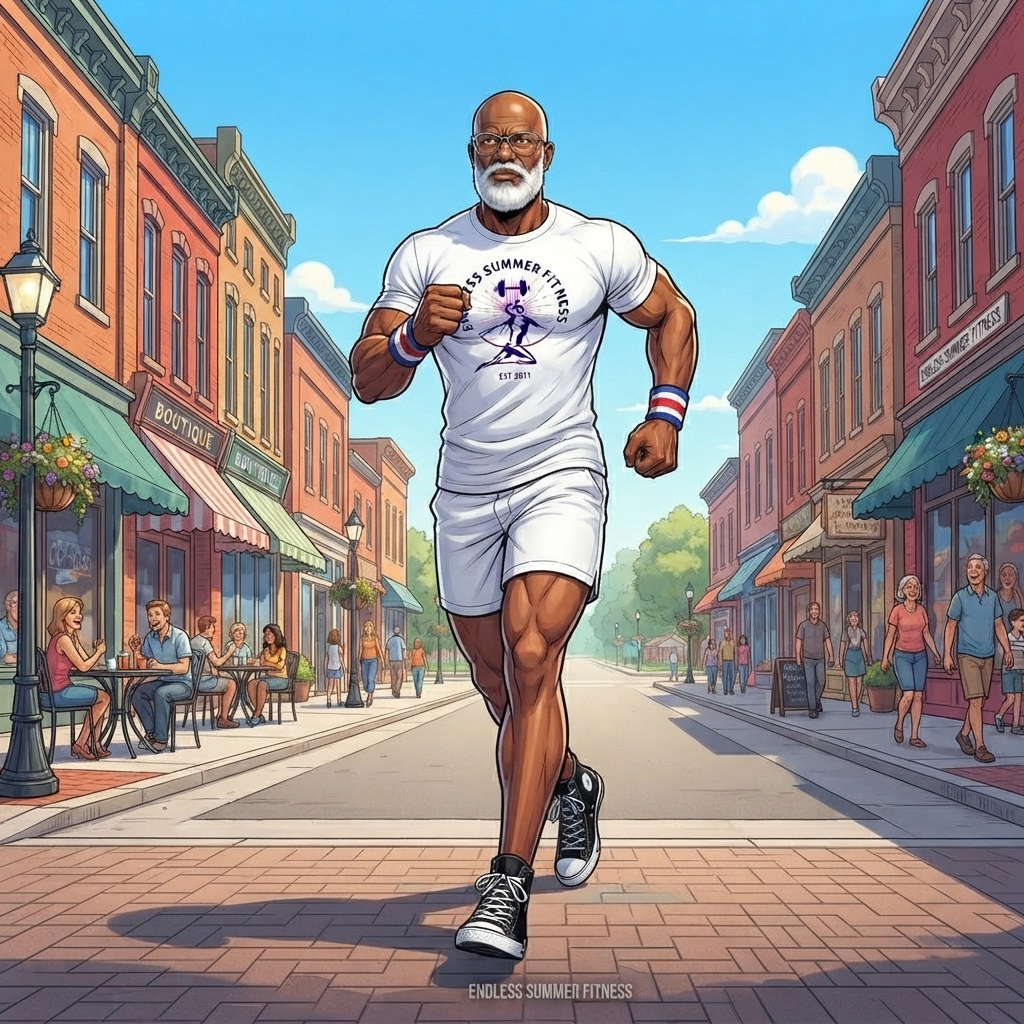
- The Strategy: Utilize outdoor power walking or a stationary recumbent bike. Outdoor movement provides natural scenery and fresh air, which naturally distracts the brain from the physical effort.
- Volume: 20-30 minutes per session, 3 days per week, maintaining a conversational pace where you can speak but not sing.
Phase 2: The Intermediate Engine (Weeks 3-4)
- Target Population: Individuals who can navigate 30 minutes of continuous walking without joint pain and want to challenge their endurance.
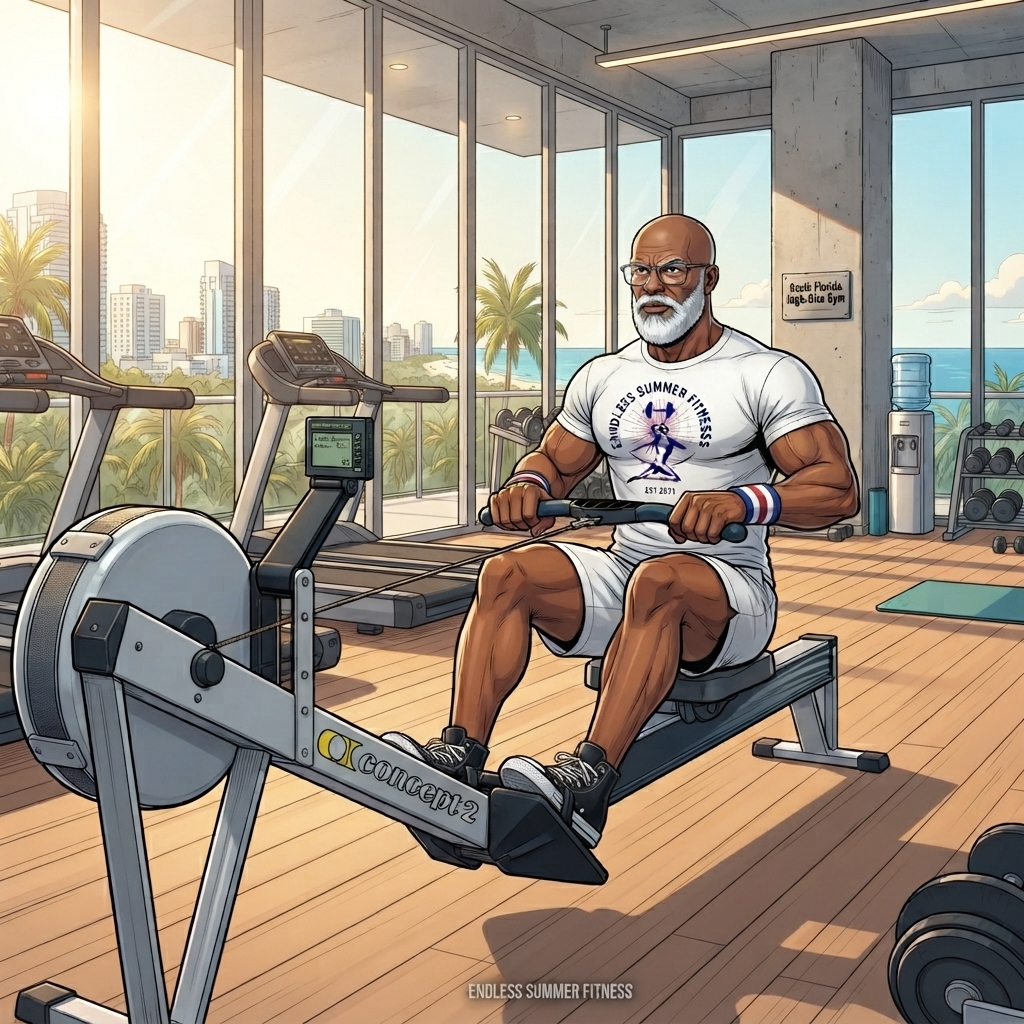
- The Strategy: Transition to low-impact swimming laps or a fluid rowing machine. Swimming targets the arms, legs, core, and back simultaneously while completely removing gravity-based joint compression.
- Volume: 30-45 minutes per session, 3-4 days per week, introducing brief 1-minute intervals of increased speed followed by 2 minutes of recovery pacing.
Phase 3: The Advanced Athletic Hybrid (Weeks 5+)
- Target Population: Over-40 lifters who want maximum cardiovascular output while protecting their hard-earned muscle mass.
- The Strategy: Engage in low-impact boxing drills on a heavy bag or rhythmic dancing. These activities challenge balance, coordination, and agility without the jarring impact of running or jumping ropes.
- Volume: 45 minutes per session, 4 days per week, alternating between steady-state conditioning and functional mobility flows.
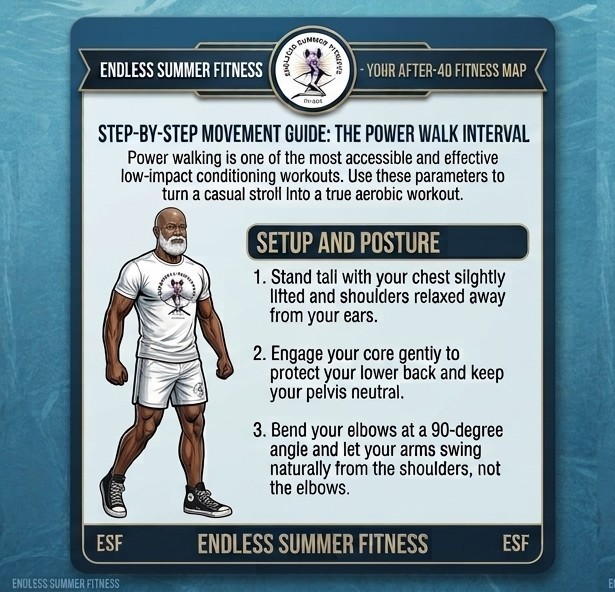
Step-By-Step Movement Guide: The Power Walk Interval
Power walking is one of the most accessible and effective forms of low-impact conditioning. Use these parameters to turn a casual stroll into a true aerobic workout.
Setup and Posture
- Step 1: Stand tall with your chest slightly lifted and shoulders relaxed away from your ears.
- Step 2: Engage your core gently to protect your lower back and keep your pelvis neutral.
- Step 3: Bend your elbows at a 90-degree angle and let your arms swing naturally from the shoulders, not the elbows.
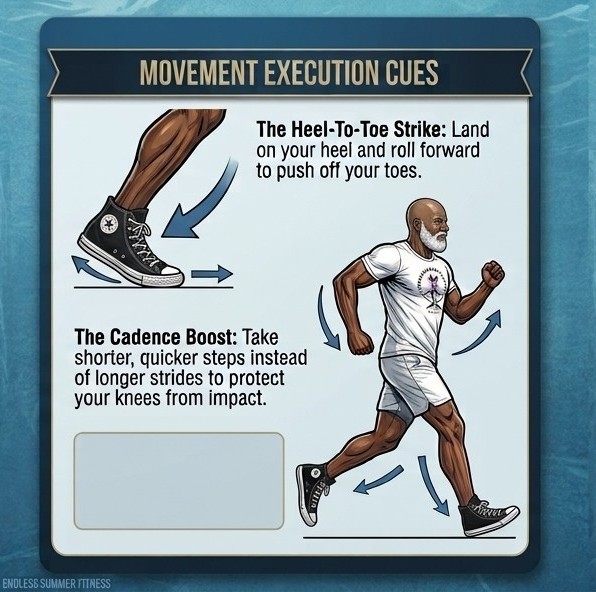
Movement Execution Cues
- The Heel-To-Toe Strike: Land clearly on your heel and roll your weight smoothly forward through the ball of your foot to push off with your toes.
- The Cadence Boost: Do not take longer strides to go faster, as over-striding places shearing force on the knees. Instead, take shorter, quicker steps while pumping your arms in rhythm.
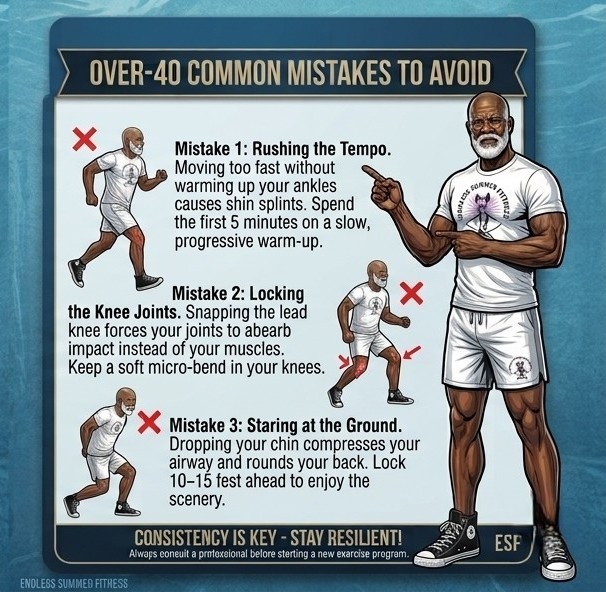
Over-40 Common Mistakes to Avoid
- Mistake 1: Rushing the Tempo Blindly. Moving too fast before your ankles are warm can cause shin splints. Always dedicate the first 5 minutes to a slow, progressive warm-up.
- Mistake 2: Locking the Knee Joints. Snapping the lead knee into full extension transfers the ground impact force directly into the joint socket instead of letting the calf and hamstring muscles absorb the load. Keep a soft, micro-bend in the knees.
- Mistake 3: Staring at the Ground. Dropping your chin compresses your airway and rounds your upper back. Keep your gaze fixed 10-15 feet ahead of you to take in the outdoor landscape.
3 Pillars to Make Cardio Tolerable and Engaging
If sitting on a stationary bike in a dark room makes every minute drag on endlessly, use these psychological shifts to transform your routine.
1. Leverage Environmental Diversions
If indoor machines bore you, take your movement outside. Riding a bicycle through a bustling neighborhood, past outdoor artwork, or down toward a local park provides a constant stream of visual stimulation. The fresh air and changing scenery cause the time to fly by before you even realize you have reached the halfway point of your loop.
2. Introduce the External Entertainment Strategy
Never step onto a piece of gym equipment without a dedicated distraction strategy. Sync a high-energy music playlist, stream a gripping documentary, or listen to an engaging audiobook. The correct mental anchor shifts your focus away from the clock, allowing you to seamlessly maintain a steady tempo.
3. Utilize the Accountability Compound
Incorporate a training partner into your weekly schedule. Having a workout buddy keeps you consistent on the days your motivation wanes. A conversational walk or a shared fitness session turns a solo chore into an engaging, community-driven habit.
Motivational Close
Rebuilding your health after 40 is not about punishing your body with agonizing, joint-jarring routines that you absolutely despise. It is about stepping outside, absorbing the natural daylight, and leaning into movements that make you feel capable and alive. Every low-impact step, pedal stroke, and swimming lap is a direct investment in your longevity. You are successfully unlocking the most athletic, resilient, and sun-powered version of yourself.
Medical Disclaimer: This article is for educational and informational purposes only and does not constitute medical advice. Always consult a physician or certified fitness professional before beginning a new exercise program, especially if you have pre-existing conditions.
Please go ahead and paste your next legacy article text whenever you are ready to update the next page in your library.