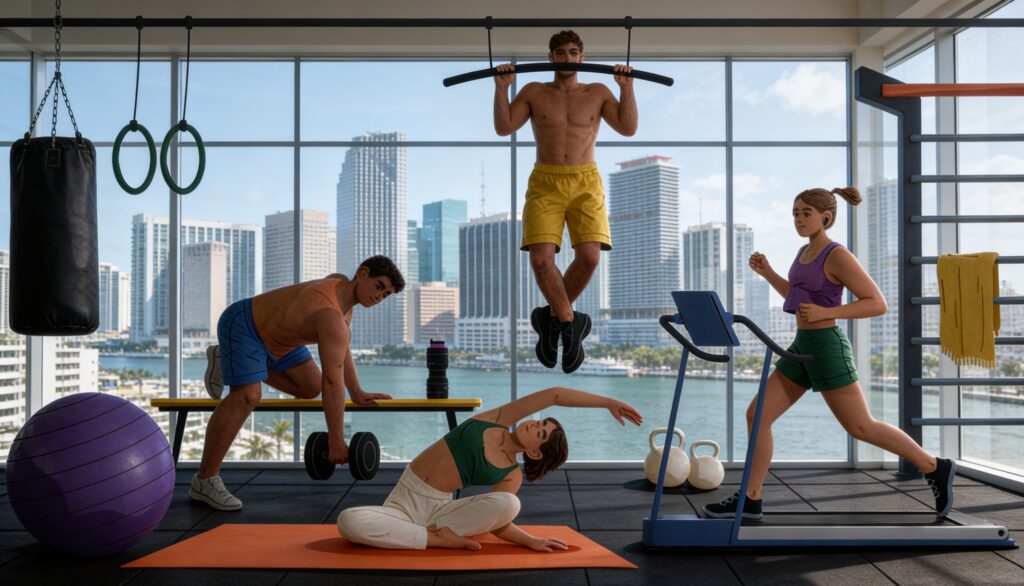

Hybrid Cardio 101: Combining Strength and Conditioning
Hybrid cardio-strength training is one of the most effective ways to build strength and endurance simultaneously. This training style blends resistance exercises with conditioning drills, allowing beginners to improve stamina, muscle tone, and overall fitness without long or complicated routines. Because hybrid training challenges multiple systems at once, it helps you get more done in less time while still supporting long-term progress.
What Is Hybrid Cardio-Strength Training?
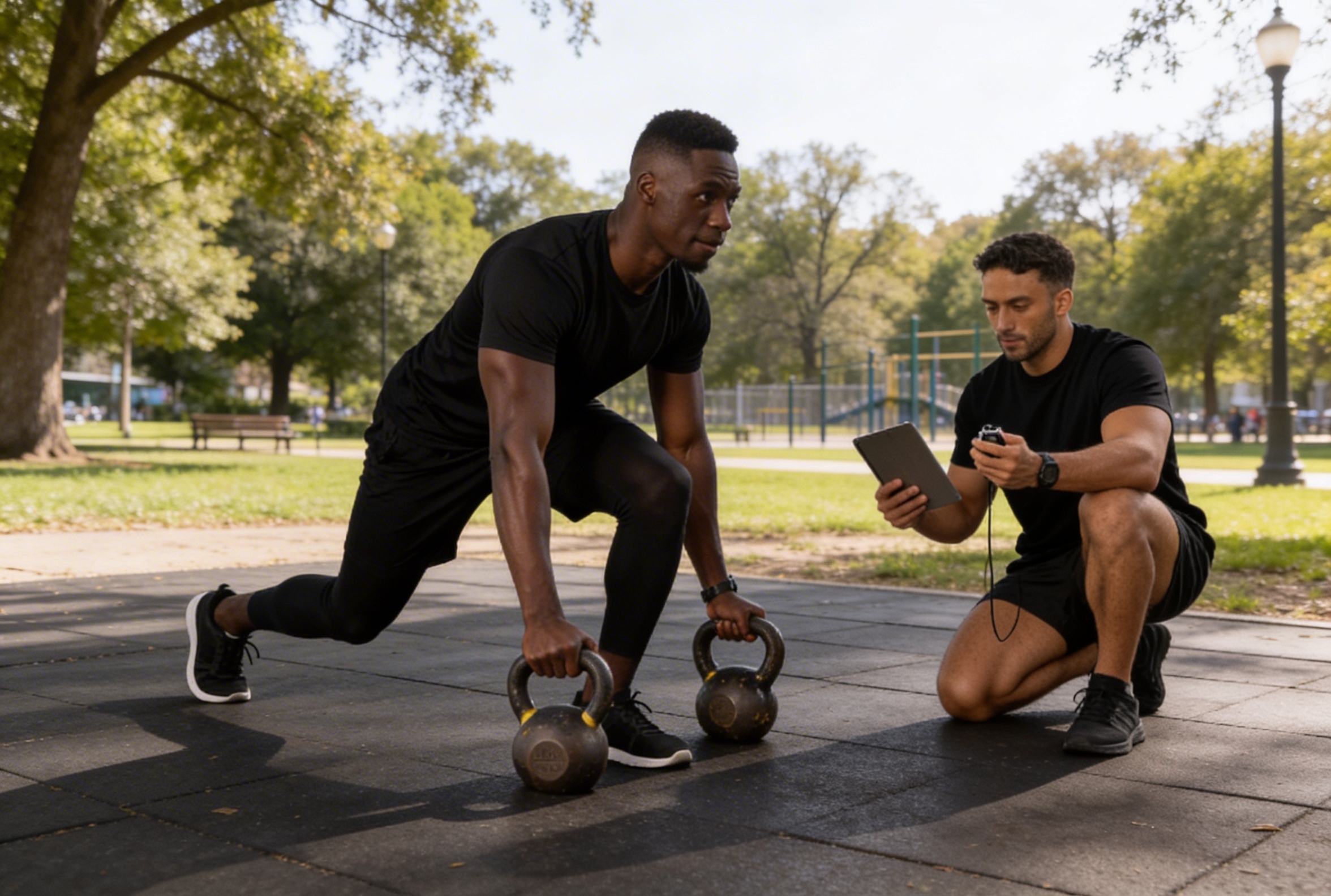
Hybrid cardio-strength training combines strength movements with conditioning intervals in a single workout. Instead of separating “cardio days” and “lifting days,” you combine both to improve your heart, lungs, and muscles.
Research from the American College of Sports Medicine (ACSM) shows that combining aerobic and resistance training improves functional capacity and overall health. This approach also supports better calorie burn, lean muscle development, and improved work capacity.
Why Hybrid Cardio-Strength Training Works
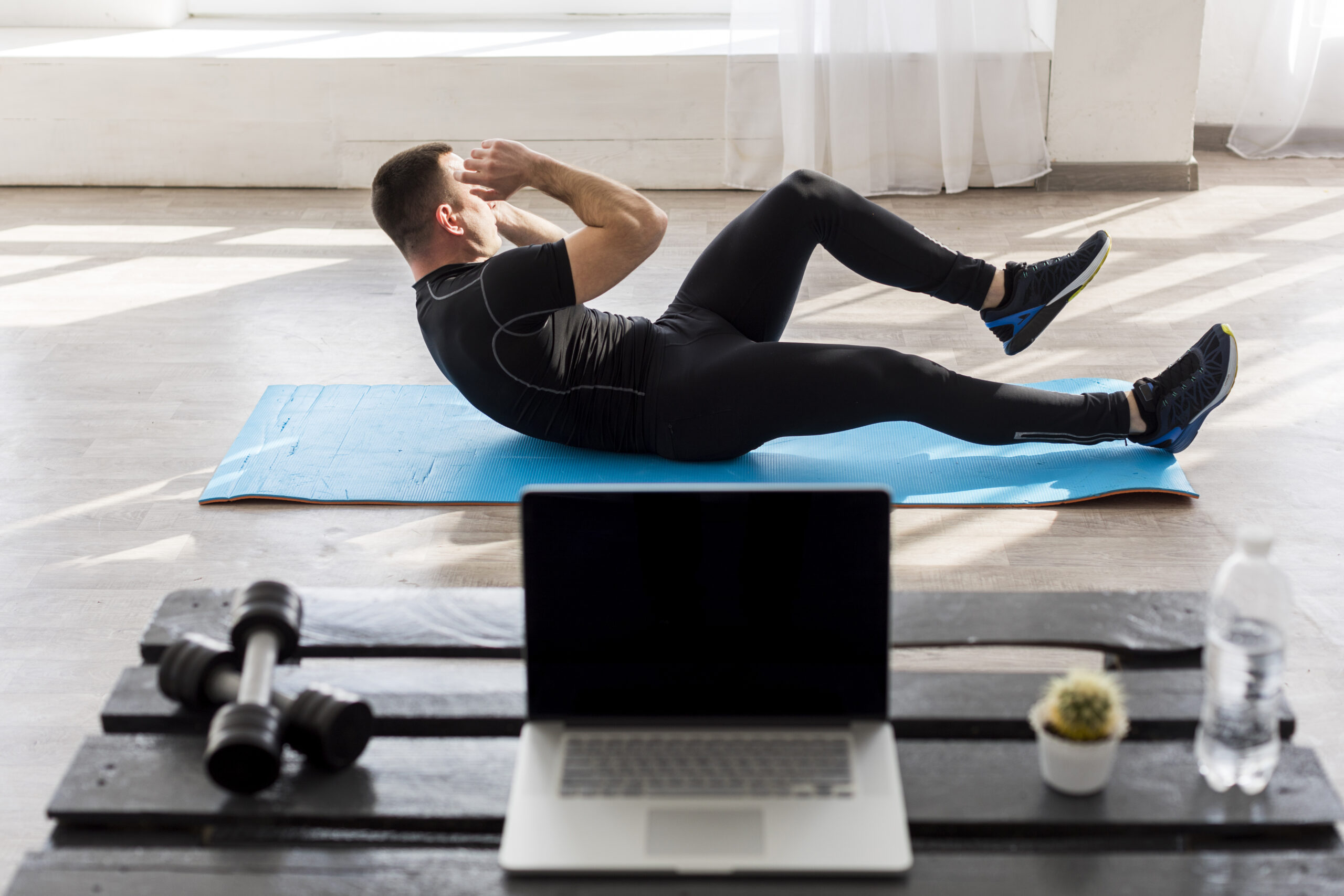
This method works because it keeps your heart rate elevated while still challenging your muscles. Moving between kettlebell swings, step-ups, band rows, and light jogging intervals trains your cardiovascular and muscular systems simultaneously.
The National Strength and Conditioning Association (NSCA) notes that mixed-modality training improves power, stability, and muscular endurance when programmed correctly. This makes hybrid training ideal for beginners who want simple, scalable workouts.
How Hybrid Cardio-Strength Training Improves Conditioning
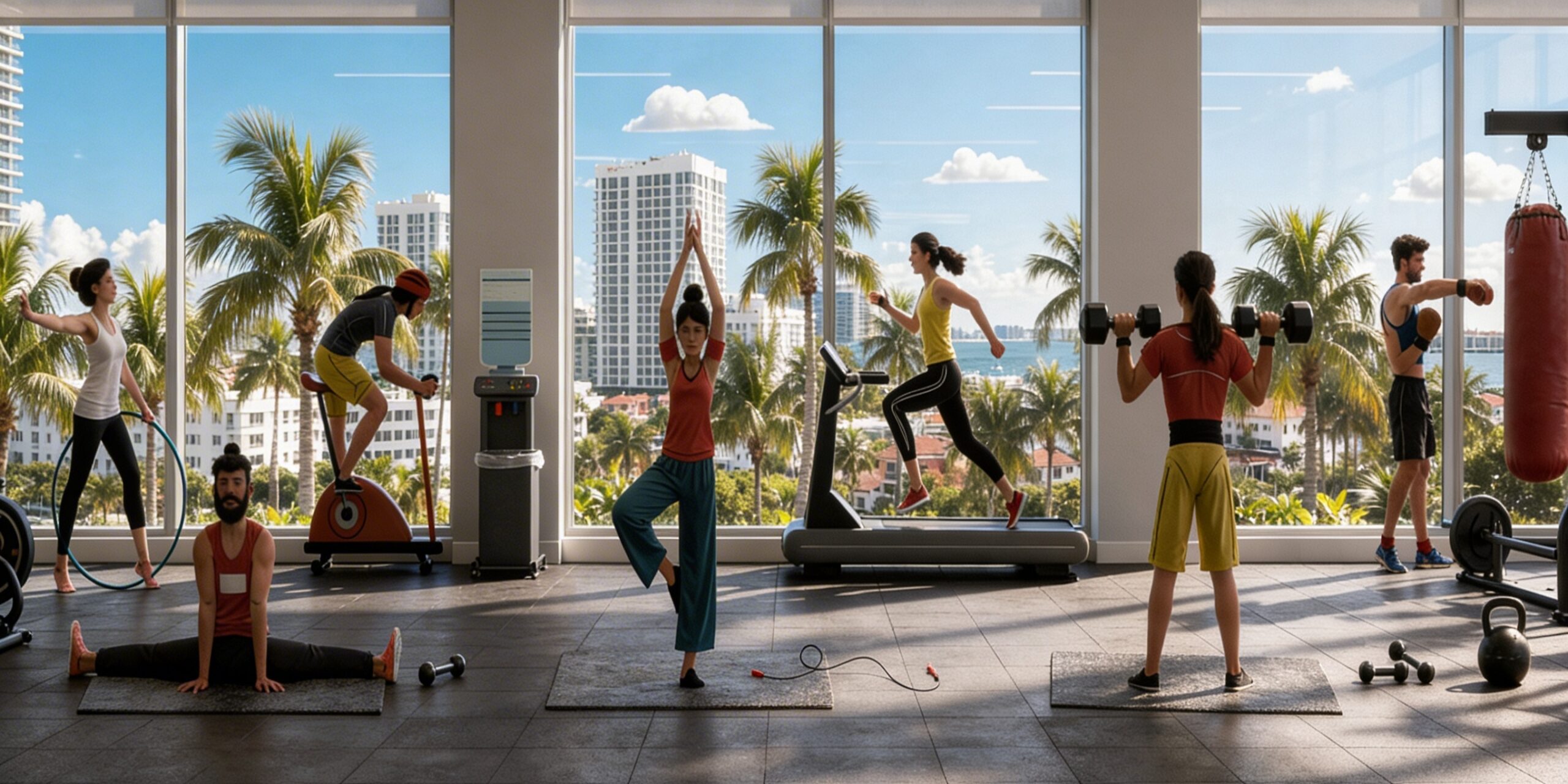
Conditioning improves when your heart rate rises and stays elevated through controlled effort. Hybrid training naturally creates this effect because you move between strength and cardio drills with short rest periods.
For example, pairing dumbbells squats with stair climbs challenges your legs, lungs, and core at once. Over time, your body learns to recover faster, breathe more efficiently, and handle more work.
How to Structure a Hybrid Cardio-Strength Training Session
A balanced hybrid session includes:
- One strength movement
- One conditioning movement
- One core or stability drill
- Short rest periods (30–60 seconds)
- A clear progression path
This structure aligns with NASM’s OPT Model, which emphasizes stability, strength, and power progressions for safe long‑term development.
THE PROGRESSION MATRIX
Hybrid Cardio Strength Training Workouts (Beginner → Elite)
Each exercise includes the muscles worked, stabilizers, and full instructions.
-
Beginner Level
Definition: New to exercise or returning after time off.
Characteristics: Light loads, slower pace, focus on form and breathing.
BEGINNER HYBRID CIRCUIT (3 ROUNDS)
-
Dumbbell Goblet Squat — 12–15 reps
Muscles: Quads, glutes
Stabilizers: Core, upper back
Instructions:
- Stand with feet shoulder‑width apart.
- Hold a dumbbell at your chest with both hands.
- Keep your chest tall and your core tight.
- Push your hips back slightly before bending your knees.
- Lower until your thighs are parallel to the floor.
- Keep your heels down and knees tracking forward.
- Drive through your feet to stand tall.
- Exhale as you rise, keeping your spine neutral.
-
Band Row — 12–15 reps
Muscles: Lats, rhomboids
Stabilizers: Core, rear delts
Instructions:
- Anchor a band at chest height.
- Stand tall with feet hip‑width apart.
- Hold the handles with palms facing each other.
- Pull your elbows straight back toward your ribs.
- Squeeze your shoulder blades together.
- Keep your chest lifted and core engaged.
- Slowly return to the start without shrugging.
- Maintain steady breathing throughout.
-
Step‑Ups on Stairs — 30 seconds
Muscles: Glutes, hamstrings
Stabilizers: Ankles, core
Instructions:
- Stand facing a stair or sturdy step.
- Place one foot on the step.
- Push through your front heel to rise.
- Bring your back foot up lightly.
- Step down with control.
- Switch legs every 2–3 reps.
- Keep your torso tall and avoid leaning forward.
-
Marching Plank — 20–30 seconds
Muscles: Core
Stabilizers: Shoulders, hips
Instructions:
- Start in a forearm plank.
- Keep your elbows under your shoulders.
- Lift one foot a few inches off the floor.
- Lower it and lift the other foot.
- Keep your hips level and core tight.
- Breathe steadily and avoid holding your breath.
-
Intermediate Level
Definition: Comfortable with basic movements and moderate intensity.
Characteristics: Moderate loads, faster transitions, controlled pace.
INTERMEDIATE HYBRID CIRCUIT (3–4 ROUNDS)
-
Kettlebell Deadlift — 10–12 reps
Muscles: Hamstrings, glutes
Stabilizers: Core, lats
Instructions:
- Stand with feet hip‑width apart.
- Place a kettlebell between your feet.
- Push your hips back and bend your knees slightly.
- Keep your spine long and chest open.
- Grip the kettlebell firmly.
- Drive through your heels to stand tall.
- Squeeze your glutes at the top.
- Lower with control by hinging at the hips.
-
Push‑Ups — 10–12 reps
Muscles: Chest, triceps
Stabilizers: Core, glutes
Instructions:
- Start in a high plank.
- Keep your hands under your shoulders.
- Lower your chest toward the floor.
- Keep elbows at a 45‑degree angle.
- Maintain a straight line from head to heels.
- Press through your palms to rise.
- Modify on knees if needed.
-
Light Jog or Stair Run — 45 seconds
Muscles: Legs, calves
Stabilizers: Core
Instructions:
- Keep your chest tall and arms relaxed.
- Land softly on the balls of your feet.
- Maintain a steady breathing rhythm.
- Keep your pace comfortable but challenging.
-
Dead Bug — 30 seconds
Muscles: Core
Stabilizers: Spine stabilizers, hips
Instructions:
- Lie on your back with arms up.
- Lift your legs to tabletop position.
- Extend one arm and the opposite leg.
- Keep your lower back gently pressed into the floor.
- Switch sides with control.
- Move slowly and breathe steadily.
-
Advanced Level
Definition: Trains consistently and handles higher intensity.
Characteristics: Heavier loads, faster transitions, more complex movements.
ADVANCED HYBRID CIRCUIT (4 ROUNDS)
-
Dumbbell Thruster — 8–12 reps
Muscles: Shoulders, quads
Stabilizers: Core
Instructions:
- Hold dumbbells at shoulder height.
- Squat down with your chest tall.
- Drive upward and press the weights overhead.
- Lock out your arms without arching your back.
- Lower the weights as you descend into the next squat.
-
Kettlebell Swing — 12–15 reps
Muscles: Glutes, hamstrings
Stabilizers: Core, grip
Instructions:
- Stand with feet slightly wider than hips.
- Hinge at the hips and grab the kettlebell.
- Hike it back between your legs.
- Drive your hips forward to swing it to chest height.
- Keep your arms relaxed and core tight.
- Let the bell fall naturally and repeat.
-
Box Jumps — 8–10 reps
Muscles: Quads, calves
Stabilizers: Ankles, hips
Instructions:
- Stand in front of a sturdy box.
- Bend your knees and swing your arms.
- Jump softly onto the box.
- Land with knees slightly bent.
- Step down with control.
-
Hollow Hold — 20–30 seconds
Muscles: Core
Stabilizers: Hip flexors
Instructions:
- Lie on your back.
- Lift your shoulders and legs off the floor.
- Keep your lower back pressed down.
- Hold your arms overhead.
- Maintain steady breathing.
-
Elite Level
Definition: Highly trained, excellent movement control, strong conditioning.
Characteristics: Explosive power, heavy loads, minimal rest.
ELITE HYBRID CIRCUIT (4–5 ROUNDS)
-
Kettlebell Clean & Press — 8–10 reps
Muscles: Shoulders, glutes
Stabilizers: Core, grip
Instructions:
- Start with the kettlebell between your feet.
- Hinge, grab, and pull it upward.
- Catch it in the rack position.
- Press overhead with a tight core.
- Lower with control and repeat.
-
Burpee Box Jump — 8–10 reps
Muscles: Full body
Stabilizers: Ankles, core
Instructions:
- Drop into a squat and place your hands down.
- Kick your feet back into a plank.
- Perform a push‑up.
- Jump your feet forward.
- Explode upward into a box jump.
- Step down safely.
-
Fast Stair Sprints — 30–45 seconds
Muscles: Legs, calves
Stabilizers: Core
Instructions:
- Pump your arms for momentum.
- Keep your steps quick and light.
- Maintain a tall posture.
- Control your breathing.
-
V‑Ups — 12–15 reps
Muscles: Core
Stabilizers: Hip flexors
Instructions:
- Lie flat with arms overhead.
- Lift your legs and torso at the same time.
- Reach toward your toes.
- Lower slowly with control.
Calls to Action
- Next up: Build Functional Strength Without Heavy Weights (Hybrid Guide)
- Also read: How to Build a Weekly Hybrid Fitness Routine
Summary
Hybrid cardio strength training blends resistance work with conditioning to help you build strength, endurance, and real-life fitness. This method keeps your heart rate elevated while still challenging your muscles, making it ideal for beginners and advanced athletes alike.
As you progress through the Beginner-to-Elite ladder, you can increase load, speed, and complexity without changing the structure. This makes hybrid training simple, scalable, and sustainable.
Most importantly, hybrid training supports everyday movement. You become stronger, faster, and more capable in daily life. With consistent practice, you’ll build a balanced fitness foundation that lasts.
FAQs
- Is hybrid cardio strength training good for beginners?
Yes. It’s simple, scalable, and easy to adjust for any fitness level.
- How many days per week should I train?
Most beginners do well with 2-3 hybrid sessions per week.
- Do I need equipment?
No. You can start with body weight and add dumbbells or bands later.
- Will hybrid training help with fat loss?
It can. Hybrid workouts burn calories while building lean muscle.
- How long should each session be?
Most hybrid workouts take 20-30 minutes.
- Can I pair hybrid training with running or cycling?
Yes. Many people use hybrid training to support endurance sports.
Disclosure
This article provides general educational information and is not a substitute for professional medical advice. Always consult with a qualified healthcare provider before starting any exercise program.
Smart tools, human guidance — straightforward, simple, effective, and fun.