

Exercising outdoors, often called “green exercise”, combines physical movement with natural environments to deliver psychological and physiological benefits that indoor gyms simply cannot replicate.
While treadmill sessions and indoor weight rooms provide controlled environments, outdoor terrain forces your body to adapt to variable surfaces, natural wind resistance, and subtle changes in elevation. This variable environment engages more stabilizer muscles, improves balance, and keeps your workouts mentally engaging.
Whether you are walking through a local park, using park benches for bodyweight circuits, or riding along paved trails, training outside turns exercise into an invigorating daily habit rather than a chore.
8 Key Health Benefits of Outdoor Fitness
1. Natural Vitamin D Synthesis
Direct exposure to sunlight triggers Vitamin D production in the skin. Vitamin D is essential for bone density, immune function, and regulating neuromuscular performance.
2. Enhanced Mood and Mental Refresh
Studies consistently show that outdoor exercise lowers cortisol (the body’s primary stress hormone) more effectively than indoor workouts. The visual variety of natural surroundings helps reduce mental fatigue and anxiety.
3. Higher Caloric Expenditure
Navigating outdoor elements—such as wind resistance, uneven pavement, and incline variations—requires your body to exert more energy, resulting in a naturally higher calorie burn compared to stationary gym equipment.
4. Improved Adherence and Consistency
People who exercise outdoors report higher levels of enjoyment and satisfaction. When movement feels engaging rather than repetitive, you are far more likely to stick with your routine long-term.
5. Lower Blood Pressure and Heart Rate
Green environments promote a parasympathetic nervous system response post-workout. Exercising in fresh air helps regulate resting heart rate and reduces systemic blood pressure.
6. Better Sleep Quality
Exposure to natural morning or afternoon sunlight helps calibrate your circadian rhythm (your body’s internal clock), leading to faster sleep onset and deeper, more restorative sleep at night.
7. Greater Spatial Awareness and Balance
Unlike smooth gym floors, natural surfaces (grass, dirt trails, sand) challenge your proprioception—your brain’s ability to sense body position in space—strengthening your feet, ankles, and core stabilizers.
8. Accessible and Cost-Effective
Outdoor fitness eliminates financial and logistical barriers. Public parks, tracks, and open spaces provide endless training opportunities without monthly membership fees or waiting for equipment.
Top 6 Outdoor Activities to Build Strength & Stamina
You do not need complex equipment to build an effective outdoor workout. Here are six versatile activities to include in your routine:
1. Brisk Park Walking & Hill Hikes
- Best For: Low-impact cardiovascular conditioning and joint health.
- Execution: Walk at a brisk pace where conversation is possible but slightly challenging. Incorporate mild hills or stairs to increase glute and calf activation.
2. Outdoor Bodyweight Calisthenics
- Best For: Functional upper-body, lower-body, and core strength.
- Execution: Use park benches for elevated push-ups or triceps dips, and use stable overhead bars for pull-ups or active hangs.
3. Cycling & Trail Riding
- Best For: Low-impact leg endurance and cardiovascular stamina.
- Execution: Maintain a smooth, continuous pedaling cadence (70–90 RPM) along paved paths or dedicated bike trails to condition your quadriceps and heart without joint impact.
4. Inline Skating (Rollerblading)
- Best For: Lateral leg strength, hip stability, and core balance.
- Execution: Keep knees slightly bent and push outward horizontally off the heels, engaging the glutes and abductors while maintaining a stable torso.
5. Outdoor Boot Camp Circuits
- Best For: Full-body conditioning, agility, and calorie burning.
- Execution: Combine bodyweight squats, lunges, bear crawls, and short shuttle runs into timed interval sets (e.g., 40 seconds of work, 20 seconds of rest).
6. Gymnastic Ring Suspended Movements
- Best For: Advanced upper-body stabilization and grip strength.
- Execution: Secure heavy-duty gymnastic straps over a sturdy, high park tree branch or pull-up frame. Perform controlled bodyweight rows, ring push-ups, or support holds.
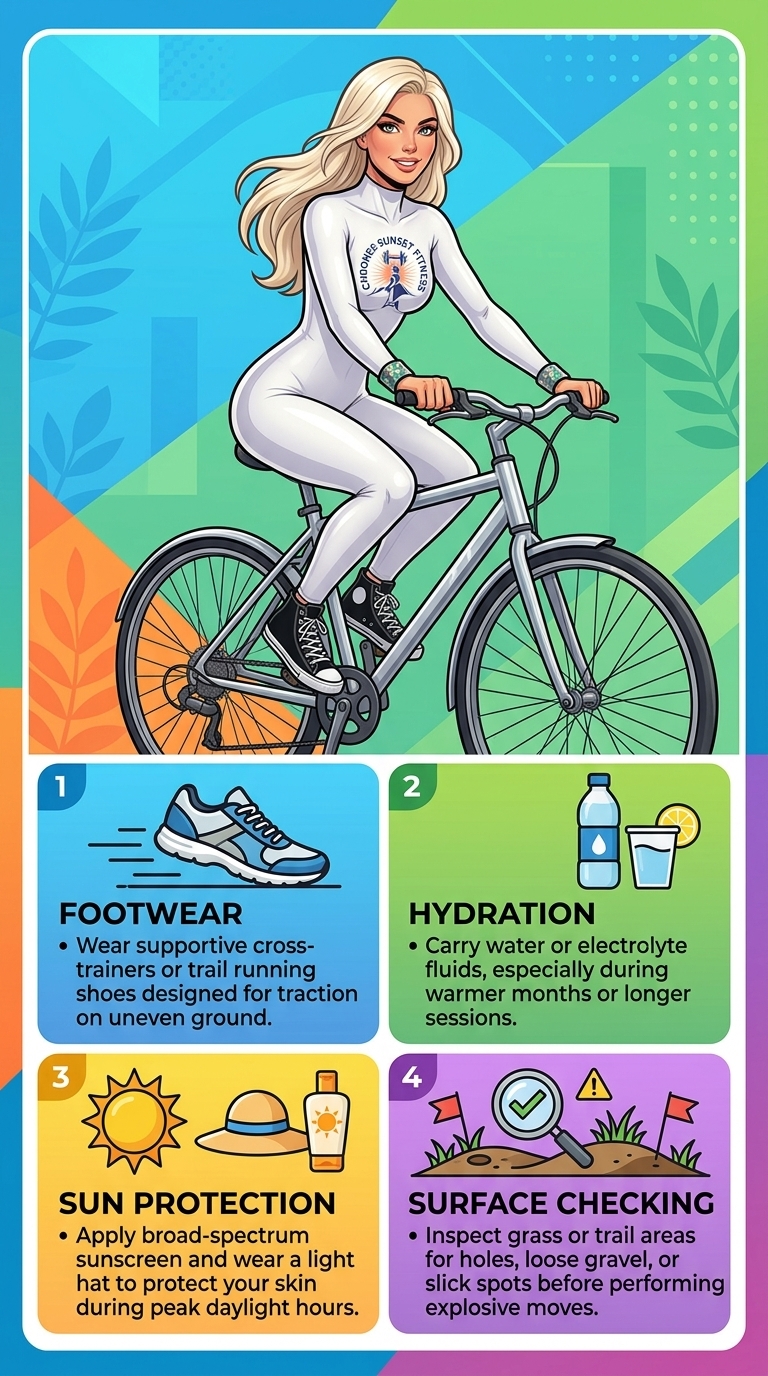
How to Safely Transition Your Routine Outdoors
Conclusion
Outdoor fitness provides a complete refresh for your physical health and mental clarity. By stepping outside the gym and utilizing natural environments for walking, bodyweight calisthenics, or interval circuits, you can build lasting physical capacity while enjoying fresh air and sunlight. Choose one or two activities that match your current fitness level, head to your local park, and make outdoor training a regular part of your wellness lifestyle.
References & Sources
-
Environmental Science & Technology / ACS Publications
- Study: Does Participating in Physical Activity in Outdoor Natural Environments Have a Greater Effect on Physical and Mental Wellbeing Than Performing Activity Indoors?
- Core Principle: Confirms that outdoor exercise correlates with greater revitalization, increased energy, and decreased confusion and stress compared to indoor training.
- Source: ACS Environmental Science & Technology
-
National Institutes of Health (NIH) / PubMed Central
- Guideline: The Health Benefits of Vitamin D and Sunlight Exposure During Exercise.
- Core Principle: Highlights how sunlight exposure during outdoor physical activity supports bone mineral density and immune regulation.
- Source: NIH National Library of Medicine
-
American Council on Exercise (ACE)
- Guideline: The Benefits of Calisthenics and Outdoor Circuit Training.
- Core Principle: Validates variable-terrain training and bodyweight circuits for improving balance, agility, and functional muscular endurance.
- Source: ACE Exercise Science Resources
Medical Disclaimer: This article is for educational and informational purposes only and does not constitute medical advice. Always consult a physician or qualified healthcare professional before beginning any new exercise program, especially if you have pre-existing health conditions or injuries.