

Endless Summer Fitness provides workout tips for fitness beginners, weekend warriors, post-physical therapy individuals, men and women in middle life, and anyone seeking fitness results.

Low-Impact Strength Training: A Guide for Beginners

Low-Impact Strength Training for Absolute Beginners

Starting a fitness journey can’t feel very overwhelming for most people. You might see athletes jumping on boxes or running miles and think that is the only way to get fit. However, your path to health does not have to involve jarring movements that hurt your knees or back. Low-impact strength training is a powerful method that keeps at least one foot on the ground.

Low-Impact Strength Training: A Guide for Beginners

Consequently, this reduces the stress on your joints while still challenging your muscles deeply. By focusing on steady, controlled movements, you can build a body that is both strong and resilient.

This approach is perfect for anyone who wants to avoid injury while seeing real physical changes. Because we prioritize safety, you will find that you can stay consistent for much longer. In fact, consistency is the most important ingredient in any successful fitness plan.

The Hybrid Fitness Philosophy

Modern exercise is shifting toward what we call “Hybrid Fitness.” The concept simply means balancing different types of physical abilities rather than focusing on just one. For example, a hybrid athlete wants the strength of a lifter and the heart health of a runner.

Low-impact training fits perfectly into this model because it builds a solid engine. While you are lifting weights or using your own body weight, your heart rate remains elevated. Therefore, you are improving your endurance and your power at the same time.

Furthermore, this balance helps you handle the demands of everyday life much better. Whether you are carrying heavy groceries or playing with your kids, hybrid fitness gives you the energy you need. It is about being  “fit for purpose” rather than just looking a certain way in the mirror.
Why Beginners Should Choose Low Impact

Many new trainers make the mistake of doing too much, too soon. They often choose high-impact “boot camps” that lead to sore joints and eventual burnout. On the other hand, low-impact training allows your connective tissues to adapt slowly to new stress.

Your tendons and ligaments take longer to get stronger than your actual muscles do. By choosing low-impact moves, you give these tissues the time they need to grow without snapping. As a result, you will spend less time on the couch recovering and more time in the gym progressing.

Additionally, these movements are much easier for a complete novice to learn. You can focus on your breathing and your form without worrying about landing a jump correctly. This mental focus helps create a stronger “mind-muscle connection,” which is vital for long-term growth.


Scientific Benefits of Resistance Training

The science behind lifting weights is very clear and well-documented. According to the American College of Sports Medicine (ACSM), resistance training is essential for maintaining bone density as we age. It keeps your skeleton strong and reduces the risk of fractures later in life.

Moreover, having more muscle mass helps your body manage blood sugar more effectively. Every time you contract a muscle against resistance, you are helping your metabolic health. Studies found on PubMed suggest that even two sessions a week can significantly lower your risk of chronic disease.

Another benefit is the improvement in your resting metabolic rate. Muscle burns more energy than fat, even while you are sleeping or sitting at your desk. Therefore, building strength is one of the best ways to manage your weight over the long term.

Joint health is often the biggest concern for people over the age of thirty. High-impact sports can aggravate old injuries or create new ones in the ankles and hips. Low-impact strength training acts as a “shield” for these sensitive areas by strengthening the muscles around them.

When the muscles surrounding a joint are strong, they take the brunt of the force during daily activities. This means your bones and cartilage don’t have to work as hard to keep you upright. For instance, strong quads and hamstrings act like shock absorbers for your knees.

To ensure safety, you must always focus on a full range of motion. Moving your limbs through their full natural range of motion keeps your joints mobile and lubricated.   This practice prevents the stiffness that often comes with a sedentary lifestyle or improper training.

The Importance of Proper Equipment

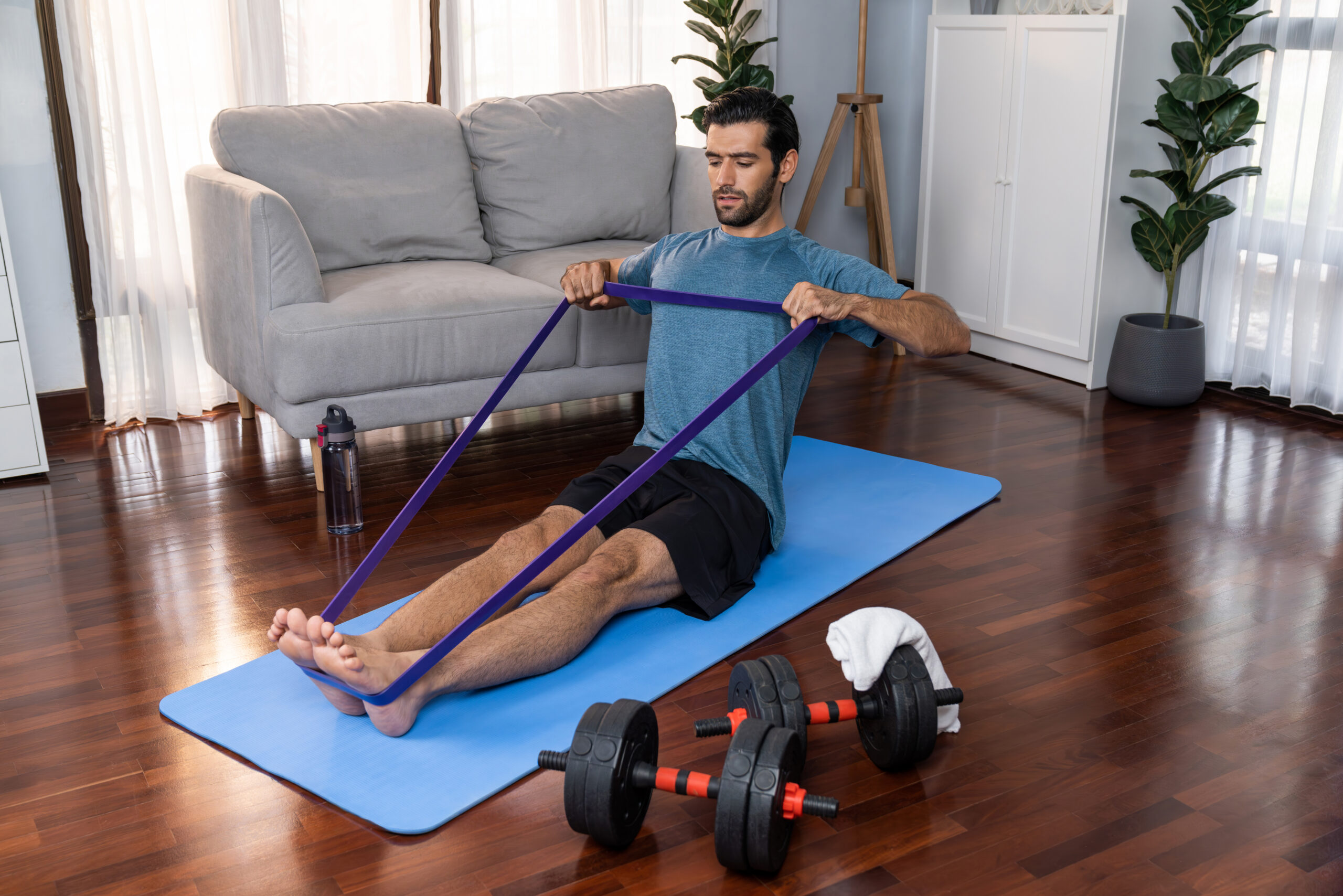
You do not need a massive garage full of heavy iron to get started today. For a beginner, simple tools like resistance bands or light dumbbells are more than enough. These tools allow for “variable resistance,” which means the move gets harder as you reach the strongest part of your lift.

Using bands is especially helpful for low-impact training because they are very gentle on the joints. They provide a smooth feel that doesn’t “jerk” the muscle at the bottom of a movement.  Eventually, you may want to move toward kettlebells or barbells as you become more advanced.

However, the best piece of equipment you own is your own body. Bodyweight exercises like wall push-ups or assisted squats are incredibly effective for building a baseline. Do not feel pressured to buy expensive gear until you have mastered the basic movement patterns.
Setting Realistic Goals for Success

Setting a goal of “losing 20 pounds” is common, but it is often hard to track day-to-day. Instead, try setting performance goals like “performing ten perfect squats.” These milestones are much more rewarding and keep you motivated during the “boring” middle weeks of a program.

Success in hybrid fitness is measured by how you feel and move in the real world. Can you walk up three flights of stairs without getting winded? Can you lift a heavy box without your back hurting the next day? These are the real victories of a low-impact strength program.

Also, remember that progress is rarely a straight line upward. Some weeks you will feel like a superhero, while other weeks you might feel a bit sluggish. The key is to keep showing up and doing what you can on that specific day.
The Progression Matrix: Your Growth Roadmap

This section outlines how to move from a total novice to an elite level of fitness. We use specific sets and rep ranges to target either endurance or strength.

  1. Beginner: The Foundation Phase
  • Definition: Someone who has never lifted weights or is returning after a multi-year break.
  • Characteristics: Needs help with balance, lacks “mind-muscle” connection, and has low muscular endurance.
  • The Routine (3 Sets | 12-15 Reps for Endurance):
    • Box Squats: Sit down onto a chair and stand back up without using your hands.
    • Wall Push-Ups: Stand a few feet from a wall and press your body away from it. Muscles: Chest, Triceps. Stabilizers: Shoulders.
    • Dead Bugs: Lie on your back and move opposite limbs slowly. Muscles: Abs. Stabilizers: Lower back.
  1. Intermediate: The Capacity Phase
  • Definition: Has trained consistently for 6 to 12 months and understands basic form.
  • Characteristics: Can handle moderate weights and recover quickly between sets.
  • The Routine (3 Sets | 8-12 Reps for Strength):
    • Goblet Squats: Hold a light weight at your chest while squatting. Muscle: Quads, Glutes, Stabilizers: Upper back, Core.
    • Incline Push-Ups: Use a sturdy bench or countertop to lower your chest. Muscles: Chest, Front Delts, Stabilizers: Core, Triceps.
    • Dumbbell Rows: Lean on a bench and pull a weight toward your hip. Muscles: Lats, Rhomboids. Stabilizers: Biceps, Forearms
  1. Advanced: The Mastery Phase
  • Definition: Has 1 to 3 years of experience and can perform complex movements with ease.
  • Characteristics: Strong enough to use significant resistance and understands “tempo” (slow) training.
  • The Routine (4 Sets | 8-12 Reps for Hypertrophy):
    • Split Squats: One foot forward, one foot back, dropping the back knee toward the floor. Muscles: Quads, Hamstrings. Stabilizers: Glute Medius (Balance)
    • Standard Push-Ups: Performed on the floor with perfect “plank” form. Muscles: Pectorals, Triceps. Stabilizers: Serratus Anterior, Abs.
    • Single-Leg Deadlifts: Hinging at the hip while one leg lifts behind you. Muscles: Hamstrings, Glutes. Stabilizers: Ankle, Core.
  1. Elite: The Optimization Phase
  • Definition: Over 3 years of dedicated training with a high level of physical awareness.
  • Characteristics: Uses advanced techniques like “paused reps” and can maintain intense focus.  
  • The Routine (4 Sets | 10-12 Reps for Hybrid Performance):
    • Rear-Foot Elevated Split Squats: Back foot on a bench to increase the load on the front leg. Muscles: Quads, Glutes. Stabilizers: Entire Core, Hip Stabilizers.
    • Weighted Floor Press: Lying on the floor to press heavy dumbbells, protecting the shoulders. Muscles: Chest, Triceps. Stabilizers: Rotator Cuff.
    • Renegade Rows: Holding a plank on dumbbells and rowing one up at a time. Muscles: Back, Core. Stabilizers: Full Body Tension.

Managing Your Recovery and Sleep

Growth does not actually happen while you are in the gym lifting weights. Instead, your body repairs itself and gets stronger while you rest and sleep. This is why a hybrid athlete prioritizes at least seven to eight hours of quality sleep every night.

During deep sleep, your body releases hormones that repair the micro-tears in your muscle fibers. If you skip sleep, you are essentially stealing the progress you worked so hard for earlier that day. Moreover, lack of rest increases your stress hormones, which can lead to unwanted fat storage.

You should also consider active recovery on your “off” days. A simple twenty-minute walk or some light stretching can help move blood into your muscles. This fresh blood flow brings nutrients that speed up the healing process and reduce soreness.

The Role of Nutrition in Hybrid Strength

Fueling your body correctly is the second half of the fitness equation. You cannot build a strong, capable body if you are only eating processed foods and sugar. A beginner should focus on eating enough protein to support muscle repair.

Good sources of protein include chicken, fish, beans, eggs, and Greek yogurt. In addition to protein, do not be afraid of healthy carbohydrates like oats, potatoes, and fruit. These foods provide the “fuel” your muscles need to perform during your strength sessions. Finally, hydration is often the most overlooked part of a beginner’s plan. Even slight dehydration can make your workouts feel twice as hard and lower your strength. Aim to drink water consistently throughout the day, not just when you are thirsty at the gym.

Staying Motivated for the Long Haul

Motivation is a feeling that comes and goes, but discipline is a habit you build over time. There will be days when you do not want to pick up a weight or put on your shoes. On those days, tell yourself.

Usually, once you start moving, the “inertia” of laziness disappears. Another great way to stay motivated is to find a community or a workout partner. Having someone expect you to show up makes it much harder to make excuses.

Finally, celebrate your small wins frequently. Did you drink enough water today? Did you choose a salad over fries? These small choices add up to a completely different life over the course of a year.
Calls to Action

Summary

Low-impact strength training is the most sustainable way for absolute beginners to change their lives. By focusing on movements that protect your joints, you can train for years without injury. This approach builds a strong metabolic foundation and improves your overall quality of life.

The Progression Matrix provides a clear path from your first day to an elite level of fitness. Remember that you do not need to rush through these levels to see results. Each phase builds the necessary stability and strength for the next challenge.

Hybrid fitness is about more than just a workout; it’s a balanced lifestyle. By combining strength with endurance, you become a more capable and energetic version of yourself. Start today, keep it simple, and focus on moving just a little better than you did yesterday.

FAQs

  1. How long does a typical low-impact session take?

Most beginner sessions can be completed in 30 to 45 minutes, including a brief warm-up.

  1. Can I do low-impact training if I have bad knees?

Yes, in many cases, strengthening the muscles around the knee actually reduces pain.

  1. Do I have to use weights right away?

No, bodyweight exercises are a great way to start until you feel confident in your form.

  1. Will this help me with my running or walking?

Absolutely. Building stronger legs and a stable core will make your cardio feel much easier and faster.

  1. How soon will I see results?

You will likely feel more energetic within the first week, but physical changes usually take 4 to 6 weeks of consistency.

  1. Is it okay to be sore after a low-impact workout?

Some mild muscle soreness is normal for beginners. However, you should never feel sharp or stabbing pain in your points.

This 4-week calendar is designed to build the neuromuscular foundation required for the Hybrid Fitness path. Following our “Low Impact: rule, this schedule alternates between Strength Days (from the Beginner Matrix) and Active Recovery/Mobility to ensure your joints adapt as fast as your muscles.

The “First Step” 4-Week Beginner Calendar

Week Monday: Strength Tuesday: Recovery Wednesday: Strength Thursday: Recovery Friday: Strength Sat/Sun: Active Rest
1 Beginner Routine (2 Sets) 15-Min Walk Beginner Routine (2 Sets) 10-Min Stretch Beginner Routine (2 Sets) 20-Min Leisure Walk
2 Beginner Routine (3 Sets) 20-Min Walk Beginner Routine (3 Sets) 15-Min Stretch Beginner Routine (3 Sets) 30-Min Hike/Walk
3 Beginner Routine (3 Sets)* 20-Min Walk Beginner Routine (3 Sets)* 15-Min Stretch Beginner Routine (3 Sets)* 30-Min Social Activity
4 Beginner Routine (4 Sets) 25-Min Walk Beginner Routine (4 Sets) 20-Min Stretch Beginner Routine (4 Sets) Rest & Reflect

*In Week 3, focus on “Slow Tempo”: Take 3 seconds to lower the weight/body in every movement.

Weekly Focus Points

  • Week 1: Pattern Recognition. Don’t worry about “feeling the burn.” Focus purely on moving your through the full range of motion.
  • Week 2: Stamina. We move from 2 sets to 3. Your goal is to keep your form identical from the first rep to the very last.
  • Week 3: Time Under Tension. By slowing your movements, you force your stabilizers to engage without adding extra weight.
  • Week 4: Volume Peak. We hit 4 sets this week. This prepares your metabolic system for the transition to the Intermediate Phase next month.

Disclosure

This content is for information purposes only and is not intended as medical advice. Always consult with a qualified healthcare professional before beginning any new exercise program to ensure it is safe for your individual health needs.

Smart tools, human guidance — straightforward, simple, effective, and fun.

Low-Impact Strength Training for Absolute Beginners

Starting a fitness journey can’t feel very overwhelming for most people. You might see athletes jumping on boxes or running miles and think that is the only way to get fit. However, your path to health does not have to involve jarring movements that hurt your knees or back. Low-impact strength training is a powerful method that keeps at least one foot on the ground.

Low-Impact Strength Training: A Guide for Beginners

Consequently, this reduces the stress on your joints while still challenging your muscles deeply. By focusing on steady, controlled movements, you can build a body that is both strong and resilient.

This approach is perfect for anyone who wants to avoid injury while seeing real physical changes. Because we prioritize safety, you will find that you can stay consistent for much longer. In fact, consistency is the most important ingredient in any successful fitness plan.

The Hybrid Fitness Philosophy

Modern exercise is shifting toward what we call “Hybrid Fitness.” The concept simply means balancing different types of physical abilities rather than focusing on just one. For example, a hybrid athlete wants the strength of a lifter and the heart health of a runner.

Low-impact training fits perfectly into this model because it builds a solid engine. While you are lifting weights or using your own body weight, your heart rate remains elevated. Therefore, you are improving your endurance and your power at the same time.

Furthermore, this balance helps you handle the demands of everyday life much better. Whether you are carrying heavy groceries or playing with your kids, hybrid fitness gives you the energy you need. It is about being  “fit for purpose” rather than just looking a certain way in the mirror.

Why Beginners Should Choose Low Impact

Many new trainers make the mistake of doing too much, too soon. They often choose high-impact “boot camps” that lead to sore joints and eventual burnout. On the other hand, low-impact training allows your connective tissues to adapt slowly to new stress.

Your tendons and ligaments take longer to get stronger than your actual muscles do. By choosing low-impact moves, you give these tissues the time they need to grow without snapping. As a result, you will spend less time on the couch recovering and more time in the gym progressing.

Additionally, these movements are much easier for a complete novice to learn. You can focus on your breathing and your form without worrying about landing a jump correctly. This mental focus helps create a stronger “mind-muscle connection,” which is vital for long-term growth.


Scientific Benefits of Resistance Training

The science behind lifting weights is very clear and well-documented. According to the American College of Sports Medicine (ACSM), resistance training is essential for maintaining bone density as we age. It keeps your skeleton strong and reduces the risk of fractures later in life.

Moreover, having more muscle mass helps your body manage blood sugar more effectively. Every time you contract a muscle against resistance, you are helping your metabolic health. Studies found on PubMed suggest that even two sessions a week can significantly lower your risk of chronic disease.

Another benefit is the improvement in your resting metabolic rate. Muscle burns more energy than fat, even while you are sleeping or sitting at your desk. Therefore, building strength is one of the best ways to manage your weight over the long term.

Joint health is often the biggest concern for people over the age of thirty. High-impact sports can aggravate old injuries or create new ones in the ankles and hips. Low-impact strength training acts as a “shield” for these sensitive areas by strengthening the muscles around them.

When the muscles surrounding a joint are strong, they take the brunt of the force during daily activities. This means your bones and cartilage don’t have to work as hard to keep you upright. For instance, strong quads and hamstrings act like shock absorbers for your knees.

To ensure safety, you must always focus on a full range of motion. Moving your limbs through their full natural range of motion keeps your joints mobile and lubricated.   This practice prevents the stiffness that often comes with a sedentary lifestyle or improper training.

The Importance of Proper Equipment

You do not need a massive garage full of heavy iron to get started today. For a beginner, simple tools like resistance bands or light dumbbells are more than enough. These tools allow for “variable resistance,” which means the move gets harder as you reach the strongest part of your lift.

Using bands is especially helpful for low-impact training because they are very gentle on the joints. They provide a smooth feel that doesn’t “jerk” the muscle at the bottom of a movement.  Eventually, you may want to move toward kettlebells or barbells as you become more advanced.

However, the best piece of equipment you own is your own body. Bodyweight exercises like wall push-ups or assisted squats are incredibly effective for building a baseline. Do not feel pressured to buy expensive gear until you have mastered the basic movement patterns.

Setting Realistic Goals for Success

Setting a goal of “losing 20 pounds” is common, but it is often hard to track day-to-day. Instead, try setting performance goals like “performing ten perfect squats.” These milestones are much more rewarding and keep you motivated during the “boring” middle weeks of a program.

Success in hybrid fitness is measured by how you feel and move in the real world. Can you walk up three flights of stairs without getting winded? Can you lift a heavy box without your back hurting the next day? These are the real victories of a low-impact strength program.

Also, remember that progress is rarely a straight line upward. Some weeks you will feel like a superhero, while other weeks you might feel a bit sluggish. The key is to keep showing up and doing what you can on that specific day.

The Progression Matrix: Your Growth Roadmap

This section outlines how to move from a total novice to an elite level of fitness. We use specific sets and rep ranges to target either endurance or strength.

  1. Beginner: The Foundation Phase
  • Definition: Someone who has never lifted weights or is returning after a multi-year break.
  • Characteristics: Needs help with balance, lacks “mind-muscle” connection, and has low muscular endurance.
  • The Routine (3 Sets | 12-15 Reps for Endurance):
    • Box Squats: Sit down onto a chair and stand back up without using your hands.
    • Wall Push-Ups: Stand a few feet from a wall and press your body away from it. Muscles: Chest, Triceps. Stabilizers: Shoulders.
    • Dead Bugs: Lie on your back and move opposite limbs slowly. Muscles: Abs. Stabilizers: Lower back.
  1. Intermediate: The Capacity Phase
  • Definition: Has trained consistently for 6 to 12 months and understands basic form.
  • Characteristics: Can handle moderate weights and recover quickly between sets.
  • The Routine (3 Sets | 8-12 Reps for Strength):
    • Goblet Squats: Hold a light weight at your chest while squatting. Muscle: Quads, Glutes, Stabilizers: Upper back, Core.
    • Incline Push-Ups: Use a sturdy bench or countertop to lower your chest. Muscles: Chest, Front Delts, Stabilizers: Core, Triceps.
    • Dumbbell Rows: Lean on a bench and pull a weight toward your hip. Muscles: Lats, Rhomboids. Stabilizers: Biceps, Forearms
  1. Advanced: The Mastery Phase
  • Definition: Has 1 to 3 years of experience and can perform complex movements with ease.
  • Characteristics: Strong enough to use significant resistance and understands “tempo” (slow) training.
  • The Routine (4 Sets | 8-12 Reps for Hypertrophy):
    • Split Squats: One foot forward, one foot back, dropping the back knee toward the floor. Muscles: Quads, Hamstrings. Stabilizers: Glute Medius (Balance)
    • Standard Push-Ups: Performed on the floor with perfect “plank” form. Muscles: Pectorals, Triceps. Stabilizers: Serratus Anterior, Abs.
    • Single-Leg Deadlifts: Hinging at the hip while one leg lifts behind you. Muscles: Hamstrings, Glutes. Stabilizers: Ankle, Core.
  1. Elite: The Optimization Phase
  • Definition: Over 3 years of dedicated training with a high level of physical awareness.
  • Characteristics: Uses advanced techniques like “paused reps” and can maintain intense focus.  
  • The Routine (4 Sets | 10-12 Reps for Hybrid Performance):
    • Rear-Foot Elevated Split Squats: Back foot on a bench to increase the load on the front leg. Muscles: Quads, Glutes. Stabilizers: Entire Core, Hip Stabilizers.
    • Weighted Floor Press: Lying on the floor to press heavy dumbbells, protecting the shoulders. Muscles: Chest, Triceps. Stabilizers: Rotator Cuff.
    • Renegade Rows: Holding a plank on dumbbells and rowing one up at a time. Muscles: Back, Core. Stabilizers: Full Body Tension.

Managing Your Recovery and Sleep

Growth does not actually happen while you are in the gym lifting weights. Instead, your body repairs itself and gets stronger while you rest and sleep. This is why a hybrid athlete prioritizes at least seven to eight hours of quality sleep every night.

During deep sleep, your body releases hormones that repair the micro-tears in your muscle fibers. If you skip sleep, you are essentially stealing the progress you worked so hard for earlier that day. Moreover, lack of rest increases your stress hormones, which can lead to unwanted fat storage.

You should also consider active recovery on your “off” days. A simple twenty-minute walk or some light stretching can help move blood into your muscles. This fresh blood flow brings nutrients that speed up the healing process and reduce soreness.

The Role of Nutrition in Hybrid Strength

Fueling your body correctly is the second half of the fitness equation. You cannot build a strong, capable body if you are only eating processed foods and sugar. A beginner should focus on eating enough protein to support muscle repair.

Good sources of protein include chicken, fish, beans, eggs, and Greek yogurt. In addition to protein, do not be afraid of healthy carbohydrates like oats, potatoes, and fruit. These foods provide the “fuel” your muscles need to perform during your strength sessions. Finally, hydration is often the most overlooked part of a beginner’s plan. Even slight dehydration can make your workouts feel twice as hard and lower your strength. Aim to drink water consistently throughout the day, not just when you are thirsty at the gym.

Staying Motivated for the Long Haul

Motivation is a feeling that comes and goes, but discipline is a habit you build over time. There will be days when you do not want to pick up a weight or put on your shoes. On those days, tell yourself.

Usually, once you start moving, the “inertia” of laziness disappears. Another great way to stay motivated is to find a community or a workout partner. Having someone expect you to show up makes it much harder to make excuses.

Finally, celebrate your small wins frequently. Did you drink enough water today? Did you choose a salad over fries? These small choices add up to a completely different life over the course of a year.

Calls to Action

Summary

Low-impact strength training is the most sustainable way for absolute beginners to change their lives. By focusing on movements that protect your joints, you can train for years without injury. This approach builds a strong metabolic foundation and improves your overall quality of life.

The Progression Matrix provides a clear path from your first day to an elite level of fitness. Remember that you do not need to rush through these levels to see results. Each phase builds the necessary stability and strength for the next challenge.

Hybrid fitness is about more than just a workout; it’s a balanced lifestyle. By combining strength with endurance, you become a more capable and energetic version of yourself. Start today, keep it simple, and focus on moving just a little better than you did yesterday.

FAQs

  1. How long does a typical low-impact session take?

Most beginner sessions can be completed in 30 to 45 minutes, including a brief warm-up.

  1. Can I do low-impact training if I have bad knees?

Yes, in many cases, strengthening the muscles around the knee actually reduces pain.

  1. Do I have to use weights right away?

No, bodyweight exercises are a great way to start until you feel confident in your form.

  1. Will this help me with my running or walking?

Absolutely. Building stronger legs and a stable core will make your cardio feel much easier and faster.

  1. How soon will I see results?

You will likely feel more energetic within the first week, but physical changes usually take 4 to 6 weeks of consistency.

  1. Is it okay to be sore after a low-impact workout?

Some mild muscle soreness is normal for beginners. However, you should never feel sharp or stabbing pain in your points.

This 4-week calendar is designed to build the neuromuscular foundation required for the Hybrid Fitness path. Following our “Low Impact: rule, this schedule alternates between Strength Days (from the Beginner Matrix) and Active Recovery/Mobility to ensure your joints adapt as fast as your muscles.

The “First Step” 4-Week Beginner Calendar

Week Monday: Strength Tuesday: Recovery Wednesday: Strength Thursday: Recovery Friday: Strength Sat/Sun: Active Rest
1 Beginner Routine (2 Sets) 15-Min Walk Beginner Routine (2 Sets) 10-Min Stretch Beginner Routine (2 Sets) 20-Min Leisure Walk
2 Beginner Routine (3 Sets) 20-Min Walk Beginner Routine (3 Sets) 15-Min Stretch Beginner Routine (3 Sets) 30-Min Hike/Walk
3 Beginner Routine (3 Sets)* 20-Min Walk Beginner Routine (3 Sets)* 15-Min Stretch Beginner Routine (3 Sets)* 30-Min Social Activity
4 Beginner Routine (4 Sets) 25-Min Walk Beginner Routine (4 Sets) 20-Min Stretch Beginner Routine (4 Sets) Rest & Reflect

*In Week 3, focus on “Slow Tempo”: Take 3 seconds to lower the weight/body in every movement.

Weekly Focus Points

  • Week 1: Pattern Recognition. Don’t worry about “feeling the burn.” Focus purely on moving your through the full range of motion.
  • Week 2: Stamina. We move from 2 sets to 3. Your goal is to keep your form identical from the first rep to the very last.
  • Week 3: Time Under Tension. By slowing your movements, you force your stabilizers to engage without adding extra weight.
  • Week 4: Volume Peak. We hit 4 sets this week. This prepares your metabolic system for the transition to the Intermediate Phase next month.

Disclosure

This content is for information purposes only and is not intended as medical advice. Always consult with a qualified healthcare professional before beginning any new exercise program to ensure it is safe for your individual health needs.

Smart tools, human guidance — straightforward, simple, effective, and fun.

Leave a Comment

Your email address will not be published. Required fields are marked *

Verified by MonsterInsights