Improve Balance After 40: Proven Drills for Stability
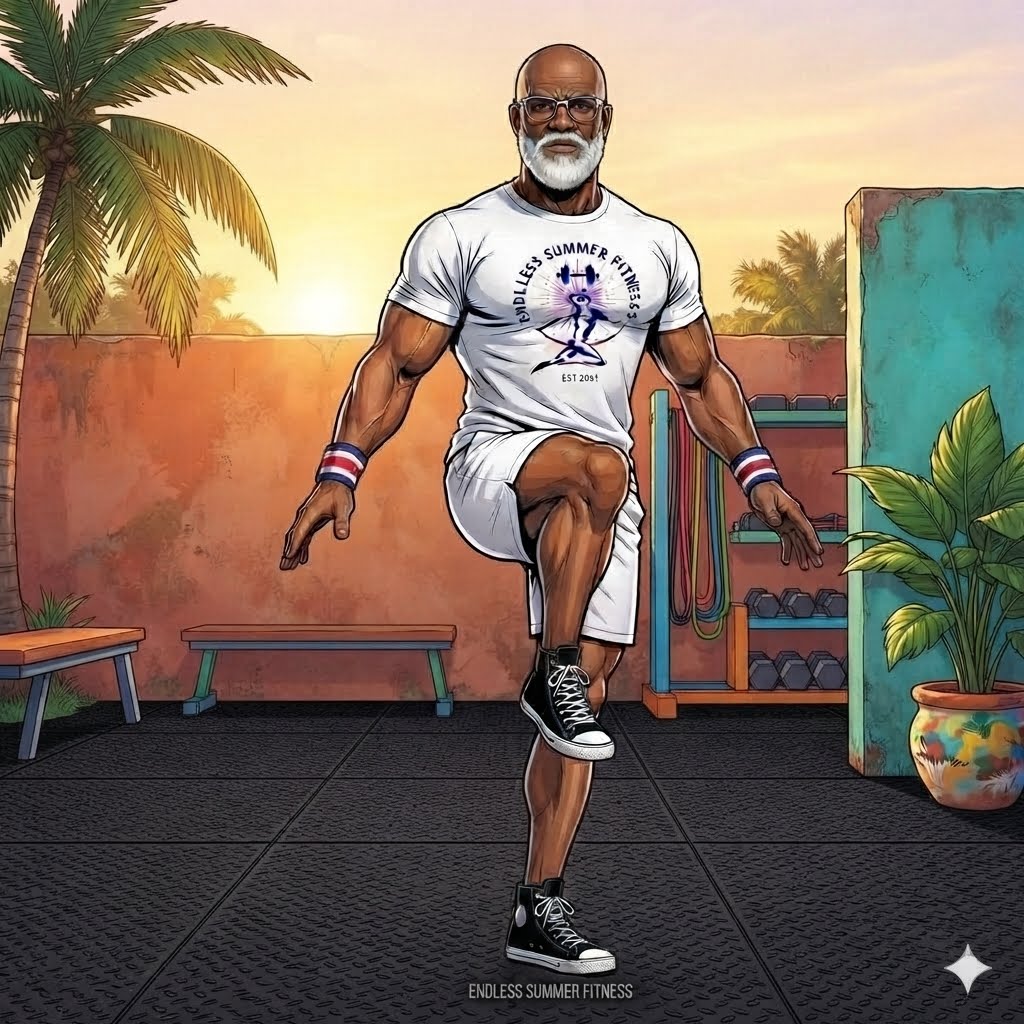
1. Single‑Leg Stand (Baseline Stability Training)
The single-leg stand is a powerful tool to reset your balance system. Balancing on one foot recruits your ankle, knee, hip, and core to maintain structural alignment. This movement wakes up crucial stabilizers that fade with age and sharpens your proprioception—your body’s spatial awareness.
In fact, research published in the Journal of Athletic Training proves that one-legged drills enhance neuromuscular control and lower fall risks, making it an essential exercise for anyone rebuilding everyday stability.
How to do it:
Stand tall and lift one foot off the ground. Hold for 20–30 seconds. Switch sides. To progress, close your eyes or stand on a soft surface.
2. Heel‑to‑Toe Walk (Gait + Coordination Reset)
How to do it:
Walk forward by placing your heel directly in front of your opposite toe each step. Move slowly for 10–15 steps.
3. Lateral Step‑Down (Hip + Knee Stability)
How to do it:
Stand on a step with one foot. Slowly lower your opposite heel toward the floor, keeping your hips level. Perform 8–12 reps per side.
4. Standing Hip Circles (Ankle + Hip Mobility)
Mobility is a major part of balance. Stiff ankles and tight hips reduce your ability to adjust to uneven surfaces or sudden shifts in movement. Standing hip circles improve joint mobility while challenging your balance in multiple directions.
A recent study in Frontiers in Physiology found that multi‑directional mobility drills actually improve joint control and enhance balance performance in aging adults.
How to do it:
Stand on one leg and slowly draw circles with your lifted knee. Perform 5–10 circles in each direction, then switch sides.
5. Split‑Stance Reach (Core + Proprioception Training)
This drill challenges your balance by narrowing your base of support and adding upper‑body movement. It trains your core, hips, and ankles to stabilize while your arms move — similar to how you reach, twist, and bend in daily life.
How to do it:
Step one foot forward into a split stance. Reach both arms overhead, then diagonally across your body. Perform 8–10 reps per side.
6. Single‑Leg Hip Hinge (Dynamic Stability + Strength)
Think of this move as an all-in-one upgrade for your backside. It targets your glutes, hamstrings, and lower back simultaneously while forcing you to stay steady on the move. If you want to feel way more solid whenever you walk, run, or crush a heavy lifting session, this is hands-down one of the absolute best things you can do.
How to do it:
Stand on one leg, hinge forward at the hips, and extend your opposite leg behind you. Keep your spine neutral. Perform 8–12 reps per side.
7. Marching with Pause (Core + Gait Control)
How to do it:
March in place, lifting one knee to hip height and pausing for 1–2 seconds. Perform 20–30 marches.
The Bottom Line
Medical Disclaimer: This article is for educational and informational purposes only and does not constitute medical advice. Always consult a physician or certified fitness professional before beginning a new exercise program, especially if you have pre-existing conditions.