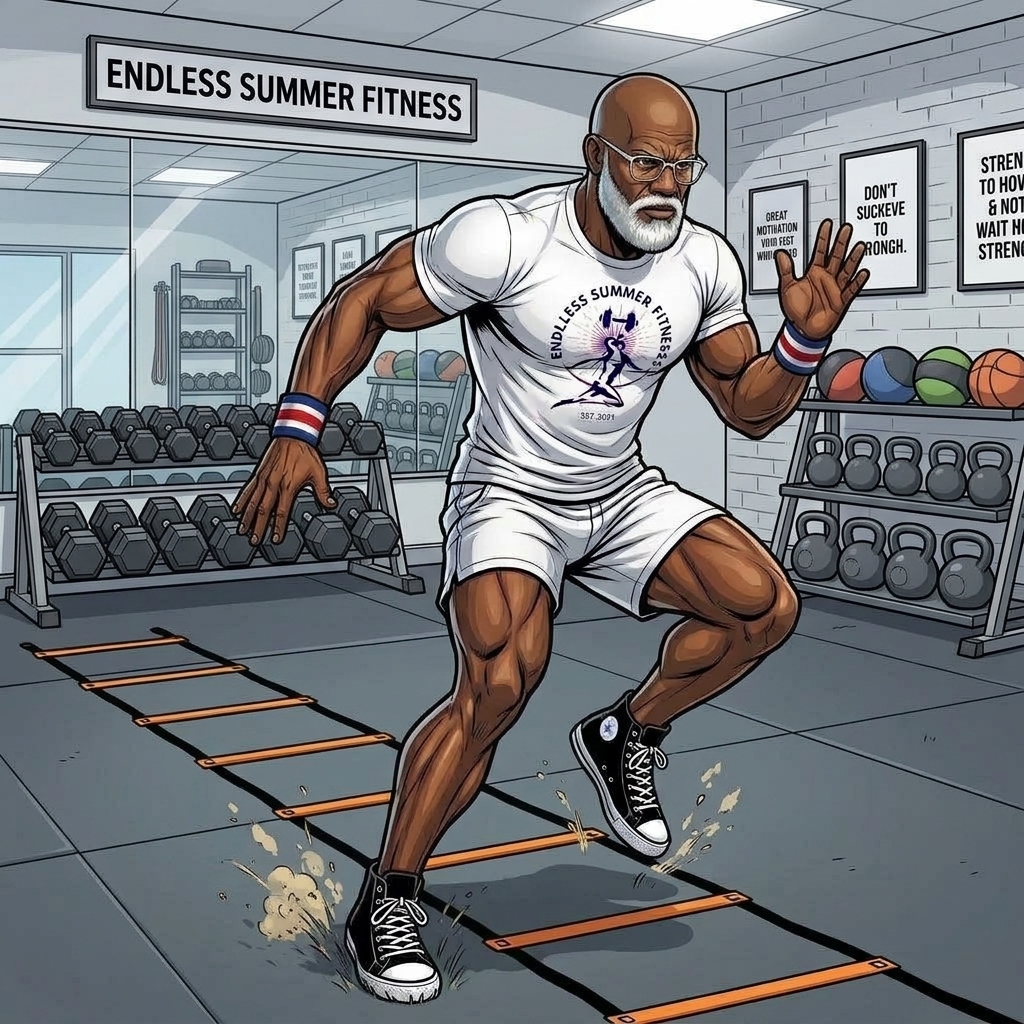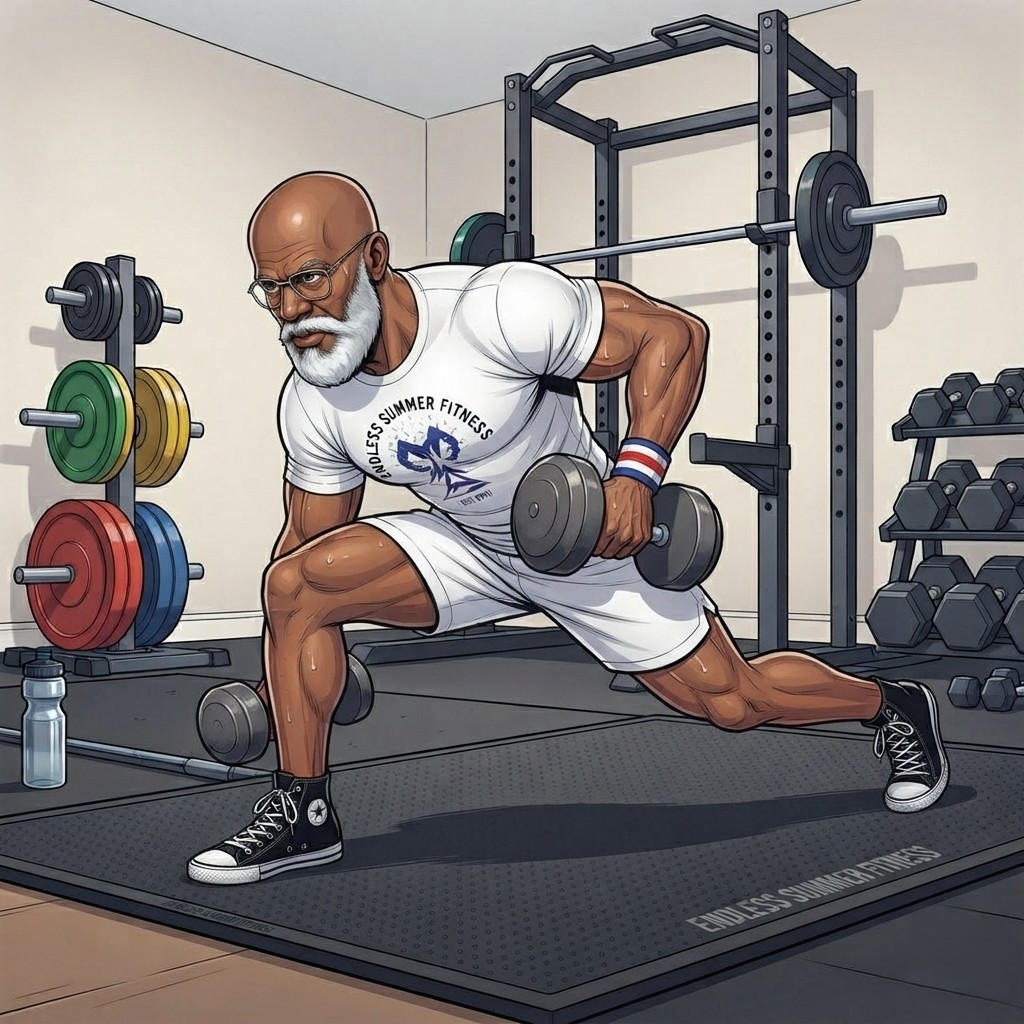
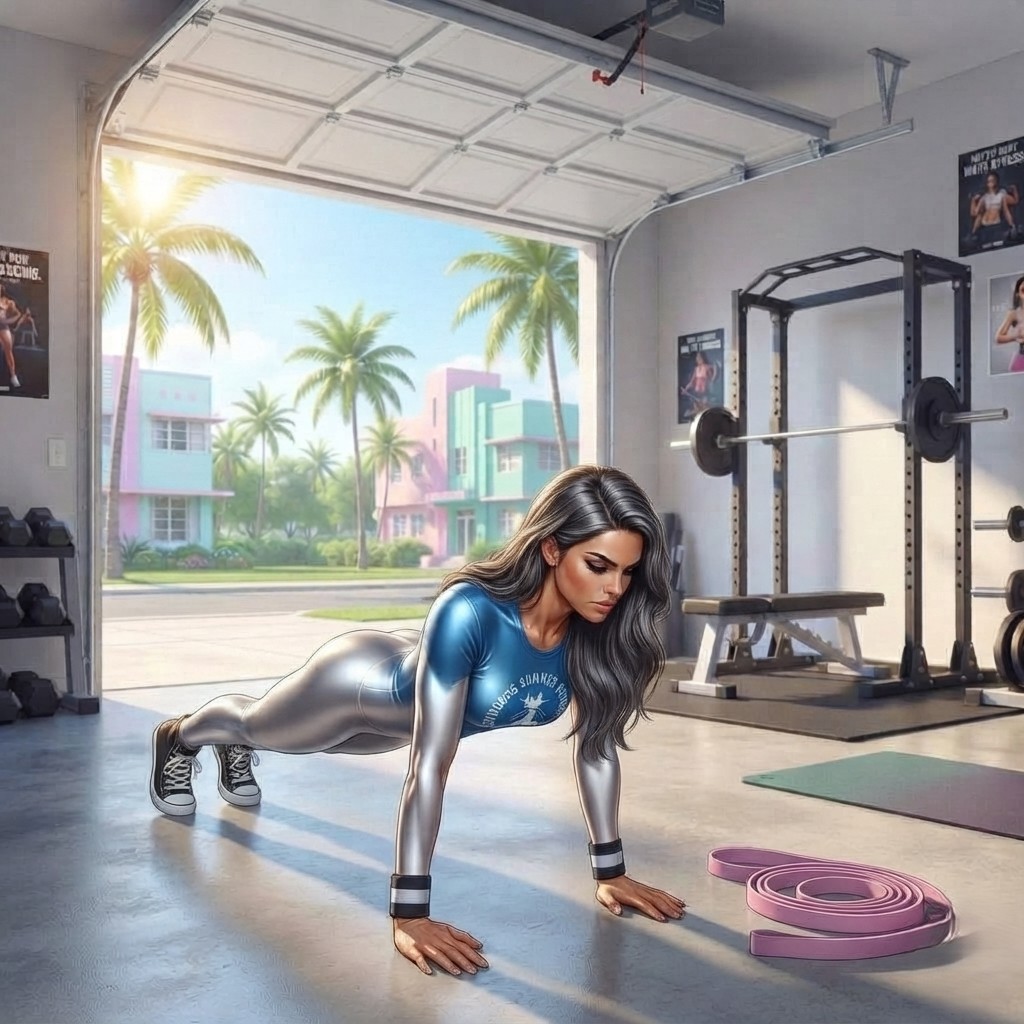
Maintaining upper-body pushing strength and muscular stamina after age 40 requires a distinct transition in exercise selection and execution. Heavy, low-rep pressing movements often subject aging shoulder capsules, elbows, and sternoclavicular joints to excessive mechanical stress. Below is your guide for High-Volume Chest & Triceps Workout for Adults 40+.
To build chest and triceps capacity safely, this protocol eliminates heavy joint loads in favor of high volume, continuous tension, and strict 3-second eccentric tempos. By controlling movement velocity and utilizing floor-based and elastic resistance, you maximize localized muscle activation while protecting connective tissue.
The Endless Summer Fitness Training Principles
Before executing this routine, adhere to these three execution rules:
- The 3-Second Eccentric Rule: Lower every weight or return from every stretch over a full 3-second count. Controlling the lowering phase eliminates momentum and builds tendon resiliency without excessive joint impact.
- Floor-Supported Positioning: Utilizing the floor during presses and flyes naturally caps the shoulder joint’s range of motion, preventing shoulder hyper-extension and impingement.
- Continuous Tension Over Heavy Load: Select a resistance that allows strict, pain-free execution. Do not strain or break form to move heavier weight.
The High-Volume Upper-Body Pushing Routine
Perform this routine in 3-set clusters per exercise. Rest 45 to 60 seconds between sets to maintain density while keeping joint stress minimal.
1. Dumbbell Floor Press
Limits shoulder extension while isolating the pectoral muscles and triceps.
- Volume: 3 sets of 12–15 repetitions
- Tempo: 3-second lowering phase, 1-second pause at floor contact, 1-second press
- Execution: Lie flat on your back on a cushioned mat with knees bent and feet flat on the floor. Hold dumbbells above your chest with a neutral grip (palms facing each other). Slowly lower your upper arms until your elbows touch the floor lightly at a 45-degree angle to your torso. Pause briefly, then press back to the starting position without locking out your elbows.
2. Resistance Band Chest Press
Provides accommodating resistance, increasing tension as you reach full chest contraction.
- Volume: 3 sets of 15–20 repetitions
- Tempo: 3-second return phase, 1-second push phase
- Execution: Anchor a resistance band behind you at chest height (or wrap it securely around a firm vertical post). Stand facing away from the anchor point in a staggered stance for stability. Hold the band handles at chest level, drive forward until arms are extended, and slowly control the return phase under constant band tension.
3. Dumbbell Floor Flys
Isolates the chest musculature without placing the shoulder joint into deep, unstable stretching positions.
- Volume: 3 sets of 12–15 repetitions
- Tempo: 3-second lowering phase, 1-second hug phase
- Execution: Lie back on the floor holding light dumbbells directly above your chest, palms facing each other with a soft bend in the elbows. Slowly lower the weights outward to the sides until your elbows touch the floor. Squeeze the pectoral muscles to bring the dumbbells back over your chest in a sweeping motion.
4. Resistance Band Overhead Triceps Extension
Targets the long head of the triceps with continuous elastic resistance.
- Volume: 3 sets of 15–20 repetitions
- Tempo: 3-second lowering phase, 1-second extension phase
- Execution: Stand on the middle of a light loop or tube band. Bring the handles overhead with elbows tucked close to your ears. Keeping your upper arms fixed vertically, extend your forearms upward until your elbows are straight. Lower the band behind your head under a strict 3-second control.
Core Mindset Pillars for Long-Term Capacity
Physical progress for adults over 40 is built on consistency rather than extreme intensity. Apply the four ESF Mindset Pillars to your daily training:
- Patience: Connective tissue adapts slower than muscular tissue. Allow your joints time to build stamina under high-volume protocols.
- Commitment: Follow the controlled tempos and set counts consistently without skipping recovery windows.
- Discipline: Resist the temptation to lift heavier than necessary. Prioritize form and 3-second tempo control over ego loading.
- Enjoyment: Physical training should enhance your daily life and energy, leaving you invigorated rather than beat up.
Summary
This high-volume chest and triceps routine provides a safe, highly effective framework for adults 40+ to maintain upper-body functional strength. By relying on floor support, band resistance, and controlled tempos, you can build muscular capacity without subjecting your joints to unnecessary wear and tear. Include this session 1–2 times per week as part of your overall conditioning schedule.
Medical Disclaimer: This article is for educational and informational purposes only and does not constitute medical advice. Always consult a physician or certified fitness professional before beginning a new exercise program, especially if you have pre-existing joint or cardiovascular conditions.
References & Scientific Sources
- American College of Sports Medicine (ACSM)
Guideline: Resistance Training for Aging Adults and Connective Tissue Health.
Key Takeaway: Confirms that high-volume, moderate-load resistance training combined with controlled tempos minimizes joint shear force while stimulating muscle protein synthesis and connective tissue density in mature lifters.
Link: ACSM Official Guidelines
- National Strength and Conditioning Association (NSCA)
Guideline: Biomechanics of Upper-Body Pressing and Shoulder Impingement Prevention.
Key Takeaway: Supports floor-supported pressing protocols to cap glenohumeral extension at neutral, preventing hyper-extension injury to the anterior shoulder capsule and rotator cuff tendons.
- Journal of Sports Science & Medicine
Study: Time Under Tension and Eccentric Tempo Control in Hypertrophic Training
Key Takeaway: Demonstrates that enforcing a 3-second eccentric (lowering) phase increases time-under-tension (TUT) and metabolic fatigue, driving hypertrophy without requiring heavy, joint-compressing loads.