
Hybrid training combines resistance exercise with cardiovascular endurance work within the same weekly training cycle. Managing both demands simultaneously requires a precise nutritional approach.
Without adequate calories, macronutrient balance, and anti-inflammatory nutrients, concurrent training leads to persistent fatigue, compromised recovery, and elevated joint discomfort. A structured dietary foundation supports tissue repair, replenishes glycogen stores, and protects joint integrity.
The Core Pillars of Hybrid Nutrition
To support concurrent strength and endurance adaptations, your dietary strategy must address three distinct metabolic needs: muscle protein synthesis, energy restoration, and systemic inflammation control.
1. Macronutrient Allocation for Dual Adaptations
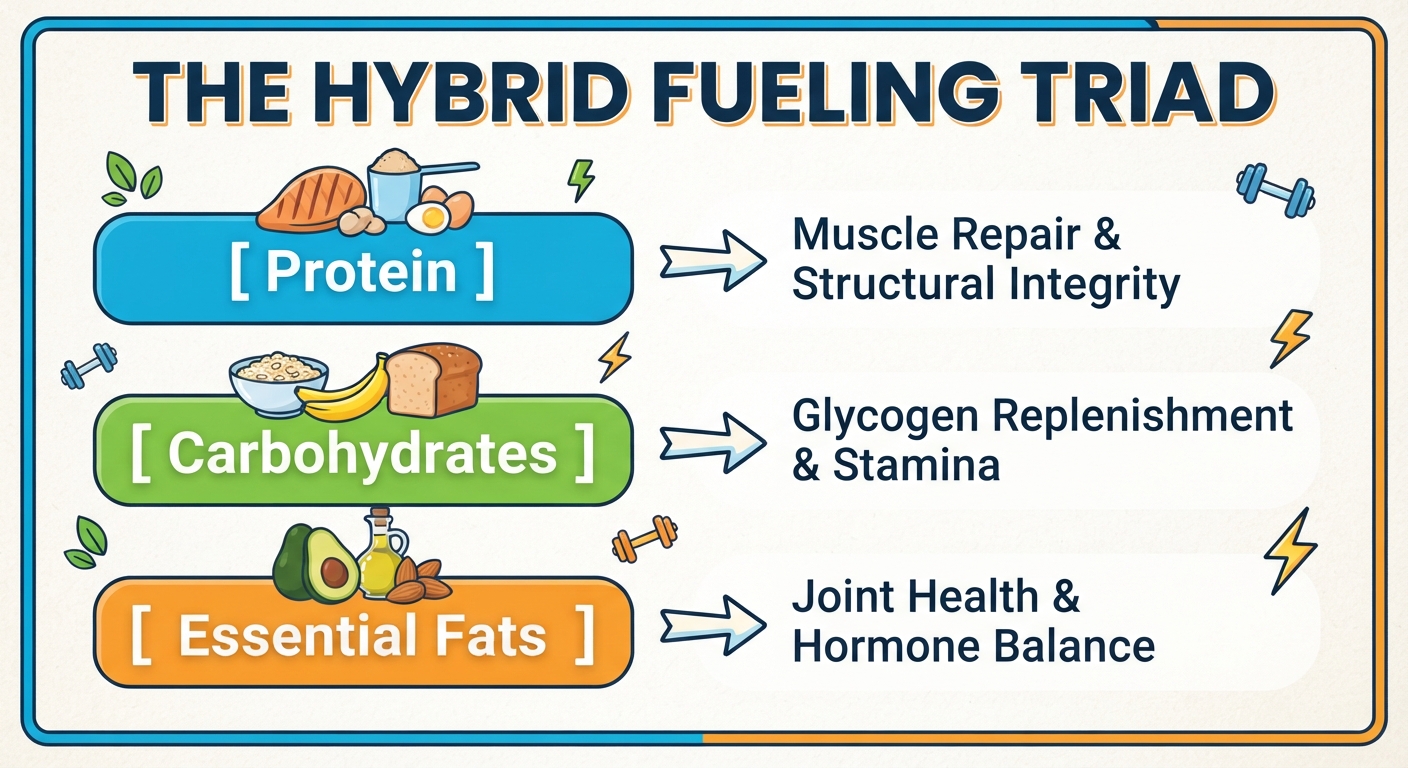
Macronutrients provide the energy and raw materials required to rebuild tissue following lifting and conditioning sessions.
Dietary Protein
Protein delivers the amino acids required to repair skeletal muscle fibers and connective tissue strained during strength workouts.
- Target: 1.6 to 2.2 grams per kilogram of total body mass daily.
- Primary Whole-Food Sources: Chicken breast, turkey, wild-caught white fish, salmon, lean beef, eggs, and firm tofu.
- Distribution Rule: Divide total daily intake into 3 to 4 balanced meals spaced 3 to 5 hours apart to maintain elevated muscle protein synthesis.
Carbohydrates
Carbohydrates are the primary fuel source for high-intensity lifting and sustained cardiovascular output. Restricting carbohydrates while undergoing hybrid training exhausts muscle glycogen, impairing performance in subsequent workouts.
- Target: 3.0 to 5.0 grams per kilogram of total body mass daily (scaled based on total conditioning volume).
- Primary Whole-Food Sources: Oats, sweet potatoes, brown rice, quinoa, berries, and legumes.
- Timing Strategy: Consume complex carbohydrates 2 to 3 hours prior to training for sustained blood glucose, followed by simple carbohydrates post-workout to accelerate glycogen re-synthesis.
Healthy Fats
Fats support hormone production, cell membrane structure, and fat-soluble vitamin absorption (Vitamins A, D, E, and K).
- Target: 0.8 to 1.0 grams per kilogram of total body mass daily.
- Primary Whole-Food Sources: Extra virgin olive oil, avocados, almonds, walnuts, chia seeds, and pumpkin seeds.
Editor’s Note: Looking to pair your recovery diet with safe, zero-equipment training? Read our guide: 6 Best Beginner Home Exercises Without Equipment to master joint-friendly bodyweight movement patterns.
2. Anti-Inflammatory Foods for Joint Integrity
Concurrent training exposes tendons, ligaments, and articular cartilage to repeated mechanical loading. Incorporating anti-inflammatory whole foods reduces systemic oxidative stress and supports joint longevity.
Omega-3 Fatty Acids
EPA (eicosatetraenoic acid) and DHA (docosahexaenoic acid) modulate inflammatory cytokine pathways, reducing post-exercise joint stiffness and soreness.
- Top Sources: Wild salmon, mackerel, sardines, herring, and anchovies.
- Target: Consume oily fish 2 to 3 times per week or supplement with 1,000 to 2,000 mg of combined EPA/DHA daily.
Antioxidants and Polyphenols
Antioxidants neutralize free radicals produced during prolonged aerobic exercise, reducing secondary muscle damage.
- Top Sources: Dark leafy greens (spinach, kale), dark berries (blueberries, blackberries), beets, and tart cherry juice.
3. Key Micronutrients for Connective Tissue and Bone
Beyond calories and macronutrients, specific micronutrients maintain bone mineral density and connective tissue resilience.
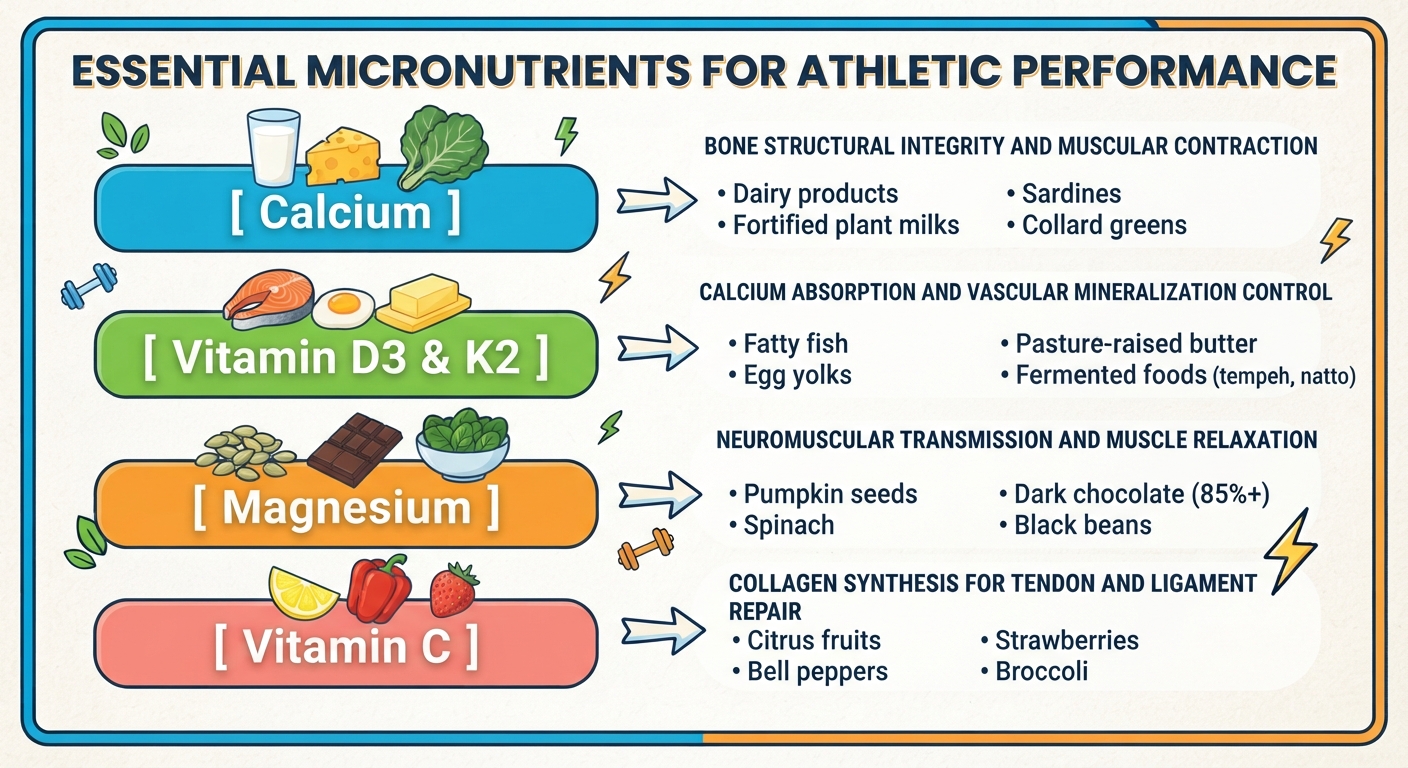
4. Hydration and Electrolyte Management
Aerobic conditioning and high-volume resistance training increase fluid losses through perspiration. Dehydration exceeding 2% of total body mass impairs cognitive function, reduces aerobic output, and increases perceived exertion.
Fluid Protocols
- Baseline Intake: 35 to 40 milliliters of fluid per kilogram of body weight per day.
- Pre-Workout: Consume 500 milliliters of water 2 hours before training.
- During Workout: Sip 150 to 250 milliliters every 15 to 20 minutes during extended sessions.
- Post-Workout: Replace lost fluid volume by drinking 1.25 to 1.5 liters of fluid for every kilogram of body weight lost through sweat.
Electrolyte Replenishment
Add a pinch of unrefined sea salt or a sodium-potassium electrolyte powder to intra-workout water during sessions lasting longer than 60 minutes to maintain nerve impulse conduction and prevent cramping.
References & Institutional Guidelines
-
International Society of Sports Nutrition (ISSN)
Guideline: ISSN Exercise & Sports Nutrition Review Update: Research & Recommendations.
Source: ISSN Official Position Stand -
American College of Sports Medicine (ACSM)
Guideline: Nutrition and Athletic Performance Joint Position Statement.
Source: ACSM Sports Nutrition Standards -
National Institutes of Health (NIH) Office of Dietary Supplements
Guideline: Dietary Supplements for Exercise and Athletic Performance Fact Sheet.
Source: NIH ODS Health Information
Medical Disclaimer: This content is for educational and informational purposes only and does not constitute medical advice. Consult a registered dietitian or licensed healthcare provider before making significant changes to your dietary regimen or supplement protocols.