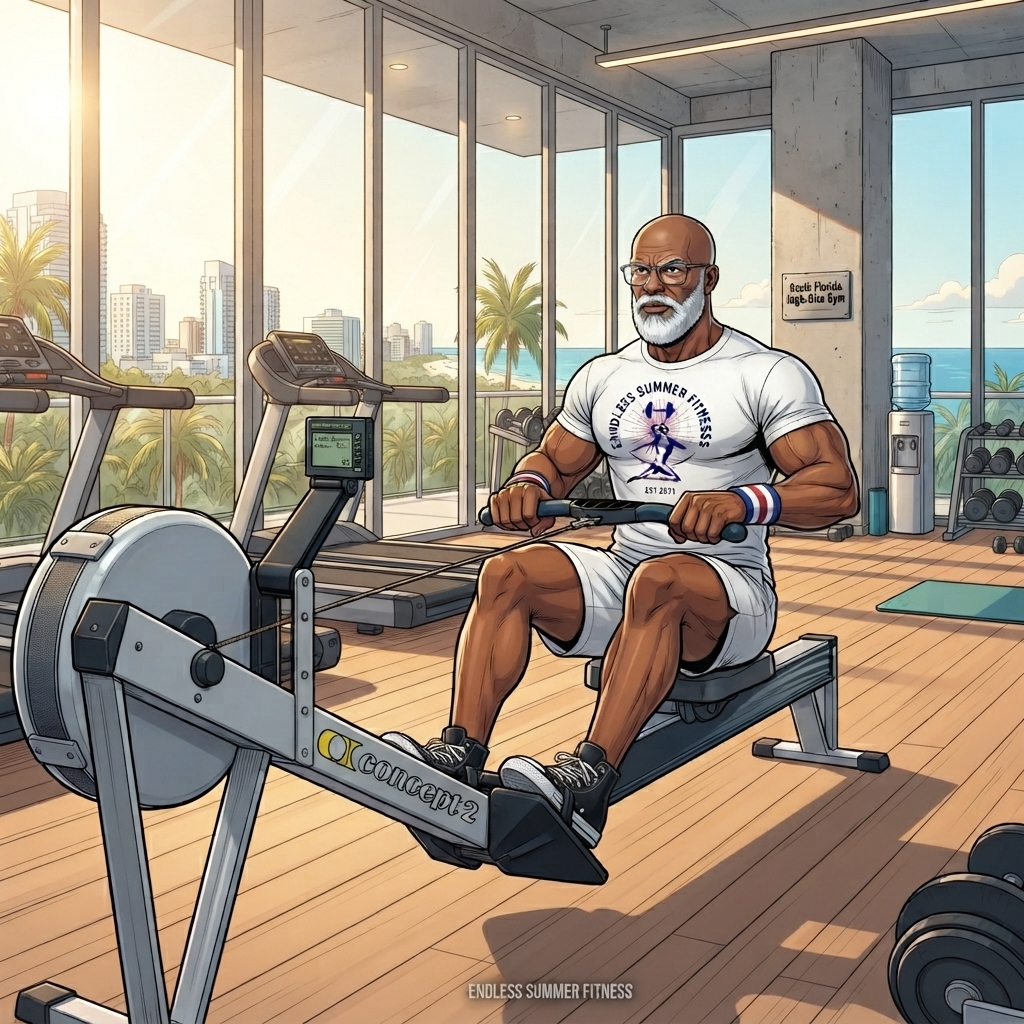
Low-impact cardio workouts elevate your heart rate and strengthen your cardiovascular system without subjecting your joints to severe impact or mechanical stress. By eliminating heavy pounding, these strategic modalities allow you to push your intensity and build endurance while protecting your ankles, knees, and hips.
Related ESF Guides
Why Joint-Friendly Cardio Matters
Cardiovascular exercise strengthens the heart and lungs, but traditional high-impact activities like running create excessive wear and tear on connective tissue. Lower-impact alternatives deliver identical cardiometabolic benefits without joint degradation.
The American Heart Association recommends obtaining at least 150 minutes of moderate-intensity cardio weekly. Substituting high-impact movements with low-impact alternatives allows you to meet or exceed this target with lower injury risk and shorter recovery windows.
Key Benefits of Low-Impact Conditioning
- Cardiovascular Protection: Reduces systemic risk factors including elevated blood pressure and unbalanced lipid profiles.
- Joint Preservation: Minimizes compressive loads on ankles, knees, and hips—ideal for osteoarthritis or joint rehabilitation.
- Higher Training Volume: Enables frequent, higher-intensity sessions without accumulating severe systemic joint fatigue.
- Cross-Training Capacity: Builds aerobic base conditioning without competing with recovery from heavy resistance sessions.
7 High-Efficiency Low-Impact Cardio Workouts
Building a high-capacity aerobic engine does not require sacrificing your hips, knees, or lower back to relentless ground forces. Integrating low-impact conditioning modalities into your weekly routine creates a powerful stimulus for heart and lung development while keeping joint structures entirely intact.
By strategically rotating through these joint-friendly workouts, you can sustain the high training volume and consistent effort needed for total-body vitality. This balanced approach drives peak cardiovascular gains without triggering systemic wear, chronic inflammation, or forced recovery breaks.
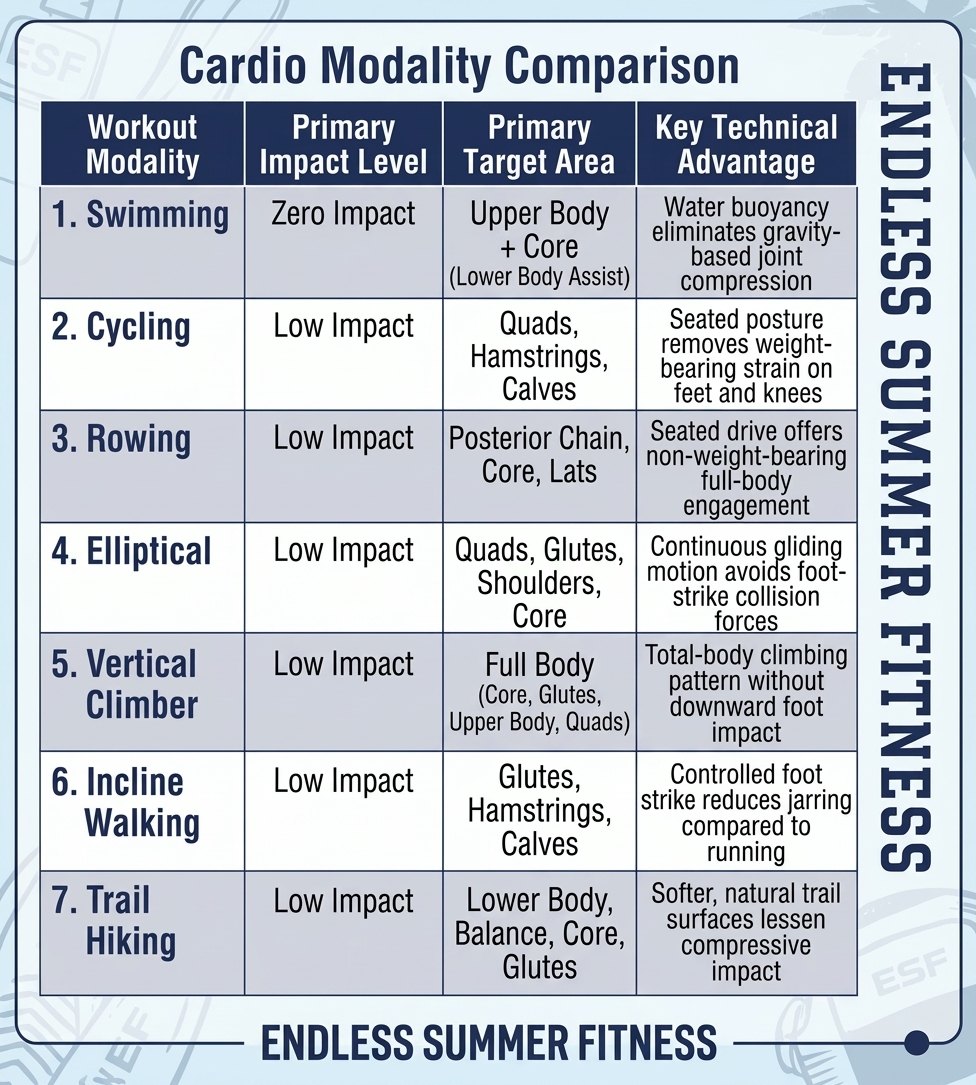
Cardio Modality Comparison
Modality Breakdown
- Swimming: The natural buoyancy of water reduces body weight on joints to near zero. It offers an ideal conditioning outlet for individuals with arthritis, reduced mobility, or joint stiffness.
- Cycling: Pedaling from a stationary or outdoor bike seat removes vertical compressive forces from your ankles and knees, making it a reliable tool for maintaining athletic endurance.
- Rowing: Utilizing a rowing machine engages upper and lower body musculature simultaneously from a seated position, removing spinal compression while driving high aerobic output.
- Elliptical Workouts: The enclosed foot pedal path creates a smooth, continuous glide, eliminating the sharp heel-strike forces typical of outdoor running.
- Vertical Climbers: Climbing machines simulate vertical ascent in a rhythm using both limbs, producing near-zero joint impact while driving a high metabolic rate.
- Incline Walking: Walking at a steep incline elevates your heart rate to match running intensity while keeping foot-strike forces significantly lower.
- Outdoor Trail Hiking: Moving across natural, soft surfaces like dirt or forest trails provides dynamic terrain for stability while absorbing ground reaction forces better than pavement.
Does Low-Impact Deliver High-Intensity Results?
Intensity is dictated by effort, not joint impact. Driving higher output on a cycle, rower, or climber pushes your heart rate and lung capacity into high-intensity training zones without inflicting mechanical trauma on your joints. You gain the cardiovascular conditioning without the joint inflammation.
Medical Disclaimer: This article is for educational and informational purposes only and does not constitute medical advice. Always consult a physician or certified fitness professional before beginning a new exercise program, especially if you have pre-existing conditions.
Peer-Reviewed References
- American Heart Association. American Heart Association Recommendations for Physical Activity in Adults and Kids. Heart.org. 2024.
- Shiroma EJ, Lee IM. Physical activity and cardiovascular health: lessons learned from epidemiological studies trials and biology. Circulation / PubMed. 2010;122(7):743-752.