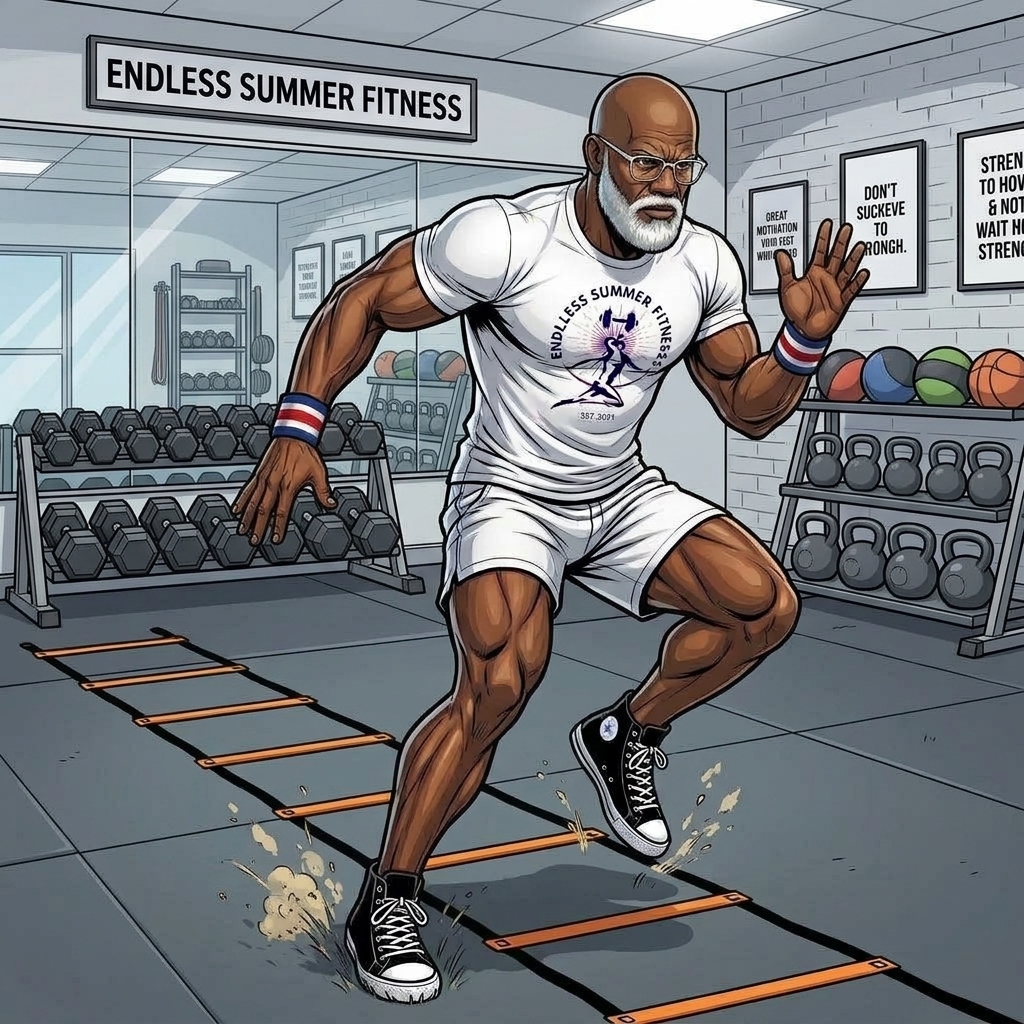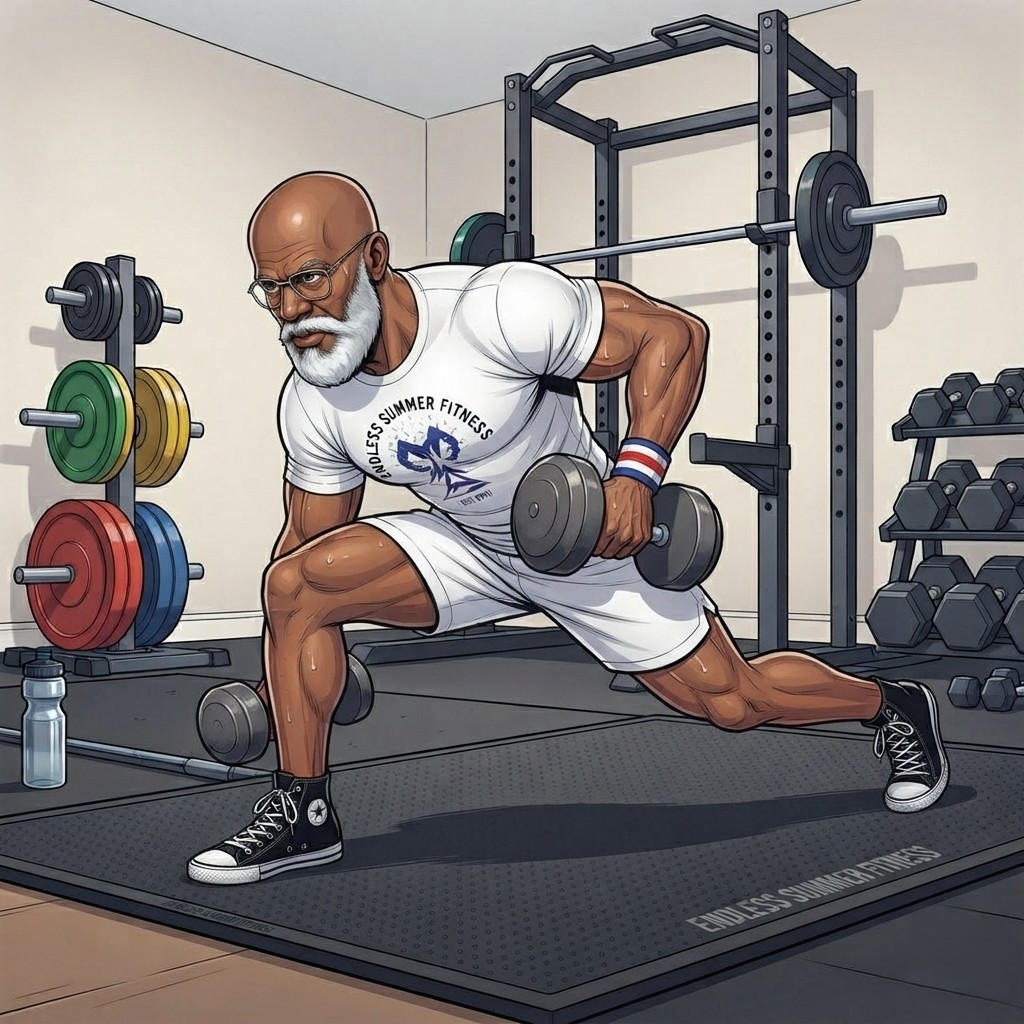
A strong core is not about visible abs, long plank contests, or proving anything in the gym. It is about feeling steady when you carry groceries from the car, reach into a high cabinet, walk across uneven ground, or get down to the floor and back up again. Let’s discuss 6 core stability drills for increase strength when you are over‑40.
For adults over 40, core training becomes less about appearance and more about having a body that feels capable in real life. These six beginner-friendly drills use bodyweight and one optional light weight to help build trunk control, balance, and everyday strength.
Don’t miss guide: Low-Impact Cardio Over 40: 5 Exercises You Will Enjoy
Why This Matters
Your core includes more than the muscles at the front of your stomach. It is the connected system around your trunk that helps control your spine, pelvis, hips, and rib cage while the rest of your body moves.
That control matters whenever your arms or legs create movement. Think about carrying a suitcase in one hand, stepping off a curb, picking up a bag of mulch, or turning quickly to catch something that falls. A steady trunk helps you transfer force without losing your position.
Core stability is especially useful as you get older because everyday movement rarely happens in a perfectly balanced setup. One side may carry more load. One foot may land on a less stable surface. One arm may reach farther than expected. Training your body to resist unwanted twisting, arching, and side bending can help you move with more awareness and confidence.
The goal is not to make these drills look perfect on day one. The goal is to practice controlled movement, pay attention to your position, and build consistency over time.
The Science
Research suggests that core training can improve dynamic balance and support functional movement when it is included in a broader exercise routine. The strongest results come from regular practice and quality execution, not from turning every session into an all-out challenge. For beginners, simple drills that teach the trunk to stay steady while the limbs move are a practical place to start.
The Workout
Complete this workout two times per week on nonconsecutive days. Perform 3 sets of 15–20 reps for each drill, except the hollow body hold, which uses a 15–20-second hold. Rest 60–90 seconds between sets.
Move slowly and stay focused. If your position starts to break down, shorten the range of motion, slow the rep, or take a brief pause before continuing. Use only bodyweight or very light resistance. The weight should never pull you out of a strong position.
-
Hollow Body Hold
The hollow body hold teaches you to create tension through the front of your trunk while keeping your ribs and pelvis controlled.
Sets: 3 x 15–20-second holds
Tempo: Set your position slowly, then hold steady tension throughout.
Rest: 60–90 seconds
Form tip: Keep your low back gently connected to the floor. If it lifts, bend your knees or place your arms by your sides.
Lie on your back with your arms extended overhead and legs long. Tighten your midsection, then lift your shoulders and heels a few inches from the floor. Start with a smaller hold position than you think you need. A shorter lever that stays controlled is far more useful than a long lever that causes your back to arch.
-
Bird Dog
The bird dog challenges your core to resist rotation while your opposite arm and leg move away from the center of your body.
Sets: 3 x 15–20 reps per side
Tempo: Extend for 2 seconds, pause for 1 second, return for 2 seconds.
Rest: 60–90 seconds
Form tip: Keep your hips square to the floor instead of opening toward the lifted leg.
Start on hands and knees with your hands under your shoulders and knees under your hips. Reach one arm forward while extending the opposite leg behind you. Return under control, then switch sides. Keep the movement smooth and deliberate. Imagine balancing a glass of water on your low back as you extend.
-
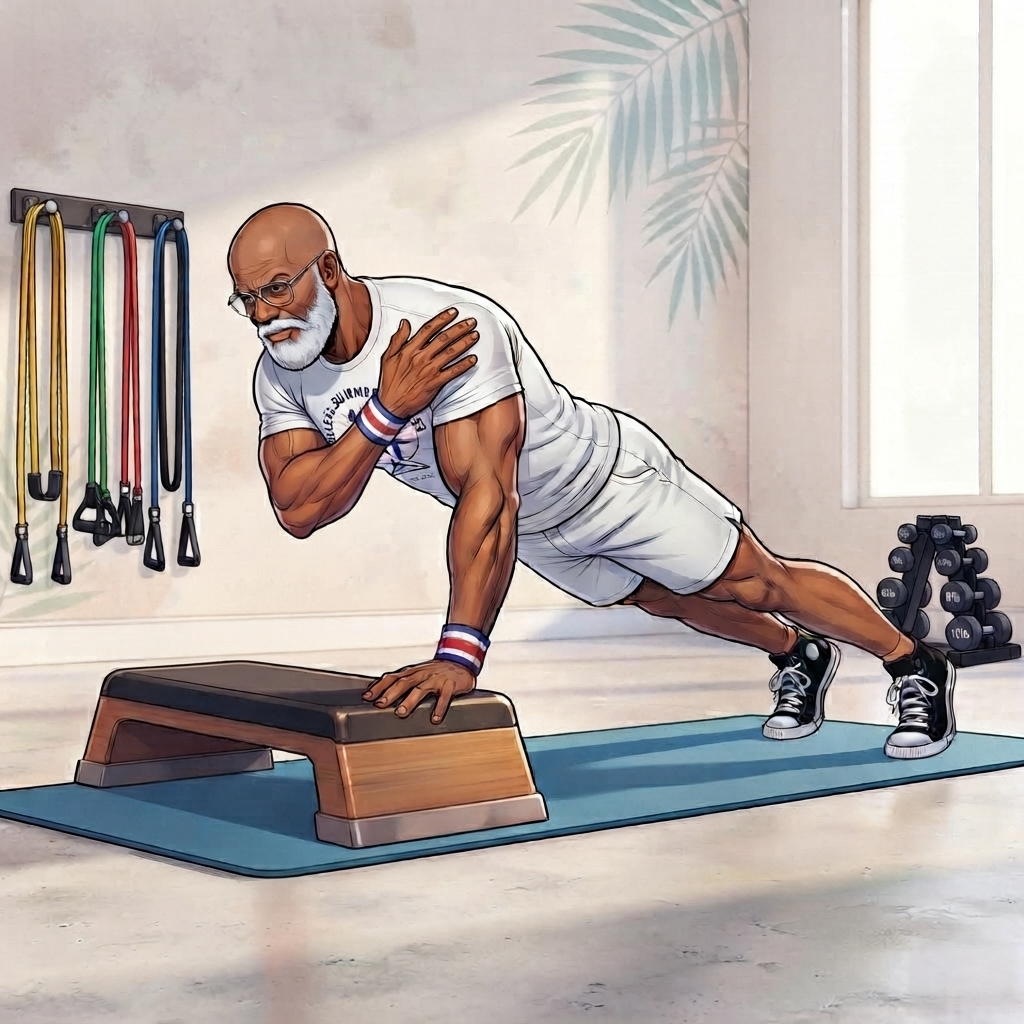
Elevated Plank Shoulder Tap
This drill teaches you to keep your trunk steady while your upper body shifts from side to side.
Sets: 3 x 15–20 reps per side
Tempo: Tap slowly, pause briefly, then return with control.
Rest: 60–90 seconds
Form tip: Keep your hips quiet rather than rocking across the bench, counter, or wall.
Place your hands on a sturdy elevated surface and step your feet back into a long-body plank. Tap one hand to the opposite shoulder, replace it, then switch sides. Using elevation makes the exercise more accessible while still giving your core a meaningful stability challenge.
-
Glute Bridge March
The glute bridge march combines hip strength and pelvic control, making it useful for walking, climbing stairs, and standing tall.
Sets: 3 x 15–20 reps per side
Tempo: Lift for 2 seconds, pause, then lower for 2 seconds.
Rest: 60–90 seconds
Form tip: Keep your pelvis level as one foot lifts; do not let one hip drop.
Lie on your back with knees bent and feet flat. Press through your feet to lift into a bridge, then raise one foot a few inches off the floor before lowering it and switching sides. Keep the marching motion small at first. Your pelvis should stay as steady as possible.
-
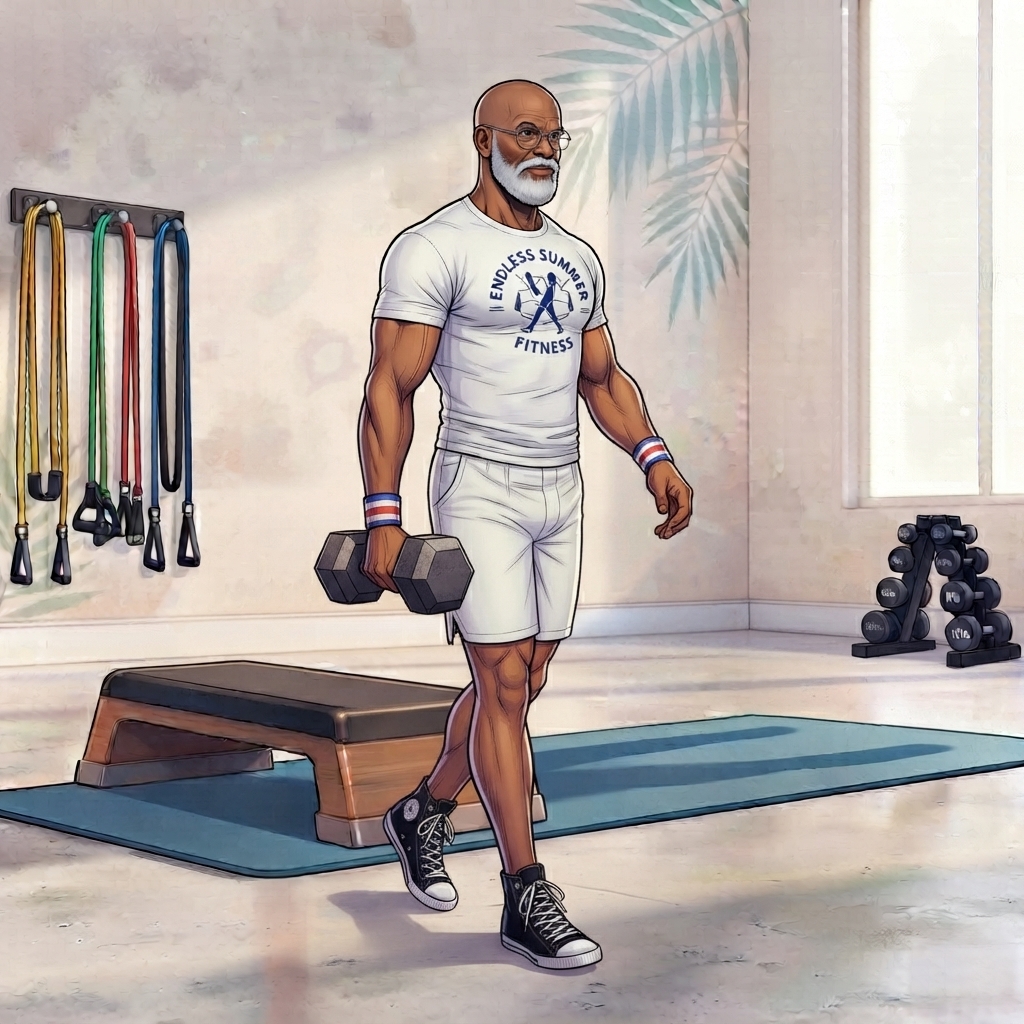
Suitcase Carry
The suitcase carry is one of the most practical core drills because it asks you to stay upright while a weight pulls from one side.
Sets: 3 x 15–20 steps per side
Tempo: Take slow, smooth steps.
Rest: 60–90 seconds
Form tip: Stand tall and resist leaning toward or away from the weight.
Hold a light dumbbell or kettlebell at one side. Walk with relaxed shoulders and controlled steps, then switch hands. Start lighter than you think. The purpose is to maintain excellent posture, not to see how much you can carry.
-
Bear Crawl
The bear crawl adds movement and coordination while asking your trunk to stay stable from hand to foot.
Sets: 3 x 15–20 steps per side
Tempo: Move one controlled step at a time.
Rest: 60–90 seconds
Form tip: Keep your back flat and avoid letting your hips sway.
Start on hands and knees, then hover your knees a few inches above the floor. Move forward with the opposite hand and foot, taking short, controlled steps. If the position feels too demanding, reduce the distance or return to a tabletop hold.
How to Apply This
Pair this workout with walking, low-impact cardio, mobility work, or a beginner full-body bodyweight session. You can also choose two or three drills as a warm-up before strength training.
Stay patient with the process. Better control, smoother reps, and stronger positions are signs of progress. If a movement causes sharp pain, stop and consult a qualified health professional before continuing.
ESF Mindset Moment
Discipline does not always look dramatic. Sometimes it is choosing the controlled rep, practicing the basics, and trusting that small efforts build a stronger body over time.
Medical Disclaimer: This article is for educational and informational purposes only and does not constitute medical advice. Always consult a physician or certified fitness professional before beginning a new exercise program, especially if you have pre-existing conditions.
Sources / References
- Prieske, O., et al. “Effects of Core Training on Dynamic Balance Stability.” Journal of Sports Sciences, 2022. https://pubmed.ncbi.nlm.nih.gov/35976032/
- Reed, C. A., Ford, K. R., Myer, G. D., and Hewett, T. E. “The Effects of Isolated and Integrated Core Stability Training on Athletic Performance Measures.” Sports Medicine, 2012. https://pubmed.ncbi.nlm.nih.gov/22784233/
- Saeterbakken, A. H., et al. “Core Training and Performance: A Systematic Review With Meta-Analysis.” Biology of Sport, 2023. https://pubmed.ncbi.nlm.nih.gov/37867742/