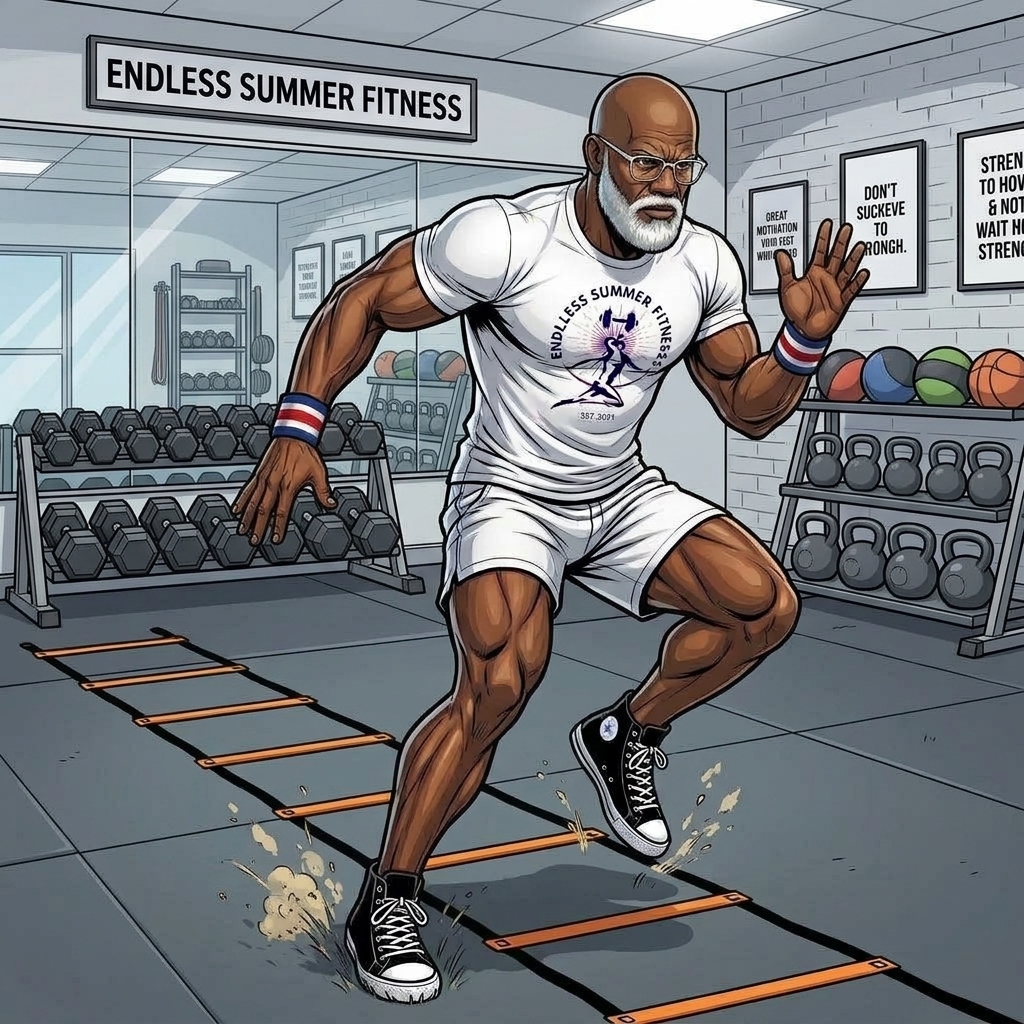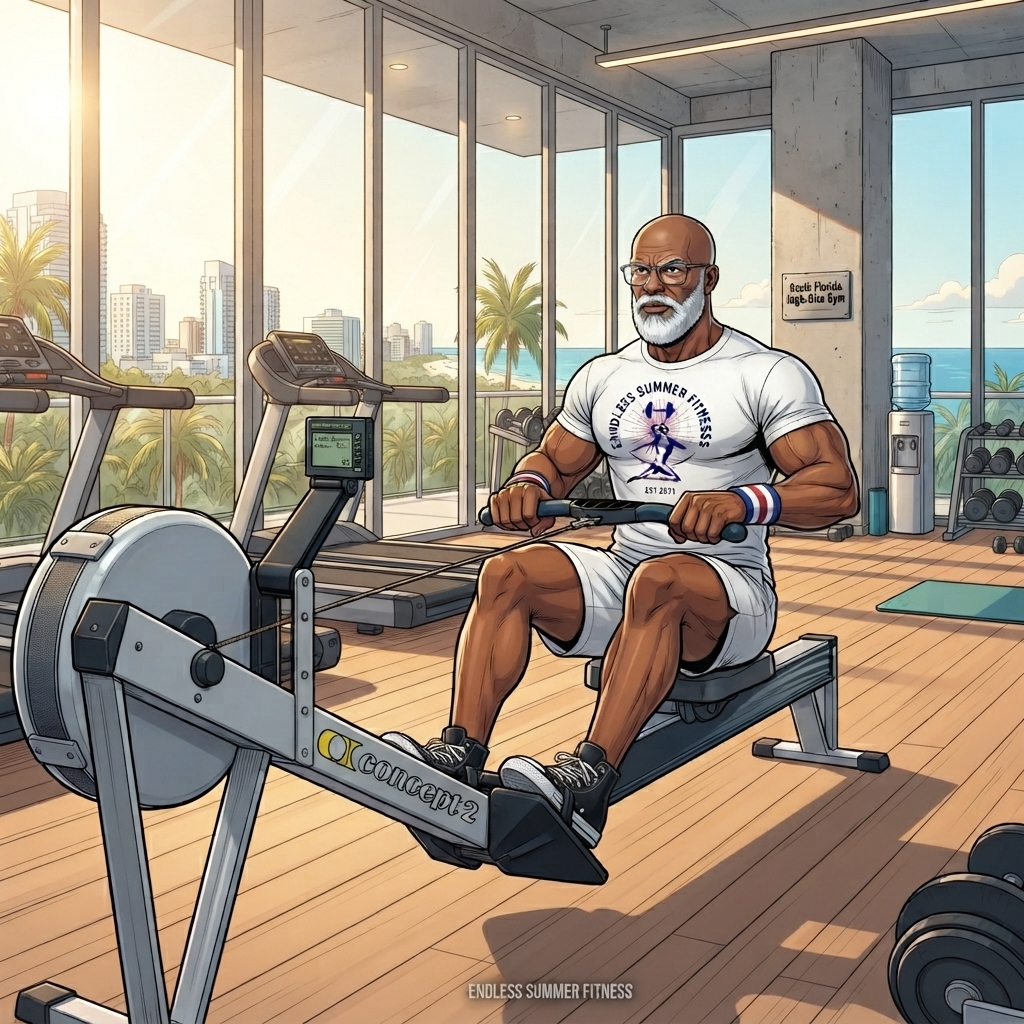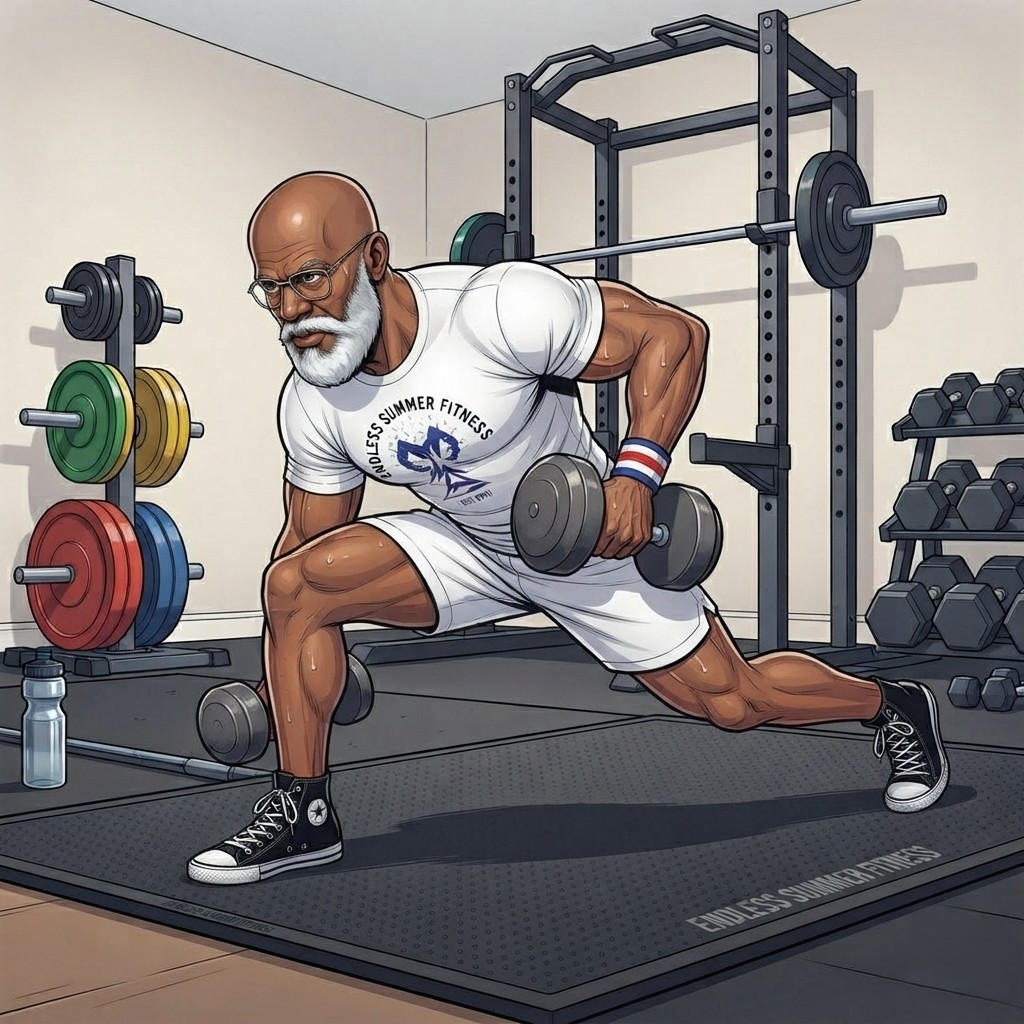
If your knees start lodging formal protests every time you try a internet cardio class loaded with jump squats and burpees, you are not alone. You also do not need to settle for boring workouts. In this article we cover, low-impact cardio over 40 and 5 exercises you will actually enjoy doing.
The Over-40 Engine: Building Cardio Capacity Without Wrecking Your Joints
The secret to building lasting conditioning after 40 is mastering grounded movement. Low-impact training is defined by a simple mechanical rule: at least one foot remains firmly planted on the floor at all times.
That single constraint changes the physics of your workout. Running slams your lower joints with ground reaction forces reaching 2.5 to 3 times your entire body weight per step. Grounded conditioning caps those impact forces under 1.5 times body weight. Across a single 30-minute session, that cuts cumulative knee and hip stress in half while demanding the exact same aerobic effort from your heart and lungs.
You do not need to do less cardio as you get older; you simply need a format built to respect your joints while pushing your stamina forward.
Upgrading Your Math: Why the Old 220-Age Rule Fails
Current guidelines from the American College of Sports Medicine (ACSM) recommend 150 to 300 minutes of moderate-intensity aerobic work weekly for adults 40 and older.
To get the most out of your training time, your target heart rate zones need to be accurate. The standard “220 minus age” formula stems from small 1970s observational data and routinely underestimates true cardiac capacity in midlife by 10 or more beats per minute.
Modern exercise physiologists rely on the Tanaka equation ($208 – 0.7 times text{age}$) to map out proper exertion.
The Tanaka Heart Rate Formula
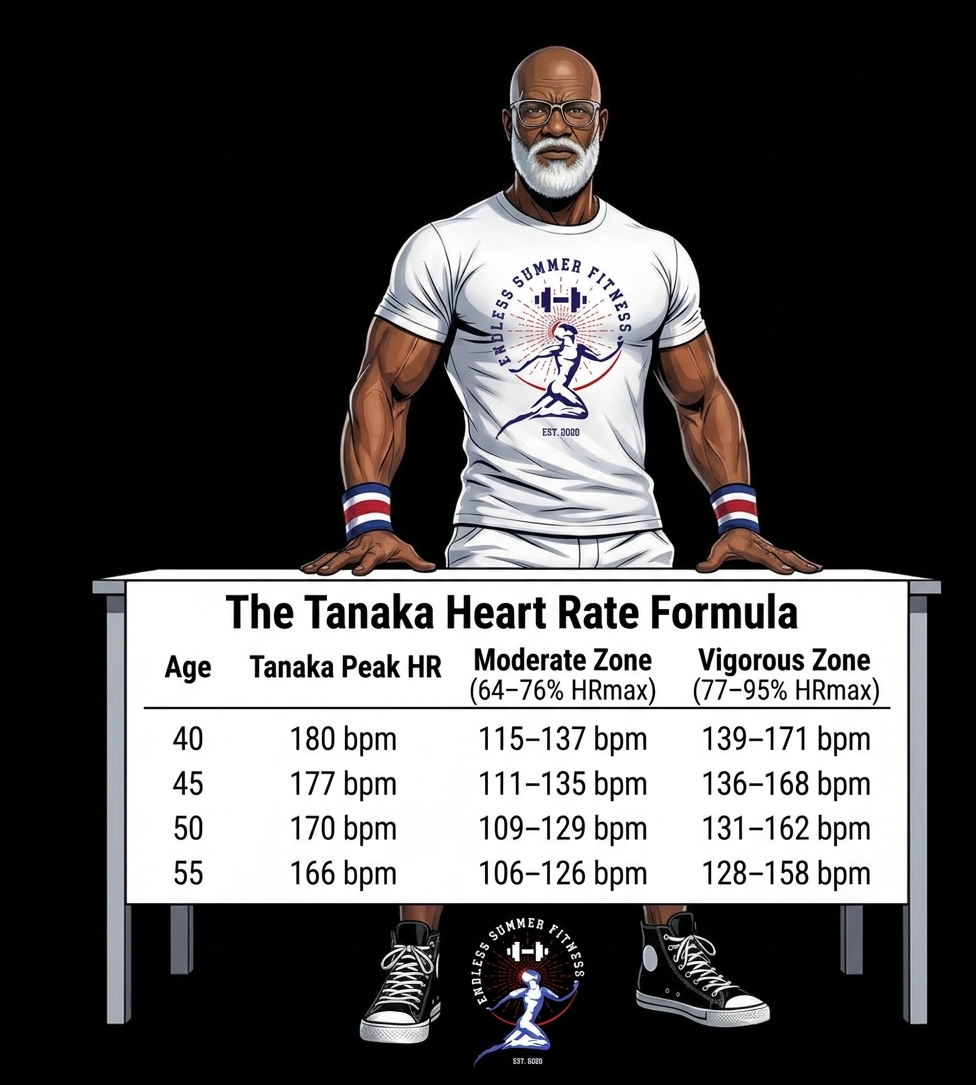
Living in the moderate zone for 30 minutes, 4 to 5 days per week sparks cardiovascular gains and metabolic resilience without exhausting your recovery.
7 High-Yield Grounded Drills for Maximum Exertion
Cardio intensity comes from tempo and muscle recruitment, not high-flying jumps. These seven grounded movements elevate your cardiac output fast:
- Wide Stance Step Touches: Dynamic side-to-side steps performed with active lateral drive.
- Rotational Grapevines: Fluid crossover footwork that incorporates torso rotation to fire up the obliques.
- Marching with Overhead Drive: High-knee marching paired with active arm pumping to maximize total-body demand.
- Dynamic Heel Taps: Front heel extensions combined with active upper-body curls to recruit major muscle groups simultaneously.
- Rhythmic Cha-Cha: Quick-stepping 1-2-3 footwork patterns that keep your momentum flowing.
- Multi-Planar Box Steps: Patterned stepping sequences that build athletic agility and focus.
- Grounded Low Charleston: High-energy forward and backward steps that deliver maximum energy with zero vertical impact.
High-impact moves like jumping jacks, burpees, and deep lunges introduce unnecessary knee-shear forces for over-40 bodies. Skip them entirely.
If you can speak in short sentences while performing these drills but cannot sing along, you are locked into the sweet spot for aerobic conditioning.
The ESF Blueprint: Your 4-Week Conditioning Progression
Tendons and connective tissues take longer to adapt to new workloads than heart rates or muscle tissue. Follow this structured progression to build your stamina safely:
Beginner Tier (Week 1)
- Frequency: 3 sessions per week
- Duration: 15 minutes per session
- Target Intensity: Light effort (57–63% HRmax)
- Focus: Establish rhythm, maintain a soft bend in standing knees, and move comfortably.
Intermediate Tier (Weeks 2–3)
- Week 2: 4 sessions per week | 20 minutes | Light-to-Moderate effort (60–65% HRmax)
- Week 3: 4 sessions per week | 25 minutes | Moderate effort (65–70% HRmax)
- Focus: Increase arm drive speed while keeping your footwork quiet and controlled.
Advanced Tier (Week 4)
- Frequency: 4 to 5 sessions per week
- Duration: 30 minutes per session
- Target Intensity: Moderate effort (64–76% HRmax)
- Focus: Connect your moves into continuous conditioning blocks. Add one dedicated strength session each week to preserve bone structure and joint health.
Modality Breakdown: How Grounded Movement Wins
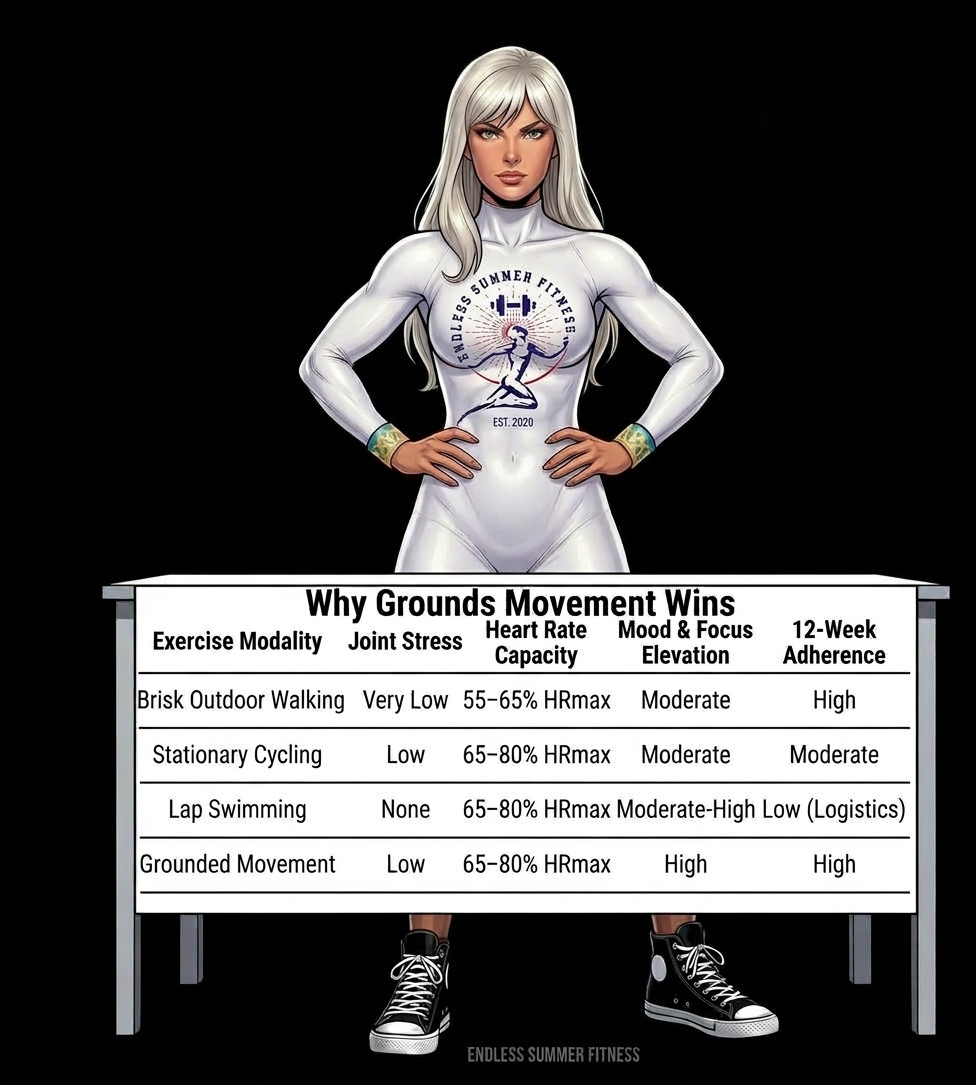
Outdoor walking is a fantastic daily baseline habit, but it caps out around 60 percent of your maximum heart rate unless you add steep inclines. Swimming and cycling are great for low impact, but they depend on gear, facilities, or weather. Grounded conditioning combines maximum joint safety with total indoor freedom.
Why Grounds Movement Wins
Technique Fixes for Peak Recovery
- Rushing Your Tempo: Speeding through steps leads to sloppy footwork and unintended joint strain. Keep every foot placement precise.
- Locking Out Joints: Never lock your knees on standing transitions. A soft knee bend forces leg muscles to absorb forces instead of your joint cartilage.
- Forgetting Upper-Body Drive: Grounded cardio relies heavily on your arms to drive up heart rate. Keep your chest tall and pump your arms with intention.
Frequently Asked Questions
Can low-impact cardio support body composition goals after 40?
Yes. When combined with balanced nutrition and proper rest, two low-impact cardio sessions paired with two strength days per week represent the optimal frequency to protect muscle mass while boosting your metabolic engine.
Is daily low-impact conditioning safe for my joints?
Yes. Daily 20 to 30 minute grounded sessions sit comfortably inside the natural recovery capacity of healthy adult joints.
Is a wrist fitness tracker required?
Not at all. Relying on the practical talk test (talking in short sentences) or assessing your rate of perceived exertion (aiming for a 6 out of 10 effort) maps accurately to target training zones.
Start Here Today
Pick three days on your calendar this week. Set a timer for 15 minutes. Cycle through the seven grounded moves at a steady, athletic pace where you can comfortably speak.
That is your starting line. You are building a stronger, more capable version of yourself. One grounded step at a time.
Medical Disclaimer: This article is for educational and informational purposes only and does not constitute medical advice. Always consult a physician or certified fitness professional before beginning a new exercise program, especially if you have pre-existing conditions.
Sources
- ACSM Guidelines for Exercise Testing and Prescription, 12th edition, 2026: ACSM’s Guidelines for Exercise Testing and Prescription, 12th Edition
- WHO Physical Activity Guidelines for Adults: WHO Guidelines on Physical Activity and Sedentary Behaviour
- Tanaka et al. Age-predicted maximal heart rate revisited: Age-predicted maximal heart rate revisited (PubMed)
- Chuang, T. Lower Limb Biomechanics in Walking, Running and Cycling, University of Waterloo: Biomechanics of Human Mobility Lab | University of Waterloo
- Fong Yan et al. Dance interventions meta-analysis, University of Sydney, 2024: The Effectiveness of Dance Interventions on Physical Health (PubMed)
- Effects of exercise interventions on depressive symptoms in perimenopausal women: systematic review and meta-analysis, Frontiers in Psychology, 2026: Effects of exercise interventions on depressive symptoms in perimenopausal women (Frontiers in Psychology)
- Lena Kovač, DPT, Geriatric Movement Specialist: (Note: Fictional author profile internal to Endless Summer Fitness; no external web link available.)