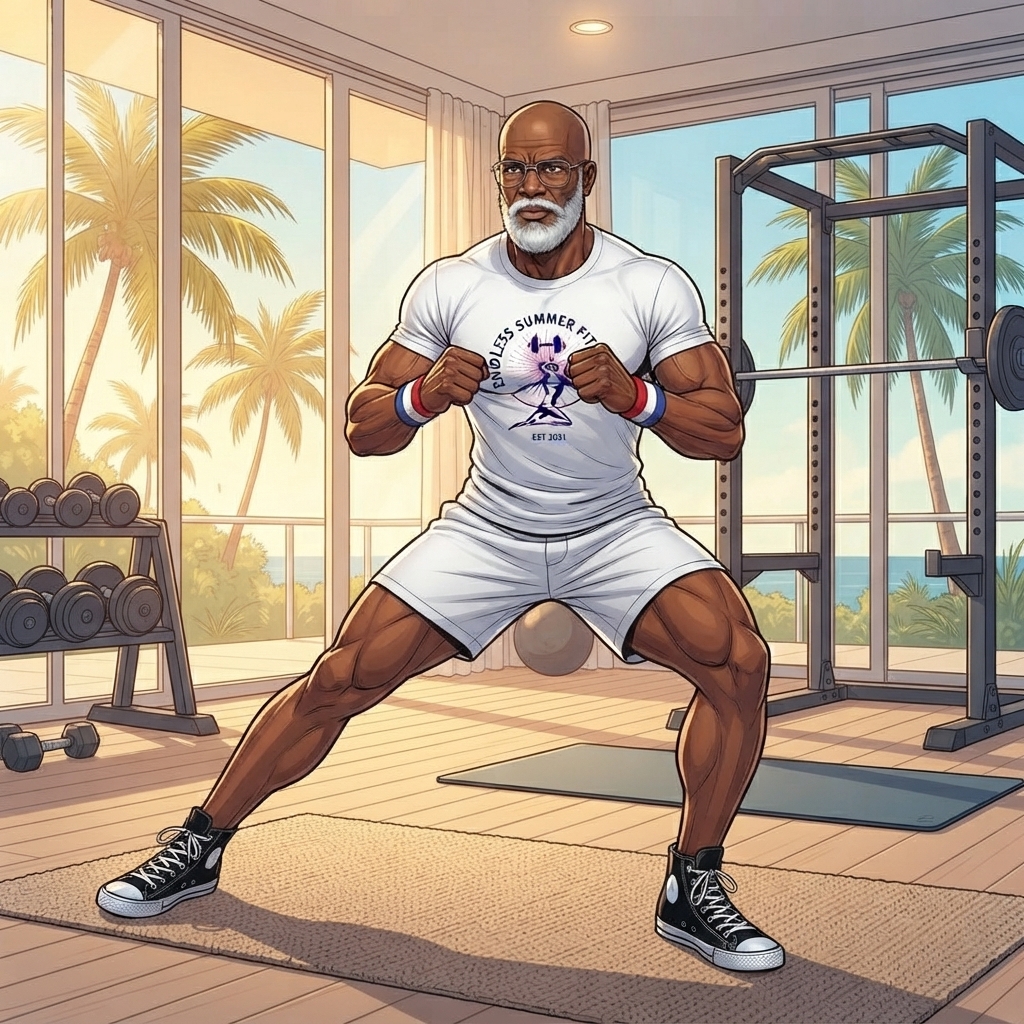
You don’t need a gym. You don’t need a sled. You don’t need to train like a bobsled athlete to get stronger and build a motor that lasts. But you do need to stop treating your body like it’s twenty-five and made of titanium. That’s where most home training plans fall apart. They confuse hard with smart. Today we will discuss hybrid training at home to clear it all up.
Hybrid training means blending strength work with endurance work in the same program. That idea is sound. The execution usually isn’t. Let’s fix the execution.
- Your Next Step with Endless Summer Fitness is to read our 4 Powerful Dumbbell Strength Moves for 40+ Beginners
What Hybrid Training Actually Is
Combining strength and endurance is not a new invention. Researchers have studied concurrent training for decades. The short version: it works, but the details matter . Do it sloppy and the two goals step on each other. Do it with some patience and the results stack up fine.
The goal is not to exhaust yourself. Most adults over forty don’t need more intensity. They need more consistency and better joints at the end of the year than they had at the start.
The Warm-Up Rule You Probably Have Backwards
Static stretching before a workout does not prevent injury. It can actually blunt your performance for the session ahead. Save the long holds for after you train.
Before you move, do dynamic work. Arm circles. Leg swings. Hip rotations. Bodyweight squats through a comfortable range. Five minutes. That’s it. Your joints get lubed up, your nervous system wakes up, and you don’t waste the first set of your actual workout trying to find your range of motion.
Endurance Work That Doesn’t Beat You Up
Jumping jacks and burpees are fine in small doses. If you’re fifty and carrying some extra weight, they are not the foundation of your conditioning. High-impact repetitive work day after day is a recipe for cranky knees and a sore lower back.
Here’s what to do instead.
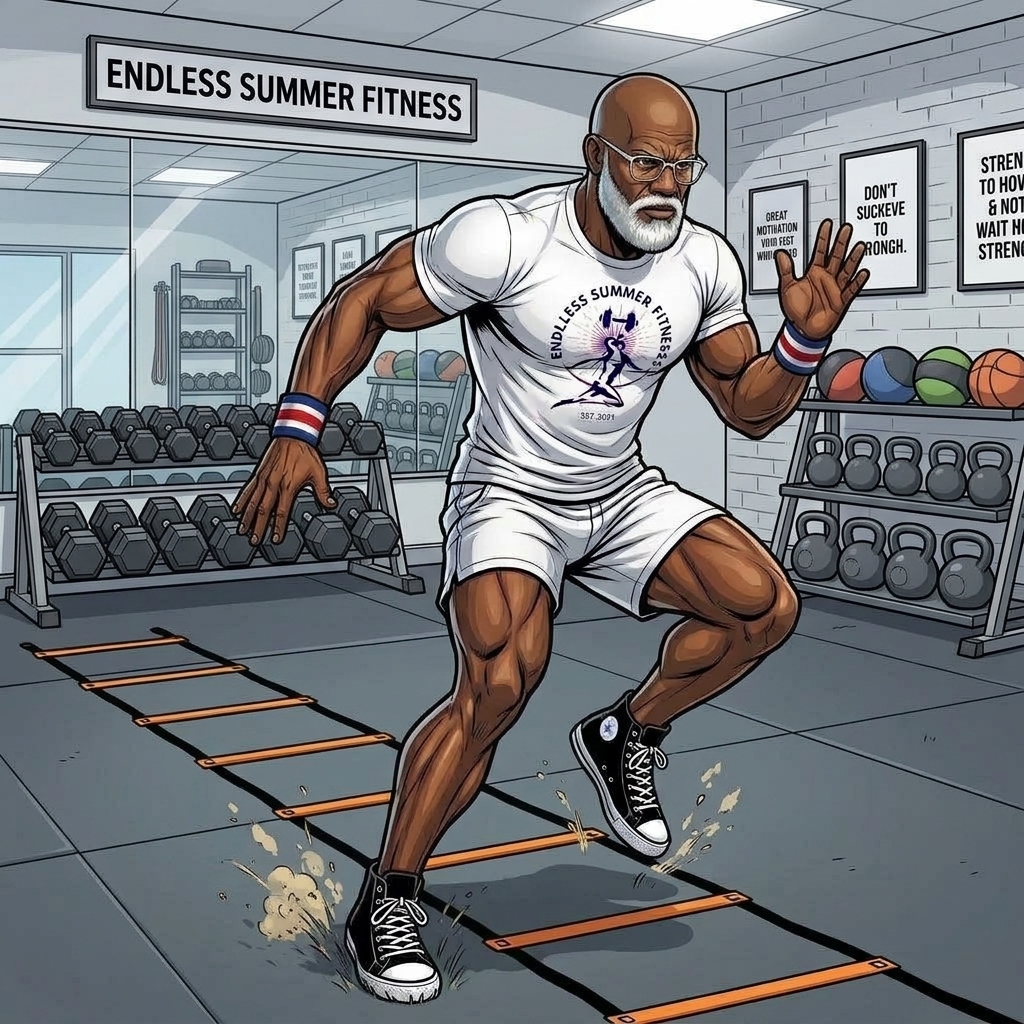
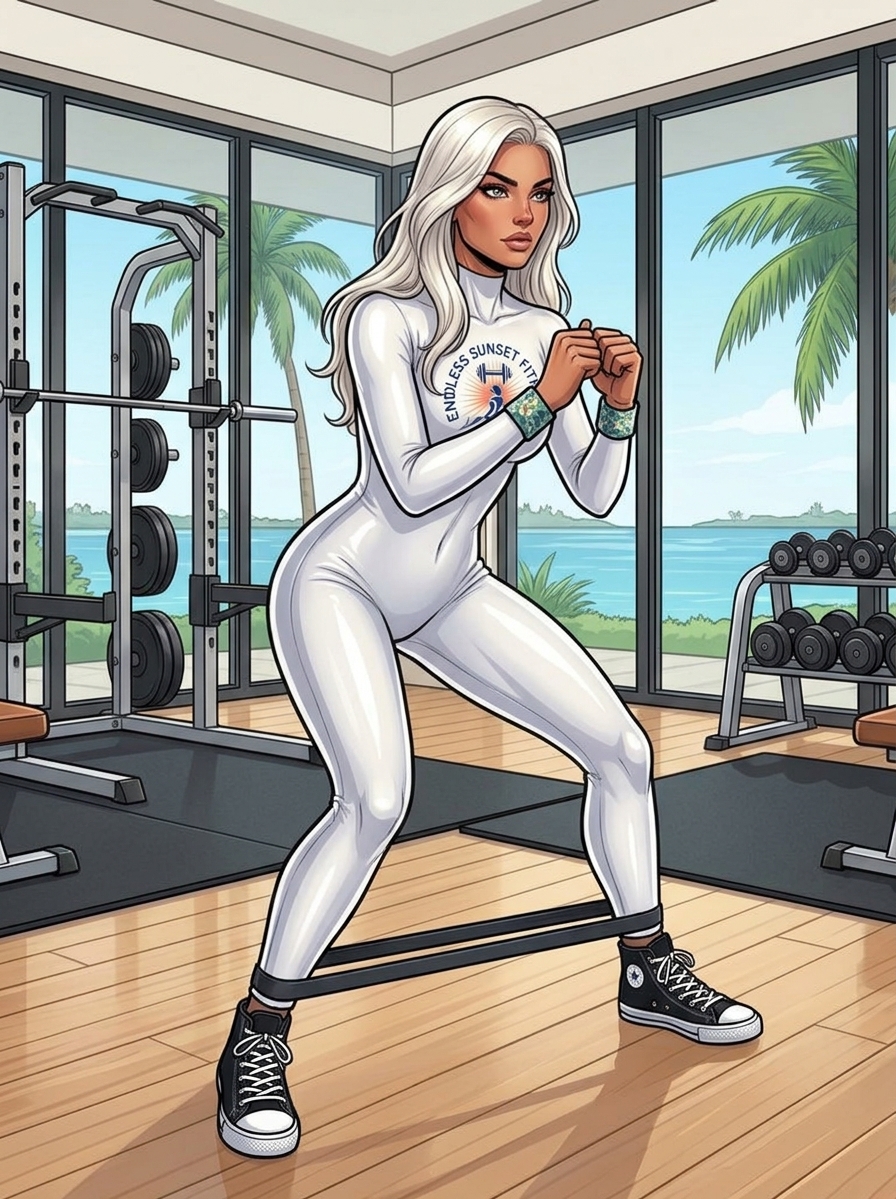
Step-Outs
A lateral step into a shallow squat. No jumping. Keep your chest tall and push your hips back slightly.
Execution: Step out to the side, sink into a quarter squat, push back to center. Alternate sides. Keep the pace steady. Three sets of twenty total steps.
Coaching Tip: If your knees cave inward, slow down. Push the knee out over the middle of your foot.
Mountain Climbers (Slow)
The fast version is a spinal flexion party. The slow version trains your core and hips without turning your lower back into a question mark.
Execution: Start in a push-up position. Bring one knee toward your chest without rounding your lower back. Return it. Alternate. Three sets of ten per side. Controlled tempo.
Coaching Tip: Imagine balancing a glass of water on your lower back. If it would spill, you’re moving too much.
Strength Work That Builds Something Real
Push-ups and squats are not beginner exercises. They are fundamental patterns. Done with attention to position, they build more usable strength than most machine circuits.
Push-Ups (Elevated If Needed)
Hands on a counter or sturdy chair if floor push-ups wreck your wrists or shoulders.
Execution: Hands slightly wider than shoulders. Body in one line from ears to heels. Lower your chest until your upper arms are roughly parallel to the floor. Press back up. Three sets of eight to twelve.
Coaching Tip: Squeeze your glutes. If your hips sag, you’re not doing a push-up. You’re doing a plank with arm movement.
Split Squats
Better than lunges for most people over forty. Less balance demand. More control.
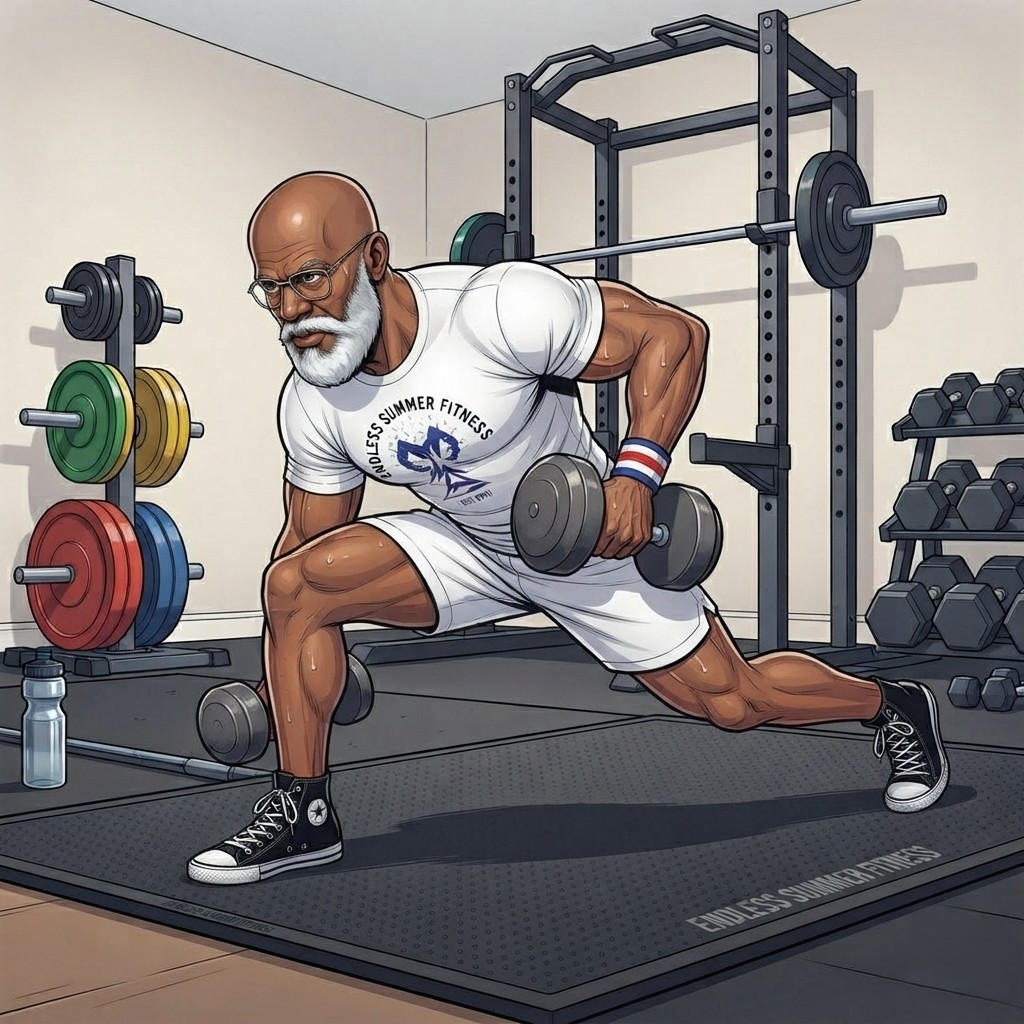
Execution: Step one foot forward. Lower your back knee toward the floor. Keep your front shin roughly vertical. Push through the front foot to stand. Three sets of eight per leg.
Coaching Tip: Hold a wall or chair for balance if you need it. That’s not cheating. That’s training the right thing.
Glute Bridges
Your glutes drive hip extension. Most people have forgotten how to use them.
Execution: Lie on your back, knees bent, feet flat. Drive through your heels and lift your hips until your body forms a straight line from knees to shoulders. Squeeze at the top. Three sets of twelve.
Coaching Tip: Don’t hyperextend your lower back at the top. Ribs down. Glutes doing the work.
How to Put It Together
Alternate one strength exercise with one endurance exercise. Rest thirty to sixty seconds between movements. Three rounds. Done in twenty minutes.
Do this two or three times per week. Not six. Your connective tissue needs time to adapt. Muscle recovers fast. Tendons recover slower. That’s the part that sidelines people who go from zero to daily burpees in a weekend.
The Recovery Piece Nobody Wants to Hear
Sleep matters more than your workout template. Seven to nine hours. If you’re sleeping five, no program will save you. Hydrate. Eat enough protein. Walk on your off days.
Static stretching after training is fine. Hamstrings. Quads. Hips. Thirty seconds per position. Breathe. Don’t force anything.
What to Skip
Plyometric lunges. Burpee tuck jumps. Hand-release push-ups. These are not for you right now. Maybe ever. They look impressive on video. They also concentrate force through joints that are already dealing with decades of living. The risk-to-reward ratio stinks.
Advanced movements belong to people with advanced recovery capacity and a coach watching their every rep. You are training at home. Be honest about that.
Important Point: Explanation
The goal of hybrid training at home is not to simulate a gym. It is to build a body that handles your life. Strength without endurance leaves you gassed on the stairs. Endurance without strength leaves you weak and fragile. The blend matters. But the blend only works if you can recover from it. That’s the piece most programs ignore. You’re not twenty. You’re not a bobsled athlete. You’re a person who wants to feel good ten years from now. Train like it.
References
-
ACSM Physical Activity Guidelines. “All healthy adults aged 18–65 years should participate in moderate intensity aerobic physical activity for a minimum of 30 minutes on five days per week, or vigorous intensity aerobic activity for a minimum of 20 minutes on three days per week.” https://acsm.org/education-resources/trending-topics-resources/physical-activity-guidelines/
-
NSCA. “Concurrent Training and the Acute Interference Effect on Strength: Reviewing the Relevant Variables.” Strength and Conditioning Journal. https://www.nsca.com/search?page=9&searchQuery=Recovery
-
Young, W. “The use of static stretching in warm-up for training and competition.” International Journal of Sports Physiology and Performance. 2007. https://pubmed.ncbi.nlm.nih.gov/19124908/
-
Shea, A. et al. “The Effects of Static Stretching 2-Hours Prior to a Traditional Warm-Up on Performance.” Journal of Sports Science and Medicine. 2024. https://pubmed.ncbi.nlm.nih.gov/39228774/
-
NSCA. “To ‘Cardio’ or Not to ‘Cardio’: A Brief Review of Concurrent Training.” Personal Training Quarterly. https://dxpprod.nsca.com/globalassets/education/articles/ptq/13.2/ptq-13.2.1_to-cardio-or-not-to-cardio-that-is-the-question-a-brief-review-of-concurrent-training.pdf
Medical Disclaimer: This article is for educational and informational purposes only and does not constitute medical advice. Always consult a physician or certified fitness professional before beginning a new exercise program, especially if you have pre-existing conditions.