The shoulder complex consists of three distinct heads of the deltoid muscle: the anterior (front), lateral (side), and posterior (rear) deltoids. Because the deltoids respond exceptionally well to controlled time-under-tension and mechanical variety, pairing free weights with constant band tension creates an effective, low-impact stimulus. The Shoulder Superset Workout: Dumbbell & Resistance Band Routines functions as an optimal biomechanical programming model to maximize muscular hypertrophy, joint stability, and time efficiency.
By utilizing supersets, performing two complementary exercises back-to-back with minimal rest, you can maximize local muscular endurance and volume while keeping workout duration efficient.
Guidelines for Shoulder Superset Training
- Prioritize Control Over Heavy Load: The shoulder joint is inherently mobile and susceptible to overuse. Use light-to-moderate resistance that allows strict, controlled tempo without body momentum.
- Smooth Transitions: Perform Exercise A, pause for 5–10 seconds to set up, and immediately perform Exercise B.
- Rest Between Sets: Rest 60 to 90 seconds after completing both exercises in a superset to allow local muscular recovery.

Complete 4-Superset Deltoid Routine
Superset 1: Anterior Deltoid & Overhead Pressing Focus
Pairs a vertical press for dynamic strength with constant band tension for isolation.
- Exercise 1A: Seated Neutral-Grip Dumbbell Shoulder Press
- Volume: 3–4 sets of 8–12 reps
- Execution: Sit upright on a bench. Hold dumbbells at shoulder height with palms facing each other (neutral grip to reduce shoulder impingement stress). Press overhead smoothly without locking out the elbows abruptly. Lower under control.
- Exercise 1B: Resistance Band Front Raise
- Volume: 3–4 sets of 12–15 reps
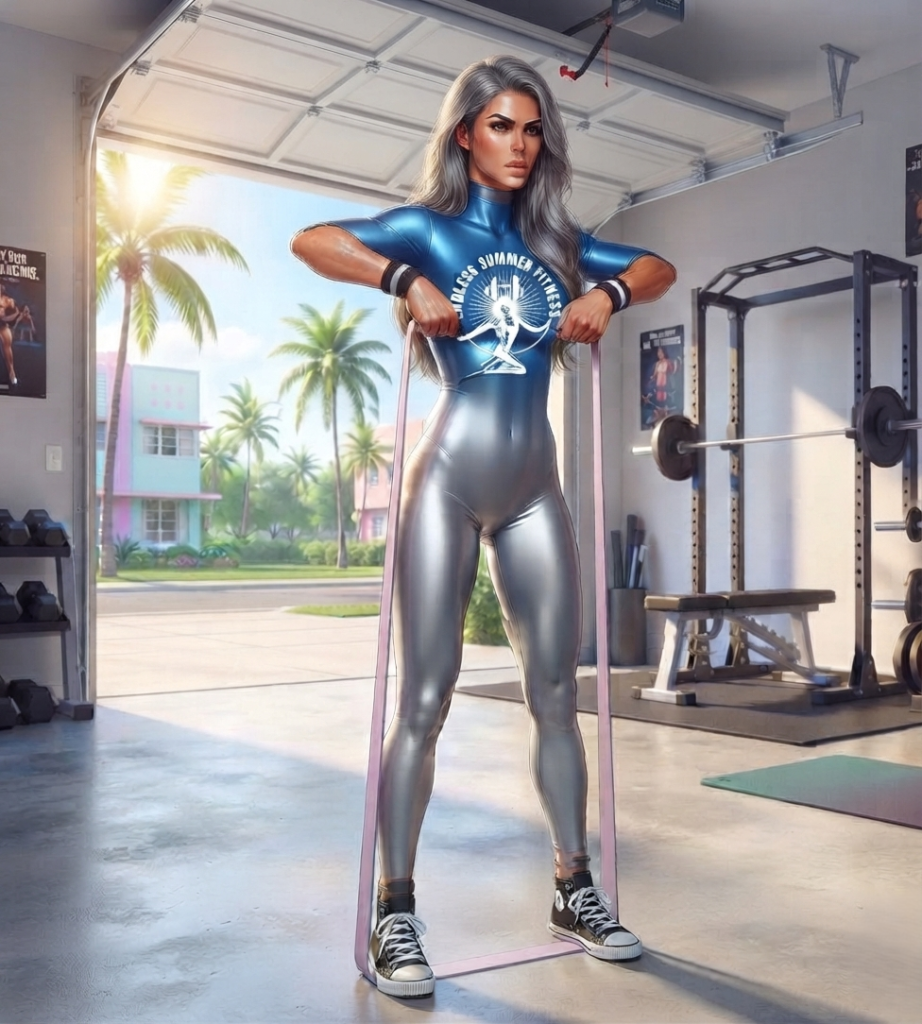
- Execution: Stand on the center of the band. Hold the ends with knuckles facing forward. Raise arms straight up to eye level with soft elbows, pause briefly at the top, and lower slowly.
Superset 2: Lateral Deltoid Width & Scapular Elevation
Combines free-weight lateral abduction with accommodating band tension.
- Exercise 2A: Dumbbell Lateral Raise
- Volume: 3–4 sets of 12–15 reps
- Execution: Stand with feet hip-width apart, holding dumbbells at your sides with a slight forward torso lean. Lead with the elbows to raise the weights out to the sides until parallel to the floor. Lower under control.
- Exercise 2B: Resistance Band Overhead Face Pull / High Pull
- Volume: 3–4 sets of 12–15 reps
- Execution: Anchor a band at chest height. Pull the band directly toward your forehead, separating your hands and driving your elbows back to engage the upper back and lateral deltoids safely without impinging the shoulder joint.
Superset 3: Posterior Deltoid & Upper Back Health
Targets the oft-neglected rear deltoids to support posture and shoulder joint balance.
- Exercise 3A: Bent-Over Dumbbell Rear Delt Fly
- Volume: 3–4 sets of 12–15 reps
- Execution: Hinge forward at the hips with a flat back and soft knees. Let the dumbbells hang down, palms facing each other. Raise the arms out to the sides by squeezing the back of the shoulders, keeping a soft bend in the elbows.
- Exercise 3B: Resistance Band Band Pull-Apart
- Volume: 3–4 sets of 15–20 reps
- Execution: Hold a light band horizontally in front of your chest at shoulder height. Keeping arms straight, pull the band apart until it touches your upper chest, squeezing the shoulder blades together at the end range.
Superset 4: Multi-Planar Finish & Joint Stability
Integrates multi-planar rotation with constant band tension for total shoulder endurance.
- Exercise 4A: Seated Arnold Press
- Volume: 3–4 sets of 8–10 reps
- Execution: Sit on a supported bench holding dumbbells in front of your chest with palms facing you. As you press overhead, rotate your wrists smoothly so your palms face forward at the top. Reverse the rotation as you lower back down.
- Exercise 4B: Resistance Band External Rotation / W-Press
- Volume: 3–4 sets of 12–15 reps
- Execution: Hold a light band with elbows bent at 90 degrees and tucked close to your ribs. Externally rotate your forearms outward against the band tension, strengthening the rotator cuff and stabilizing the shoulder capsule.
Programming & Recovery Recommendations
- Frequency: Perform this shoulder routine 1 to 2 times per week with at least 72 hours of recovery between sessions, especially if you engage in heavy chest or back pressing movements on other days.
- Pain-Free Range: Never force a movement into joint pain. If pressing overhead causes discomfort, reduce the range of motion or adjust the angle to a high incline press.
References & Scientific Sources
- National Strength and Conditioning Association (NSCA)
Guideline: Resistance Training Technique Manual (3rd Ed.) — Upper Body Movement Mechanics and Deltoid Isolation.
Key Takeaway: Demonstrates that maintaining controlled movement speeds and avoiding extreme internal rotation during shoulder raises reduces the risk of subacromial bursitis and impingement.
Link: NSCA Education & Performance Resources - American College of Sports Medicine (ACSM)
Guideline: Progression Models in Resistance Training for Healthy Adults.
Key Takeaway: Validates the use of high-volume, low-rest superset protocols for muscular endurance and hypertrophic stimulus in smaller, stabilizing muscle groups like the deltoids.
Link: ACSM Official Guidelines - Journal of Human Kinetics
Study: Electromyographic Analysis of Dynamic Shoulder Exercises using Free Weights and Elastic Resistance
Key Takeaway: Shows that elastic resistance bands provide consistent mechanical tension throughout the full range of motion, making them an ideal complement to dumbbell free weights for joint-friendly deltoid activation.
Link: PubMed – Deltoid Activation & Elastic Resistance Research
Medical Disclaimer: This article is for educational and informational purposes only and does not constitute medical advice. Always consult a physician or certified fitness professional before beginning a new exercise program, especially if you have pre-existing shoulder conditions.