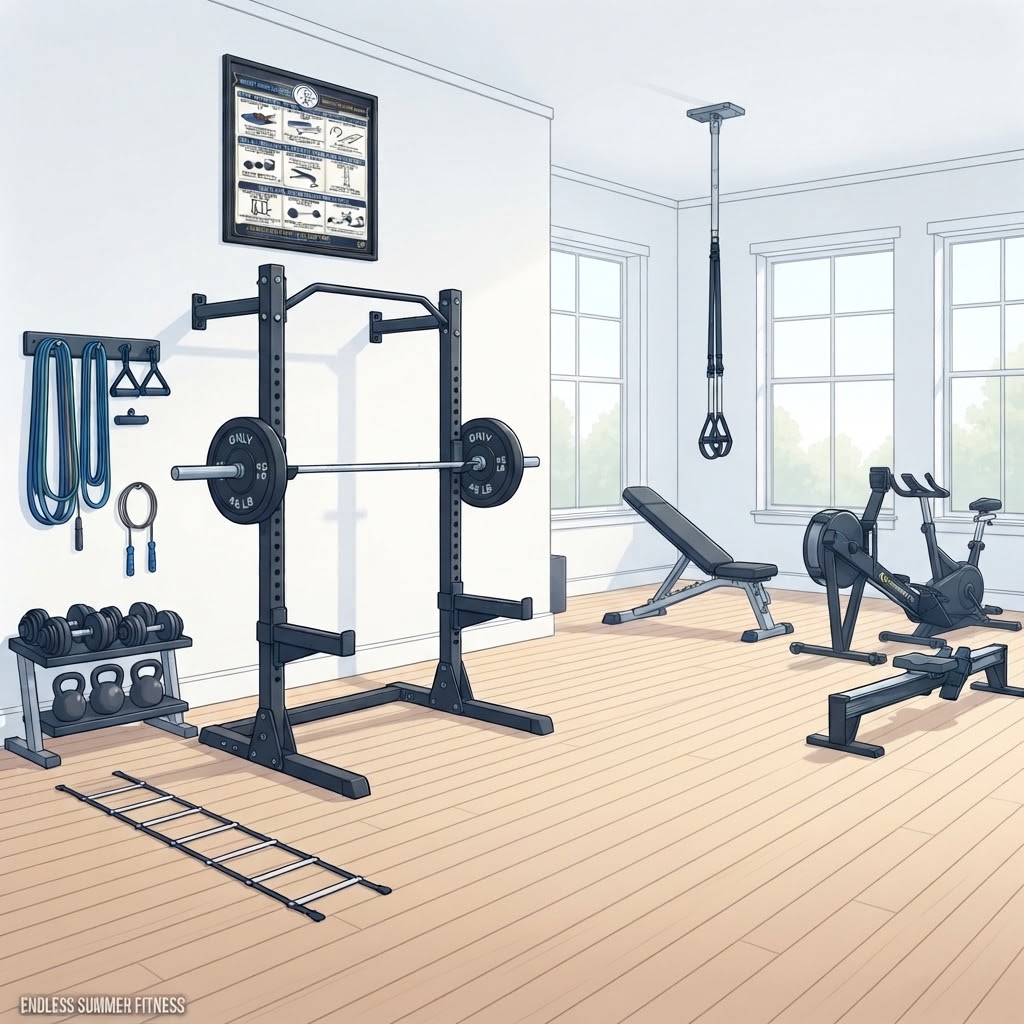
Building a dedicated home exercise space eliminates commute friction, removes gym crowd barriers, and creates an environment tailored entirely to your training needs. However, setting up an effective home gym does not require thousands of dollars or a full commercial facility. We will discuss How to Start a Home Gym within your budget using basic equipment and limited space.
By focusing on spatial safety, versatile free weights, and joint-friendly training equipment, you can construct a high-utility workout space on any budget.
1. Define Spatial and Environmental Requirements
Before purchasing equipment, evaluate your prospective training area—whether it is a garage, spare room, basement, or living room corner.
- Flooring and Impact Mitigation: Hardwood and concrete surfaces require protective high-density rubber matting (at least 3/8-inch thickness) to absorb shock, protect floor integrity, and reduce joint impact during step work or floor exercises.
- Vertical and Horizontal Clearance: Ensure at least 8 feet of vertical ceiling clearance for overhead presses and dynamic movements. Verify a clear 6×6 foot horizontal floor footprint free of furniture or obstruction.
- Ventilation and Airflow: Physical exertion increases ambient humidity and room temperature. Ensure adequate airflow using fans or open ventilation to support efficient thermoregulation during training.
2. Budget Tiers: From Essentials to Advanced Setup
Prioritize versatile multi-planar equipment over single-station fixed machines.
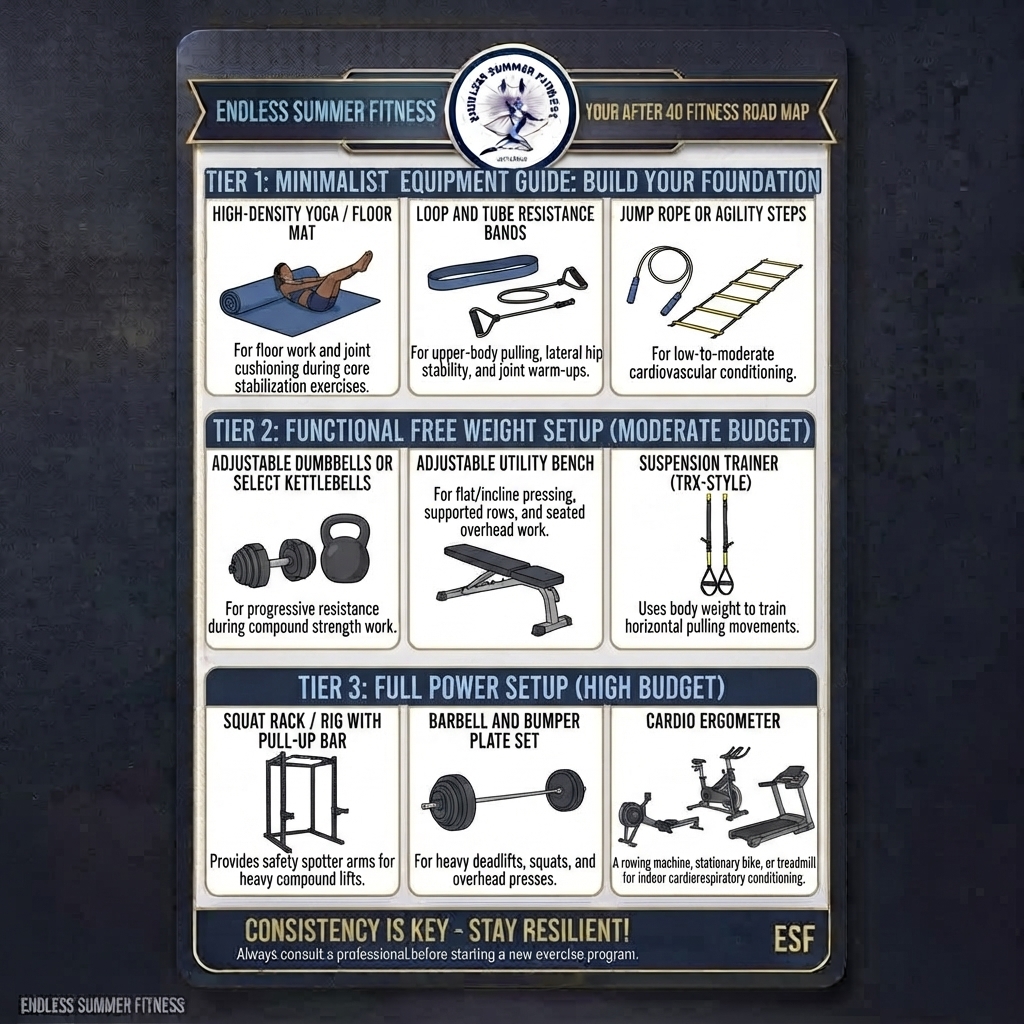
Tier 1: Minimalist Setup (Low Budget)
Focuses on bodyweight resistance, mobility, and variable tension.
- High-Density Yoga/Floor Mat: Essential for joint cushioning during floor work and core stabilization exercises.
- Loop and Tube Resistance Bands: Provides variable kinetic resistance for upper body pulling, lateral hip stability, and joint warm-ups.
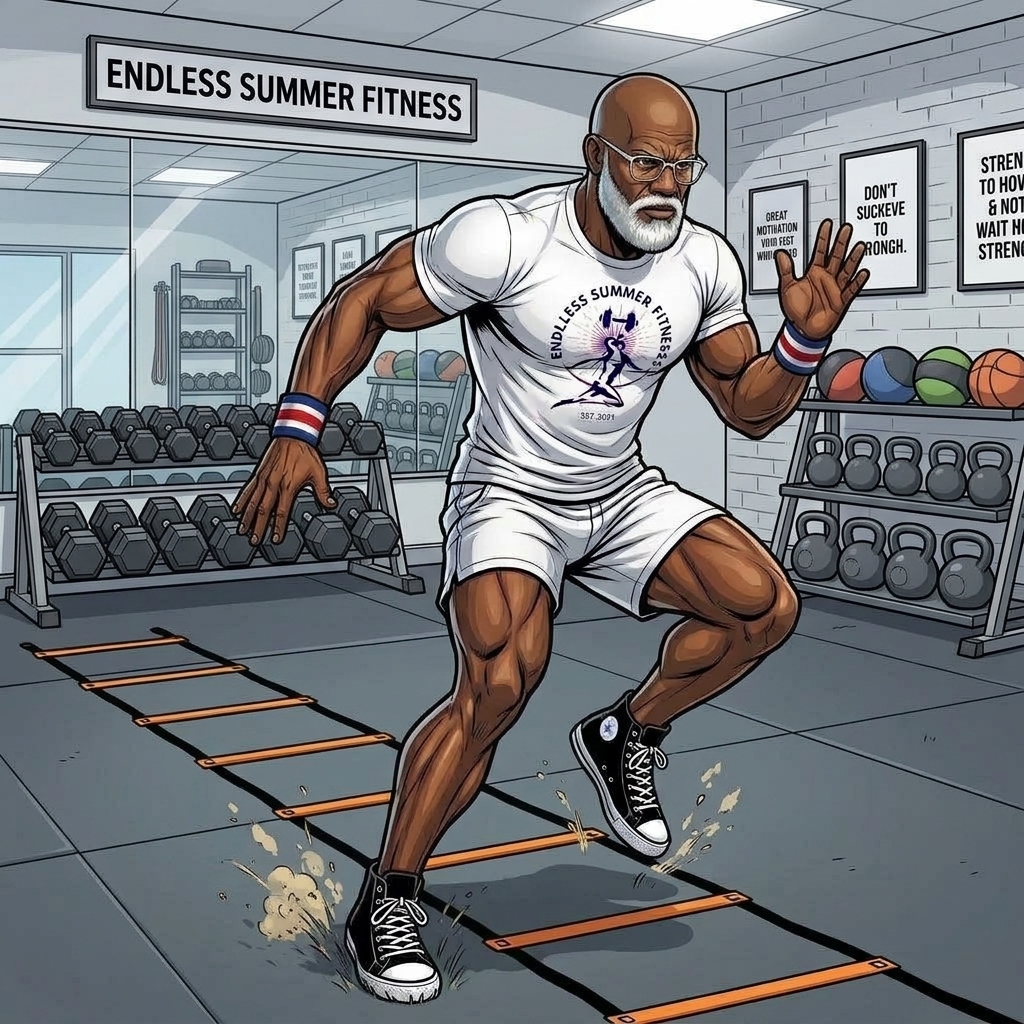
- Jump Rope or Agility Steps: Low-cost tools for low-to-moderate cardiovascular conditioning.
Tier 2: Functional Free Weight Setup (Moderate Budget)
Adds external loading for compound movement patterns (squat, hinge, press, row).
- Adjustable Dumbbells or Select Kettlebells: Replaces multiple fixed racks while allowing progressive resistance for compound strength work.
- Adjustable Utility Bench: Enables flat and incline dumbbell pressing, supported chest rows, and seated overhead work.
- Suspension Trainer (TRX-style): Uses body weight to train horizontal pulling movements, supporting shoulder girdle health.
Tier 3: Full Power Setup (High Budget)
- Squat Rack / Rig with Pull-Up Bar: Provides safety spotter arms for heavy compound barbell lifts.
- Barbell and Bumper Plate Set: Allows heavy deadlifts, squats, and overhead presses with quiet, impact-absorbing plates.
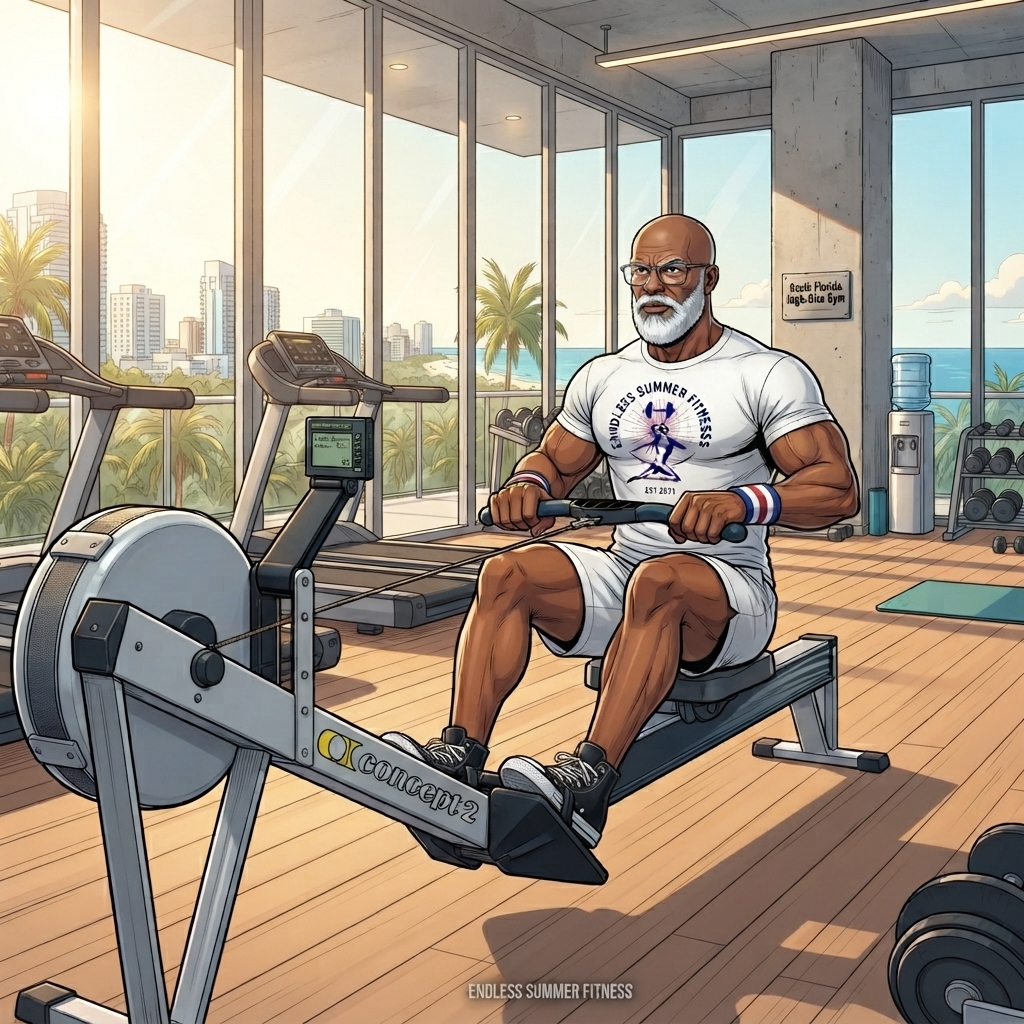
- Cardio Ergometer: A rowing machine, stationary bike, or treadmill for indoor cardiorespiratory conditioning.
3. Home Gym Safety and Organization
- Equipment Storage: Keep floor spaces clear using wall hooks or vertical racks for bands, mats, and dumbbells to prevent tripping hazards.
- Mirror Placement: Position a vertical mirror along one wall to self-monitor biomechanical alignment, lumbar spine position, and knee tracking during unassisted movements.
- Lighting: Bright, direct overhead lighting improves spatial awareness and prevents accidents during dynamic exercise execution.
4. Structured Beginner Home Gym Workout Plan
Rotate strength training days with dedicated recovery or low-impact steady-state (LISS) movement.
Workout A: Full-Body Resistance (Monday & Thursday)
Perform 3 sets of 10–12 repetitions per exercise. Rest 60 seconds between sets.
- Lower Body Push: Bodyweight or Goblet Squats
- Upper Body Push: Incline Push-Ups or Dumbbell Floor Presses
- Lower Body Hinge: Glute Bridges or Dumbbell Romanian Deadlifts
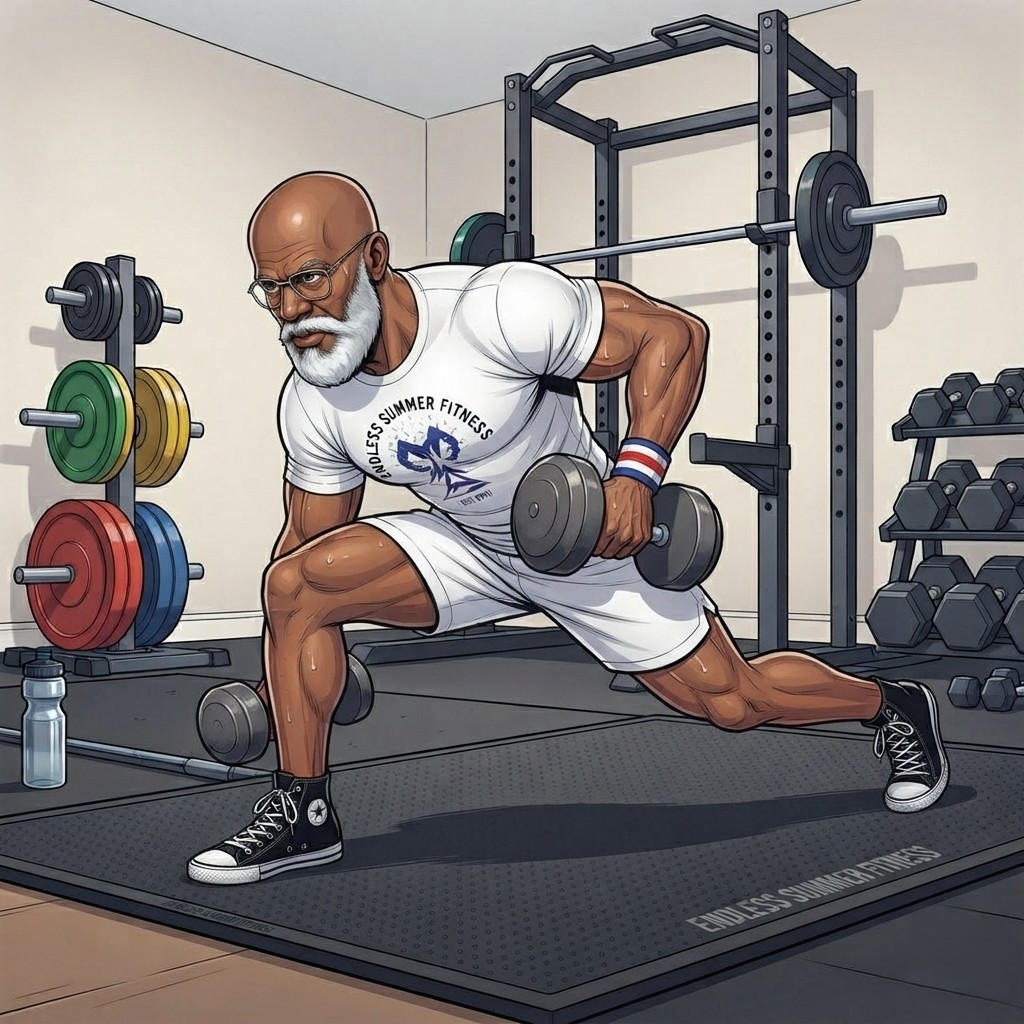
- Upper Body Pull: Resistance Band Rows or Dumbbell Bent-Over Rows
- Core Stability: Forearm Plank Holds (30–45 seconds)
Workout B: Cardiovascular Conditioning & Mobility (Tuesday & Friday)
- Brisk Walking or Indoor Cycling: 30–40 minutes at a steady, conversational pace.
- Post-Session Static Stretching: 10 minutes targeting hamstrings, hip flexors, chest, and calves.
References & Scientific Sources
-
American College of Sports Medicine (ACSM)
Guideline: Physical Activity Guidelines for Americans — Equipment and Home Exercise Prescription.
Key Takeaway: Validates that free weight and bodyweight resistance training provide equivalent metabolic and strength benefits to commercial gym machines when progressive resistance and proper biomechanics are applied.
Link: ACSM Physical Activity Guidelines -
National Strength and Conditioning Association (NSCA)
Guideline: Facility Design, Layout, and Safety Periodization Standards.
Key Takeaway: Establishes minimum spatial recommendations (6×6 ft clearing) and flooring shock-absorption requirements to prevent acute musculoskeletal injuries during home exercise.
Link: NSCA Education & Performance Resources -
Journal of Sports Science & Medicine
Study: Comparison of Free-Weight vs. Machine Training on Muscular Capacity and Joint Stability
Key Takeaway: Demonstrates that multi-planar free weight movements (dumbbells, kettlebells) engage higher levels of stabilizer musculature and core activation than fixed selectorized gym equipment.
Link: PubMed – Free Weight vs Machine Research
Medical Disclaimer: This article is for educational and informational purposes only and does not constitute medical advice. Always consult a physician or certified fitness professional before beginning a new exercise program or purchasing heavy home equipment.