

Why Core Strength for Everyday Movement Matters
Most people think of “abs” as a six-pack visible at the beach. However, true core strength is about much more than looking good in a swimsuit. It is the engine room of your entire body. Whether you are lifting a heavy bag of groceries or running a marathon, your core is working. This article is a guide for improving Core Strength for Everyday Movement.
In the world of Hybrid Fitness, we view the core as the bridge between strength and endurance. This “bridge” of your body stabilizes your spine and transfers power between your upper and lower limbs. Without a functional core, your performance in the other areas will eventually stall or lead to injury.
This guide will break down the mechanics of the midsection. We will explore how to build a core that supports functional movement and long-term health. By the end, you will have a clear roadmap to level up your physical capabilities.
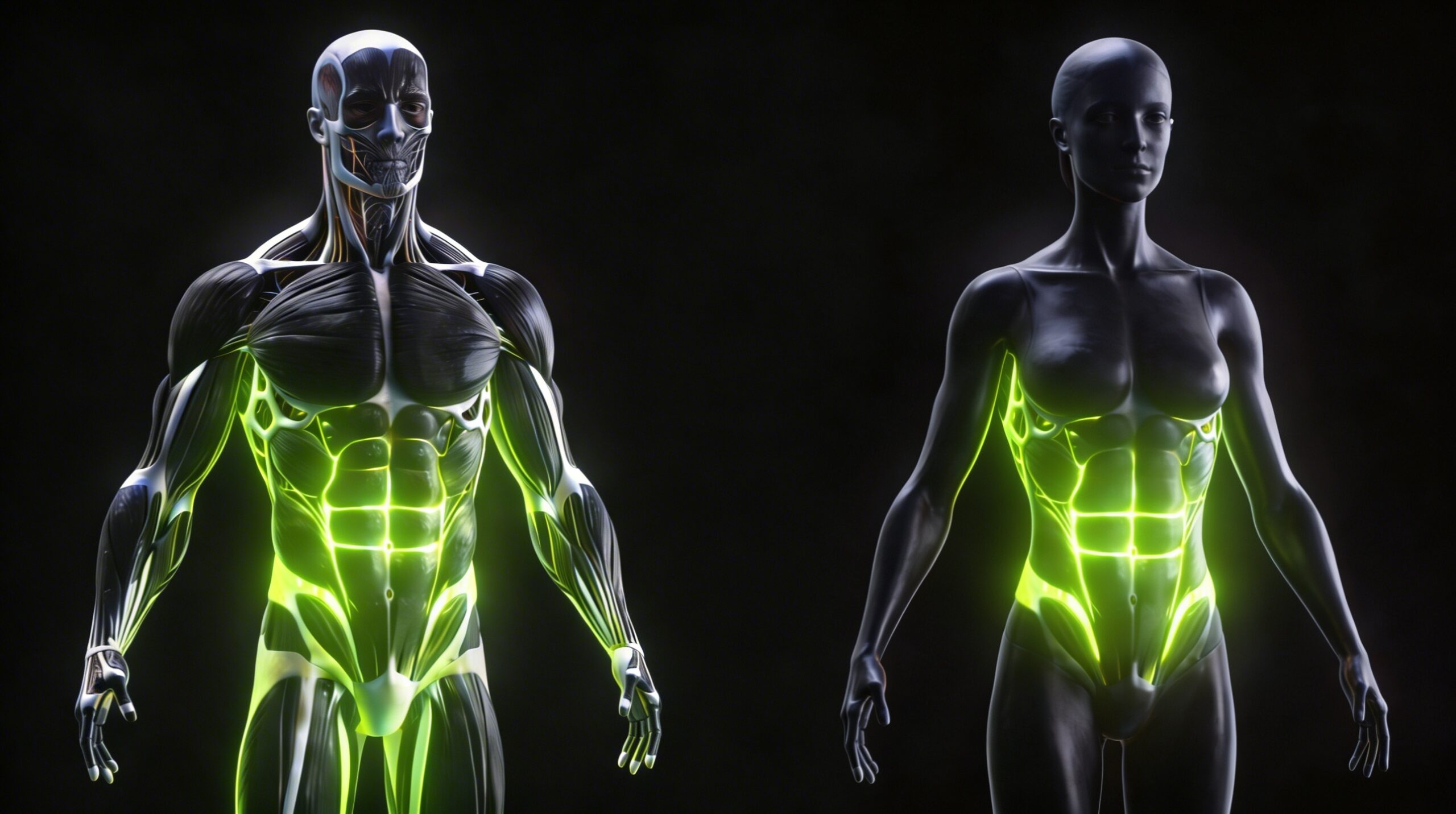
Defining the Hybrid Fitness Core
Hybrid fitness is the practice of simultaneously balancing diverse physical attributes. It means you don’t just want to be strong; you also want to be able to move for a long time without getting tired. Therefore, your core training must reflect this duality.
A hybrid core is both “stiff” and “supple.” It must be stiff enough to protect your back during a heavy deadlift. Simultaneously, it must be supple enough to allow for deep breathing and rotation during a long-distance trail run. This balance is the secret to a versatile body.
The core is the central foundation of human movement, encompassing the hips, torso, and shoulders rather than just the abdominal muscles. Training the pillar involves managing pressure through breathing and bracing while performing functional movements that involve carrying, reaching, and resisting force.
The Anatomy of Your Inner Support System
To build core strength for everyday movement, you need to know that you are actually training. It is not just the rectus abdominis (the six-pack muscle). Deep underneath lies the transverse abdominis, which acts like a natural weight belt.
Additionally, your internal and external obliques handle rotation and side-bending. We cannot forget the multifidus and erector spinae in the back, which keep you upright. Even your pelvic floor and diaphragm are considered part of the functional core unit.
When these muscles work together, they create “intra-abdominal pressure.” This pressure helps keep your spine safe when you pick up a child or a heavy box. According to the National Academy of Sports Medicine (NASM), stabilizing these deep muscles is the first step in any effective training program.
Stability vs. Mobility in Everyday Life
There is often a misunderstanding about whether the core should move or stay still. The truth is, it must do both, depending on the task. Stability is the ability to resist unwanted motion, such as not falling over when a dog pulls on a leash.
Mobility, on the other hand, is the ability to move through a full range of motion. Think about reaching into the back seat of your car to grab a bag. That requires a controlled rotation of the core. Hybrid Fitness athletes train for both “anti-rotation” and “controlled rotation.”
Effective core strength for everyday movement means you can switch between these states instantly. If you only do sit-ups, you are missing the stability component. If you only do planks, you might lack the mobility needed for dynamic sports or chores.
Transitioning to Functional Training Patterns
How do we move from gym exercises to real-world applications? We look at “Foundational Movement Patterns.” These include squatting, lunging, pushing, pulling, and most importantly, carrying.
Carrying a heavy object in one hand (a suitcase carry) is one of the best core exercises ever invented. It forces your side body to work hard so you don’t tilt over.
By integrating these patterns, you stop “working out” and start “training for life.” You will notice that your back feels better after a long day of yard work. You might also find that you can walk further with less fatigue because your posture is more efficient.
The Role of Breathing in Core Power
Did you know that how you breathe changes how your core functions? Your diaphragm is a primary core muscle. When you take shallow chest breaths, you lose out on the stability that deep belly breathing provides.
In the Endless Summer Fitness philosophy, we emphasize “360-degree breathing.” This means expanding your ribs to the front, sides, and back. This expansion creates a solid foundation for your spine to rest upon.
During high-intensity endurance work, your breathing needs to be rhythmic and controlled. During heavy lifting, you might use a “Valsalva maneuver” to lock your core in place. Learning to toggle between these breathing styles is a hallmark of an advanced hybrid athlete.
Common Mistakes in Core Training
Many people spend hours doing crunches, thinking they are building a strong core. Unfortunately, excessive crunching can put unnecessary stress on the spinal discs. It also fails to train the core for its primary job: resisting movement.
Another mistake is neglecting the posterior chain (the muscles on your back side). A strong core requires strong glutes and a strong lower back. If the front of your body is much stronger than the back, you will likely develop poor posture.
Lastly, people often hold their breath during core exercises, which can cause “bearing down.” This can weaken the pelvic floor over time. Instead, focus on maintaining a “braced” sensation while still allowing air to flow in and out.
How to Measure Your Progress
You don’t need a fancy lab to see if your core strength for everyday movement is improving. Start by noticing your posture while sitting at your desk. Are you slouching, or can you sit tall with ease?
Next, look at your balance. Can you stand on one leg while putting on your socks? This requires significant core stabilization. If you find these daily tasks becoming easier, your training is working.
In the gym, progress is measured by the “Progression Matrix.” We look at how long you can hold a position or how much weight you can carry without losing form. Consistency is more important than intensity when it comes to long-term spinal health.
The Progression Matrix: Core-Centric Hybrid Workouts
This expanded matrix bridges the gap between raw strength and functional endurance. To achieve a Hybrid Fitness balance, we utilize specific rest intervals; shorter rests for endurance (30-45 seconds) and longer rests for strength/power (60-120 seconds).
-
Beginner Level: The Foundation Phase
Definition: Individuals new to structured exercise or returning after a long break. Focus is on “kinesthetic awareness” (learning where your body is in space).
Characteristics: Needs high supervision, focuses on form over weight, and uses stable environments.
Dead Bugs (Endurance focus)
- Visual Description: Lie on your back with arms reaching toward the ceiling and knees bent at 90 degrees (like a bug on its back). Slowly lower your right arm and left leg toward the floor simultaneously, stopping just before your lower back lifts.
- Muscles: Transverse Abdominis, Hip Flexors.
- Sets/Reps/Rest: 3 sets of 15 reps per side. Rest: 30 Seconds.
Bird-Dog (Stability focus)
- Visual Description: Start on all fours with a flat back. Extend your opposite arm and leg straight out, forming a straight line from fingertip to heel. Imagine a glass of water resting on your lower back that you cannot spill.
- Muscles: Erector Spinae, Glutes.
- Sets/Reps/Rest: 3 sets of 10 reps per side. Rest: 45 seconds.
Glute Bridges (Endurance focus)
- Visual Description: Lie on your back with your feet flat on the floor, hip-width apart. Squeeze your glutes to lift your hips toward the ceiling until your body forms a straight line from shoulders to knees.
- Muscles: Gluteus Maximus, Hamstrings.
- Sets/Reps/Rest: 3 sets of 15 reps. Rest: 30 seconds.
-
Intermediate Level: The Integration Phase
Definition: At least 6 months of consistent training. Able to maintain form under moderate loads.
Characteristics: Understands bracing, can perform multi-joint movements, beginning to use “offset” loads.
Dumbbell Suitcase Carry (Functional Strength)
- Visual Description: Hold a heavy dumbbell in only one hand as if carrying a suitcase. Walk forward with perfect posture, resisting the weight’s attempt to pull your torso to the side. Keep your shoulders level and your gaze forward.
- Muscles: Obliques, Quadratus Lumborum.
- Sets/Distance/Rest: 3 sets of 40 steps per side. Rest: 60 seconds.
Kettlebell Halos (Mobility & Stability)
- Visual Description: Hold a kettlebell by the “horns” (the sides of the handle) at chest height. Circle the weight closely around your head, like you are drawing a halo. Keep your ribs tucked down and your hips dead still.
- Muscles: Shoulders, Upper Core, Deep Stabilizers.
- Sets/Reps/Rest: 3 sets of 12 reps (6 each direction). Rest: 45 seconds.
Standard Plank with Leg Lift (Strength focus)
- Visual Description: Assume a standard forearm plank position. Without letting your hips shift or tilt, lift one foot two inches off the ground, hold for a second, and switch.
- Muscles: Entire anterior chain.
- Sets/Reps/Rest: 3 sets of 12 reps per leg. Rest: 60 seconds.
-
Advanced Level: The Power Phase
Definition: 2+ years of training. High level of body control and ability to hands high-intensity intervals.
Characteristics: Can perform plyometrics safely, utilizes “anti-rotation” techniques under heavy load.
Pallof Press with Band (Anti-Rotation Strength)
- Visual Description: Stand sideways to a resistance band anchored at chest height. Hold the handle with both hands at your chest. Press the band straight out in front of you. The band will try to pull you toward the anchor; your core must fight to stay centered.
- Muscles: Obliques, Transverse Abdominis.
- Sets/Reps/Rest: 4 sets of 10 slow reps per side. Rest: 60 seconds.
Dumbbell Renegade Rows (Stability Strength)
- Visual Description: Get into a push-up position with each hand gripping a hex-shaped dumbbell. Perform a row by pulling one weight to your hip while balancing on the other. The goal is to keep your hips perfectly parallel to the floor—no swelling allowed.
- Muscles: Latissimus dorsi, core.
- Sets/Reps/Rest: 4 sets of 8 reps per side. Rest: 75 seconds.
Medicine Ball Slams (Plyometric Power)
- Visual Description: Reach a medicine ball high overhead, standing on your tiptoes. Use your entire core to “crunch” downward, slamming the ball into the floor as hard as possible. Catch the bounce and repeat instantly.
- Muscles: Rectus Abdominis, Lats.
- Sets/Reps/Rest: 4 sets of 15 reps. Rest: 45 seconds.
-
Elite Level: The Mastery Phase
Definition: Competitive athletes or high-performance hobbyists with master-level movement mechanics.
Characteristics: Exceptional power-to-weight ratio, able to maintain core tension during complex aerobic tasks.
Hanging Leg Raises (Strict Strength)
- Visual Description: Hang from a pull-up bar. Without using any momentum or swinging, lift your legs until your toes touch the bar. Lower them slowly, revisiting the urge to arch your back.
- Muscles: Lower abs, hip flexors.
- Sets/Reps/Rest: 4 sets of 12 reps. Rest: 90 seconds.
Turkish Get-Ups (Hybrid Mastery)
- Visual Description: A complex 7-step movement starting from lying on the floor with a kettlebell pressed towards the ceiling. You must move from the floor to a standing position and back down while keeping the weight locked out overhead and your eyes on the bell.
- Muscles: Total Body Integration, Intrinsic Core.
- Sets/Reps/Rest: 3 sets of 5 reps per side. Rest: 120 seconds.
Weighted Box Jumps (Power Endurance)
- Visual Description: While wearing a weighted vest or holding light dumbbells, jump onto a sturdy box or stairs. Land softly in a “quiet” squat. Step down carefully to protect the joints.
- Muscles: Glutes, Core, Quads.
- Sets/Reps/Rest: 4 sets of 8 reps. Rest: 60 seconds.
Safety and Environmental Considerations
When training for core strength for everyday movement, your environment matters. If you are training at home using chairs or stairs, ensure they are sturdy and non-slip. Always clear your space of clutter to avoid tripping during dynamic moves,
The American College of Sports Medicine (ACSM) suggests that proper footwear is essential for stabilization. If you are doing plyometrics like box jumps, make sure your surface is even. Listening to your body is the most important “smart tool” you have.
Additionally, the American Council on Exercise (ACE) emphasizes that sustainable behavior change comes from safe, progressive loading. If you feel sharp pain in your back, stop immediately. Core training should feel like “burning” in the muscles, not “pinching” in the joints.
Long-Term Benefits of a Hybrid Core
Building a resilient core pays dividends as you age. It is the best defense against age-related balance issues and falls. Furthermore, a strong core makes every other activity—from cycling to swimming—feel significantly easier.
In a hybrid model, we don’t just train for the next hour; we train for the next decade. This is the essence of our hybrid fitness strategy: connecting different exercise activities to ultimately achieve functional freedom of the body. A strong core is the foundation of that freedom.
Keep your training varied and fun. Use different tools like bands one day and heavy kettlebells the next. By challenging your core in different ways, you ensure it never becomes “bored” or stagnant.
ESF Calls to Action
- Learn more about foundational movements: Check out our guide on Start Now! It’s Never Too Late!
- Optimize your recovery: Read our previous article on Beginner Mobility Routine to Reduce Stiffness: Hybrid Guide.
Summary
Building core strength for everyday movement is a fundamental requirement for a high-quality life. It goes beyond aesthetics, focusing on the deep muscles that stabilize the spine and facilitate power transfer. By using a Hybrid Fitness approach, you develop a core that is both strong and enduring.
The key takeaways from this guide include the importance of 360-degree breathing and the balance between stability and mobility. We also highlighted the value of functional movements like carrying and bracing. These habits protect your back and enhance your athletic performance,
Furthermore, we introduced the Progression Matrix to show that anyone can start today. From the simple “Dead Bug” to the complex “Turkish Get-Up,” every step matters. This structured path ensures you build a body that is ready for real-world challenges.
Ultimately, core training is about building a “pillar” that supports all your goals. Whether you are a beginner or an elite athlete, the matrix provides a scalable path forward. Stay consistent, move with intent, and enjoy the benefits of a truly functional body.
FAQs
- How often should I train my core?
For most people, performing core-specific exercises 3—4 times a week is ideal. However, remember that your core works during almost every other exercise, like squats and rows.
- Do I need heavy weights to build a strong core?
No, you can build a very strong core using just bodyweight and resistance bands. However, adding weights such as dumbbells or kettlebells can increase absolute strength and bone density.
- Will core exercises give me a flat stomach?
Core exercises strengthen the muscles, but a “flat stomach” is largely determined by body fat percentage and nutrition. However, a strong core improves posture, which can instantly make you look leaner.
- Is it okay to do core exercises with back pain?
It depends on the cause of the pain. Gentle stabilization exercises like the “Bird-Dog” are often used in physical therapy, but you should always consult a doctor before starting a new routine if you have an injury.
- What is the best core exercise for beginners?
The “Dead Bug” is highly recommended because it teaches you to keep your back flat on the floor while moving your limbs, a vital skill for all other exercises.
- How long does it take to see results?
You may feel more stable within 2—3 weeks of consistent training. Significant changes in strength and functional ease typically take 8—12 weeks of regular practice.
Disclosure
The information provided by Endless Summer Fitness (ESF) is for educational purposes only. Always consult with a qualified healthcare professional or physician before beginning any new exercise program. Use of any information provided in this article is solely at your own risk.
Smart tools, human guidance — straightforward, simple, effective, and fun.
Sources:
- National Academy of Sports Medicine (NASM)
- American College of Sports Medicine (ACSM)
- American Council on Exercise (ACE)