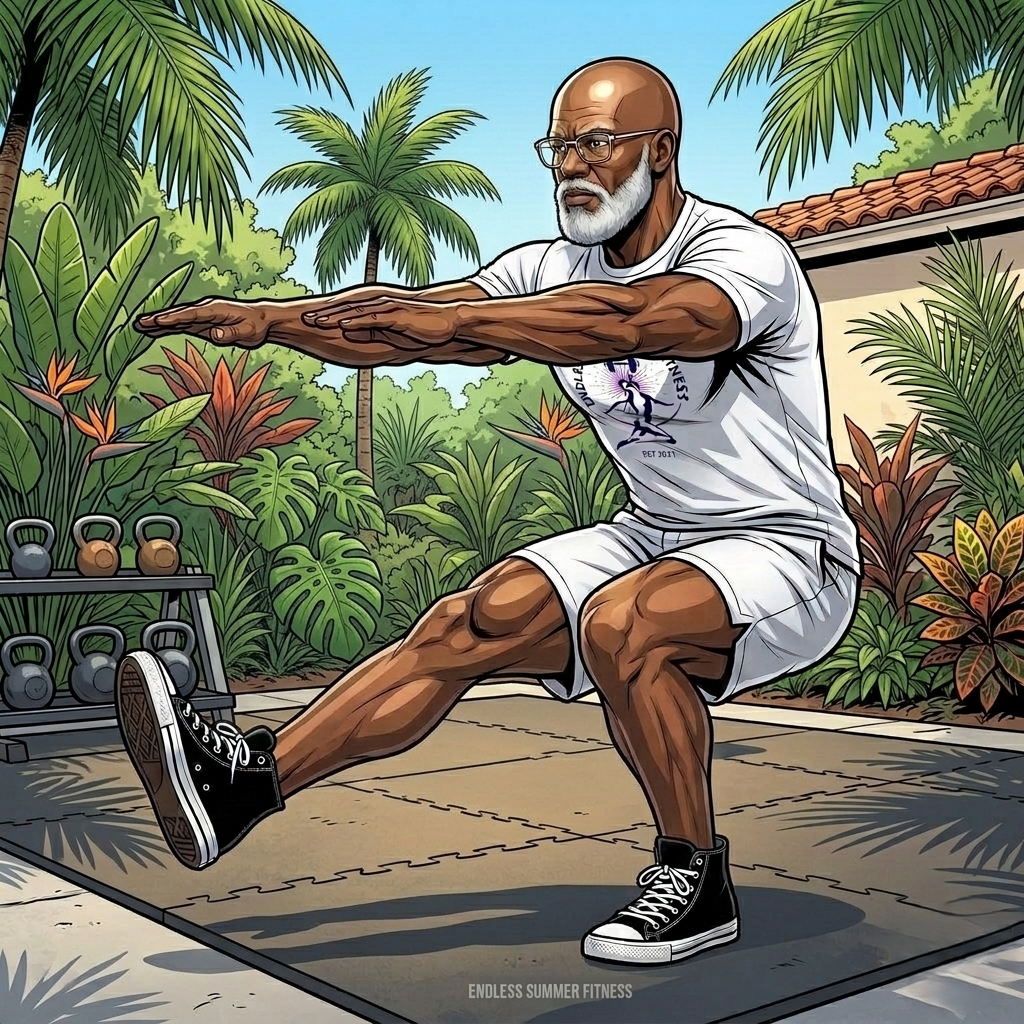
Maintaining your physical health as you age isn’t about chasing youth—it’s about preserving your independence, staying active, and moving without pain. Research consistently shows that staying active helps protect muscle mass, support bone density, and reduce the risk of fall-related injuries.
While joint mobility drills (like arm circles) are great for warming up, true functional anti-aging exercises focus on strength, balance, and core stability. Here are seven simple, highly effective movements you can incorporate into your daily routine to keep your body resilient and agile.
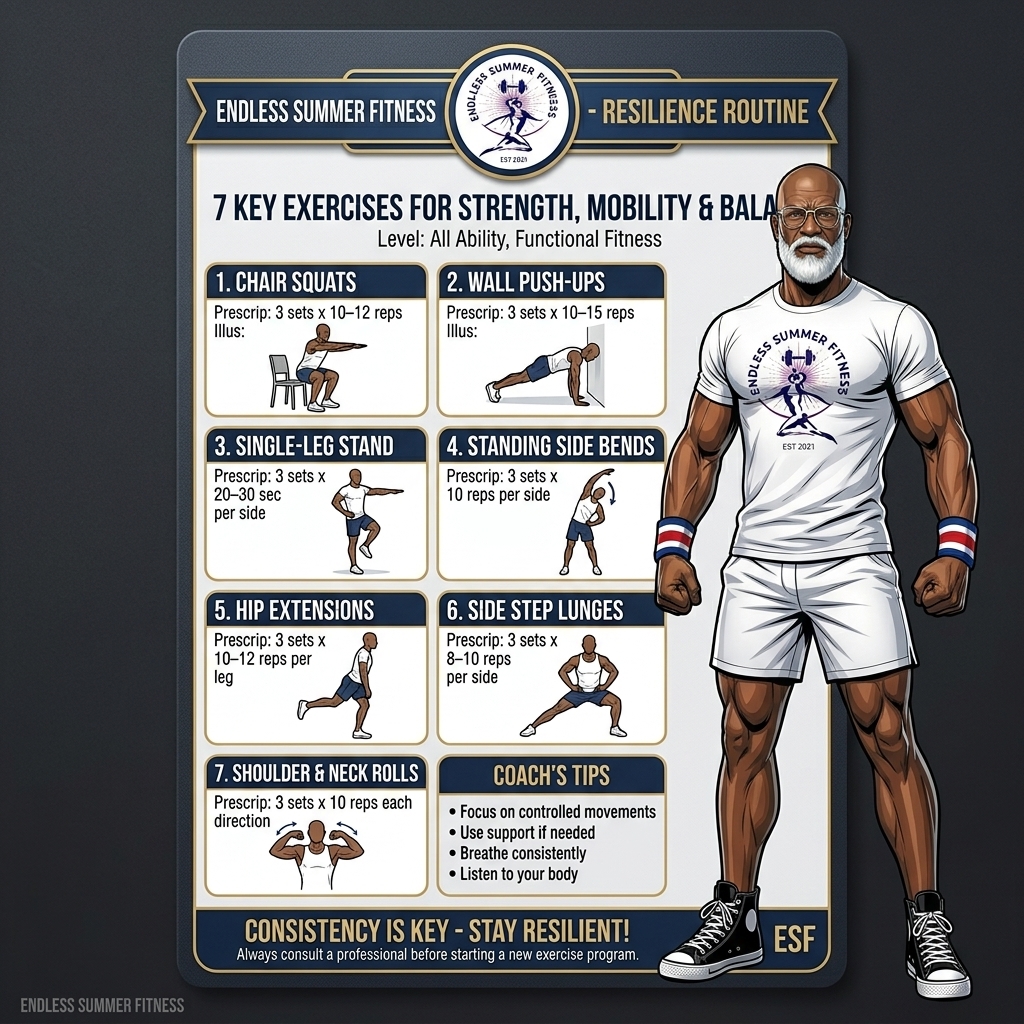
7 Exercises for Strength, Mobility, and Balance as You Age
1. Chair Squats
- Target: Lower body strength (quads, glutes, and hamstrings)
- Prescription: 3 sets of 10–12 reps
- Why It Matters: Sitting down and standing up is one of the most essential functional movements in daily life. Chair squats build leg strength while protecting your knees and back.
-
How to Do It:
- Stand in front of a sturdy chair with your feet shoulder-width apart.
- Inhale, hinge at your hips, and slowly lower yourself toward the seat as if you are about to sit down.
- Gently touch the seat (without sitting all the way down) and push firmly through your heels to return to standing.
2. Wall Push-Ups
- Target: Upper body strength (chest, shoulders, and triceps)
- Prescription: 3 sets of 10–15 reps
- Why It Matters: Upper body pushing strength is vital for pushing open heavy doors, lifting objects, or catching yourself safely during a trip. Wall push-ups provide upper-body resistance without placing excessive strain on your wrists or lower back.
-
How to Do It:
- Stand arm’s-length away facing a wall. Place your hands flat against the wall at shoulder height and shoulder-width apart.
- Bend your elbows to lower your chest toward the wall in a smooth, controlled motion.
- Pause briefly, then press through your hands to return to the starting position.
3. Single-Leg Balance Stand
- Target: Balance, ankle stability, and hip strength
- Prescription: 3 sets of 20–30 seconds per side
- Why It Matters: Falls are one of the leading health risks for older adults. Training single-leg stability strengthens stabilizing muscles in the feet and hips, significantly reducing fall risks.
-
How to Do It:
- Stand near a wall or sturdy counter for support if needed.
- Lift one foot slightly off the floor while maintaining a tall, upright posture.
- Hold for 20–30 seconds, focusing on a fixed point ahead of you. Switch legs and repeat.
4. Standing Side Bends
- Target: Spinal flexibility, obliques, and lateral mobility
- Prescription: 3 sets of 10 reps per side
- Why It Matters: Lateral flexibility helps maintain spine health and makes daily twisting or reaching movements smoother and safer.
-
How to Do It:
- Stand upright with your feet hip-width apart.
- Reach your right arm overhead and gently side-bend your upper body to the left.
- Hold for 1–2 seconds at the stretch point, then return to center. Complete 10 reps before switching sides.
5. Standing Hip Extensions
- Target: Glute strength and lower back support
- Prescription: 3 sets of 10–12 reps per leg
- Why It Matters: Prolonged sitting weakens the glutes, leading to lower back pain and poor posture. Hip extensions activate the posterior chain to improve alignment and walking gait.
-
How to Do It:
- Stand tall behind a chair, holding the back for support.
- Keeping your torso upright and leg straight, slowly extend one leg backward.
- Squeeze your glute at the top for a second, then lower your foot under control.
6. Side-to-Side Step Lunges
- Target: Lateral leg strength and hip mobility
- Prescription: 3 sets of 8–10 reps per side
- Why It Matters: Most everyday movement happens in a straight line, but lateral movements train the adductors and hips to prevent joint stiffness and improve side-to-side stability.
-
How to Do It:
- Stand with your feet together. Step out comfortably to the right.
- Bend your right knee slightly, shifting your weight gently to the right while keeping your left leg straight.
- Push off your right foot to return to the starting position. Repeat on the left side.
7. Shoulder & Neck Rolls
- Target: Upper back and neck tension relief
- Prescription: 3 sets of 10 reps in each direction
- Why It Matters: A ideal cool-down movement to relieve upper-body tightness caused by reading, sitting, or posture slumping.
-
How to Do It:
- Sit or stand upright with your arms relaxed at your sides.
- Slowly roll your shoulders upward toward your ears, backward, and down in a fluid circular motion.
- Perform 10 full circles, then reverse direction.
Tips for Long-Term Success
Consistency is key when building physical resilience. Start with a rep range that feels manageable and gradually increase the challenge as your strength improves. Always focus on smooth, controlled movements over quick reps.
Medical Disclaimer: This article is for educational and informational purposes only and does not constitute medical advice. Always consult a physician or certified fitness professional before beginning a new exercise program, especially if you have pre-existing conditions or joint pain.
Sources:
-
Evidence-Based Exercise Enhances Healthy Aging (PMC / NIH)
-
Focus: Details how multicomponent exercise programs, progressive resistance training, and balance/fall-prevention protocols combat cellular aging, preserve muscle function, and mitigate frailty in older adults.
-
-
Preserving Mobility in Older Adults (PubMed / NIH)
-
Focus: Highlights epidemiological evidence and clinical trials demonstrating that strength and balance training preserve lower-body functional mobility, support muscle performance, and significantly reduce fall risk.
-