
Hybrid fitness training is changing how people approach health and exercise. Instead of sticking to one style, hybrid fitness combines several workout methods. You will see strength training, cardio, flexibility, balance, and mobility all together. As a result, this approach brings a balanced routine that helps you build muscle, burn fat, and move better.
This article aims to make hybrid fitness simple for everyone. We break down science, highlight what makes hybrid fitness special, and share practical routines you can start today. Whether you are new to exercise or are already active, hybrid fitness offers something for all.
Because hybrid fitness training is versatile, you get to work on multiple goals at once. You can build strength and endurance. You can boost flexibility. Plus, you can support heart health. By blending different workouts, you help prevent boredom and keep your body guessing. This keeps motivation high.
What Is Hybrid Fitness Training?
Hybrid fitness training combines different exercise styles into a single program. For example, you might do weightlifting and jogging. You could add yoga and swimming. As you progress, you can include cycling, HIIT, or even sports drills. The primary goal is to improve your overall fitness by developing several abilities simultaneously.
Hybrid fitness does not target a single muscle group or skill; it challenges your body in many ways. You work on strength, stamina, agility, and flexibility together. As a result, you build a well-rounded body that is ready for anything. From daily tasks to sports and recreation, hybrid routines prepare you for life.
Many fitness experts now recommend hybrid training. This method promotes balance and helps prevent overuse injuries. For instance, only running can stress your joints. Mixing in strength and mobility exercises helps protect your body and speed up recovery.

Why Hybrid Fitness Training Works: Scientific Evidence
Hybrid fitness training works because it uses proven science. Exercise research shows that combining strength and endurance training is powerful. According to the American College of Sports Medicine (ACSM), combining resistance and aerobic workouts yields greater health benefits than either alone (source: ACSM Position Stand).
One reason hybrid fitness works is muscle adaptation. When you change your routine, your muscles must adapt to new challenges. This process leads to strength and growth. Furthermore, hybrid training activates different energy systems. Strength workouts use fast-twitch muscle fibers. Endurance exercise uses slow-twitch fibers. By training both, you gain power and stamina.
Another key is metabolic conditioning. Research from the National Strength and Conditioning Association (NSCA) shows hybrid routines improve how your body uses energy. You burn more calories, even when resting. This supports weight management and fat loss (source: NSCA Journal).
Hybrid fitness also supports heart health. Endurance and interval training boost cardiovascular fitness. Strength training helps lower blood pressure and supports healthy cholesterol. Studies in PubMed and Google Scholar confirm these benefits across all age groups (source).
In addition, hybrid workouts improve flexibility and balance. You reduce the risk of injury and recover faster. Because you train multiple muscle groups, your whole body gets stronger and more resilient.
How Hybrid Fitness Training Boosts Results
Results from hybrid fitness training come from using the best of each workout type. Strength training builds muscle and bone density. Cardio workouts improve endurance and heart health, and mobility exercises help you move better and reduce stiffness. By blending these, you get more results in less time.
Hybrid fitness also helps you stay motivated. With varied routines, you are less likely to get bored. You can set new goals and try new activities. Transitioning between workout types keeps your mind engaged. As a result, you stay with your program longer and achieve your goals.
If you are starting from zero, hybrid fitness is ideal. Beginners can try simple circuits that mix basic movements. As you improve, you can add more complex exercises. The format is flexible, so you can adjust the routines to your needs. Progression is built in.
Hybrid Training Compared to Traditional Methods
Traditional fitness plans typically focus on a single area. For example, some programs focus solely on building strength. Others just boost endurance. As a result, you may see quick gains in one skill but miss out on balance. Hybrid fitness solves this problem.
Hybrid routines give you better balance and faster progress. You avoid plateaus by varying your workouts. You build muscle, burn fat, and improve your health at the same time. For busy people, hybrid fitness saves time. Short workouts with mixed formats deliver results efficiently.
Because hybrid fitness adapts to your schedule, you do not need fancy equipment. Many exercises use body weight or simple tools. You can train at home, outdoors, or at the gym. As you gain experience, you can use barbells, resistance bands, or kettlebells to increase intensity.
Beginner-Friendly Hybrid Fitness: Getting Started
Anyone can start a hybrid fitness program, even if you have never exercised before. Begin with basic movements like squats, push-ups, and walking. Over time, add more challenging exercises. Always focus on proper form. Listen to your body and rest when needed. Gradual progression is important.
First, select three to four exercises for your hybrid routine. Try one strength, one cardio, and one mobility move. Perform each exercise for the recommended set and reps. For endurance, aim for 12-15 reps. For strength, target 8-12 reps. Between sets, include active recovery such as stretching or light movement.
As you progress, add new exercises or increase difficulty. For example, switch from knee push-ups to full push-ups. Replace walking with jogging. Try new challenges like lunges, planks, or resistance bands. Keep your routine varied for balanced gains.
Hybrid fitness routines engage multiple muscle groups and involve stabilizers. This helps you build core strength and prevent injuries. It also prepares your body for real-life activities.
Hybrid Fitness Routine Progression: Levels Defined
Hybrid fitness training is organized into levels. Each level is designed to match your skill and experience. Starting at the right level helps you stay safe and get the best results.
- Beginner Level: Focus on basic bodyweight exercises. Use simple movements and low intensity. Practice proper form and build confidence. Example moves: squats, push-ups, walking, and gentle stretching.
- Intermediate Level: Add resistance or more complex exercises. Increase sets and reps. Start using dumbbells or resistance bands. Include moderate-intensity cardio intervals and core-stability work.
- Advanced Level: Use heavier weights and challenging movements. Try HIIT circuits, plyometric exercises, and advanced mobility drills. Build greater strength, speed, and endurance.
- Elite Level: Combine all skills into high-performance routines. Use barbells, kettlebells, and sports-specific drills. Push intensity and complexity. Ideal for athletes and experienced fitness fans.
Hybrid fitness routines are always scalable. You can move up or down levels as needed. Adapts the routine to fit your goals and experience.
Sample Hybrid Fitness Workout Routines
Here are sample routines for each level. Each workout includes sets, reps, muscles worked, and stabilizers involved. Progression is clear, so you can move from beginner to elite over time.
Beginner Routine
- Warm-Up: 5 minutes brisk walking or gentle cycling
- Strength Circuit:
- Bodyweight squats: 3 sets x 12 reps (quads, glutes, stabilizers: core)
- Knee push-ups: 3 sets x 10 reps (chest, triceps, stabilizers: shoulders)
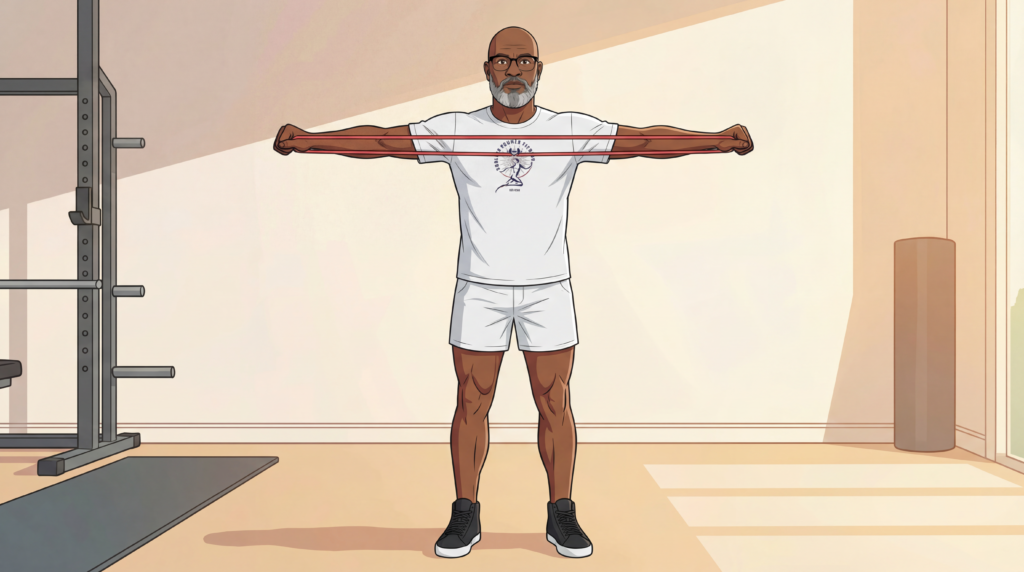
- Standing rows with resistance band: 3 sets x 12 reps (back, biceps, stabilizers: core)
- Cardio Burst: 2 minutes jump rope or marching in place
- Mobility: 2 sets x 30 seconds quad stretch, 2 sets x 30 seconds shoulder stretch
Intermediate Routine
- Warm-Up: 7 minutes of jogging or dynamic stretching
- Strength & Endurance Circuit:
- Dumbbell goblet squats: 3 sets x 15 reps (quads, glutes, stabilizers: core)
- Push-ups: 4 sets x 12 reps (chest, triceps, stabilizers: shoulders)
- Plank: 3 sets x 40 seconds (core, stabilizers: shoulders, hips)
- Cardio Interval: 3 minutes alternating high knee and butt kicks
- Mobility: sets x 45 seconds hip flexor stretch, 2 sets x 45 seconds thoracic rotation
Advanced Routine
- Warm-Up: 10 minutes dynamic mobility (lunges, arm circles, jumping jacks)
- Performance Circuit:
- Barbell deadlift: 4 sets x 8 reps (hamstring, glutes, stabilizers: core, lower back)
- Weighted pull-ups: 4 sets x 10 reps (back, biceps, stabilizers: core)
- Burpees: 4 sets x 15 reps (full body, stabilizers: shoulders, core)
- Single-arm kettlebell press: 4 sets x 12 reps ( shoulders, triceps, stabilizers: core)
- Cardio Finisher: 5-minute interval sprints (30-second sprint, 30-second recovery)
- Advanced Mobility: 2 sets x 60 seconds deep squat hold, 2 sets x 60 seconds overhead shoulder stretch
Elite Routine
- Warm-UP: 12 minutes dynamic drills (agility ladder, high knees, plyometric jumps)
- Elite Circuit:
- Power cleans: 4 sets x 8 reps (full body, stabilizers: core, lower back)
- Muscle-ups: 4 sets x 10 reps (back, chest, stabilizers: shoulders, core)
- Box jumps: 4 sets x 15 reps (legs, stabilizers: core, ankles)
- Turkish get-up: 4 sets x 12 reps (core, shoulders, stabilizers: hips)
- Cardio Power: 6 minutes sprint intervals (40 seconds sprint, 20 seconds recovery)
- Elite Mobility: 2 sets x 90 seconds deep squat hold, 2 sets x 90 seconds overhead arm stretch
Each routine is designed to progress as you build strength, endurance, and confidence. Always move at your own pace. Advance only when ready.
Muscles Worked and Stabilizers Involved
Hybrid fitness targets both major and minor muscles. For example, squats work your quadriceps, glutes, and hamstrings. Push-ups strengthen your chest, shoulders, and triceps. Deadlifts target the whole backside, including the lower back and glutes. Cardio bursts engage your heart and lungs. Mobility exercises stretch and support your joints.
Stabilizers are muscles that help keep your body steady. Core muscles stabilize nearly every exercise. Shoulder, hip, and ankle stabilizers prevent injury and boost performance. By training these, hybrid fitness helps you move better and feel stronger in everyday life.
How to Progress Your Hybrid Fitness Routine
Transitioning from beginners to elite is all about gradual change. Start with basic moves and lighter weights. Increase sets, reps, or resistance as you grow stronger. Try new exercises and add variety. If you feel stuck, change your routine every two to four weeks. This helps your body adapt and prevents plateaus.
Tracking your progress is important. Write down your workouts. Note how you feel and what you accomplish. Set small goals for each week. Celebrate your wins and stay motivated.
Rest is also key. Make sure you recover between workouts. Use mobility and stretching to speed recovery. Never skip a proper warm-up and cool-down.
Hybrid Fitness Benefits: Mental and Physical
Hybrid fitness brings both mental and physical rewards. Physically, you develop strength, endurance, flexibility, and balance. Mentally, you gain confidence and motivation. Because routines change often, you do not get bored. You handle stress better and enjoy exercise more.
Hybrid fitness supports weight loss and improves body composition. Mixed workouts burn more calories and support lean muscle. You see improvements in energy, sleep, and mood.
Family and friends can join you in hybrid fitness. Group workouts encourage healthy habits and make exercise social. Sharing your progress builds community and keeps you engaged.
Hybrid Fitness: The Evidence and References
Many scientific studies support hybrid fitness methods. For example, research from ACSM shows mixed routines improve heart health and muscle strength (source). Studies from NSCA confirm metabolic benefits and faster recovery (source). PubMED and NCBI have published evidence of improved flexibility and reduced injury risk (source).
External links to peer-reviewed studies provide detailed backing for these claims. You can read about metabolic conditioning in Sports Medicine (source). For muscle adaptation, visit Journal of Strength and Conditioning Research (source).
Internal Links: Expand Your Hybrid Fitness Knowledge
- Read our ESF article, “Starting Hybrid Fitness Training at Home,” for more foundational tips.
- Read our ESF article, “Hybrid Fitness Training: A Beginner’s Guide,” for more foundational tips.
- Discover advanced strategies in “Best 7 Part Hybrid Fitness Program”.
What You Should Remember
Hybrid fitness training unlocks a balanced approach to health and exercise. By blending strength, endurance, mobility, and flexibility, you gain a well-rounded body and mind. The routines are scalable and adaptable, making hybrid fitness ideal for all ages and abilities.
The main takeaways are clear. Hybrid fitness prevents boredom, supports steady progress, and encourages lifelong wellness. You can start with basic routines and progress to advanced workouts. Mental and physical benefits are supported by scientific evidence and real-world experience.
Next steps are simple. Choose a routine that fits your level. Commit to regular practice and celebrate your progress. Use internal and external resources to stay motivated. Hybrid fitness is relevant to anyone looking to improve their health, build strength, and stay active.
Join our ESF community to share your journey and find expert support. With hybrid fitness, you empower yourself for success.
Frequently Asked Questions
- What is hybrid fitness training?
Hybrid fitness training combines strength, cardio, and mobility exercises into a single routine. It helps build balanced fitness.
- Is hybrid fitness training good for beginners?
Yes, anyone can start. Begin with basic moves and progress slowly.
- How often should I do hybrid fitness workouts?
Try two to three times per week. Increase frequency as you get stronger.
- Do I need special equipment for hybrid fitness?
No, you can use bodyweight or simple tools. Advanced routines can use weights or resistance bands.
- Can hybrid fitness help with weight loss?
Yes, it burns calories and supports lean muscle.
- Are hybrid fitness routines good for all ages?
Yes, routines can be adjusted for any age or fitness level.
Standard ESF Safety Disclaimer
The information in this beginner workout plan is for educational purposes. Please consult with a qualified healthcare professional before starting any new exercise routine, especially if you have health conditions. ESF Hybrid Fitness isn’t liable for any injuries or adverse effects from these exercises—but we’ll always be here cheering you on!
Smart tools, human guidance, and a fitness path that finally feels possible.