

Endless Summer Fitness provides workout tips for fitness beginners, weekend warriors, post-physical therapy individuals, men and women in middle life, and anyone seeking fitness results.

How to Start Working Out After 40: Safe, Beginner-Friendly Guide for Real Results

How to Start Working Out After 40

Why starting after 40 is a power move

A lot of people hit their 40s and think, “I missed my window.” You didn’t! Your 40s, 50s, 60s, and 70s are actually one of the best times to start working out—because now you care less about impressing people at the gym and more about feeling strong, mobile, and energized in real life. This article tackles the benefits of working out after 40.

working out after 40

Biologically, a few things are happening
  • Muscle mass naturally starts to decline (sarcopenia, which affects strength, metabolism, and independence.
  • Bone density can decrease, especially without resistance training.
  • Recovery matters more—but when you train smart, your body still adapts incredibly well.

The good news: strength, mobility, and cardiovascular health can all improve well into later decades. You’re not “too late” —you’re right on time.

The real fountain of youth: movement, not magic

Let’s be honest: most people don’t just want to feel younger—they want to look younger too. Not in a “pretend I’m 25’ way, but in a “you look really healthy” way.

Working out after 40 helps you look more youthful because it:
  • Keeps muscles firm and lifted (instead of soft and deflated)
  • Improves posture, which instantly changes how you carry yourself
  • Boost circulation, which supports skin health and glow
  • Helps manage body fat and blood sugar
  • Reduces inflammation and supports better sleep

Research consistently links regular physical activity with healthier aging, better function, and lower risk of chronic disease.

No cream or supplement can do what consistent movement plus decent nutrition can.

Why hybrid fitness works so well after 40

Hybrid fitness is basically the “balanced plate” of training: a mix of strength, mobility, low-impact conditioning, and recovery. That combo is perfect for life after 40 because it hits every system that tends to slide with age.

  • Strength training: protects muscle, boosts metabolism, supports bone density, and improves joint stability.
  • Mobility + flexibility: keeps joints moving smoothly and reduces stiffness.
  • Low-impact cardio: supports heart health without beating up your knees and hips.
  • Recovery: keeps your nervous system and hormones from living in “burnout mode.”

You don’t have to train like an athlete. You just need a smart mix of these elements, done consistently.
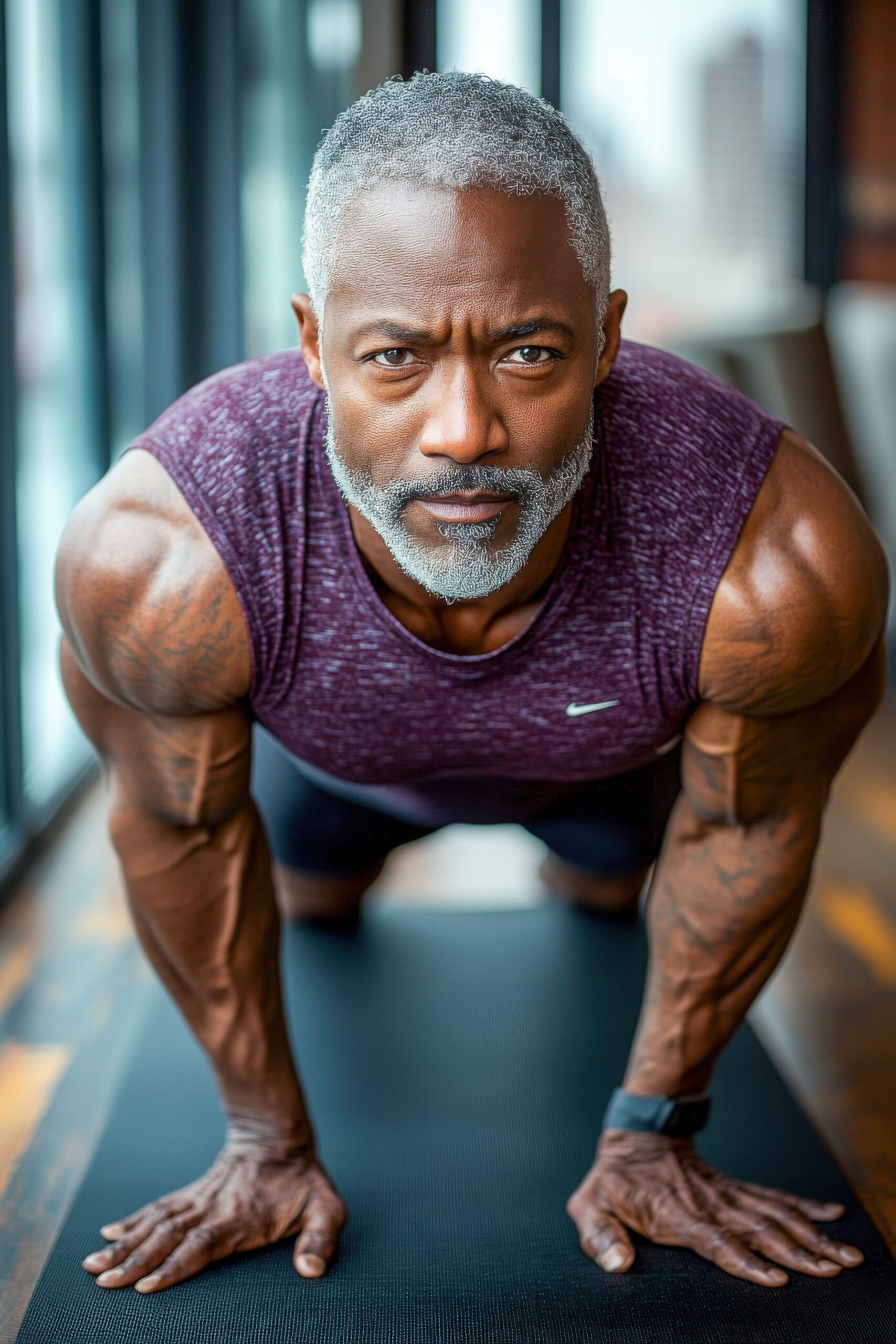
Yoga, Pilates, and mobility: moving like someone younger

Yoga, Pilates, and mobility work are massively underrated for “looking youthful” because they change how you move:

  • The improved posture and alignment.
  • They lengthen tight muscles and open up stiff joints,
  • This builds deep core strength and body awareness.
  • They help you move with ease instead of stiffness.

Studies show that flexibility, balance, and mobility are strongly tied to functional independence and quality of life as we age.

A 45-year-old who moves well, stands tall, and walks with confidence will always read as more “youthful” than someone younger who’s stiff, hunched, and exhausted.

Meditation and stress: the invisible aging accelerator

Stress ages you from the inside—skin, sleep, hormones, mood, everything. Chronic stress and elevated cortisol are linked to inflammation, poor recovery, and increased disease risk.

Meditation and other mind-body practices:

  • Help regulate stress and cortisol
  • Improve sleep quality
  • Support better recovery from workouts
  • Improve emotional resilience

That calmer baseline shows up in your face, your energy, and how you carry yourself.

Strength training: the lifted, firm, “ageless” look

If there’s one non-negotiable after 40, it’s some form of strength training.

Research shows that resistance training helps preserve muscle mass, improve bone density, support metabolic health, and reduce the risk of falls as we age.

You don’t need heavy barbells or complicated machines. You just need:

  • Simple, joint-friendly movements
  • 2-3 strength sessions per week
  • Consistent progression over time

That’s enough to keep your body looking and feeling strong, supported, and “held up” instead of saggy and unstable.
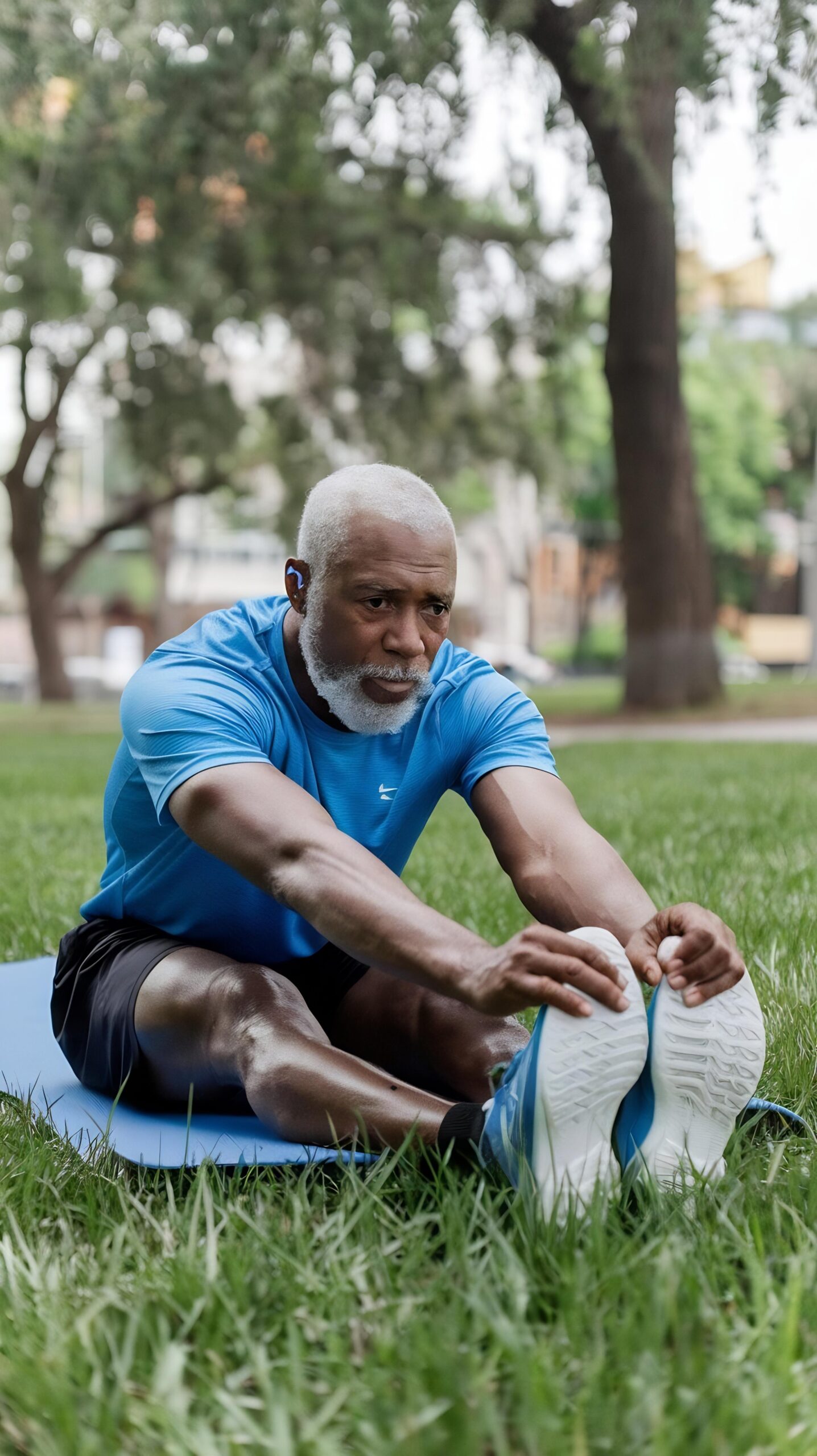
Balance + flexibility: the “youthful movement” advantage

Youth isn’t just about how you look—it’s about how you move through space.

Balance and flexibility work:

  • Reduce fall risk
  • Improve coordination and control
  • Keep your gait smooth and confident
  • Make everyday movement (stairs, carrying groceries, playing with kids) feel easier

When your body moves well, people notice—even if they can’t quite name what’s different.

Clean nutrition: the glow you can’t fake

You can’t out-train a consistently poor diet, especially after 40. Nutrition is where your body gets the raw materials to repair, build, and recover.

A mostly whole-food, minimally processed, protein-forward, plant-rich way of eating helps:

  • Support hormone balance
  • Reduce chronic inflammation
  • Improve skin clarity and texture
  • Support muscle repair and growth
  • Stabilize energy and appetite

Exercise sets the stage. Nutrition decides how well the show runs.

It’s not “all or nothing.”

One of the biggest lies that keeps people stuck is the idea that you have to “go all in” or its’ not worth it.

Here’s the truth:

  • Walking counts
  • Yoga counts
  • Short strength sessions count
  • 10 minutes count
  • Starting again (for the 5th time) still counts

You don’t have to pick one identity—“gym person.” Yoga person,” runner.” You can mix and match or change your mind. You can start small and stay small if that’s what fits your life.

Consistency beats intensity. Always.

How to start working out after 40: simple roadmap

Step 1: Start with 20–30 minutes

You don’t need 90-minute workouts. Start with 20-30 minutes, 3 days per week. You can build from there once the habit feels solid.

Step 2: Pick joint‑friendly movements

Think:

  • Squats to a chair
  • Glute bridges
  • Rows
  • Step-ups
  • Incline pushups

These give you a lot of benefits without beating up your joints.

Step 3: Strength first, cardio second

Strength training gives you the biggest long-term payoff for muscle, metabolism, and bone health. Cardio is still important—but it’s the complement, not the foundation, once you’re over 40.

Step 4: Build a weekly rhythm

Example beginner week:

  • Monday: Full-body strength
  • Tuesday: Mobility + walk
  • Wednesday: Full-body strength
  • Thursday: Mobility or yoga
  • Friday: Strength or low-impact conditioning
  • Weekend: Optional walk, stretch, or full rest
Step 5: Progress slowly

Change one thing at a time:

  • Add a set
  • Increase a few reps
  • Add a little weight
  • Slow down the tempo

Slow progression is sustainable progression.

Beginner full‑body workout for adults over 40

Do this 2-3 times per week, with at least one rest or light-movement day in between.

Aim for 3-4 sets of each exercise. Rest 60-90 seconds between sets.

  1. Glute Bridge — 3–4 sets of 10–12 reps

Muscles: glutes, hamstrings, core

How to do it:
  • Lie on your back with knees bent and feet flat, hip-width apart.
  • Press your lower back gently into the floor to engage your core.
  • Push through your heels and slowly lift your hips toward the ceiling.
  • Stop when your body forms a straight line from shoulders to knees.
  • Squeeze your flutes at the top for a second.
  • Lower your hips slowly with control.
  • Keep your ribs down—don’t over-arch your lower back.
  1. Incline Pushup — 3–4 sets of 8–10 reps

Muscles: chest, shoulders, triceps, core

How to do it:
  • Stand facing a sturdy surface (countertop, bench, or wall).
  • Place your hands slightly wider than shoulder-width apart.
  • Step your feet back until your body forms a straight line from head to heels.
  • Brace your core so your hips don’t sag.
  • Bend your elbows and lower your chest toward the surface slowly.
  • Stop a few inches above the surface—no collapsing.
  • Push through your palms to return to the start.
  • Keep your neck neutral and elbows at about a 45-degree angle.
  1. Bodyweight Squat to Chair — 3–4 sets of 10–12 reps

Muscle: quads, glutes, core

How to do it:
  • Stand in front of a chair with your feet about shoulder-width apart.
  • Keep your chest lifted and your core gently braced.
  • Push your hips back first, like you’re reaching for the chair.
  • Bend your knees and lower yourself slowly toward the seat.
  • Lightly tap the chair with your hips (or sit fully if needed).
  • Press through your heels to stand back up.
  • Keep your knees tracking in line with your toes.
  • Move slowly—no bouncing at the bottom.
  1. Bent‑Over Dumbbell Row — 3–4 sets of 8–10 reps per side

Muscles: upper back, lats, rear shoulders, core

How to do it:
  • Hold a light dumbbell in one hand.
  • Place your opposite hand on a chair or bench for support.
  • Step your feet hip-width apart and hinge forward slightly at the hips.
  • Keep your back flat and your core engaged.
  • Let the dumbbell hang straight down with your arm extended.
  • Pull the dumbbell toward your ribcage, keeping your elbow close to your body.
  • Squeeze your shoulder blades toward your spine at the top.
  • Lower the weight slowly and with control — no swinging.
  1. Step‑Ups — 3–4 sets of 8–10 reps per side

Muscle: glutes, quads, core, hips

How to do it:
  • Stand in front of a sturdy step or low bench.
  • Place one foot fully on the step—heel included.
  • Lean slightly forward to engage your glutes.
  • Push your foot through the step and lift your body upward.
  • Bring your other foot up lightly to meet the first.
  • Step back down slowly with control.
  • Keep your knee aligned with your toes–no wobbling inward.
  • Complete all reps on one side, then switch legs.
  1. Dead Bug — 3–4 sets of 6–8 reps per side

Muscles: deep core, hip flexors, lower back stabilizers

How to do it:
  • Lie on your back with your arms extended toward the ceiling.
  • Lift your legs so your hips and knees are bent at 90 degrees.
  • Press your tower back gently into the floor.
  • Slowly extend your right arm overhead while extending your left leg forward.
  • Only go as far as you can while keeping your lower back pressed down.
  • Return to the starting position with control.
  • Switch sides and repeat.
  • Move slowly—this is about control, not speed.
  1. Standing Calf Raise — 3–4 sets of 12–15 reps

Muscles: calves, ankles, feet

How to do it:
  • Stand tall with your feet hip-width apart.
  • Hold onto a wall or chair for balance if needed.
  • Press through the balls of your feet and slowly lift your heels.
  • Pause at the top and squeeze your calves.
  • Lower your heels back down with control.
  • Keep your knees soft—not locked.
  • Avoid bouncing: think smooth and controlled.
Quick mobility routine (5–8 minutes)

Do this on non-strength days or after your workout:

  • Cat-Cow: 6 slow reps
  • Hip Flexor Stretch: 20 seconds per side
  • Thoracic Spine Rotation (open book): 6 reps per side
  • Ankle Circles: 10 circles each direction per side
  • Chest Opener Stretch (doorway or wall): 20-30 seconds

This helps reduce stiffness, improve range of motion, and make your strength work feel better.

Low‑impact conditioning options

Pick one and keep it easy-to-moderate:

  • 20-30 minute brisk walk
  • 10-15 minutes on an incline treadmill
  • 15-20 minutes of cycling
  • 10-15 minutes on a rower
  • Simple low-impact circuit (marching in place, step taps, light band work)

You don’t need to be breathless and wrecked. You just need to move.

Common mistakes to avoid after 40
  • Going straight into high-intensity workouts because you’re “making up for lost time.”
  • Skipping strength training and only doing cardio.
  • Ignoring mobility and flexibility.
  • Training like you did in your 20s with none of the recovery.
  • Comparing your progress to that of other people.
  • Doing too much, too soon, then burning out or getting hurt.

Slow, smart, and consistent beats aggressive and inconsistent every time.

How long until you see results?

Everyone’s different, but a realistic timeline looks like:

  • 7-10 days: energy and mood often start to improve.
  • 2-3 weeks: stiffness usually starts to decrease.
  • 4-6 weeks: noticeable strength and confidence improvements.
  • 8-12 weeks: visible changes in muscle tone, posture, and overall shape

You don’t have to feel “motivated” every day. You just have to keep showing up. 

FAQs: starting to work out after 40

Is it too late to start working out after 40?

No. Research shows benefits of strength and aerobic training well into older age—better function, lower disease risk, and improved quality of life.

How many days a week should I work out?

Most beginners do well with 3 strength days and 2 lighter days (mobility, walking, yoga)

Do I have to lift heavy?

No. Light to moderate resistance, done consistently with good form and progression, is extremely effective.

Should I avoid high‑impact workouts?

You don’t have to avoid them forever, but they shouldn’t be your starting point. Build strength and control first.

What if I have joint pain?

Start with low-impact strength and mobility. If pain is sharp, persistent, or worsening, talk a qualified healthcare professional.
Disclosure

As with all exercise programs, use common sense. To reduce the risk of injury, check with your doctor before beginning any fitness program. By performing any fitness exercises, you are performing them at your own risk; endlesssummerfitness.com will not be responsible or liable for any injury or harm you sustain as a result of our fitness program, online fitness videos, or information shared on our website. This includes emails, videos, and text.


How to Start Working Out After 40

Why starting after 40 is a power move

A lot of people hit their 40s and think, “I missed my window.” You didn’t! Your 40s, 50s, 60s, and 70s are actually one of the best times to start working out—because now you care less about impressing people at the gym and more about feeling strong, mobile, and energized in real life. This article tackles the benefits of working out after 40.

working out after 40

Biologically, a few things are happening
  • Muscle mass naturally starts to decline (sarcopenia, which affects strength, metabolism, and independence.
  • Bone density can decrease, especially without resistance training.
  • Recovery matters more—but when you train smart, your body still adapts incredibly well.

The good news: strength, mobility, and cardiovascular health can all improve well into later decades. You’re not “too late” —you’re right on time.

The real fountain of youth: movement, not magic

Let’s be honest: most people don’t just want to feel younger—they want to look younger too. Not in a “pretend I’m 25’ way, but in a “you look really healthy” way.

Working out after 40 helps you look more youthful because it:
  • Keeps muscles firm and lifted (instead of soft and deflated)
  • Improves posture, which instantly changes how you carry yourself
  • Boost circulation, which supports skin health and glow
  • Helps manage body fat and blood sugar
  • Reduces inflammation and supports better sleep

Research consistently links regular physical activity with healthier aging, better function, and lower risk of chronic disease.

No cream or supplement can do what consistent movement plus decent nutrition can.

Why hybrid fitness works so well after 40

Hybrid fitness is basically the “balanced plate” of training: a mix of strength, mobility, low-impact conditioning, and recovery. That combo is perfect for life after 40 because it hits every system that tends to slide with age.

  • Strength training: protects muscle, boosts metabolism, supports bone density, and improves joint stability.
  • Mobility + flexibility: keeps joints moving smoothly and reduces stiffness.
  • Low-impact cardio: supports heart health without beating up your knees and hips.
  • Recovery: keeps your nervous system and hormones from living in “burnout mode.”

You don’t have to train like an athlete. You just need a smart mix of these elements, done consistently.

Yoga, Pilates, and mobility: moving like someone younger

Yoga, Pilates, and mobility work are massively underrated for “looking youthful” because they change how you move:

  • The improved posture and alignment.
  • They lengthen tight muscles and open up stiff joints,
  • This builds deep core strength and body awareness.
  • They help you move with ease instead of stiffness.

Studies show that flexibility, balance, and mobility are strongly tied to functional independence and quality of life as we age.

A 45-year-old who moves well, stands tall, and walks with confidence will always read as more “youthful” than someone younger who’s stiff, hunched, and exhausted.

Meditation and stress: the invisible aging accelerator

Stress ages you from the inside—skin, sleep, hormones, mood, everything. Chronic stress and elevated cortisol are linked to inflammation, poor recovery, and increased disease risk.

Meditation and other mind-body practices:

  • Help regulate stress and cortisol
  • Improve sleep quality
  • Support better recovery from workouts
  • Improve emotional resilience

That calmer baseline shows up in your face, your energy, and how you carry yourself.

Strength training: the lifted, firm, “ageless” look

If there’s one non-negotiable after 40, it’s some form of strength training.

Research shows that resistance training helps preserve muscle mass, improve bone density, support metabolic health, and reduce the risk of falls as we age.

You don’t need heavy barbells or complicated machines. You just need:

  • Simple, joint-friendly movements
  • 2-3 strength sessions per week
  • Consistent progression over time

That’s enough to keep your body looking and feeling strong, supported, and “held up” instead of saggy and unstable.

Balance + flexibility: the “youthful movement” advantage

Youth isn’t just about how you look—it’s about how you move through space.

Balance and flexibility work:

  • Reduce fall risk
  • Improve coordination and control
  • Keep your gait smooth and confident
  • Make everyday movement (stairs, carrying groceries, playing with kids) feel easier

When your body moves well, people notice—even if they can’t quite name what’s different.

Clean nutrition: the glow you can’t fake

You can’t out-train a consistently poor diet, especially after 40. Nutrition is where your body gets the raw materials to repair, build, and recover.

A mostly whole-food, minimally processed, protein-forward, plant-rich way of eating helps:

  • Support hormone balance
  • Reduce chronic inflammation
  • Improve skin clarity and texture
  • Support muscle repair and growth
  • Stabilize energy and appetite

Exercise sets the stage. Nutrition decides how well the show runs.

It’s not “all or nothing.”

One of the biggest lies that keeps people stuck is the idea that you have to “go all in” or its’ not worth it.

Here’s the truth:

  • Walking counts
  • Yoga counts
  • Short strength sessions count
  • 10 minutes count
  • Starting again (for the 5th time) still counts

You don’t have to pick one identity—“gym person.” Yoga person,” runner.” You can mix and match or change your mind. You can start small and stay small if that’s what fits your life.

Consistency beats intensity. Always.

How to start working out after 40: simple roadmap

Step 1: Start with 20–30 minutes

You don’t need 90-minute workouts. Start with 20-30 minutes, 3 days per week. You can build from there once the habit feels solid.

Step 2: Pick joint‑friendly movements

Think:

  • Squats to a chair
  • Glute bridges
  • Rows
  • Step-ups
  • Incline pushups

These give you a lot of benefits without beating up your joints.

Step 3: Strength first, cardio second

Strength training gives you the biggest long-term payoff for muscle, metabolism, and bone health. Cardio is still important—but it’s the complement, not the foundation, once you’re over 40.

Step 4: Build a weekly rhythm

Example beginner week:

  • Monday: Full-body strength
  • Tuesday: Mobility + walk
  • Wednesday: Full-body strength
  • Thursday: Mobility or yoga
  • Friday: Strength or low-impact conditioning
  • Weekend: Optional walk, stretch, or full rest
Step 5: Progress slowly

Change one thing at a time:

  • Add a set
  • Increase a few reps
  • Add a little weight
  • Slow down the tempo

Slow progression is sustainable progression.

Beginner full‑body workout for adults over 40

Do this 2-3 times per week, with at least one rest or light-movement day in between.

Aim for 3-4 sets of each exercise. Rest 60-90 seconds between sets.

  1. Glute Bridge — 3–4 sets of 10–12 reps

Muscles: glutes, hamstrings, core

How to do it:
  • Lie on your back with knees bent and feet flat, hip-width apart.
  • Press your lower back gently into the floor to engage your core.
  • Push through your heels and slowly lift your hips toward the ceiling.
  • Stop when your body forms a straight line from shoulders to knees.
  • Squeeze your flutes at the top for a second.
  • Lower your hips slowly with control.
  • Keep your ribs down—don’t over-arch your lower back.
  1. Incline Pushup — 3–4 sets of 8–10 reps

Muscles: chest, shoulders, triceps, core

How to do it:
  • Stand facing a sturdy surface (countertop, bench, or wall).
  • Place your hands slightly wider than shoulder-width apart.
  • Step your feet back until your body forms a straight line from head to heels.
  • Brace your core so your hips don’t sag.
  • Bend your elbows and lower your chest toward the surface slowly.
  • Stop a few inches above the surface—no collapsing.
  • Push through your palms to return to the start.
  • Keep your neck neutral and elbows at about a 45-degree angle.
  1. Bodyweight Squat to Chair — 3–4 sets of 10–12 reps

Muscle: quads, glutes, core

How to do it:
  • Stand in front of a chair with your feet about shoulder-width apart.
  • Keep your chest lifted and your core gently braced.
  • Push your hips back first, like you’re reaching for the chair.
  • Bend your knees and lower yourself slowly toward the seat.
  • Lightly tap the chair with your hips (or sit fully if needed).
  • Press through your heels to stand back up.
  • Keep your knees tracking in line with your toes.
  • Move slowly—no bouncing at the bottom.
  1. Bent‑Over Dumbbell Row — 3–4 sets of 8–10 reps per side

Muscles: upper back, lats, rear shoulders, core

How to do it:
  • Hold a light dumbbell in one hand.
  • Place your opposite hand on a chair or bench for support.
  • Step your feet hip-width apart and hinge forward slightly at the hips.
  • Keep your back flat and your core engaged.
  • Let the dumbbell hang straight down with your arm extended.
  • Pull the dumbbell toward your ribcage, keeping your elbow close to your body.
  • Squeeze your shoulder blades toward your spine at the top.
  • Lower the weight slowly and with control — no swinging.
  1. Step‑Ups — 3–4 sets of 8–10 reps per side

Muscle: glutes, quads, core, hips

How to do it:
  • Stand in front of a sturdy step or low bench.
  • Place one foot fully on the step—heel included.
  • Lean slightly forward to engage your glutes.
  • Push your foot through the step and lift your body upward.
  • Bring your other foot up lightly to meet the first.
  • Step back down slowly with control.
  • Keep your knee aligned with your toes–no wobbling inward.
  • Complete all reps on one side, then switch legs.
  1. Dead Bug — 3–4 sets of 6–8 reps per side

Muscles: deep core, hip flexors, lower back stabilizers

How to do it:
  • Lie on your back with your arms extended toward the ceiling.
  • Lift your legs so your hips and knees are bent at 90 degrees.
  • Press your tower back gently into the floor.
  • Slowly extend your right arm overhead while extending your left leg forward.
  • Only go as far as you can while keeping your lower back pressed down.
  • Return to the starting position with control.
  • Switch sides and repeat.
  • Move slowly—this is about control, not speed.
  1. Standing Calf Raise — 3–4 sets of 12–15 reps

Muscles: calves, ankles, feet

How to do it:
  • Stand tall with your feet hip-width apart.
  • Hold onto a wall or chair for balance if needed.
  • Press through the balls of your feet and slowly lift your heels.
  • Pause at the top and squeeze your calves.
  • Lower your heels back down with control.
  • Keep your knees soft—not locked.
  • Avoid bouncing: think smooth and controlled.
Quick mobility routine (5–8 minutes)

Do this on non-strength days or after your workout:

  • Cat-Cow: 6 slow reps
  • Hip Flexor Stretch: 20 seconds per side
  • Thoracic Spine Rotation (open book): 6 reps per side
  • Ankle Circles: 10 circles each direction per side
  • Chest Opener Stretch (doorway or wall): 20-30 seconds

This helps reduce stiffness, improve range of motion, and make your strength work feel better.

Low‑impact conditioning options

Pick one and keep it easy-to-moderate:

  • 20-30 minute brisk walk
  • 10-15 minutes on an incline treadmill
  • 15-20 minutes of cycling
  • 10-15 minutes on a rower
  • Simple low-impact circuit (marching in place, step taps, light band work)

You don’t need to be breathless and wrecked. You just need to move.

Common mistakes to avoid after 40
  • Going straight into high-intensity workouts because you’re “making up for lost time.”
  • Skipping strength training and only doing cardio.
  • Ignoring mobility and flexibility.
  • Training like you did in your 20s with none of the recovery.
  • Comparing your progress to that of other people.
  • Doing too much, too soon, then burning out or getting hurt.

Slow, smart, and consistent beats aggressive and inconsistent every time.

How long until you see results?

Everyone’s different, but a realistic timeline looks like:

  • 7-10 days: energy and mood often start to improve.
  • 2-3 weeks: stiffness usually starts to decrease.
  • 4-6 weeks: noticeable strength and confidence improvements.
  • 8-12 weeks: visible changes in muscle tone, posture, and overall shape

You don’t have to feel “motivated” every day. You just have to keep showing up. 

FAQs: starting to work out after 40

Is it too late to start working out after 40?

No. Research shows benefits of strength and aerobic training well into older age—better function, lower disease risk, and improved quality of life.

How many days a week should I work out?

Most beginners do well with 3 strength days and 2 lighter days (mobility, walking, yoga)

Do I have to lift heavy?

No. Light to moderate resistance, done consistently with good form and progression, is extremely effective.

Should I avoid high‑impact workouts?

You don’t have to avoid them forever, but they shouldn’t be your starting point. Build strength and control first.

What if I have joint pain?

Start with low-impact strength and mobility. If pain is sharp, persistent, or worsening, talk a qualified healthcare professional.

Disclosure

As with all exercise programs, use common sense. To reduce the risk of injury, check with your doctor before beginning any fitness program. By performing any fitness exercises, you are performing them at your own risk; endlesssummerfitness.com will not be responsible or liable for any injury or harm you sustain as a result of our fitness program, online fitness videos, or information shared on our website. This includes emails, videos, and text.

Leave a Comment

Your email address will not be published. Required fields are marked *

Verified by MonsterInsights