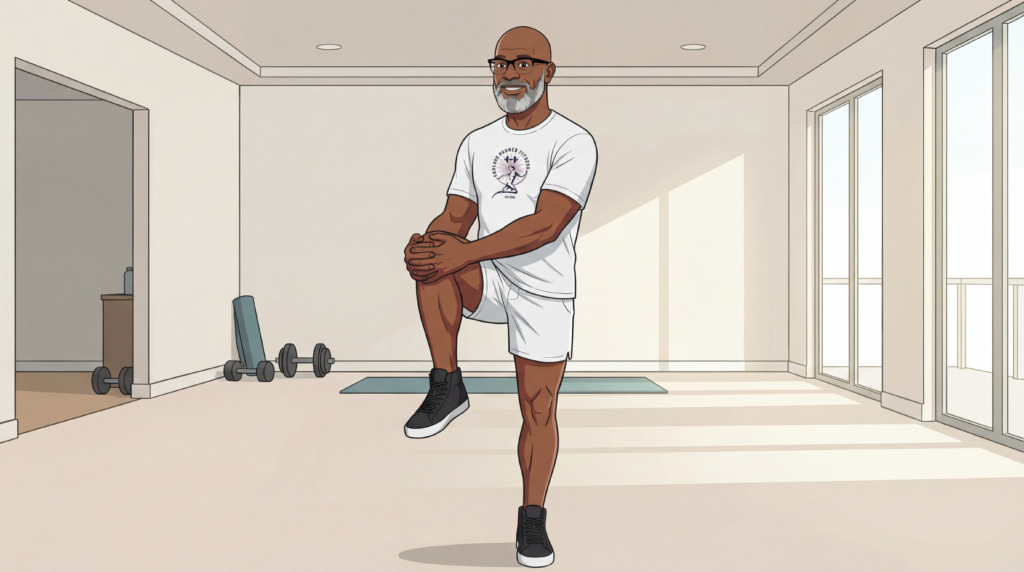

Hybrid fitness training at home is more than a trend —it’s a practical revolution that empowers you to take charge of your health, no matter your starting point or resources. With no equipment required, hybrid fitness opens the door to everyone, merging strength and endurance into a single, dynamic routine.
This article will guide you through the essentials of hybrid fitness, illustrating how you can start from scratch and progress steadily—all while drawing inspiration from the robust training methods of Winter Olympian Desi Johnson of the Australian bobsleigh team. You’ll see that even elite athletes rely on hybrid principles to sharpen their performance, and you can too.
Hybrid fitness training (HFT) at home is not only efficient but also accessible, affordable, and highly adaptable. Whether your goal is to increase stamina, build muscle, lose weight, or simply feel better, these routines can fit your lifestyle. No fluff—every paragraph will serve a purpose, and you’ll walk away with actionable steps and an understanding of why hybrid fitness matters to athletes and beginners alike.
What Is Hybrid Fitness Training?
HFT is the art and science of combining multiple exercise modalities—strength, endurance, agility, flexibility, and often mobility—into a single program. This approach delivers comprehensive benefits, including training both fast- and slow-twitch muscle fibers, boosting cardiovascular health, and improving functional movement patterns.
Unlike conventional routines that focus on a single goal, hybrid fitness combines aerobic and anaerobic exercises. You transition seamlessly from a set of push-ups to a round of mountain climbers, challenging your muscles and lungs together. This mirrors the cross-training principles Winter Olympian Desi Johnson employs: by cultivating both explosive power and sustained endurance, Desi ensures peak performance for the bobsleigh team, where strength and stamina are equally vital.
The best part of home hybrid fitness training is that you can do it anywhere.
Hybrid Fitness Framing: Why Is It Important?
At home, hybrid fitness training is relevant in today’s fast-paced world because it maximizes results while minimizing time and equipment. It’s the same approach used by professionals like Desi Johnson, who must train across multiple domains to excel in their sport. For bobsleigh athletes, hybrid training is essential—combining sprint drills, plyometrics, and bodyweight strength exercises to build explosive starts and maintain endurance down the track.
For everyday people, the hybrid approach translates to real-world strength, increased energy, and a resilient body. It can help you lift groceries, climb stairs, chase after kids, or enjoy weekend adventures, all while improving your health markers.
Few fitness programs are as ideal for beginners as hybrid programs, which use natural movements, body weight, and simple progressions. You can start slowly and adapt the routine to your needs, making it sustainable for long-term growth. Even if you don’t have Olympic aspirations, you can still benefit from training strategies that elite athletes trust.
Why Train at Home Without Equipment?
Training at home without equipment puts you in control. You can exercise when and where you want, without waiting for machines or worrying about gym fees. Bodyweight exercises are safe, scalable, and effective for all fitness levels.
Disciplined training at home also promotes consistency—no excuses about weather, crowded gyms, or lack of equipment. You simply need a clear space and a willingness to improve. This mirrors Desi Johnson’s off-season conditioning, in which bodyweight and hybrid routines keep them strong and agile, even without access to specialized gym equipment.
With hybrid fitness, you can combine functional movements like squats, lunges, push-ups, and jumps for a full-body workout. These exercises train your stabilizers and prime your nervous system for athletic tasks and everyday activities.
Getting Started: Preparation, Mindset, and Space Setup
Clear a space about the size of a yoga mat—no fancy gym required. Wear comfortable clothes, keep water nearby, and set your intentions: do you want to get stronger, improve endurance, or boost overall health?
Write down your goals and track your progress daily or weekly. Begin with short sessions and gradually increase duration and intensity. Elite athletes, including Desi Johnson, use visualization before workouts to mentally prepare, and you can do the same. Take five minutes to focus, breathe, and set a goal for each session.
Begin with a warm-up—a few minutes of dynamic stretches like arm circles, leg swings, and hip rotations. This reduces injury risk and helps your muscle activities for the workout ahead.
Hybrid Fitness Principles: Combining Endurance and Strength
Training at home is most effective when you alternate or combine endurance and strength exercises. Endurance activities like jumping jacks and mountain climbers boost your heart rate and stamina. Strength-focused moves like push-ups and lunges build muscle, increase metabolism, and tone your body.
Top athletic training emphasizes hybrid principles that blend sprint intervals, plyometrics, and resistance-based exercises. For example, for bobsleigh athletes, the ability to push hard for a few seconds and maintain energy throughout the race is crucial. You can adopt the same philosophy: challenge your body in diverse ways, adapt, and grow stronger.
Begin your hybrid fitness training at home by alternating between endurance and strength exercises in a circuit. This not only keeps you engaged but also stimulates multiple muscle groups and energy systems.
Bodyweight Endurance Exercises (No Equipment Needed)
Endurance exercises build your cardiovascular capacity and muscular stamina. Here are expanded bodyweight options:
- Jumping Jacks: 3-4 sets of 20-30 reps. Works calves, shoulders, and core. Stabilizers: glutes, lower back. Great for increasing heart rate and coordination.
- High Knees: 3-4 sets of 30 seconds. Targets hip flexors and quadriceps. Stabilizes the abs and back. Helps improve speed and leg power, as used in sprint drills by Olympians.
- Mountain Climbers: 3-4 sets of 20 reps. Works the shoulders, chest, and core. Stabilizers: triceps, hip flexors. Increase agility and endurance, reflecting Desi Johnson’s interval training for explosive starts.
- Bodyweight Squat Pulses: 3-4 sets of 15 reps. Works quadriceps and glutes. Stabilizes hamstrings and calves. Strengthens legs for powerful pushes, a key skill in bobsleigh.
- Burpees: 3 sets of 12 reps. Full-body endurance, combining squat, push-up, and jump. Enhances explosive movement and stamina.
- Step Outs: 3 sets of 20 reps. Targets hips and thighs, improving mobility; great for warm-ups.
Bodyweight Strength & Hypertrophy Exercises (No Equipment Needed)
:
Build muscle and increase strength with these expanded exercises:
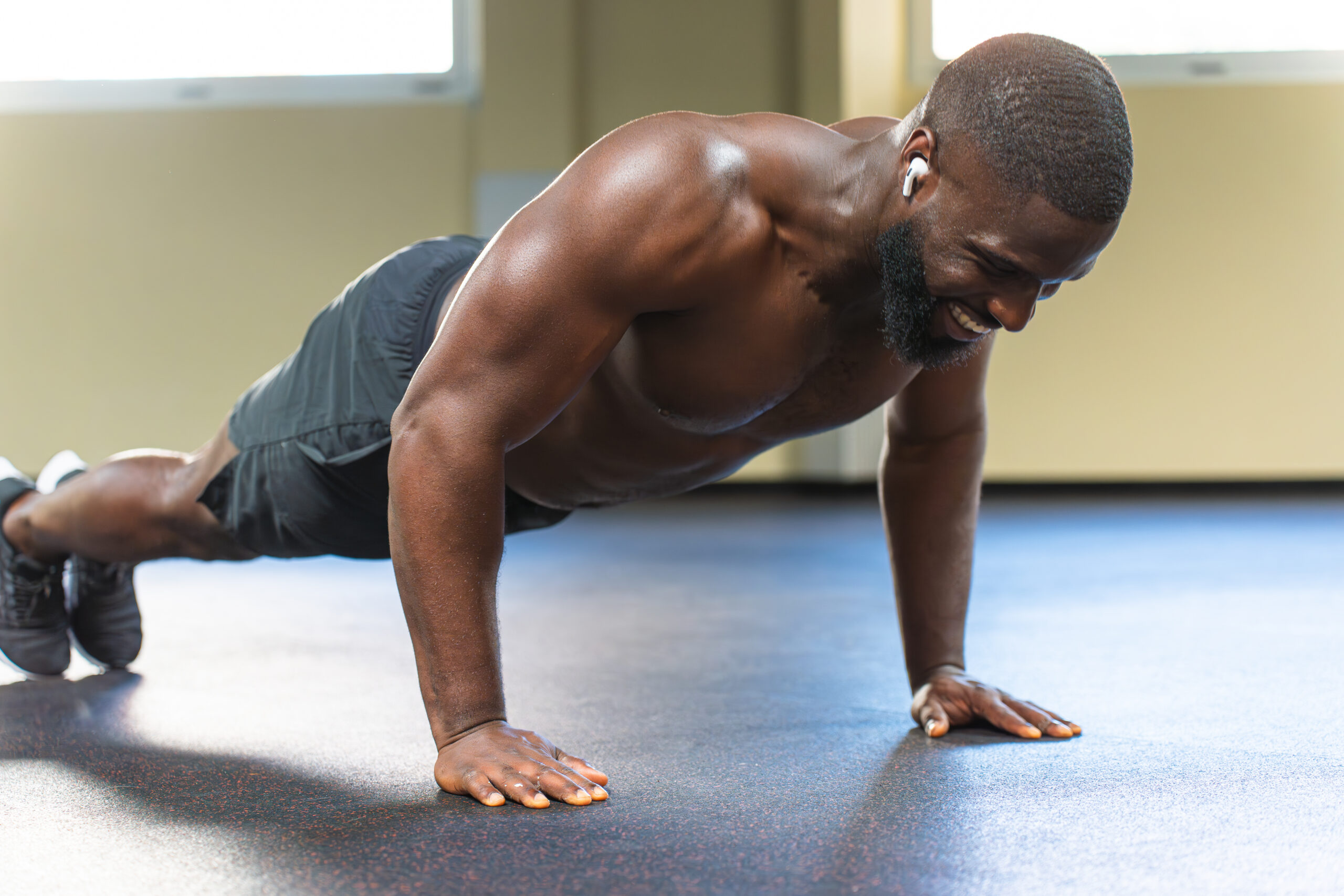
- Push-Ups: 3-4 sets of 8-15 reps. Works chest, triceps. Stabilizers: shoulders, core. Modify with knee push-ups for beginners or diamond push-ups for the advanced.
- Bodyweight Lunges: 3-4 sets of 10 reps per leg. Work the quadriceps and glutes. Stabilizes calves and core. Improves balance and unilateral strength—essential for athletic performance.
- Plank Holds: 3-4 sets of 20-40 seconds. Works the core and shoulders. Stabilize the glutes and the back. Builds endurance and spinal stability, vital for bobsleigh athletes.
- Glute Bridges: 3-4 sets of 15 reps. Works glutes and hamstrings. Stabilizes the core and lower back. Enhances hip extension for sprinting and powerful pushes.
- Squats: 3-4 sets of 15 reps. Works quads, glutes. Stabilizes calves and lower back.
- Supermans: 3 sets of 15 reps. Targets the lower back, glutes, and shoulders. Supports posture and core strength.
Sample Hybrid Fitness Training at Home Routine (No Equipment Needed)
The expanded routine incorporates both endurance and strength, inspired by Desi Johnson’s athletic regimen. Rest 30-60 seconds between sets.
- Jumping Jacks – 4 sets of 25 reps
- Push-Ups – 4 sets of 10 reps
- Bodyweight Lunges – 4 sets of 12 reps per leg
- Mountain Climbers – 4 sets of 18 reps
- Plank Holds – 4 sets of 45 seconds
- Burpees – 3 sets of 12 reps
- Glute Bridges – 4 sets of 15 reps
- Squats – 4 sets of 15 reps
Muscles worked: chest, legs, core, glutes, shoulders, and back. Stabilizers: abs, lower back, calves, hip, flexors. These exercises parallel the hybrid routines used by Desi Johnson, who combines endurance and strength to optimize performance for the Australian bobsleigh team.
Progression & Tracking Your Hybrid Fitness Training at Home
Consistency is key. As you get stronger, try harder variations, increase reps, add sets, or shorten rest intervals. For example, progress from knee push-ups to full push-ups, or from basic lunges to jumping lunges. Track your progress using a journal, app, or spreadsheet.
At any level, every athlete’s training relies on regular assessment and adjustment. Olympians use the Borg Rating of Perceived Exertion (RPE) to gauge intensity, aiming for moderate-to-challenging levels to stimulate adaptation. You can use the same tool: after each workout, rate your effort on a scale of 1 (easy) to 10 (maximal). Aim for 5-7 as you build endurance and strength.
Set weekly goals—complete four workouts, improve your plank hold by ten seconds, and add one rep to each exercise. Celebrate milestones and stay motivated.
Safety & Recovery in Hybrid Fitness Training at Home
Warm up for 5–10 minutes before every session. Try arm circles, leg swings, and dynamic stretches. Cool down afterward with static stretches—hamstring stretches, quad stretches, and deep breathing.
Prioritize proper form over speed. Watch your alignment, especially in squats and push-ups, to prevent injury. Rest for at least one day between hybrid workouts. Hydrate before, during, and after exercise.
Top coaches emphasize recovery as much as training. For professional athletes, sleep, nutrition, and active recovery (walking, yoga, foam rolling) are essential. You should adopt similar habits: aim for 7— 9 hours of sleep, eat balanced meals, and include gentle movement on rest days.
Hybrid Fitness and Athletic Performance: Lessons from a Winter Olympian
Bobsleigh team, like many winter sport athletes, faces unique demands: they need explosive power to launch the sled, endurance to sustain speed, and coordination to navigate the icy track. They are renowned for their fitness approach, which incorporates bodyweight and functional exercises.
Hybrid training is central to preparation: intervals, plyometrics, and strength circuits build not only muscle but also resilience and mental toughness. Olympic athletes’ off-season routine often swaps traditional gym equipment for bodyweight, agility drills, and dynamic movements—mirroring what you can do at home. By following hybrid fitness principles, Desi maximizes athletic versatility and injury prevention.
If you want to train like an Olympian, focus on variety, progression, and balance. Mix endurance exercises with strength moves, challenge your body in new ways, and always listen to your limits. Hybrid fitness training at home mirrors the philosophy of elite athletes: consistency, adaptations, and holistic health.
For further insights, see peer-reviewed articles from the American College of Sports Medicine (ACSM) and the National Strength and Conditioning Association (NSCA), where the impact of hybrid training on athletic performance is explored in detail.
Hybrid Fitness for Beginners: Making Progress Accessible
You don’t need to be a Winter Olympian to start hybrid fitness training at home. The routines outlined here are beginner-friendly and scalable. Start slow, learn proper form, and build confidence. Use your body’s feedback—if an exercise feels too hard, modify it, or if it feels easy, increase reps or sets.
If you have five minutes, do jumping jacks and squats. If you have thirty, complete the full circuit. Over time, you’ll notice improvements in strength, stamina, mood, and overall well-being.
Hybrid training is especially valuable for people with busy schedules—parents, students, professionals—because it integrates multiple fitness goals in less time. You’re not just working out; you’re building a foundation for lifelong health.
Hybrid Fitness Across Ages and Abilities
Older adults can benefit by focusing on low-impact, bodyweight movements that build balance and prevent falls. Children and teens can improve coordination, strength, and confidence. People recovering from injury or illness can use hybrid routines to ease back into activity.
Modify exercises as needed—do step-outs instead of jumping jacks, or wall push-ups instead of floor push-ups. The principles remain the same: movement, adaptation, and gradual progression.
Most elite athletes’ journey also illustrates the power of adaptability. When training facilities were limited, they shifted to home-based hybrid workouts to maintain fitness and mental health. You can do the same by customizing routines to your needs and environment.
Hybrid Fitness and Mental Health
Physical activity is a proven booster for mental well-being. Hybrid fitness training at home encourages creativity, goal-setting, and mindfulness. Changing routines and learning new movements keep the brain engaged and improve cognitive function.
Many professional athletes credit hybrid fitness with improving their mental resilience, noting that varied workouts reduce stress and build confidence. You’ll find that progress in physical fitness often translates to increased focus, mood, and self-esteem
Schedule workouts as “me time” and use exercise as a tool for managing life’s challenges. Even a short session can have a big impact.
Nutrition Tips for Hybrid Fitness Training at Home
Good nutrition fuels your workouts and recovery. Eat a balanced diet with lean proteins, whole grains, healthy fats, and plenty of fruits and vegetables. Hydrate regularly—water is your best friend during exercise.
Nearly all top athletes follow a nutrition plan that supports hybrid training: pre-workout snacks (such as bananas or yogurt) for energy and post-workout meals (such as chicken and rice) for recovery. You don’t need elaborate supplements—just focus on whole food and consistent hydration.
For more on fueling your hybrid fitness journey, check out our article Hybrid Fitness Nutrition Basics and review International Society of Sports Nutrition (ISSN) recommendations for evidence-based advice.
Hybrid Fitness and Injury Prevention
At-home fitness training is safe when done correctly. Focus on gradual progression, proper form, and listening to your body. Take rest days seriously, and address any pain or discomfort immediately.
Pro coaches emphasize the importance of mobility work, stretching, and recovery tools. Integrate dynamic warm-ups and mobility drills—arm circles, hip openers, ankle rotations—to reduce injury risk.
For external resources, refer to the National Academy of Sports Medicine (NASM) and PubMed for peer-reviewed studies on safe exercise practices.
Advanced Hybrid Fitness Progressions
Once you’ve mastered basic routines, challenge yourself with advanced variations:
- Plyometric lunges
- Hand-release push-ups
- Single-leg glute bridges
- Side planks with hip dips
- Burpee tuck jumps
It is believed Olympic athletes follow similar training regimens for competition preparation. Advanced moves boost power, coordination, and athletic performance. Integrate them gradually, focusing on form and safety.
Internal and External Links for Further Learning
- Beginner’s Guide to Hybrid Fitness—Practical tips and routines for new hybrid fitness enthusiasts.
- Hybrid Fitness Nutrition Basics—How to eat and hydrate for hybrid fitness.
- ACSM Position Stands—Evidence-based guidelines for hybrid fitness and injury prevention.
- National Center for Biotechnology Information (NCBI)—Peer-reviewed articles on exercise science.
Summary: Key Takeaways and Next Steps for Hybrid Fitness Training at Home
Hybrid fitness training at home, with no equipment needed, is an accessible and powerful approach for beginners and experienced athletes alike. By blending strength and endurance exercises, you build a resilient body, boost energy, and adapt to life’s demands. The principles used by Winter Olympian Desi Johnson for the Australian bobsleigh team—variety, progression, and balance—can be applied to your own routines for enhanced performance and injury prevention.
Hybrid fitness is flexible, scalable, and relevant to people of all ages and abilities. Progress at your own pace, track your milestones, and celebrate every improvement. Nutrition, recovery, and mental health are integral to your success, so build habits that support your holistic well-being.
Your next steps are simple: choose a workout routine from this article, set a goal, and get started. Use internal and external resources for guidance and remember that you don’t need equipment or gym access to achieve meaningful progress. Each session moves you closer to your health and fitness goals
Hybrid fitness training at home is not just a workout—it’s a lifestyle. By following proven strategies and adapting them to your needs, you can unlock your physical potential, just as Desi Johnson does in Olympic competition. Stay consistent, challenge yourself, and let hybrid fitness pave the way to a stronger, healthier you.
Keep exploring our Endless Summer Fitness articles for more guidance, and remember: smart tools, human guidance, and a fitness path that finally feels possible.
Frequently Asked Questions about Hybrid Fitness Training at Home
- What is hybrid fitness training at home?
Hybrid fitness training at home combines endurance and strength exercises, using your bodyweight in your living space. It is accessible, scalable, and effective, drawing on athletic principles used by Olympians such as Desi Johnson.
- Can beginners do hybrid fitness training at home?
Absolutely! Hybrid fitness is ideal for beginners. Start with basic moves, increase intensity gradually, and modify experiences as needed.
- How often should I do hybrid fitness workouts?
Begin with two to three sessions per week, resting at least one day between workouts. As you improve, add more sessions or increase the difficulty for continued progress.
- Do I need any equipment for home hybrid fitness training?
No equipment is needed. All exercises use your own bodyweight, making hybrid fitness accessible for everyone.
- How do I track my progress?
Use a journal, app, or spreadsheet to record workouts, reps, and sets. Tracking helps you stay motivated and see real changes.
- Is hybrid fitness training safe?
Hybrid fitness is safe when you use proper form, warm up, cool down, and listen to your body. For injury prevention, refer to external resources like ACSM and NSCA.
ESF Safety Disclaimer: Always consult your physicians or healthcare provider before starting any new fitness program. The exercises and routines in this article are for information purposes only and may not be suitable for everyone. Stop immediately if you experience pain or discomfort and seek professional advice as needed.
Smart tools, human guidance, and a fitness path that finally feels possible.