Endless Summer Fitness provides workout tips for fitness beginners, weekend warriors, post-physical therapy individuals, men and women in middle life, and anyone seeking fitness results.

Start Now! It’s Never Too Late!

You Can Learn and Grow at Any Age

As I always do in all posts, this article is for informational purposes only. Be sure to consult with your health professional before beginning any exercise program.

Seniors Start Your Engines!

Many older adults choose not to work out because they may feel more self-conscious about their physical appearance. More senior people are increasingly concerned about physical health issues such as joint stiffness, bone degeneration, muscle tenderness, and illness.

But if you have been sedentary for many years or decades, you can still benefit from physical activity. Studies have shown that even modest exercise can significantly help older adults.

Exercise and Live Longer and Healthier
 

A 2011 Harvard Health Publishing study found that men who started exercising in midlife had lower mortality rates than those who did so before age 50. Additionally, men who began regular workouts after age 50 had a 49% lower death rate than those who remained sedentary.

They cited a 2021 study published in Dove Press. The original research aimed to identify methods for assessing physical fitness age and analyzed the relationship between biological fitness age. A portion of the study compared the physical fitness and chronological ages of a frail elderly group and an exercise group. All the subjects were older women aged 60–94.
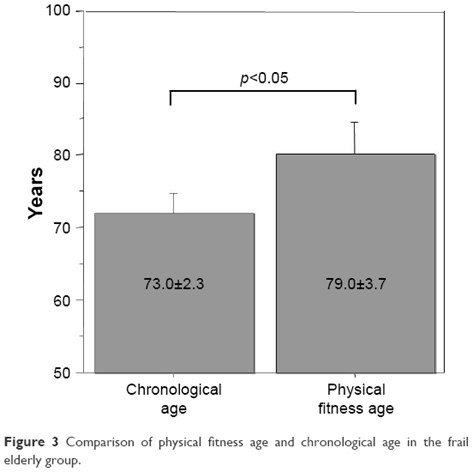
Dove Medical Press Ltd: Developing an assessment based on physical fitness age to evaluate motor function in frail and healthy elderly women.

The mean physical fitness age in the frail elderly group was 79.0 years, compared with a chronological age of 73.0 years. This indicates that subjects in this group were older than expected for their physical fitness levels.
Dove Medical Press Ltd: Developing an assessment based on physical fitness age to evaluate motor function in frail and healthy elderly women.

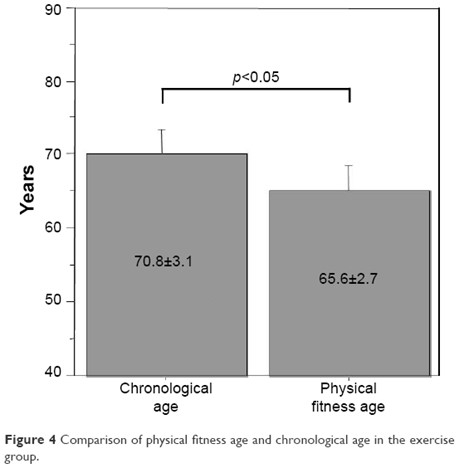
The mean physical fitness age in the exercise group was 65.6 years, significantly lower than the mean chronological age of 70.8 years.

The Fountain of Youth is Exercise!


Although it may not have been the Dove Press study’s specific purpose, the data further support the theory that consistent physical activity helps slow the aging process. Sometimes significantly. A 2014 Harvard Health Publishing study of men, titled “Exercise and Aging: Can You Walk Away from Father Time,” further supports Dove Press’s findings.

The Harvard report stated that regular exercise helps slow aging, and physical activity provides healthier, more dynamic years. Physical fitness helps us all live longer. A Harvard study indicates that men who routinely exercise can expect to add approximately two hours of life expectancy for each hour of exercise.

The 7 Reasons Why it’s never too late to start

  1. Fitness and proper nutrition effectively fight chronic disease.
  2. Having a daily workout plan helps you affirm your independence.
  3. Exercise enables you to stay mobile and energetic.
  4. Older adults who exercise tend to live longer.
  5. People who remain physically active are at a lower risk of dying from cancer and heart disease.
  6. Exercise helps relieve aches and pains, including back pain, arthritis, migraines, stiff joints, and chronic soreness.
  7. Exercise can invigorate your physical and mental strength and make you feel much better!
Conclusion

The data is specific: exercise benefits everyone at every age, and it’s never too late or too early to start. Begin your exercise program today, and you will benefit from its many benefits. But no matter where your starting point lands on the chronological scale after you make the first step, keep stepping until the scale runs out. You may be surprised how far you may travel before it is all said and done. And be sure to bring a friend or two along the journey. It will be more fun!

Citing a 2021 study published in Dove Press, the original research aimed to identify methods for assessing physical fitness age and analyzed the relationship between biological fitness age. A portion of the study compared the physical fitness ages and chronological ages of a frail elderly group with those of an exercise group. All the subjects were elderly women aged 60–94.


Before starting any new health and fitness program or taking supplements, it’s crucial to consult with your healthcare professional. They can provide personalized advice based on your medical history and current health status, ensuring your new regimen is safe and effective. This step helps prevent potential health risks and ensures that any changes you make are beneficial and sustainable in the long run. Your healthcare professional is your best resource for making informed decisions about your health and wellness journey.


 

You Can Learn and Grow at Any Age

As I always do in all posts, this article is for informational purposes only. Be sure to consult with your health professional before beginning any exercise program.

Seniors Start Your Engines!

Many older adults choose not to work out because they may feel more self-conscious about their physical appearance. More senior people are increasingly concerned about physical health issues such as joint stiffness, bone degeneration, muscle tenderness, and illness.

But if you have been sedentary for many years or decades, you can still benefit from physical activity. Studies have shown that even modest exercise can significantly help older adults.

Exercise and Live Longer and Healthier


A 2011 Harvard Health Publishing study found that men who started exercising in midlife had lower mortality rates than those who did so before age 50. Additionally, men who began regular workouts after age 50 had a 49% lower death rate than those who remained sedentary.

They cited a 2021 study published in Dove Press. The original research aimed to identify methods for assessing physical fitness age and analyzed the relationship between biological fitness age. A portion of the study compared the physical fitness and chronological ages of a frail elderly group and an exercise group. All the subjects were older women aged 60–94.

Dove Medical Press Ltd: Developing an assessment based on physical fitness age to evaluate motor function in frail and healthy elderly women.

The mean physical fitness age in the frail elderly group was 79.0 years, compared with a chronological age of 73.0 years. This indicates that subjects in this group were older than expected for their physical fitness levels.

Dove Medical Press Ltd: Developing an assessment based on physical fitness age to evaluate motor function in frail and healthy elderly women.

The mean physical fitness age in the exercise group was 65.6 years, significantly lower than the mean chronological age of 70.8 years.

The Fountain of Youth is Exercise!


Although it may not have been the Dove Press study’s specific purpose, the data further support the theory that consistent physical activity helps slow the aging process. Sometimes significantly. A 2014 Harvard Health Publishing study of men, titled “Exercise and Aging: Can You Walk Away from Father Time,” further supports Dove Press’s findings.

The Harvard report stated that regular exercise helps slow aging, and physical activity provides healthier, more dynamic years. Physical fitness helps us all live longer. A Harvard study indicates that men who routinely exercise can expect to add approximately two hours of life expectancy for each hour of exercise.

The 7 Reasons Why it’s never too late to start

  1. Fitness and proper nutrition effectively fight chronic disease.
  2. Having a daily workout plan helps you affirm your independence.
  3. Exercise enables you to stay mobile and energetic.
  4. Older adults who exercise tend to live longer.
  5. People who remain physically active are at a lower risk of dying from cancer and heart disease.
  6. Exercise helps relieve aches and pains, including back pain, arthritis, migraines, stiff joints, and chronic soreness.
  7. Exercise can invigorate your physical and mental strength and make you feel much better!

Conclusion

The data is specific: exercise benefits everyone at every age, and it’s never too late or too early to start. Begin your exercise program today, and you will benefit from its many benefits. But no matter where your starting point lands on the chronological scale after you make the first step, keep stepping until the scale runs out. You may be surprised how far you may travel before it is all said and done. And be sure to bring a friend or two along the journey. It will be more fun!

Citing a 2021 study published in Dove Press, the original research aimed to identify methods for assessing physical fitness age and analyzed the relationship between biological fitness age. A portion of the study compared the physical fitness ages and chronological ages of a frail elderly group with those of an exercise group. All the subjects were elderly women aged 60–94.


Before starting any new health and fitness program or taking supplements, it’s crucial to consult with your healthcare professional. They can provide personalized advice based on your medical history and current health status, ensuring your new regimen is safe and effective. This step helps prevent potential health risks and ensures that any changes you make are beneficial and sustainable in the long run. Your healthcare professional is your best resource for making informed decisions about your health and wellness journey.


Leave a Comment

Your email address will not be published. Required fields are marked *

Verified by MonsterInsights