Endless Summer Fitness provides workout tips for fitness beginners, weekend warriors, post-physical therapy individuals, men and women in middle life, and anyone seeking fitness results.

Exercises for Women Over 60: 3 Must-Do Moves for Hybrid Fitness

Exercises for Women Over 60

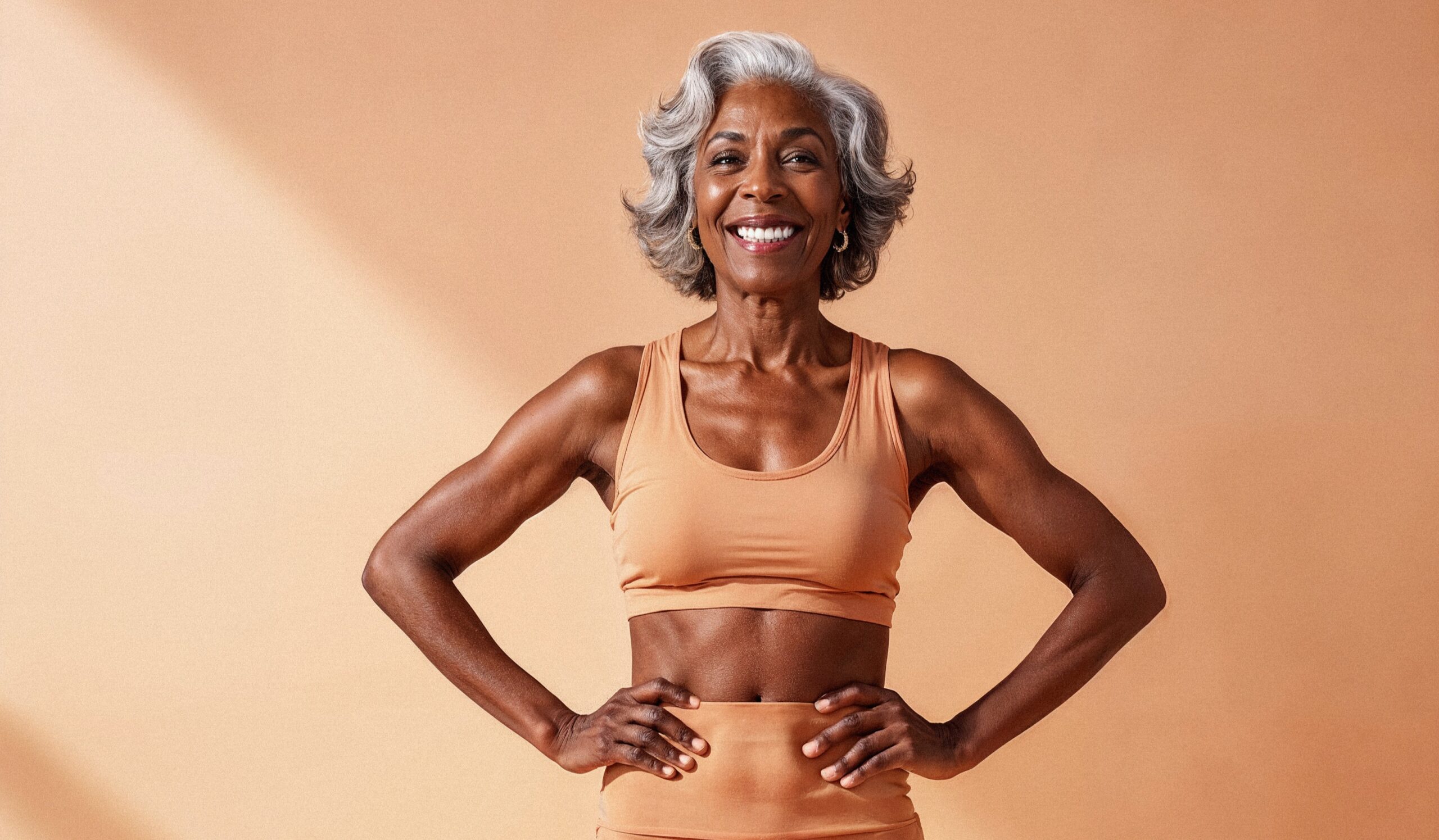
If you’re looking for exercises for women over 60, you don’t need a complicated routine. You need the right moves—ones that protect your joints, rebuild strength, sharpen balance, and keep you confident doing real-life things like carrying groceries, climbing stairs, and getting up off the floor.

At Endless Summer Fitness, we frame this as hybrid fitness: a simple blend of strength + conditioning + mobility so your body performs well in everyday life, not just in the gym. If you’re brand new, start with our beginner roadmap. You Want Hybrid Fitness Training? Start Here! For a no-equipment approach you can do in your living room, see How to Start Hybrid Fitness Training at Home (No Equipment Needed).

More good news: the basics are strongly supported by research and major organizations. The National Institute on Aging (NIA) emphasizes strength, balance, flexibility, and endurance as key pillars as we age. Likewise, the peer-reviewed ACSM positions stand on older adults highlights that resistance, aerobic, flexibility, and balance training can be safe and highly beneficial when progressed appropriately (ACSM/AHA recommendations for older adults).

Exercises for Women Over 60

Why these 3 exercises (and why “must-do” isn’t hype)

After 60, the “best” exercise isn’t the flashiest one. It’s the one you can do consistently, with good form, and with a clear payoff. The three moves below were chosen because they check the boxes that matter most for long-term hybrid fitness.

  • Strength you can use: legs, hips, and upper back strength to support posture and daily tasks.
  • Balance under control: training that improves stability and reduces “near-miss” stumbles.
  • Joint-friendly range of motion: mobility that helps you move without feeling stiff or fragile.
  • Easy to scale: beginner options today and stronger variations later.
  • Hybrid-ready: pairs well with walking, cycling, or any low-impact cardio you enjoy.

If you have osteoporosis, joint replacements, uncontrolled blood pressure, or you’re returning after an injury, it’s smart to get new exercise approved by your clinician or physical therapist first. When that box is checked, progressive resistance training is widely supported as a way to improve strength and function in older adults (for an overview of evidence, see NCBI’s free full-text review: Resistance training in older adults).
Exercises for Women Over 60

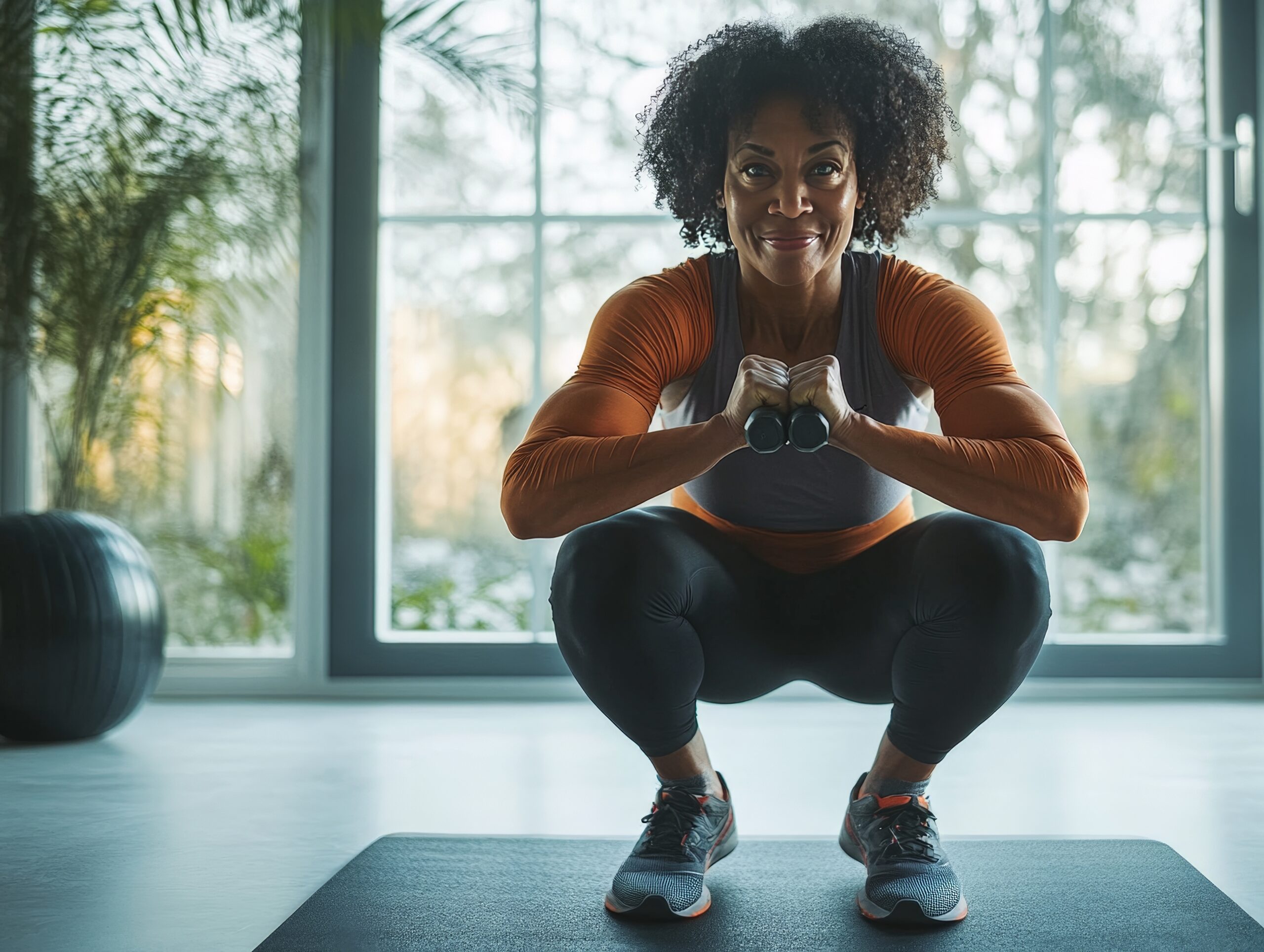
Exercises for women over 60 #1: Sit-to-Stand (Squat Pattern)

The sit-to-stands is the most underrated strength move on the planet. It trains you to use the exact pattern you need to rise from a chair, get off the toilet, or stand up after gardening. In hybrid fitness terms, it’s “real-world power” for your legs and hips—without needing a barbell.

Why it matters after 60: Strong quads, glutes, and hips help protect knees, support stairs, and improve walking speed. You also practice controlling your body weight through a full range—key for confidence and fall prevention.

How to do it (chair version):

  1. Sit tall on a sturdy chair. Place feet about hip-width apart, whole foot on the floor.
  2. Brace your midsection as if you’re about to cough. Keep chest proud.
  3. Lean slightly forward from the hips (not the low back), then stand up.
  4. Pause for one second at the top. Squeeze glutes gently.
  5. Lower under control until you touch the chair—don’t “plop.”

Form cues: knees track over the middle toes, heels stay down, and you should feel the work in thighs and glutes more than the low back. If your knees cave inward, place a loop band above the knees or lightly push your knees out.

Make it easier: Use a higher chair, place hands on armrests, or reduce depth. Make it harder: Hold a light dumbbell to your chest, slow the lowering phase to 3 seconds, or progress to a bodyweight squat.

Beginner dose: 2-3 sets of 6-10 reps, resting 60-90 seconds. Pair it with a brisk walk later the same day or the next day for any easy hybrid week.
Exercises for Women Over 60

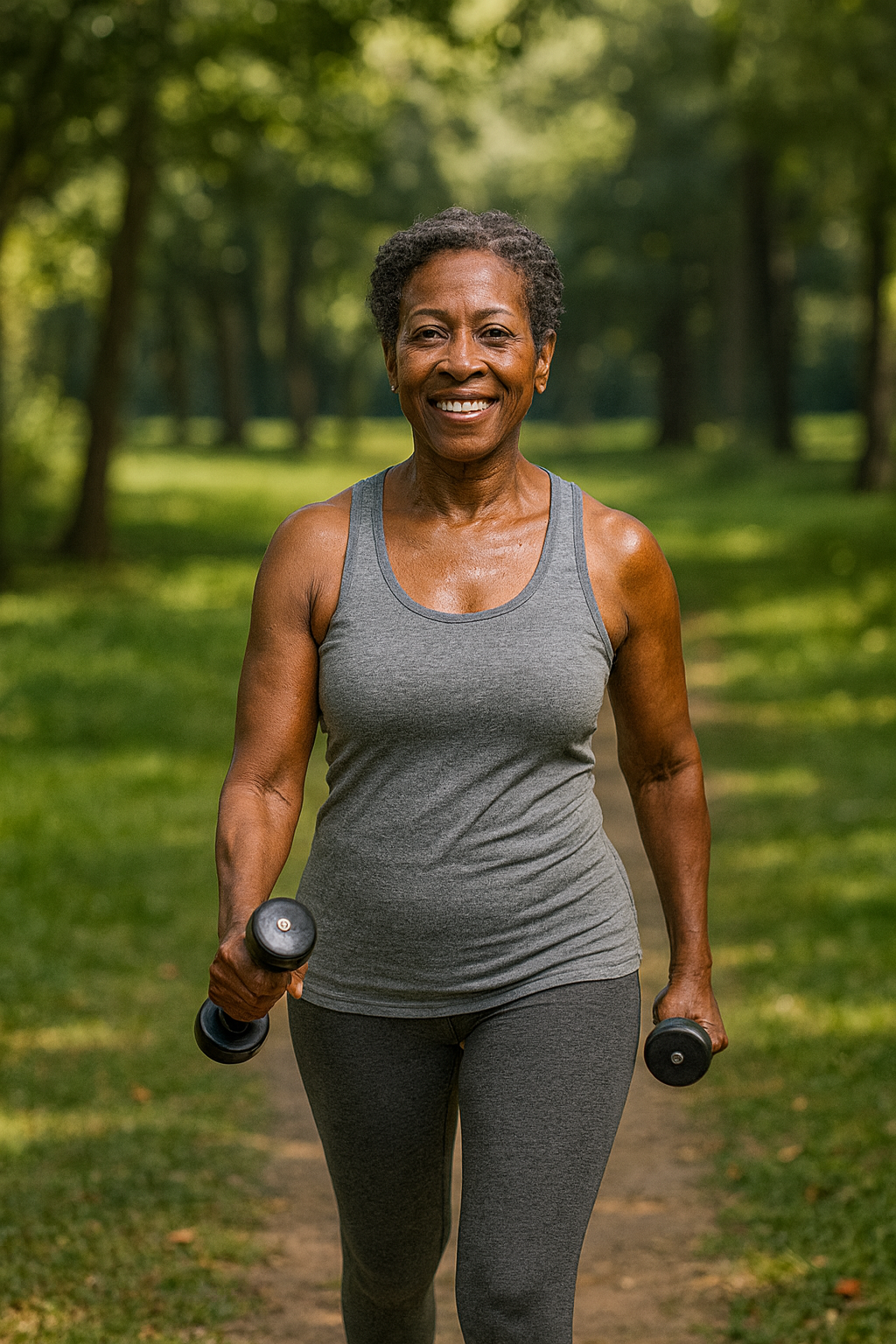
Exercises for women over 60 #2: Suitcase Carry (Core + Grip + Posture)

Think of the suitcase carry as “walking tall while holding life.” It trains your core to resist side-bending, your grip to stay strong, and your shoulders to sit in a healthier position. Since hybrid fitness is about strength that transfers to movement, loaded carries are a perfect fit.

Why it matters after 60: Carrying a bag, lifting a laundry basket, or holding a grandchild often happens on one side. This move builds the “anti-tilt” strength that keeps your spine stable and your gait steady.

How to do it:

  1. Hold one dumbbell or kettlebell at your side like a suitcase. Start light.
  2. Stand tall: ribs stacked over hips, shoulders level, eyes forward.
  3. Walk 20-40 steps at a controlled pace.  Breathe normally.
  4. Set the weight down safely, switch sides, and repeat.

Common fixes: If you lean away from the weight, go lighter. If your shoulder creeps up, think “long neck” and gently pull the shoulder blade down and back. If walking bothers your back, shorten the distance and focus on perfect posture.

Beginner does: 2-4 carries per side. Choose a weight that feels like a 6-7/10 effort by the last 10 steps, while posture stays crisp. Over time, add distance first, then load.
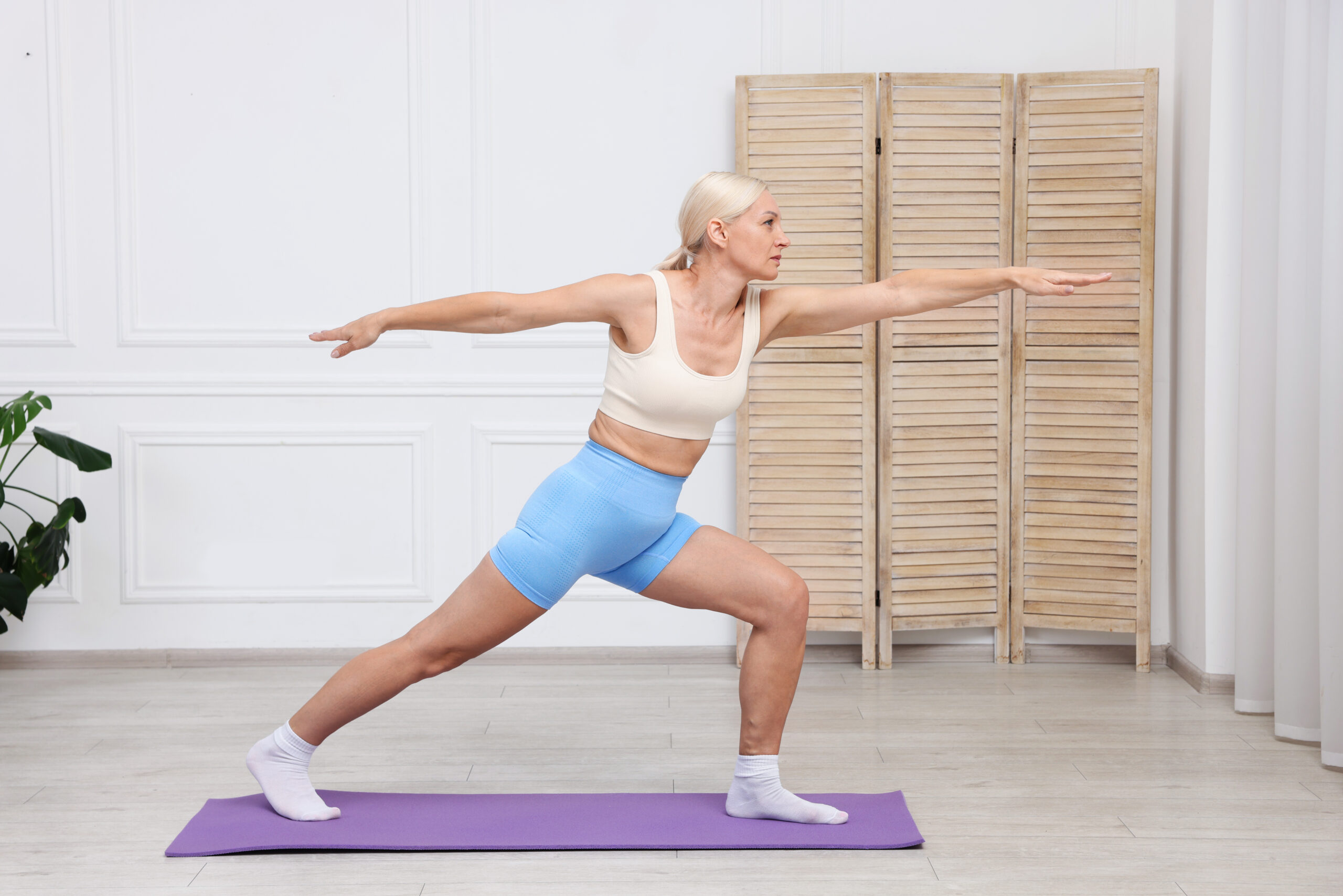
Exercises for women over 60 #3: Single -Leg Balance + Reach (Supported)

[If too difficult, both feet on the ground]

Balance isn’t just about “not falling.” It’s a skill your nervous system practices. A supported single-leg balance with a gentle reach trains your ankles, hips, and core to make quick corrections—exactly what you need when you step off a curb or turn fast in the kitchen.

Why it matters after 60: Balance training is a core piece of fall-prevention programs. A large evidence review in JAMA found that exercise interventions can reduce falls in older adults (USPSTF evidence review).

How to do it (supported):

  1. Stand next to a wall or counter so you can touch it with two fingers.
  2. Shift weight onto one foot. Keep the knee soft, not locked.
  3. Lift the other foot slightly (even an inch is fine).
  4. Reach the free leg forward, then back, then to the side—small ranges first.
  5. Reset, switch legs, and repeat.

Safety cues: stay near support, keep your breathing steady, and stop if you feel dizzy. The “tripod foot” (big toe, little toe, heel) stabilizes the ankle.

Progressions: use less fingertip support, slow the reaches, or close your eyes only when you’re highly stable and safe. Beginner dose: 2 rounds per side, 20-30 seconds each round, or 6-8 controlled reaches in each direction.

A simple hybrid workout (20 minutes, 2–3x/week)

This is a straightforward template you can repeat for 4-6 weeks. Log your reps, load, and carry distance to progress gradually.

Warm-up (3-5 minutes): easy marching in place, shoulder rolls, and 5 slow sit-to-stands. Keep it gentle and get your joints moving.

Main circuit (repeat 2–3 rounds):

  • Sit-to-Stand: 6-10 reps
  • Suitcase Carry: 20-40 steps per side
  • Supported Single-Leg Reach: 20-30 seconds per side
  • Rest: 60-90 seconds, then start the next round

Optional hybrid finisher (5-10 minutes): brisk walking, cycling, or a comfortable incline treadmill place. Aim for a “can talk, slightly breathy” effort.

Cool-down (2 minutes): slow walking and gentle calf/hip stretches. Stop stretching before you feel pain.

Call to Action (CTA) Next steps (keep it simple)

CTA #1: If you want an easy starting point for intensity, warm-ups, and weekly structure, read “You Want Hybrid Fitness Training? Start Here!” and use it as your 7-day checklist.

CTA #2: Prefer workouts that don’t require equipment? Follow the step-by-step guide in “How to Start Hybrid Fitness Training at Home (No Equipment Needed)” and plug the three “must-do” exercises into that plan.

Summary

The best exercises for women over 60 are the ones that build strength, balance, and mobility without beating up your joints. That’s why the sit-to-stand, suitcase carry, and supported single-leg reach deserve a permanent spot in your week.

Each move has a clear benefit. Sit-to-stands strengthen the legs and hips for stairs and standing up with ease. Suitcase carries train posture, grip, and core stability for everyday carrying. Single-leg balance work improves stability and helps you react faster when you trip or turn.

From a hybrid fitness lens, these exercises also “play well” with cardio. You can lift a little, walk a little, and keep improving—without needing marathon sessions. Over time, you’ll feel stronger in daily life and more capable in the activities you enjoy.

Next step: do the 20-minute routine 2-3 times per week for a month. Track your reps and distances, then progress slowly. If you want extra structure, use the two ESF articles linked above to build a simple weekly plan you’ll actually stick with.

FAQs

How often should women over 60 train for strength?

Most people do well with 2-3 strength sessions per week, with a day between sessions. Start with shorter workouts and build consistently first.

What if my knees hurt during sit-to-stands?

Use a higher chair, reduce depth, and slow the lowering phase. Keep knees tracking over toes. If pain persists, get cleared by a clinician and consider a PT assessment.

Do I need heavy weights to see results?

No. You need the right challenge for you. Start with a load that lets you keep perfect form, then increase gradually as it feels easier.

Are these exercises safe for people with osteoporosis?

Many people with osteoporosis can train safely, but you should get individualised guidance. Avoid fast, uncontrolled bending or twisting, and progress resistance slowly with medical clearance.

What’s the best cardio for hybrid fitness after 60?

Walking is a great base. Cycling, swimming, and rowing can also work well. Choose what you can do consistently, then build time or pace slowly.

How do I know if I’m progressing?

Watch for small wins: more reps with the same chair height, longer carries with stable posture, and less need to touch the counter during balance drills. Progress should feel steady, not rushed.

Disclosure

This content is for general educational purposes only and is not medical advice. Always consult a physician or qualified healthcare professional before starting any exercise or nutrition program, especially if you are pregnant, nursing, have a medical condition, take medications, or are recovering from an injury. Individual needs vary, and any neutrino information provided is not intended to diagnose, treat, cure, or prevent a disease.

References

  • National Institute on Aging (NIA): Exercise and Older Adults Toolkit
  • Nelson ME, et al. Physical activity and public health in older adults (ACSM/AHA recommendations). PubMed
  • BCI/NIH (NCBI). Resistance training in older adults
  • US Preventive Services Task Force evidence review on falls prevention. JAMA

Smart tools with human guidance that are straightforward, simple, effective, and fun.

Exercises for Women Over 60

If you’re looking for exercises for women over 60, you don’t need a complicated routine. You need the right moves—ones that protect your joints, rebuild strength, sharpen balance, and keep you confident doing real-life things like carrying groceries, climbing stairs, and getting up off the floor.

At Endless Summer Fitness, we frame this as hybrid fitness: a simple blend of strength + conditioning + mobility so your body performs well in everyday life, not just in the gym. If you’re brand new, start with our beginner roadmap. You Want Hybrid Fitness Training? Start Here! For a no-equipment approach you can do in your living room, see How to Start Hybrid Fitness Training at Home (No Equipment Needed).

More good news: the basics are strongly supported by research and major organizations. The National Institute on Aging (NIA) emphasizes strength, balance, flexibility, and endurance as key pillars as we age. Likewise, the peer-reviewed ACSM positions stand on older adults highlights that resistance, aerobic, flexibility, and balance training can be safe and highly beneficial when progressed appropriately (ACSM/AHA recommendations for older adults).

Exercises for Women Over 60

Why these 3 exercises (and why “must-do” isn’t hype)

After 60, the “best” exercise isn’t the flashiest one. It’s the one you can do consistently, with good form, and with a clear payoff. The three moves below were chosen because they check the boxes that matter most for long-term hybrid fitness.

  • Strength you can use: legs, hips, and upper back strength to support posture and daily tasks.
  • Balance under control: training that improves stability and reduces “near-miss” stumbles.
  • Joint-friendly range of motion: mobility that helps you move without feeling stiff or fragile.
  • Easy to scale: beginner options today and stronger variations later.
  • Hybrid-ready: pairs well with walking, cycling, or any low-impact cardio you enjoy.

If you have osteoporosis, joint replacements, uncontrolled blood pressure, or you’re returning after an injury, it’s smart to get new exercise approved by your clinician or physical therapist first. When that box is checked, progressive resistance training is widely supported as a way to improve strength and function in older adults (for an overview of evidence, see NCBI’s free full-text review: Resistance training in older adults).

Exercises for Women Over 60

Exercises for women over 60 #1: Sit-to-Stand (Squat Pattern)

The sit-to-stands is the most underrated strength move on the planet. It trains you to use the exact pattern you need to rise from a chair, get off the toilet, or stand up after gardening. In hybrid fitness terms, it’s “real-world power” for your legs and hips—without needing a barbell.

Why it matters after 60: Strong quads, glutes, and hips help protect knees, support stairs, and improve walking speed. You also practice controlling your body weight through a full range—key for confidence and fall prevention.

How to do it (chair version):

  1. Sit tall on a sturdy chair. Place feet about hip-width apart, whole foot on the floor.
  2. Brace your midsection as if you’re about to cough. Keep chest proud.
  3. Lean slightly forward from the hips (not the low back), then stand up.
  4. Pause for one second at the top. Squeeze glutes gently.
  5. Lower under control until you touch the chair—don’t “plop.”

Form cues: knees track over the middle toes, heels stay down, and you should feel the work in thighs and glutes more than the low back. If your knees cave inward, place a loop band above the knees or lightly push your knees out.

Make it easier: Use a higher chair, place hands on armrests, or reduce depth. Make it harder: Hold a light dumbbell to your chest, slow the lowering phase to 3 seconds, or progress to a bodyweight squat.

Beginner dose: 2-3 sets of 6-10 reps, resting 60-90 seconds. Pair it with a brisk walk later the same day or the next day for any easy hybrid week.

Exercises for Women Over 60

Exercises for women over 60 #2: Suitcase Carry (Core + Grip + Posture)

Think of the suitcase carry as “walking tall while holding life.” It trains your core to resist side-bending, your grip to stay strong, and your shoulders to sit in a healthier position. Since hybrid fitness is about strength that transfers to movement, loaded carries are a perfect fit.

Why it matters after 60: Carrying a bag, lifting a laundry basket, or holding a grandchild often happens on one side. This move builds the “anti-tilt” strength that keeps your spine stable and your gait steady.

How to do it:

  1. Hold one dumbbell or kettlebell at your side like a suitcase. Start light.
  2. Stand tall: ribs stacked over hips, shoulders level, eyes forward.
  3. Walk 20-40 steps at a controlled pace.  Breathe normally.
  4. Set the weight down safely, switch sides, and repeat.

Common fixes: If you lean away from the weight, go lighter. If your shoulder creeps up, think “long neck” and gently pull the shoulder blade down and back. If walking bothers your back, shorten the distance and focus on perfect posture.

Beginner does: 2-4 carries per side. Choose a weight that feels like a 6-7/10 effort by the last 10 steps, while posture stays crisp. Over time, add distance first, then load.

Exercises for women over 60 #3: Single -Leg Balance + Reach (Supported)

[If too difficult, both feet on the ground]

Balance isn’t just about “not falling.” It’s a skill your nervous system practices. A supported single-leg balance with a gentle reach trains your ankles, hips, and core to make quick corrections—exactly what you need when you step off a curb or turn fast in the kitchen.

Why it matters after 60: Balance training is a core piece of fall-prevention programs. A large evidence review in JAMA found that exercise interventions can reduce falls in older adults (USPSTF evidence review).

How to do it (supported):

  1. Stand next to a wall or counter so you can touch it with two fingers.
  2. Shift weight onto one foot. Keep the knee soft, not locked.
  3. Lift the other foot slightly (even an inch is fine).
  4. Reach the free leg forward, then back, then to the side—small ranges first.
  5. Reset, switch legs, and repeat.

Safety cues: stay near support, keep your breathing steady, and stop if you feel dizzy. The “tripod foot” (big toe, little toe, heel) stabilizes the ankle.

Progressions: use less fingertip support, slow the reaches, or close your eyes only when you’re highly stable and safe. Beginner dose: 2 rounds per side, 20-30 seconds each round, or 6-8 controlled reaches in each direction.

A simple hybrid workout (20 minutes, 2–3x/week)

This is a straightforward template you can repeat for 4-6 weeks. Log your reps, load, and carry distance to progress gradually.

Warm-up (3-5 minutes): easy marching in place, shoulder rolls, and 5 slow sit-to-stands. Keep it gentle and get your joints moving.

Main circuit (repeat 2–3 rounds):

  • Sit-to-Stand: 6-10 reps
  • Suitcase Carry: 20-40 steps per side
  • Supported Single-Leg Reach: 20-30 seconds per side
  • Rest: 60-90 seconds, then start the next round

Optional hybrid finisher (5-10 minutes): brisk walking, cycling, or a comfortable incline treadmill place. Aim for a “can talk, slightly breathy” effort.

Cool-down (2 minutes): slow walking and gentle calf/hip stretches. Stop stretching before you feel pain.

Call to Action (CTA) Next steps (keep it simple)

CTA #1: If you want an easy starting point for intensity, warm-ups, and weekly structure, read “You Want Hybrid Fitness Training? Start Here!” and use it as your 7-day checklist.

CTA #2: Prefer workouts that don’t require equipment? Follow the step-by-step guide in “How to Start Hybrid Fitness Training at Home (No Equipment Needed)” and plug the three “must-do” exercises into that plan.

Summary

The best exercises for women over 60 are the ones that build strength, balance, and mobility without beating up your joints. That’s why the sit-to-stand, suitcase carry, and supported single-leg reach deserve a permanent spot in your week.

Each move has a clear benefit. Sit-to-stands strengthen the legs and hips for stairs and standing up with ease. Suitcase carries train posture, grip, and core stability for everyday carrying. Single-leg balance work improves stability and helps you react faster when you trip or turn.

From a hybrid fitness lens, these exercises also “play well” with cardio. You can lift a little, walk a little, and keep improving—without needing marathon sessions. Over time, you’ll feel stronger in daily life and more capable in the activities you enjoy.

Next step: do the 20-minute routine 2-3 times per week for a month. Track your reps and distances, then progress slowly. If you want extra structure, use the two ESF articles linked above to build a simple weekly plan you’ll actually stick with.

FAQs

How often should women over 60 train for strength?

Most people do well with 2-3 strength sessions per week, with a day between sessions. Start with shorter workouts and build consistently first.

What if my knees hurt during sit-to-stands?

Use a higher chair, reduce depth, and slow the lowering phase. Keep knees tracking over toes. If pain persists, get cleared by a clinician and consider a PT assessment.

Do I need heavy weights to see results?

No. You need the right challenge for you. Start with a load that lets you keep perfect form, then increase gradually as it feels easier.

Are these exercises safe for people with osteoporosis?

Many people with osteoporosis can train safely, but you should get individualised guidance. Avoid fast, uncontrolled bending or twisting, and progress resistance slowly with medical clearance.

What’s the best cardio for hybrid fitness after 60?

Walking is a great base. Cycling, swimming, and rowing can also work well. Choose what you can do consistently, then build time or pace slowly.

How do I know if I’m progressing?

Watch for small wins: more reps with the same chair height, longer carries with stable posture, and less need to touch the counter during balance drills. Progress should feel steady, not rushed.

Disclosure

This content is for general educational purposes only and is not medical advice. Always consult a physician or qualified healthcare professional before starting any exercise or nutrition program, especially if you are pregnant, nursing, have a medical condition, take medications, or are recovering from an injury. Individual needs vary, and any neutrino information provided is not intended to diagnose, treat, cure, or prevent a disease.

References

  • National Institute on Aging (NIA): Exercise and Older Adults Toolkit
  • Nelson ME, et al. Physical activity and public health in older adults (ACSM/AHA recommendations). PubMed
  • BCI/NIH (NCBI). Resistance training in older adults
  • US Preventive Services Task Force evidence review on falls prevention. JAMA

Smart tools with human guidance that are straightforward, simple, effective, and fun.

Leave a Comment

Your email address will not be published. Required fields are marked *

Verified by MonsterInsights