
The meal prep for beginners doesn’t need to feel overwhelming. When you follow a simple system, you can save 5 hours every week, reduce stress, and fuel your hybrid-athlete lifestyle with meals that actually taste good. Meal prep for beginners works because it removes decision fatigue, keeps your nutrition consistent, and supports your training goals — whether you’re lifting, walking, running, or rebuilding your fitness after years away.
What Is Meal Prep for Beginners?
Meal prep for beginners is the process of planning, cooking, and storing meals in advance to help your week run more smoothly. You’re not cooking every meal from scratch. You’re building a small system that supports your goals.
Why it matters:
When you’re busy, tired, or juggling work and family, nutrition is usually the first thing to slip. Meal prep protects your energy and keeps your hybrid-training pillars strong:
- Weight Training: You recover better when protein is consistent.
- Food for Every Goal: You hit calories and macros without stress.
- Endurance & Sprinting: You stay fueled for long walks, runs, and intervals.
And because ESF is built on patience, commitment, discipline, and enjoyment, meal prep becomes a mindset tool — not a chore.
Why Meal Prep Saves You 5 Hours Every Week
Most people waste time deciding what to eat, driving to pick up food, or cooking multiple times per day. Meal prep removes all of that.
Where do the 5 hours come from?
- 10 –15 minutes saved per meal
- Fewer grocery trips
- No last-minute cooking
- No “what should I eat?” moments
- Less cleanup
Those minutes add up fast. And when you’re over 40, balancing work, training, and recovery, saving time is a performance advantage.
How to Meal Prep for Beginners in 5 Simple Steps
Step 1: Choose Your 2–3 Base Proteins
Protein is the anchor of hybrid nutrition. It supports muscle recovery and satiety.
Great beginner options:
- Chicken thigh or breasts
- Ground turkey
- Lean beef
- Salmon or white fish
- Tofu or tempeh
Hybrid benefit:
High-protein meals help maintain lean mass, especially when paired with strength training and endurance work.
Step 2: Add 2–3 Easy Carbs
Carbs fuel your training, especially Zone 2, tempo, and VO₂ max work.
Choose simple, fast-cooking options:
- Rice
- Potatoes
- Quinoa
- Pasta
- Whole-grain wraps
Hybrid benefit:
Carbs refill glycogen, which powers your lifts, runs, and sprints.
Step 3: Add 2–3 Colorful Veggies
Veggies add micronutrients, fiber, and anti-inflammatory benefits.
Easy options:
- Broccoli
- Bell peppers
- Spinach
- Zucchini
- Mixed greens
Hybrid benefit:
Anti-inflammatory foods support recovery and reduce soreness.
Step 4: Build 3–4, Mix‑and‑Match Meals
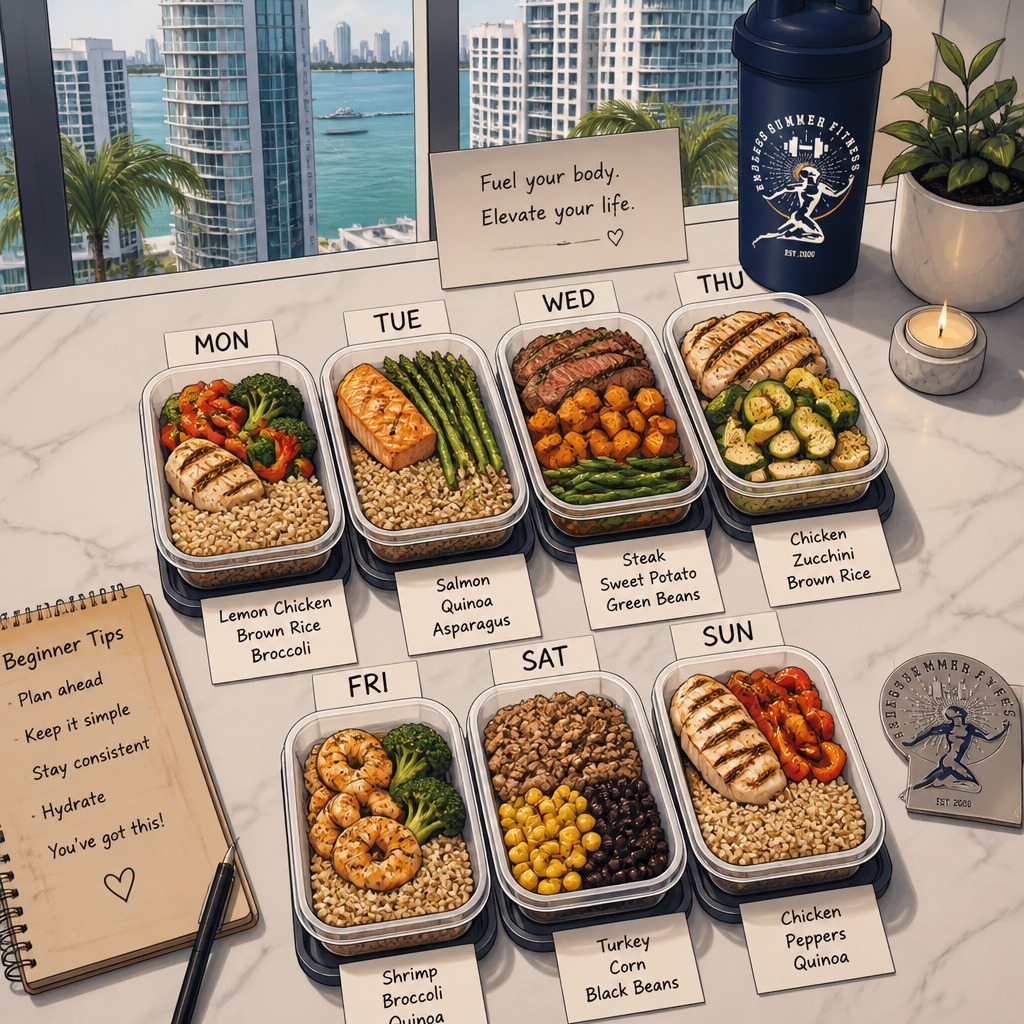
This is where meal prep becomes fun. Mix your proteins, carbs, and veggies into different combinations so you don’t get bored.
Examples:
- Chicken + rice + broccoli
- Turkey + potatoes + peppers
- Salmon + quinoa + spinach
Hybrid benefit:
Consistent meals = consistent energy = better training.
Step 5: Store and Label
Use simple containers. Label with:
- Meal name
- Day of the week
- Protein source
This keeps your week organized and reduces decision fatigue.
How Meal Prep Supports Hybrid Training

Meal prep isn’t just about saving time. It’s about fueling your performance.
Weight Training
Protein timing helps muscle repair and growth. High-protein diets preserve lean mass, especially during fat-loss phases.
Endurance & Sprinting
Carbs support long walks, Zone 2 runs, tempo work, and VO₂ max intervals.
Recovery
Anti-inflammatory foods — berries, leafy greens, omega-3s — reduce soreness and support joint health.
Hydration
Add electrolytes (sodium, potassium, magnesium) to your routine. Coconut water + citrus + sea salt is a simple Miami-friendly mix.
Common Beginner Mistakes
Mistake 1: Trying to Prep Too Much
Start with 3 – 4 meals, not 12.
Mistake 2: Making Complicated Recipes
Simple wins. Always.
Mistake 3: Forgetting Snacks
Prep protein snacks: Greek yogurt, cottage cheese, boiled eggs.
Mistake 4: Ignoring Hydration
Electrolytes matter more as you age and train harder.
Hybrid Fitness Nutrition: Why It Helps
Meal prep supports every Endless Summer Fitness pillar:
- Patience: You build consistency over time.
- Patience: You build consistency over time.
- Commitment: You follow through because the food is ready.
- Discipline: You remove friction and stay aligned with your goals.
- Enjoyment: You feel better, train better, and recover faster.
Your Journey Starts Here!
Summary
Meal prep for beginners is one of the simplest ways to save time, reduce stress, and support your hybrid-athlete lifestyle. When you plan your meals ahead of time, you remove the daily friction that leads to skipped meals, low energy, and inconsistent training.
By choosing simple proteins, carbs, and veggies, you create a flexible system that works even on your busiest weeks. This structure helps you stay fueled for strength training, endurance work, and recovery — the core of the ESF hybrid pillars.
Meat prep also supports the ESF mindset pillars. It builds discipline, strengthens commitment, and creates a sense of enjoyment because your week feels easier and more predictable. Over time, this consistency leads to better performance, better recovery, and better long-term results.
Whether you’re over 40, returning to fitness, or balancing a demanding schedule, meal prep gives you control. It’s a small habit with a massive payoff.
FAQs
- How long does meal prep take for beginners?
Usually, 60-90 minutes per week.
- How long do meal-prepped foods last?
Most meals last 3 – 4 days in the fridge.
- Do I need to count macros?
Not at first. Focus on protein + colorful plates.
- Can meal prep help with weight loss?
Yes — consistency reduces overeating and supports training.
- What if I get bored with the same meals?
Use mix-and-match ingredients to keep flavors fresh.
- Do I need special containers?
No. Any reusable work.
Medical Disclaimer: This article is for educational and informational purposes only and does not constitute medical advice. Always consult a physician or certified fitness professional before beginning a new exercise program, especially if you have pre-existing conditions.
Move fast, stay strong, go far
— The hybrid body is built for anything!
Nutrition & Recovery Journals
Evidence‑Based Guidelines
- High‑protein diets preserve lean mass
- Leucine threshold: 3–4g post‑workout
- Anti‑inflammatory foods: berries, leafy greens, omega‑3s
- Hydration: sodium, potassium, magnesium, chloride
- Recovery: massage reduces DOMS; cold water immersion reduces inflammation; mobility improves function in 4 weeks