Endless Summer Fitness provides workout tips for fitness beginners, weekend warriors, post-physical therapy individuals, men and women in middle life, and anyone seeking fitness results.
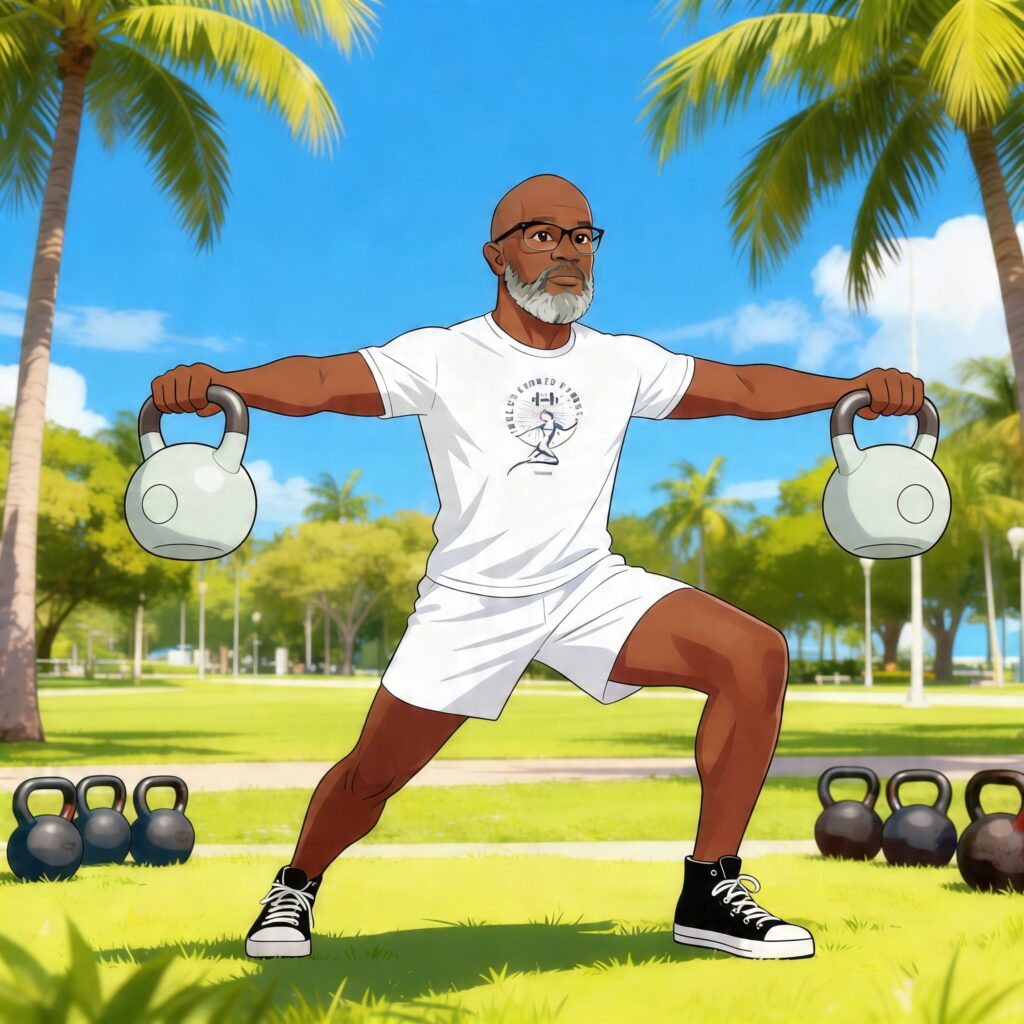
Animated Endless Summer Fitness character doing step‑ups on a sturdy box in a Miami outdoor park setting. Palm trees, clean pavement, bright sunlight. Diverse group of animated characters in the background doing low‑impact cardio. Organized equipment visible but minimal. No haze, no sunset tones, no text.

Hybrid Fitness for Weight-Loss Beginners

A Simple, Sustainable Plan

Hybrid fitness for weight-loss beginners is all about blending strength training and cardio into a simple, repeatable plan. You are not trying to train like an athlete on day one. Instead, you are building a base that helps you lose fat, protect your joints, and feel more confident in your body.

Because this approach mixes resistance work and endurance in the same week, your body learns to move better, burn more calories, and keep muscle while the scale goes down. Over time, that combination makes weight loss more sustainable and less stressful.

Low-Impact Conditioning for Long-Term Health

What hybrid fitness for weight loss really means

Hybrid fitness means you train both your muscles and your heart in a structured way during the same week. Rather than choosing only lifting or only cardio, you use both so your body gets stronger and your engine gets bigger.

From a science standpoint, combining resistance training with aerobic exercise supports better body composition than either alone. Research and position statements from the American College of Sports Medicine (ACSM) indicate that adults should engage in both moderate-intensity aerobic activity and muscle-strengthening activities each week for health and weight management. ACSM | The American College of Sports Medicine.

For beginners, this does not need to be complicated. A few days of full-body strength work plus a few days of walking or light jogging can be enough to start losing weight and feeling better. When you repeat that pattern consistently, your body adapts, and your confidence grows.

Why hybrid fitness works so well for beginners

Hybrid fitness for weight-loss beginners works because it attacks the problem from multiple angles. Strength training helps you keep or build lean muscle, which supports your metabolism. Cardio sessions help you burn more calories and improve heart and lung health.

Evidence-based guidelines from the American College of Sports Medicine (ACSM) and similar organizations consistently show that aerobic exercise (like walking or jogging) and resistance training (like dumbbells or bands) both improve weight control, blood pressure, and overall health.

When you combine these two training styles in the same weekly plan, you get greater total benefits than doing either one alone.

Additionally, hybrid training keeps things interesting. Instead of repeating the same workout every day, you rotate between strength, conditioning, and active recovery. The variety can reduce boredom and make it easier to stick with your plan long enough to see real change.

Getting started safely as a true beginner

Before you jump into any hybrid fitness for weight loss beginners plan, you should check in with your healthcare provider, especially if you have been inactive or have medical conditions. This step helps you train with more confidence and fewer surprises.

Next, set realistic expectations. A good starting point is to move three to four days per week, not seven. As you build consistency, you can add more volume or intensity.

Finally, focus on technique first. Lighter weights, slower tempos, and controlled movements will protect your joints and help you feel that each exercise is supposed to do. Over time, you can increase your range of motion and help you feel what each exercise is supposed to do. Over time, you can increase load and complexity as your body adapts.

Weekly hybrid fitness for weight loss beginners

This beginner-friendly hybrid fitness for weight loss plan uses dumbbells, kettlebells, bands, bodyweight, and simple cardio like walking or light jogging. You will train three non-consecutive days per week (for example, Monday, Wednesday, Friday). On the other days, you can walk, stretch, or rest.

Each workout blends strength, endurance, and functional movement. Use 8-12 reps for strength-focused moves and 12-15 reps for endurance-focused moves, as noted. Rest 45-75 seconds between sets unless otherwise stated.

Session structure overview

  • Warm-up: 5-8 minutes
  • Hybrid Strength Block: 3-4 exercises
  • Hybrid Conditioning Block: 1-2 exercises
  • Core & Mobility Finisher: 2-3 exercises
  • Cooldown: 3-5 minutes

The Progression Matrix: Beginner hybrid fitness workout

Warm-up block (5–8 minutes)

  • March or walk in place – 2 minutes, easy pace
  • Bodyweight sit-to-stand from chair – 2 sets of 10 reps
  • Arm circles + shoulder rolls – 30 seconds each direction
  • Cat-camel on hands and knees – 2 sets of 8 slow reps

This warm-up gently raises your heart rate, lubricates your joints, and prepares your muscles for work. As you repeat it, you will notice it feels easier, which is a sign your fitness is improving.

Hybrid Strength Block A: Full-body foundation

Perform 3 sets of each exercise before moving to the next.

  1. Goblet squat with dumbbell or kettlebell
    • Reps: 12–15 (endurance focus)
    • Notes: Hold the weight close to your chest, feet shoulder-width apart, sit your hips back, and keep your chest tall.
  2. Incline push-up on bench, box, or sturdy table
    • Reps: 8–12 (strength/hypertrophy focus)
    • Notes: Hands on elevated surface, body in a straight line, lower with control, press back up.
  3. Band row or towel row around a post
    • Reps: 12–15 (endurance focus)
    • Notes: Squeeze your shoulder blades together, keep your chest lifted, and avoid shrugging.
  4. Hip hinge deadlift with dumbbells or kettlebell
    • Reps: 8–12 (strength/hypertrophy focus)
    • Notes: Soften your knees, push hips back, keep the weight close to your legs, and maintain a neutral spine.
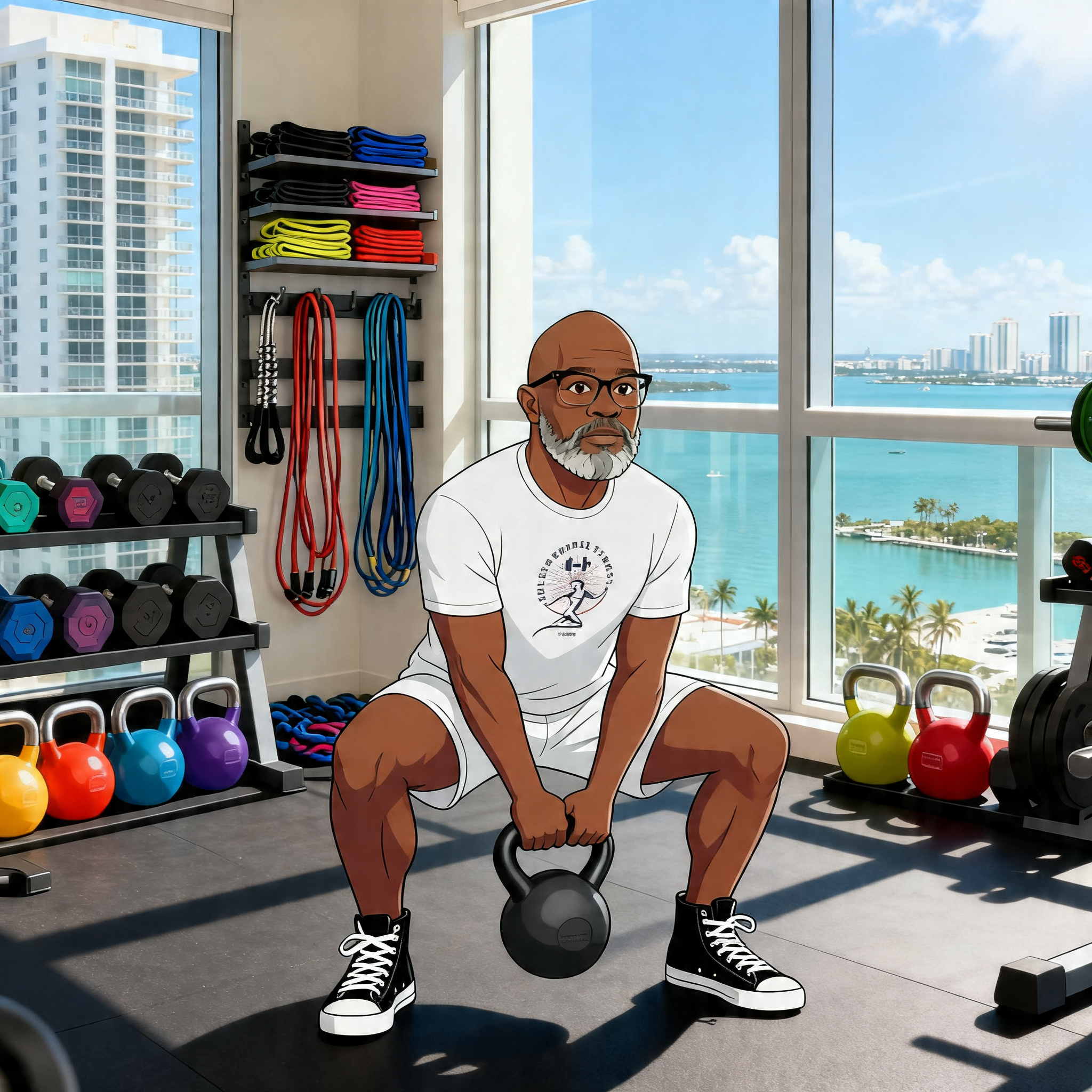
Hybrid Fitness for Weight-Loss Beginners beginner hybrid fitness goblet squat demonstration in bright Miami gym

This block builds strength in your legs, chest, back, and hips. Because you are using moderate loads and controlled reps, you are training both muscle and endurance at the same time.

Hybrid Conditioning Block B: Low-impact cardio power

Perform 3 rounds with minimal rest.

  1. Step-ups on box, stairs, or sturdy step
    • Reps: 10–12 per leg (endurance focus)
    • Notes: Drive through your whole foot, stand tall at the top, and control the way down.
  2. Low-impact jack or side step jack
    • Reps: 30–40 seconds
    • Notes: Step one foot out at a time while raising your arms overhead, then return to center.
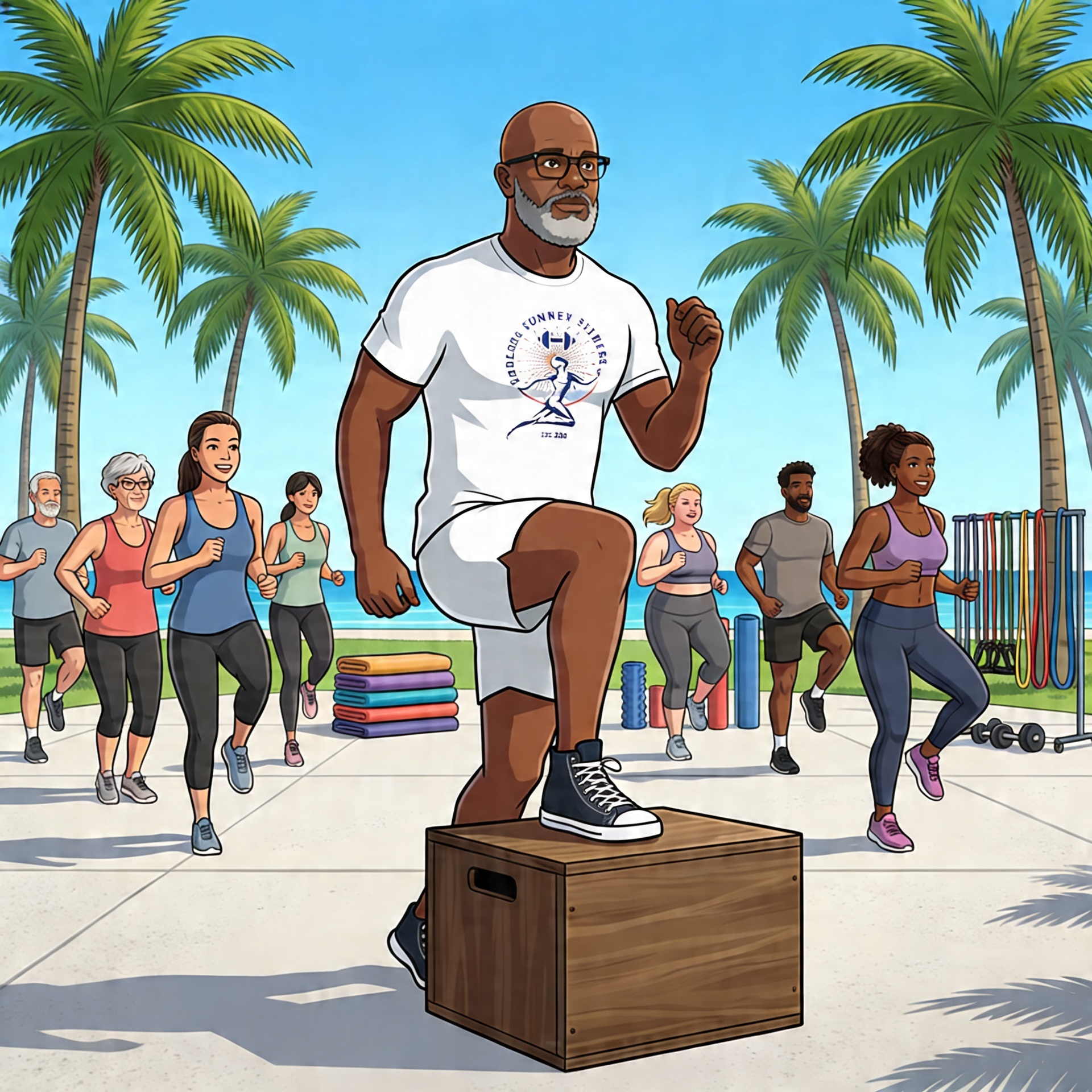
Hybrid Fitness for Weight-Loss Beginners low‑impact hybrid fitness step‑up exercise for weight loss beginners outdoors

This conditioning block raises your heart rate without heavy impact. As your fitness improves, you can shorten rest periods or add a light jog in place between rounds.

Core, mobility, and functional finisher

Perform 2–3 sets of each exercise.

  1. Dead bug on mat
    • Reps: 8–10 per side
    • Notes: Lie on your back, arms up, knees bent at 90 degrees, slowly extend opposite arm and leg while keeping your lower back gently pressed into the floor.
  2. Glute bridge
    • Reps: 12–15
    • Notes: Press through your heels, squeeze your glutes at the top, and avoid arching your lower back.
  3. Half-kneeling hip flexor stretch
    • Time: 20–30 seconds per side
    • Notes: Gently shift your hips forward until you feel a stretch in the front of your hip, then breathe slowly.

This finisher supports core stability, hip strength, and mobility. Those qualities make daily movement easier and help you tolerate more training volume over time.

Weekly schedule for hybrid fitness for weight loss beginners

Here is a simple weekly layout using the progression matrix workout above. You can repeat the same session three times per week for the first four weeks.

  • Day 1 (Mon): Beginner Hybrid Session (A + B + Finisher)
  • Day 2 (Tue): 20–30 minutes of brisk walking or light jogging intervals
  • Day 3 (Wed): Beginner Hybrid Session (A + B + Finisher)
  • Day 4 (Thu): Mobility, stretching, or yoga for 15–20 minutes
  • Day 5 (Fri): Beginner Hybrid Session (A + B + Finisher)
  • Day 6 (Sat): Optional easy walk, stairs, or light recreational activity

As you adapt, you can progress by adding a fourth set to the strength block, increasing walking time, or slightly increasing load. However, keep at least one full rest or very light day each week to support recovery.

How to progress your hybrid fitness plan over time

After four to six weeks, hybrid fitness for weight loss beginners should start to feel more manageable. At that point, you can progress in small, smart steps.

You might add one new exercise variation, such as a reverse lunge instead of a squat, or a band chest press instead of an incline push-up. You could also increase your walking time by 5-minutes per session or add one short interval of light jogging.

Guidelines from organizations like NASM and ACSM emphasize gradual overload rather than sudden jumps in intensity. ACSM | The American College of Sports Medicine When you progress slowly, you reduce injury risk and give your body time to adapt.

Recovery, nutrition, and tracking progress

Training is only one part of a hybrid fitness approach for weight-loss beginners. Recovery and nutrition matter just as much. Aim for consistent sleep, hydration, and a balanced diet that includes lean protein, colorful fruits and vegetables, and whole grains. Evidence from sports nutrition research shows that pairing resistance training with adequate protein intake helps preserve muscle mass during weight loss. Exercise is Medicine

You should also track more than just the scale. Take simple notes on how your clothes fit, how your energy feels, and how many reps or sets you can complete with good form. Over time, those markers will show progress even when the scale moves slowly.

Finally, listen to your body. Mild soreness is normal, but sharp pain, dizziness, or extreme fatigue are signs to stop and reassess. When in doubt, scale back and rebuild your base.

Common mistakes beginners make with hybrid fitness

Many beginners try to do too much, too soon. They stack long runs, heavy lifting, and intense classes in the same week, then feel exhausted and discouraged. Instead, your hybrid fitness plan for weight-loss beginners should feel challenging but doable.

Another common mistake is skipping strength work and relying only on cardio. That approach can lead to muscle loss, which makes long-term weight management harder. By keeping resistance training in your plan, you protect your lean mass and your joints. Altitude PT

Finally, some people change programs every week. Constantly switching workouts makes it hard to measure progress. Sticking with one simple plan for at least four to six weeks gives your body time to adapt and your mind time to build confidence.

When to move beyond the beginner phase

You will know your hybrid fitness-for-weight-loss beginner phase is ending when the current workouts feel noticeably easier. If you can complete all sets and reps with solid form, low fatigue, and short rest, you are ready for the next level.

At that point, you can add slightly heavier weights, introduce gentle plyometrics like low step hops, or include an extra conditioning interval. You might also split your training into two different hybrid sessions to add variety while keeping structure.

Even as you advance, the core idea stays the same. You are still blending strength and cardio in a way that fits your life, supporting your joints, and keeps you moving forward.

A Call to Action

Summary

Hybrid fitness for weight loss beginners gives you a simple way to blend strength and cardio in the same week. Instead of choosing one training style, you use both so your body burns more calories, retains muscle, and moves better in daily life. That mix makes weight loss more sustainable and less frustrating.

The beginner Progression Matrix in this article focuses on full-body strength, low-impact conditioning, and core stability. With just a few pieces of equipment—dumbbells, kettlebells, bands, a chair, and stairs—you can build a complete routine at home or in a basic gym. Because the plan uses moderate loads and controlled reps, it is joint-friendly and beginner-ready.

From a scientific perspective, combining resistance training with aerobic exercise aligns with major guidelines from organizations such as ACSM and NASM. These groups highlight that adults should include muscle-strengthening work and aerobic activity each week to support health, weight management, and overall performance. When you follow those recommendations in a structured, consistent way, you set yourself up for better long-term results.

The Final Say

The key takeaways are straightforward. Start with three hybrid sessions per week, add walking and mobility on other days, and progress slowly as your body adapts. Track more than just the scale, pay attention to your energy and strength, and adjust when life gets busy.

Most importantly, remember that hybrid fitness for weight loss beginners is not about perfection. It is about building a lifestyle you can repeat—week after week—without burning out. When you treat this as a long game, your body composition, confidence, and energy all move in the right direction.

FAQs

How many days per week should beginners do hybrid fitness for weight loss?

Most beginners do well with three hybrid sessions per week plus pne or two days of walking or mobility. That scheduling gives you enough stimulus to change while still allowing time to recover.

Can I do hybrid fitness for weight loss beginners at home without a gym?

Yes, you can. With a pair of dumbbells or a kettlebell, a resistance band, a chair, and stairs or a step, you can perform every exercise in the beginner Progression Matrix. As you get stronger, you can add more load or variety.

How long should each hybrid fitness workout last?

Most beginner sessions will last 35-50 minutes, including warm-up and cooldown. If you are short on time, you can reduce one set from each block and still get a solid training effect.

Do I need to do cardio on separate days from strength training?

You do not have to. Hybrid fitness for weight-loss beginners blends strength and conditioning in a single session. However, adding separate walking days can increase your weekly activity without making your workouts feel overwhelming.

How soon will I see results from a hybrid fitness plan?

Many people notice a better energy and mood within two weeks. Visible changes in body composition often appear after four to eight weeks of consistent training and nutrition. Your exact timeline will depend on sleep, stress, and eating habits.

Is hybrid fitness safe if I have joint pain or a history of injuries?

It can be, especially when you focus on low-impact options, controlled tempos, and proper form. Still, you should talk with your healthcare provider or a qualified exercise professional before starting, and you may need specific modifications.

Disclosure

This article is for general education only and is not a substitute for medical advice, diagnosis, or treatment. Always consult your physician or qualified healthcare provider before starting any new exercise, nutrition, or lifestyle program, especially if you have existing health conditions, injuries, or concerns. Stop any exercise that causes sharp pain, dizziness, or unusual shortness of breath, and seek professional guidance as needed.

Smart tool, human guidance—straightforward, simple, effective, and fun.

A Simple, Sustainable Plan

Hybrid fitness for weight-loss beginners is all about blending strength training and cardio into a simple, repeatable plan. You are not trying to train like an athlete on day one. Instead, you are building a base that helps you lose fat, protect your joints, and feel more confident in your body.

Because this approach mixes resistance work and endurance in the same week, your body learns to move better, burn more calories, and keep muscle while the scale goes down. Over time, that combination makes weight loss more sustainable and less stressful.

Low-Impact Conditioning for Long-Term Health

What hybrid fitness for weight loss really means

Hybrid fitness means you train both your muscles and your heart in a structured way during the same week. Rather than choosing only lifting or only cardio, you use both so your body gets stronger and your engine gets bigger.

From a science standpoint, combining resistance training with aerobic exercise supports better body composition than either alone. Research and position statements from the American College of Sports Medicine (ACSM) indicate that adults should engage in both moderate-intensity aerobic activity and muscle-strengthening activities each week for health and weight management. ACSM | The American College of Sports Medicine.

For beginners, this does not need to be complicated. A few days of full-body strength work plus a few days of walking or light jogging can be enough to start losing weight and feeling better. When you repeat that pattern consistently, your body adapts, and your confidence grows.

Why hybrid fitness works so well for beginners

Hybrid fitness for weight-loss beginners works because it attacks the problem from multiple angles. Strength training helps you keep or build lean muscle, which supports your metabolism. Cardio sessions help you burn more calories and improve heart and lung health.

Evidence-based guidelines from the American College of Sports Medicine (ACSM) and similar organizations consistently show that aerobic exercise (like walking or jogging) and resistance training (like dumbbells or bands) both improve weight control, blood pressure, and overall health.

When you combine these two training styles in the same weekly plan, you get greater total benefits than doing either one alone.

Additionally, hybrid training keeps things interesting. Instead of repeating the same workout every day, you rotate between strength, conditioning, and active recovery. The variety can reduce boredom and make it easier to stick with your plan long enough to see real change.

Getting started safely as a true beginner

Before you jump into any hybrid fitness for weight loss beginners plan, you should check in with your healthcare provider, especially if you have been inactive or have medical conditions. This step helps you train with more confidence and fewer surprises.

Next, set realistic expectations. A good starting point is to move three to four days per week, not seven. As you build consistency, you can add more volume or intensity.

Finally, focus on technique first. Lighter weights, slower tempos, and controlled movements will protect your joints and help you feel that each exercise is supposed to do. Over time, you can increase your range of motion and help you feel what each exercise is supposed to do. Over time, you can increase load and complexity as your body adapts.

Weekly hybrid fitness for weight loss beginners

This beginner-friendly hybrid fitness for weight loss plan uses dumbbells, kettlebells, bands, bodyweight, and simple cardio like walking or light jogging. You will train three non-consecutive days per week (for example, Monday, Wednesday, Friday). On the other days, you can walk, stretch, or rest.

Each workout blends strength, endurance, and functional movement. Use 8-12 reps for strength-focused moves and 12-15 reps for endurance-focused moves, as noted. Rest 45-75 seconds between sets unless otherwise stated.

Session structure overview

  • Warm-up: 5-8 minutes
  • Hybrid Strength Block: 3-4 exercises
  • Hybrid Conditioning Block: 1-2 exercises
  • Core & Mobility Finisher: 2-3 exercises
  • Cooldown: 3-5 minutes

The Progression Matrix: Beginner hybrid fitness workout

Warm-up block (5–8 minutes)

  • March or walk in place – 2 minutes, easy pace
  • Bodyweight sit-to-stand from chair – 2 sets of 10 reps
  • Arm circles + shoulder rolls – 30 seconds each direction
  • Cat-camel on hands and knees – 2 sets of 8 slow reps

This warm-up gently raises your heart rate, lubricates your joints, and prepares your muscles for work. As you repeat it, you will notice it feels easier, which is a sign your fitness is improving.

Hybrid Strength Block A: Full-body foundation

Perform 3 sets of each exercise before moving to the next.

  1. Goblet squat with dumbbell or kettlebell
    • Reps: 12–15 (endurance focus)
    • Notes: Hold the weight close to your chest, feet shoulder-width apart, sit your hips back, and keep your chest tall.
  2. Incline push-up on bench, box, or sturdy table
    • Reps: 8–12 (strength/hypertrophy focus)
    • Notes: Hands on elevated surface, body in a straight line, lower with control, press back up.
  3. Band row or towel row around a post
    • Reps: 12–15 (endurance focus)
    • Notes: Squeeze your shoulder blades together, keep your chest lifted, and avoid shrugging.
  4. Hip hinge deadlift with dumbbells or kettlebell
    • Reps: 8–12 (strength/hypertrophy focus)
    • Notes: Soften your knees, push hips back, keep the weight close to your legs, and maintain a neutral spine.

Hybrid Fitness for Weight-Loss Beginners beginner hybrid fitness goblet squat demonstration in bright Miami gym

This block builds strength in your legs, chest, back, and hips. Because you are using moderate loads and controlled reps, you are training both muscle and endurance at the same time.

Hybrid Conditioning Block B: Low-impact cardio power

Perform 3 rounds with minimal rest.

  1. Step-ups on box, stairs, or sturdy step
    • Reps: 10–12 per leg (endurance focus)
    • Notes: Drive through your whole foot, stand tall at the top, and control the way down.
  2. Low-impact jack or side step jack
    • Reps: 30–40 seconds
    • Notes: Step one foot out at a time while raising your arms overhead, then return to center.

Hybrid Fitness for Weight-Loss Beginners low‑impact hybrid fitness step‑up exercise for weight loss beginners outdoors

This conditioning block raises your heart rate without heavy impact. As your fitness improves, you can shorten rest periods or add a light jog in place between rounds.

Core, mobility, and functional finisher

Perform 2–3 sets of each exercise.

  1. Dead bug on mat
    • Reps: 8–10 per side
    • Notes: Lie on your back, arms up, knees bent at 90 degrees, slowly extend opposite arm and leg while keeping your lower back gently pressed into the floor.
  2. Glute bridge
    • Reps: 12–15
    • Notes: Press through your heels, squeeze your glutes at the top, and avoid arching your lower back.
  3. Half-kneeling hip flexor stretch
    • Time: 20–30 seconds per side
    • Notes: Gently shift your hips forward until you feel a stretch in the front of your hip, then breathe slowly.

This finisher supports core stability, hip strength, and mobility. Those qualities make daily movement easier and help you tolerate more training volume over time.

Weekly schedule for hybrid fitness for weight loss beginners

Here is a simple weekly layout using the progression matrix workout above. You can repeat the same session three times per week for the first four weeks.

  • Day 1 (Mon): Beginner Hybrid Session (A + B + Finisher)
  • Day 2 (Tue): 20–30 minutes of brisk walking or light jogging intervals
  • Day 3 (Wed): Beginner Hybrid Session (A + B + Finisher)
  • Day 4 (Thu): Mobility, stretching, or yoga for 15–20 minutes
  • Day 5 (Fri): Beginner Hybrid Session (A + B + Finisher)
  • Day 6 (Sat): Optional easy walk, stairs, or light recreational activity

As you adapt, you can progress by adding a fourth set to the strength block, increasing walking time, or slightly increasing load. However, keep at least one full rest or very light day each week to support recovery.

How to progress your hybrid fitness plan over time

After four to six weeks, hybrid fitness for weight loss beginners should start to feel more manageable. At that point, you can progress in small, smart steps.

You might add one new exercise variation, such as a reverse lunge instead of a squat, or a band chest press instead of an incline push-up. You could also increase your walking time by 5-minutes per session or add one short interval of light jogging.

Guidelines from organizations like NASM and ACSM emphasize gradual overload rather than sudden jumps in intensity. ACSM | The American College of Sports Medicine When you progress slowly, you reduce injury risk and give your body time to adapt.

Recovery, nutrition, and tracking progress

Training is only one part of a hybrid fitness approach for weight-loss beginners. Recovery and nutrition matter just as much. Aim for consistent sleep, hydration, and a balanced diet that includes lean protein, colorful fruits and vegetables, and whole grains. Evidence from sports nutrition research shows that pairing resistance training with adequate protein intake helps preserve muscle mass during weight loss. Exercise is Medicine

You should also track more than just the scale. Take simple notes on how your clothes fit, how your energy feels, and how many reps or sets you can complete with good form. Over time, those markers will show progress even when the scale moves slowly.

Finally, listen to your body. Mild soreness is normal, but sharp pain, dizziness, or extreme fatigue are signs to stop and reassess. When in doubt, scale back and rebuild your base.

Common mistakes beginners make with hybrid fitness

Many beginners try to do too much, too soon. They stack long runs, heavy lifting, and intense classes in the same week, then feel exhausted and discouraged. Instead, your hybrid fitness plan for weight-loss beginners should feel challenging but doable.

Another common mistake is skipping strength work and relying only on cardio. That approach can lead to muscle loss, which makes long-term weight management harder. By keeping resistance training in your plan, you protect your lean mass and your joints. Altitude PT

Finally, some people change programs every week. Constantly switching workouts makes it hard to measure progress. Sticking with one simple plan for at least four to six weeks gives your body time to adapt and your mind time to build confidence.

When to move beyond the beginner phase

You will know your hybrid fitness-for-weight-loss beginner phase is ending when the current workouts feel noticeably easier. If you can complete all sets and reps with solid form, low fatigue, and short rest, you are ready for the next level.

At that point, you can add slightly heavier weights, introduce gentle plyometrics like low step hops, or include an extra conditioning interval. You might also split your training into two different hybrid sessions to add variety while keeping structure.

Even as you advance, the core idea stays the same. You are still blending strength and cardio in a way that fits your life, supporting your joints, and keeps you moving forward.

A Call to Action

Summary

Hybrid fitness for weight loss beginners gives you a simple way to blend strength and cardio in the same week. Instead of choosing one training style, you use both so your body burns more calories, retains muscle, and moves better in daily life. That mix makes weight loss more sustainable and less frustrating.

The beginner Progression Matrix in this article focuses on full-body strength, low-impact conditioning, and core stability. With just a few pieces of equipment—dumbbells, kettlebells, bands, a chair, and stairs—you can build a complete routine at home or in a basic gym. Because the plan uses moderate loads and controlled reps, it is joint-friendly and beginner-ready.

From a scientific perspective, combining resistance training with aerobic exercise aligns with major guidelines from organizations such as ACSM and NASM. These groups highlight that adults should include muscle-strengthening work and aerobic activity each week to support health, weight management, and overall performance. When you follow those recommendations in a structured, consistent way, you set yourself up for better long-term results.

The Final Say

The key takeaways are straightforward. Start with three hybrid sessions per week, add walking and mobility on other days, and progress slowly as your body adapts. Track more than just the scale, pay attention to your energy and strength, and adjust when life gets busy.

Most importantly, remember that hybrid fitness for weight loss beginners is not about perfection. It is about building a lifestyle you can repeat—week after week—without burning out. When you treat this as a long game, your body composition, confidence, and energy all move in the right direction.

FAQs

How many days per week should beginners do hybrid fitness for weight loss?

Most beginners do well with three hybrid sessions per week plus pne or two days of walking or mobility. That scheduling gives you enough stimulus to change while still allowing time to recover.

Can I do hybrid fitness for weight loss beginners at home without a gym?

Yes, you can. With a pair of dumbbells or a kettlebell, a resistance band, a chair, and stairs or a step, you can perform every exercise in the beginner Progression Matrix. As you get stronger, you can add more load or variety.

How long should each hybrid fitness workout last?

Most beginner sessions will last 35-50 minutes, including warm-up and cooldown. If you are short on time, you can reduce one set from each block and still get a solid training effect.

Do I need to do cardio on separate days from strength training?

You do not have to. Hybrid fitness for weight-loss beginners blends strength and conditioning in a single session. However, adding separate walking days can increase your weekly activity without making your workouts feel overwhelming.

How soon will I see results from a hybrid fitness plan?

Many people notice a better energy and mood within two weeks. Visible changes in body composition often appear after four to eight weeks of consistent training and nutrition. Your exact timeline will depend on sleep, stress, and eating habits.

Is hybrid fitness safe if I have joint pain or a history of injuries?

It can be, especially when you focus on low-impact options, controlled tempos, and proper form. Still, you should talk with your healthcare provider or a qualified exercise professional before starting, and you may need specific modifications.

Disclosure

This article is for general education only and is not a substitute for medical advice, diagnosis, or treatment. Always consult your physician or qualified healthcare provider before starting any new exercise, nutrition, or lifestyle program, especially if you have existing health conditions, injuries, or concerns. Stop any exercise that causes sharp pain, dizziness, or unusual shortness of breath, and seek professional guidance as needed.

Smart tool, human guidance—straightforward, simple, effective, and fun.

Leave a Comment

Your email address will not be published. Required fields are marked *

Scroll to Top
Scroll to Top
Verified by MonsterInsights