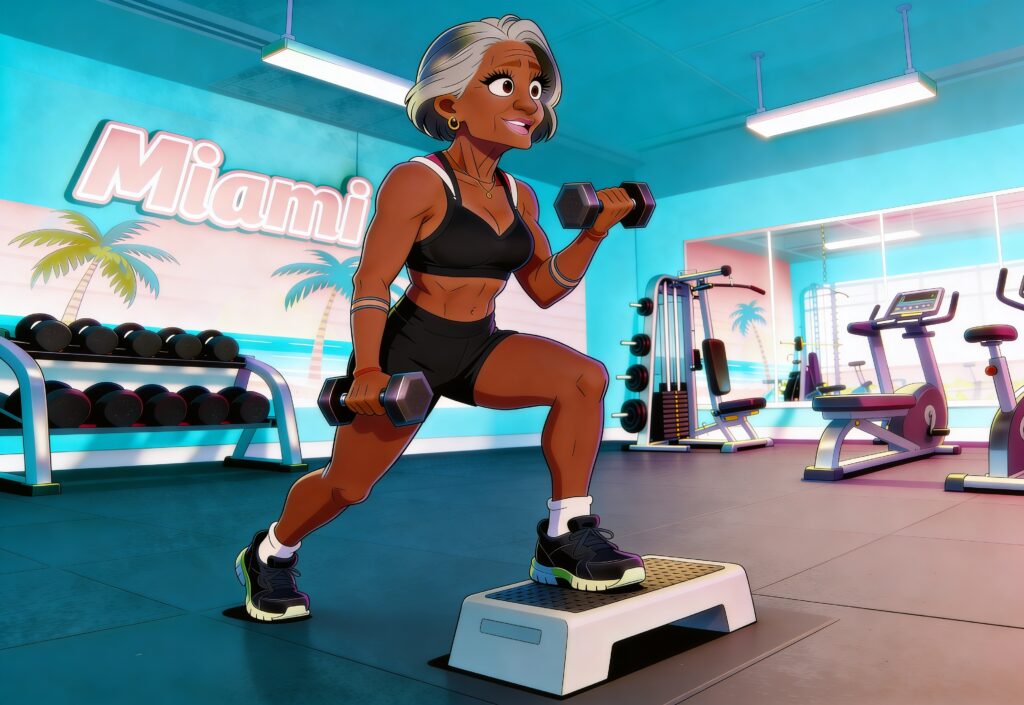

Why Strength Training Matters After 40
As women move through their 40s, natural changes in muscle mass, bone density, and hormones begin to accelerate. Although these shifts are normal, they can be slowed—and in many cases reversed—with consistent resistance training. According to the NSCA, strength training reduces sarcopenia, improves bone health, and enhances functional capacity. ACSM also emphasizes that resistance training is essential for maintaining independence and reducing fall risk as women age. This article aims to explain the benefits of strength training for women over 40.
Key Benefits of Strength Training for Women Over 40
- Preserves muscle mass and strength, supporting everyday movement and long-term independence.
- Improves bone density, which reduces fracture risk during and after menopause.
- Enhances metabolic health, including insulin sensitivity and lipid profiles.
- Boosts balance and coordination, lowering the likelihood of falls.
Citations: NSCA Position Statement; ACSM Guidelines, PubMed Review.
Common Myths About Strength Training for Women Over 40
Myth 1: “Lifting makes women bulky.”
This myth persists, but it has no scientific basis. Women do not produce enough testosterone to build large, bodybuilder-style muscle mass without extreme training volume and specialized nutrition. Instead, strength training creates lean, firm muscle that supports posture, mobility, and metabolic health.
Myth 2: “Strength training is unsafe after 40.”
When programmed correctly, resistance training is one of the safest and most beneficial forms of exercise for women over 40. ACSM and NSCA both recommend it as a primary tool for healthy aging. Proper technique, gradual progression, and appropriate load selection significantly reduce the risk of injury.
Myth 3: “Cardio alone is enough.”
Cardio supports heart health, but it does not prevent muscle loss or bone decline. Strength training is the only modality proven to maintain lean mass and bone density. A hybrid approach—combining resistance work with moderate aerobic training—delivers the best long-term results.
Hybrid Fitness: Balancing Strength and Endurance
Hybrid fitness blends resistance training with aerobic conditioning to build strength, stamina, and mobility at the same time. This approach is especially effective for women over 40 because it supports metabolic health while preserving muscle and joint function. A balanced hybrid week typically includes 2—3 strength sessions, 2—3 cardio sessions, and dedicated mobility work.
Programming Principle for Women Over 40
- Individualize loads and progressions based on experience and recovery.
- Periodize intensity to avoid plateaus and reduce overtraining risk.
- Prioritize compound movements like squats, deadlifts, rows, and presses.
- Include power work (lighter loads, faster reps) to maintain reaction time and functional speed.
Citations: NSCA Position Statement; ACSM Guidelines.
Program Design for Women Over 40 (Intermediate)
Definition — Intermediate
An intermediate trainee has 6—12+ months of consistent training, understands basic movement patterns, and recovers within 48—72 hours between sessions.
Characteristics
- Uses moderate loads with solid technique.
- Applies progressive overload through reps, sets, or load increases.
- Handles 3–5 weekly training sessions.
- Requires structured recovery and mobility work.
Training Goals
- Build or maintain lean muscle mass.
- Improve functional strength for daily tasks.
- Increase aerobic capacity without sacrificing muscle.
- Support joint health and long-term mobility.
Sample 8‑Week Hybrid Plan (Weekly Template)
- Strength Days (2–3×/week): Full-body sessions with compound lifts first.
- Hybrid Cardio (2×/week): Brisk walking, stair intervals, or light jogging for 20-35 minutes.
- Active Recovery (1×/week): Yoga, mobility, or a long walk.
- Rest: One full rest day.
Intermediate Hybrid Workout Routine (4‑Week Block)
Equipment: Dumbbells, kettlebells, resistance bands, box or step, chair, mat.
Sets & Reps:
- Strength/hypertrophy: 3–4 sets of 8–12 reps
- Endurance/conditioning: 3 sets of 12–15 reps or timed intervals
- Rest: 60–90 seconds for strength; 30–60 seconds for conditioning
Day A — Full‑Body Strength + Core
- Goblet Squat — 3 × 8–12
- Push‑Up or Incline Push‑Up — 3 × 8–12
- Single‑Arm Dumbbell Row — 3 × 8–12 per side
- Romanian Deadlift — 3 × 8–12
- Pallof Press — 3 × 12–15 seconds per side
- Plank with Knee Taps — 3 × 30–45 seconds
Day B — Hybrid Strength + Plyo Conditioning
- Kettlebell Swing — 3 × 12–15
- Split Squat (Rear Foot Elevated) — 3 × 8–12 per leg
- Seated Band Row — 3 × 12–15
- Box Step‑Ups — 3 × 12 per leg
- Low Box Jumps or Step‑Ups — 3 × 8–10
- Dead Bug — 3 × 12–15 per side
Day C — Conditioning + Mobility
- Warm‑Up: 5–8 minutes brisk walking or stair climbing
- Interval Walk/Jog: 20 minutes (1‑min jog, 2‑min walk × 6 rounds)
- Cool‑Down: 8–10 minutes of hip and hamstring mobility
Progression Tip: Increase load by 2—5% when you can complete the top rep range with solid form. Alternatively, add a set or reduce rest time.
Safety, Screening, and Recovery
Before starting any new program, complete a health screening and consult a clinician if you have chronic conditions. Begin with lighter loads to refine technique. Additionally, mobility work, foam rolling, hydration, and adequate sleep all support recovery. Both ACSM and NSCA emphasize that individualized, periodized programs are the safest and most effective for older adults.
Nutrition and Recovery Basics for Muscle Preservation
Protein intake, hydration, and balanced meals play a major role in muscle maintenance. Aim for consistent protein across meals to support muscle protein synthesis. Anti-inflammatory food—such as berries, leafy greens, and fatty fish—help reduce soreness and support recovery. PubMed research shows that resistance training combined with adequate protein intake significantly improves strength outcomes in older women.
Internal Links
- [Internal Link: ESF — Beginner Strength Guide for Women]
- [Internal Link: ESF — Hybrid Cardio and Strength Workouts]
Peer‑Reviewed Sources
- ACSM — Strength Training for Older Adults
- NSCA — Resistance Training for Older Adults (Position Statement)
- PubMed — Effects of Resistance Training Load on Older Women
Internal CTAs
- Read next: ESF —How to Start Working Out After 40
- Try this: ESF —3 Exercises for Women Over 60
Summary
Strength training for women over 40 is one of the most powerful tools for long-term health. It preserves muscle, strengthens bones, and improves metabolic functions. When combined with aerobic conditioning, hybrid fitness creates a balanced approach that supports energy, mobility, and confidence.
Intermediate women benefit from structured programs that use progressive overload, compound movements, and consistent recovery practices. Two to three strength sessions per week—paired with moderate cardio and mobility work—create sustainable results.
Evidence from ACSM, NSCA, and PubMed reinforces that resistance training in safe, effective, and essential for healthy aging. Women over 40 can lift with confidence, knowing the science is firmly on their side.
FAQs
Will lifting weights make me bulky after 40?
No. Women naturally build lean, toned muscle—not bulk—unless following extreme bodybuilding protocols.
How often should I strength train each week?
Most women benefit from 2-3 full-body strength sessions plus 2 cardio or hybrid sessions.
What rep ranges work best for women over 40?
Both 8—12 reps (strength) and 12—15 reps (endurance) are effective. PubMed research supports using a mix of loads.
Is hybrid training safe if I have joint pain?
Yes, when modified. Choose low-impact cardio, reduce load, and prioritize mobility.
Do I need a trainer?
A coach helps with technique and progression, but many women can start safely with structured programs.
How long until I see results?
Strength and energy improvements often appear within 6—12 weeks.
Disclosure
This article provides general information and is not medical advice. Consult your healthcare provider before starting any new exercise program, especially if you have pre-existing conditions.
Smart tools, human guidance—straightforward, simple, effective, and fun.